
Top Picks For You
Castrol Power1 4T 10W-40
An exceptional, budget-friendly street oil that dampens engine noise and delivers dependable daily clutch protection without demanding full-synthetic prices.
Check Price
Kawasaki 4-Stroke 10W-40
The ultimate low-risk pick for Kawasaki owners, featuring heavy-duty cleaning agents that actively protect older, higher-mileage engines from performance-robbing sludge build-up.
Check Price
Pro Honda GN4 10W-30
Perfect for Honda owners seeking effortless, notch-free shifting and foolproof setup, giving new riders smooth clutch engagement straight out of the bottle.
Check Price
Valvoline 4-Stroke Full Synthetic 10W-40
The top pick for aggressive track or weekend sport riders who demand maximum high-heat protection, bulletproof clutch bite, and zero thermal degradation under heavy load.
Check Price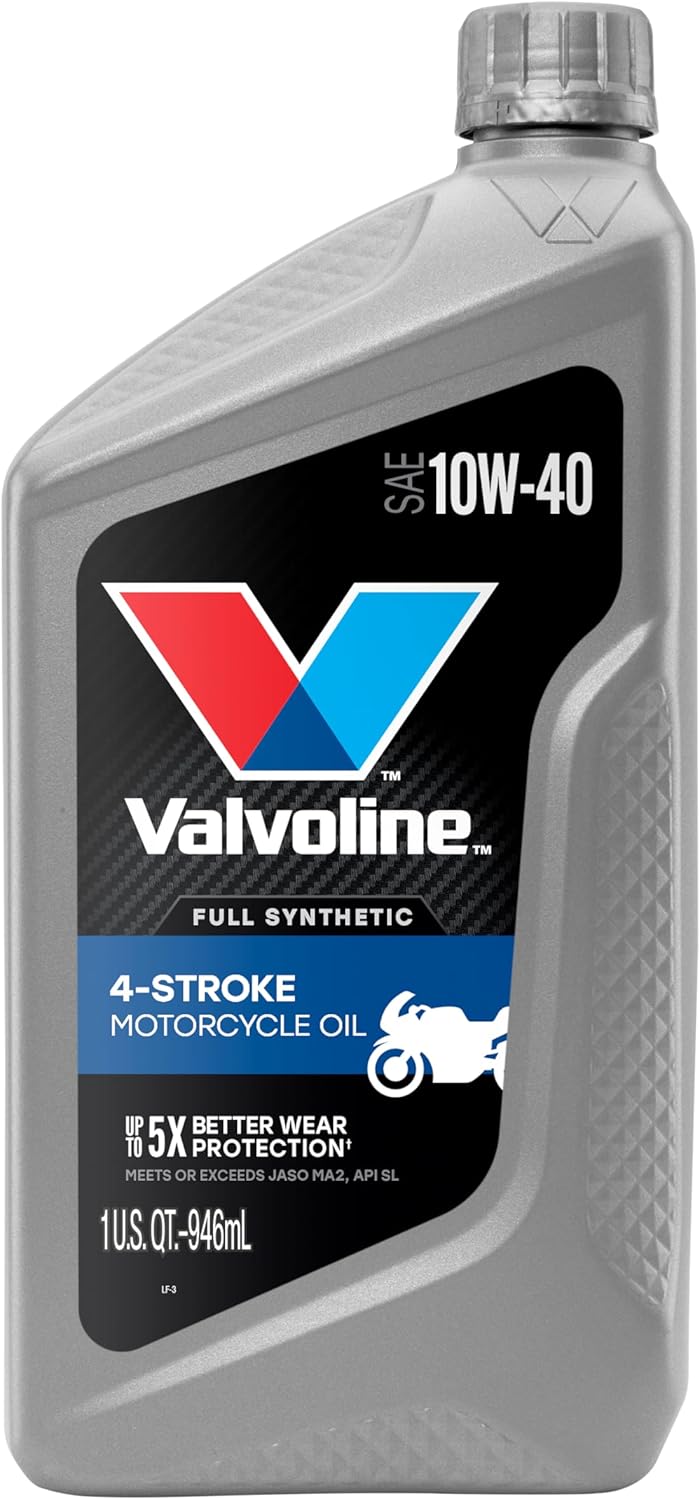
The best 4-stroke motorcycle engine oil for most riders is a JASO MA2-certified 10W-40, matched to your specific engine and, where one exists, your bike’s own manufacturer.
That’s a less exciting answer than “this one oil beats them all,” but it’s the honest one. Motorcycle oil isn’t like car oil. It shares a bath with your clutch and gearbox, which means the wrong bottle can leave you with a slipping clutch even if the engine itself runs fine.
I used to grab whatever was cheapest on the shelf. Then a friend’s oil choice on his track bike left me eating his dust, and I actually looked into why. Turns out the oil matters more than I’d assumed. Here are the four I’d actually put in a bike, and why.
If you’re not sure how much to put in or how often to change it, start here before you buy anything.
What Actually Matters Before You Buy
JASO MA vs. MA2 (this is the one that actually protects your clutch)
Most 4-stroke motorcycles share one oil bath between the engine, gearbox, and clutch. Car oil is formulated with friction modifiers that make automatic transmissions shift smoothly, and those same additives will make a wet clutch slip and glaze, the same kind of slipping and grabbing covered here if you’ve ever felt it firsthand.
JASO T903 is the specific standard that tests an oil’s clutch friction performance and sorts it into MA or MA2 depending on how much friction it holds. Skip an oil without a JASO rating entirely if your bike has a wet clutch, no matter how good the API rating looks.
Viscosity: what 10W-40 or 10W-30 actually tells you
The number before the W measures how the oil flows cold; the number after measures how it holds up at operating temperature. A 10W-40 stays thicker at high heat than a 10W-30, which matters more in hot climates or on air-cooled engines that run hotter than liquid-cooled ones. We cover that specific case in more depth here if you’re riding somewhere genuinely hot for most of the year.
Your owner’s manual has the manufacturer’s actual recommendation. Start there, not with whatever grade happens to be cheapest that week.
Mineral, semi-synthetic, or full synthetic
Mineral oil is refined straight from crude and is the cheapest option. Semi-synthetic blends mineral with synthetic base stock for a middle ground on price and protection. Full synthetic is manufactured rather than refined and generally holds up best under heat and high RPM, at the highest price of the three.
None of these tiers override the JASO rating. A cheap semi-synthetic with the right JASO number protects your clutch better than an expensive synthetic without one.
OEM-branded vs. general motorcycle oil
An oil branded by your bike’s own manufacturer is formulated specifically around that engine, which is a real advantage if you want the simplest possible decision.
A quality general-purpose motorcycle oil with the right viscosity and JASO rating will serve you just as well mechanically. The OEM route mostly buys you certainty, not necessarily better protection.
Best for Regular Street Use: Castrol Power1 4T 10W-40
Full synthetic · JASO MA-2 · Trizone technology
Key Features
- Active sound-dampening qualities reduce mechanical clatter and idle chatter
- Provides broad-spectrum 3-way protection without costing much
- Engineered specifically for stop-and-go city traffic and low-to-mid range power demands
This is the oil I’d point a budget-conscious rider toward first. Castrol’s Trizone formulation is built to protect the engine, clutch, and gearbox as one connected system rather than treating the engine as the only thing that matters, and it carries the JASO MA-2 rating, so it’s genuinely safe for wet clutch systems, Honda included. That’s worth being clear about, since older reviews of budget motorcycle oils sometimes lump a bike-specific oil in with car oil concerns that don’t apply here.
I noticed a quieter, smoother feel almost immediately after switching, less mechanical clatter at idle, and no issues after extended use. It’s not going to out-perform a full synthetic at the redline, but for regular street riding it’s a genuinely solid, affordable choice.
If you’re chasing every last bit of performance out of a track-oriented engine, a full synthetic will still edge it out. For everyday riding, that gap is smaller than the price difference suggests.
Best for Kawasaki Engines: Kawasaki 4-Stroke 10W-40
Semi-synthetic · JASO MA/MA2 · API SL
Key Features
- Advanced detergent additives actively break down harmful varnish and legacy motor carbon
- Extended seal and internal component protection tailored for aging or high-hour powertrains
- WBlended directly to match standard clearance specifications across all Kawasaki platforms
I’ve run this in an older Vulcan 750, and it’s done exactly what an OEM-branded oil should: kept the engine clean, kept the clutch engaging smoothly, and cost less than most full synthetics on the shelf. The cleaning agents noticeably cut down on deposit buildup over time, which matters more on an older engine that’s already accumulated some wear.
It’s not a full synthetic, so don’t expect synthetic-level shear stability at sustained high RPM. The measuring lines on the bottle could be more precise, and I’ve heard of leaky bottles from a few other riders. None of that affects what’s actually going into the engine, though, and for a Kawasaki owner who wants the manufacturer’s own formulation without paying synthetic prices, it’s a safe, sensible pick.
Best for Honda Engines: Pro Honda GN4 10W-30
Semi-synthetic · JASO MA · Honda OEM formulation
Key Features
- Tailored viscosity sweep eliminates gear notchiness and sticky lever action during rapid shifts
- Reduced cold-drag allows quicker starter turnover and faster oil pressure build-up
- Ensures crisp, predictable friction-zone engagement ideal for beginner-to-intermediate riders
Sticking with Honda’s own oil on a Honda engine is about as low-risk a decision as motorcycle maintenance gets. Running this in a CBR250, shifting engages precisely and the engine pulls cleanly through the rev range without any of the notchiness a mismatched oil can cause. It’s formulated specifically around Honda’s engine and clutch tolerances, which takes some of the guesswork out entirely.
The bottle size is smaller than some competitors and the price sits a bit higher for what you get, so it’s not the budget pick on this list. For a newer rider who’d rather not think too hard about oil compatibility, going straight to the manufacturer’s own recommendation removes a decision that trips up a lot of first-time owners.
Best Premium Full Synthetic / Wet Clutch Protection: Valvoline 4-Stroke Full Synthetic 10W-40
Full synthetic · JASO MA-2 · Multi-plate wet clutch formulation
Key Features
- Maintains steady viscosity during extreme track days and long, aggressive mountain runs
- Additive pack locks wet clutch plates firmly together under heavy acceleration to prevent power fade
- Maintains quick flow on cold morning starts while offering thick-film protection in desert heat
This is the one I’d reach for if I wanted the most protection available and didn’t mind paying for it. The full synthetic base resists heat breakdown better than a semi-synthetic, which shows up as steadier torque and cleaner acceleration on longer, harder rides. The friction-fighting additive package is specifically tuned for wet, multi-plate clutches, and the difference in shift feel compared to a basic oil is genuinely noticeable, smoother engagement with none of the slipping that comes from using the wrong oil in a shared-bath system.
It costs more than any other oil on this list, and availability can be inconsistent depending on where you shop. For a rider who takes their bike hard, whether that’s spirited weekend riding or actual track days, the extra cost buys real, measurable protection rather than just a marketing claim.
Signs It’s Actually Time for a Change
Don’t go purely by the odometer. Oil darkens as it picks up combustion byproducts and road contaminants, and it can thin out over time as it breaks down under heat.
If you’re logging serious miles during riding season, check your specific interval rather than assuming every bike follows the same 3,000-mile rule of thumb, since that number shifts a fair amount by bike type and oil quality.
Bottom Line
Match the JASO rating to your clutch type first, the viscosity to your climate and owner’s manual second, and let brand loyalty or budget settle the rest. The Castrol Power1 covers most riders on a budget, the Kawasaki and Honda OEM oils are the safest call if you own either brand, and the Valvoline full synthetic is worth the extra cost if you’re actually pushing the bike hard. Any of these beats guessing based on whatever’s cheapest on the shelf that day. Once you’ve picked one, here’s how to actually get it into the bike if you’re doing the change yourself.
FAQs About the Best 4 Stroke Motorcycle Engine Oil
What’s the difference between mineral, synthetic blend, and full synthetic oil?
Mineral oil is refined from crude petroleum. Synthetic blend mixes mineral with synthetic base stock. Full synthetic is manufactured rather than refined and generally offers the best heat resistance and shear stability of the three. better performance properties.
Can I use regular car oil in my motorcycle?
No, not if your bike has a wet clutch. Car oils use friction modifiers that reduce friction for smoother automatic shifting, and those same additives cause a motorcycle’s wet clutch to slip.
Should I run a different oil weight for summer versus winter?
Some riders switch to a lighter winter grade and a heavier summer grade but check your owner’s manual first. A quality multigrade oil in the manufacturer’s recommended range covers most seasonal swings without switching bottles.
Does the oil brand actually matter?
The brand itself doesn’t guarantee quality, but the JASO rating and viscosity grade absolutely do. An OEM-branded oil is formulated specifically for that manufacturer’s engines, which is a real convenience even if a quality third-party oil with matching specs performs just as well.