Affiliate disclosure: This post may contain affiliate links. If you buy through a link on this page, MOTOZMO may earn a small commission at no extra cost to you. It helps keep our guides free. How we test and choose products.
Top Picks for You
All Balls Racing 56-129 Fork & Dust Seal Kit (Honda/Kawasaki/Suzuki/Yamaha)
The first-timer’s kit: OEM-size oil seals and dust seals for both legs of the most common street bikes, in one box.
Check Price
SKF KITG-43S Fork Seal Kit, Green, 43mm SHOWA
The longest-lived seal here, with a self-lubricating dual compound. One box covers a single leg, so order two.
Check Price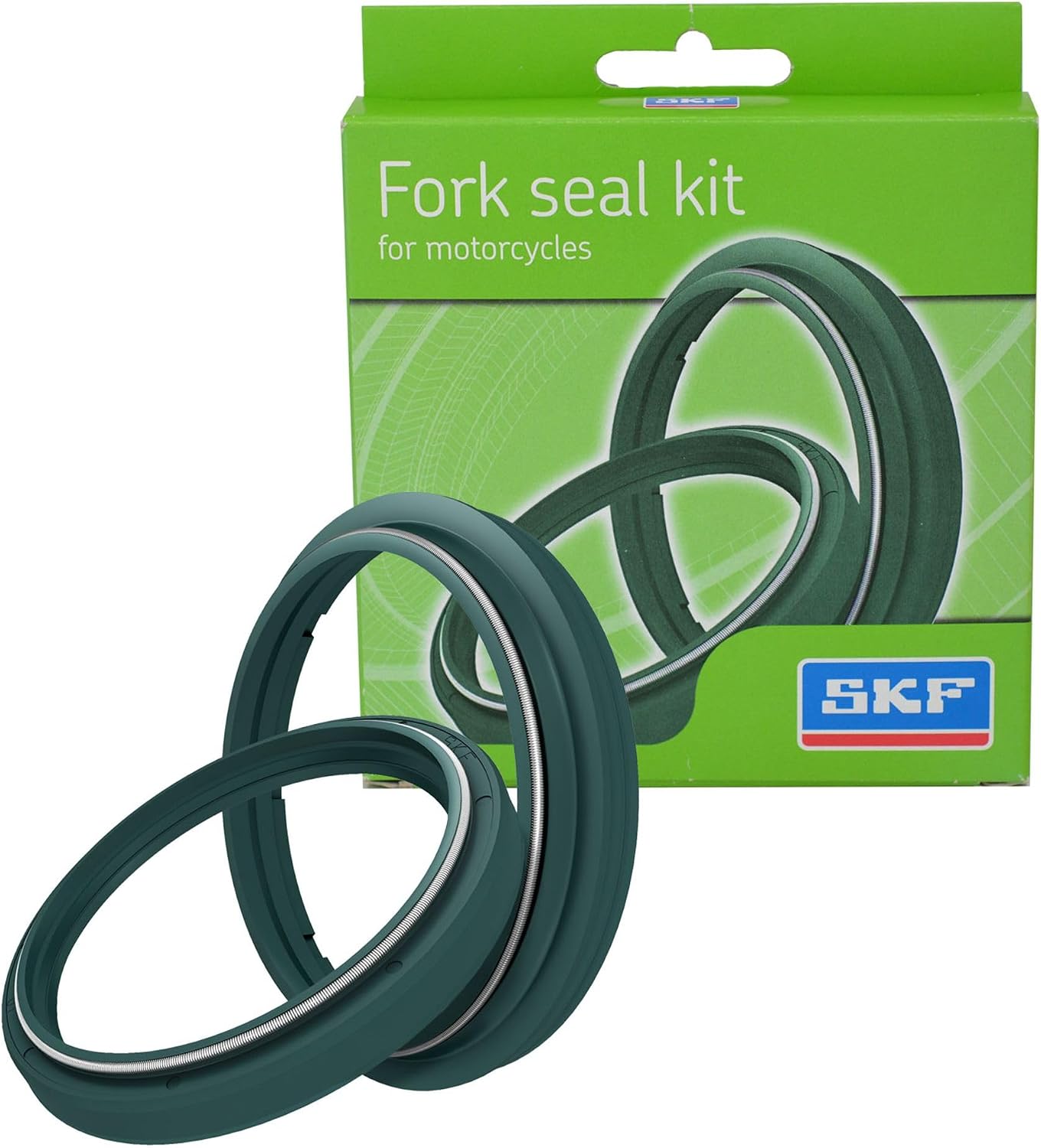
K&S Technologies 16-1009 Fork Oil Seal Set
A budget oil-seal set at true OEM dimensions for 31mm forks. Bring your own dust seals.
Check Price
Pivot Works Fork Seal & Bushing Kit
The only full rebuild here: seals, wipers, bushings, and o-rings for high-mileage forks, from a specialty retailer.
Check Price
My pick is the All Balls Racing 56-129: two oil seals and two dust seals, sized like OEM for the most common street bikes, in one box.
I have resealed forks in a garage more than once, and the worst moment is opening the kit to find the seal doesn’t match the stanchions. That’s why this guide covers two things: the right seal size for your forks, and what’s in the box. Fork seals are not one-size parts. You read the seal code, match it to your fork, then pick your tier: seals only, seals plus dust seals, or a full rebuild with bushings.
These four kits cover every tier, from a budget oil-seal set to a dual-compound race seal at twice the price. If oil is on your fork legs, read our guide to why your motorcycle is leaking or burning oil first.
How Do You Read a Fork Seal Size?
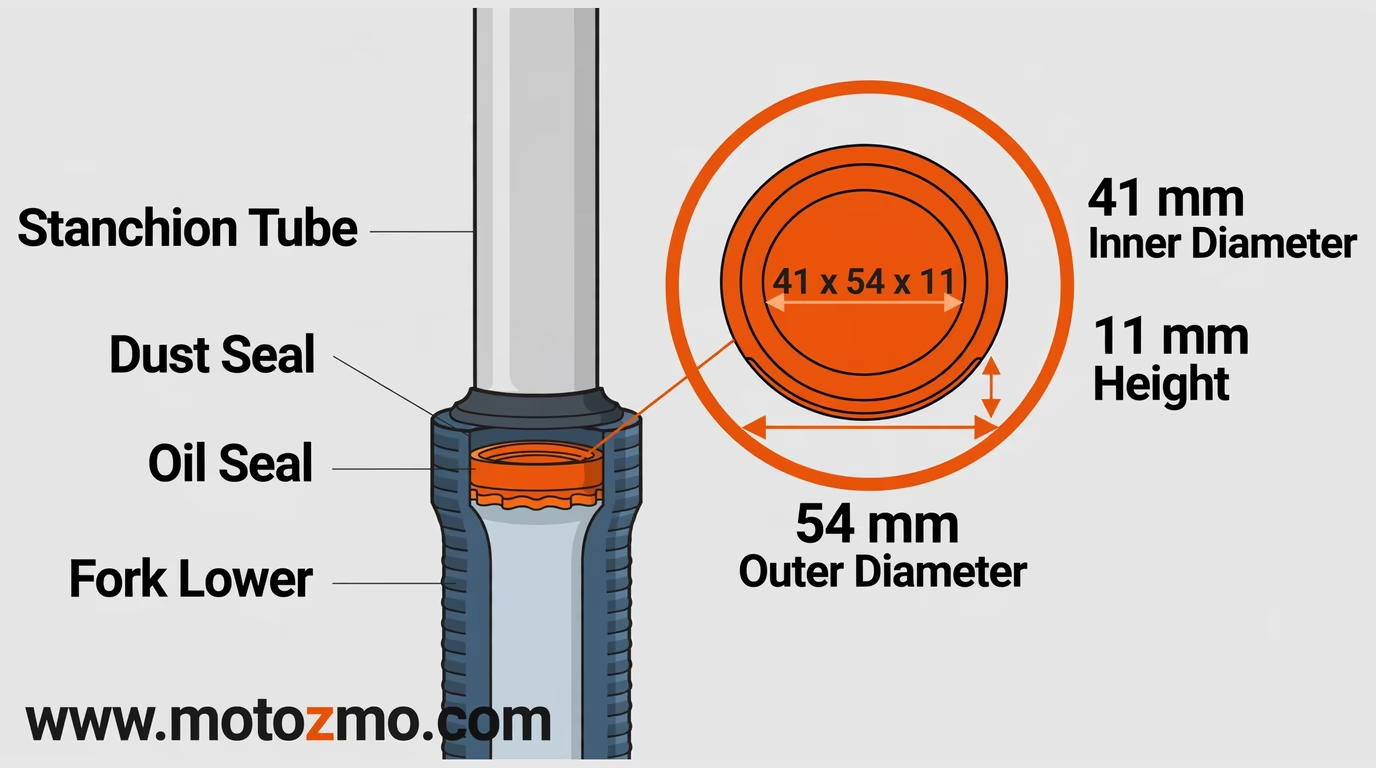
A fork seal code reads inner diameter, outer diameter, and height in millimeters. 41x54x11 means a 41mm stanchion, a 54mm seal outside, and 11mm tall.
Match the number stamped on the old seal, or the parts diagram for your bike’s year and model. A 1mm miss means the seal will not seat, and no amount of grease fixes that.
Diameter alone is not enough on some forks. SKF splits its 43mm line into fork codes (43S, 43K, 43W) because SHOWA, KYB, and WP legs take different seals at the same diameter.
If you buy by diameter alone you can get the wrong kit in the right size. SKF publishes a fork seal fitment chart, worth a look before you order any brand.
A quick reference for the common sizes:
| Stanchion size | Seal code example | What to order |
|---|---|---|
| 31mm (small and older bikes) | 31x43x10.3 | A seal set listed for your bike’s year and model |
| 41mm (most street bikes) | 41x54x11 | A kit listed for your bike’s year and model |
| 43mm SHOWA (dirt and ADV) | 43S / 43K / 43W | Match the fork code, not just the diameter |
Oil on the stanchion does not always mean a dead seal. Worn bushings, scored tubes, or a nicked dust seal can look the same from the outside. Run through the common causes of a motorcycle oil leak before you spend money on the wrong fix.
What’s in the Box?
This is where fork seal kits differ most. “Kit” can mean two rubber rings, or everything short of new fork oil. This DIY fork seal guide from Bennetts walks through a full reseal and shows why the box contents decide how the job goes.
| Kit | Oil seals | Dust seals / wipers | Bushings | O-rings | One box covers |
|---|---|---|---|---|---|
| All Balls Racing 56-129 | 2 | 2 | No | No | Both legs |
| SKF KITG-43S (Green) | 1 | No | No | No | One leg (buy two) |
| K&S Technologies 16-1009 | 2 | No | No | No | Both legs |
| Pivot Works Fork Seal & Bushing Kit | 2 | 2 | Full sets | Yes | Both legs |
Seals-only kits assume your dust seals are still supple. If they are cracked or hard, grit reaches the new oil seal and you do the job twice. And on a high-mileage fork, tired bushings let the sliders rock.
A fresh seal in a sloppy fork starts weeping again within months. That is the case for the full kit at the bottom of this list.
Which Fork Seal Kit Should Most Riders Buy?
Key Features
- Part number 56-129 is catalogued for Honda, Kawasaki, Suzuki, and Yamaha street bikes
- Owner-reported OEM fit on the 1998 Yamaha R1, 2000 Suzuki SV650, and 2017 Yamaha FZ-07
- Thick, pliable seal lips that press into the fork leg without sealant
- One box covers both fork legs: two oil seals and two dust seals
The All Balls 56-129 is the safe default for a street bike: a seals-plus-dust-seals kit for both legs at about $35 to $45, with nothing to reuse from the old assembly except the metal parts.
The seals feel thick and pliable in hand and press in straight, the kind of fit that tells you the molds match OEM. Owners report them fitting like factory on a 98 R1, a 2000 SV650, and a 2017 FZ07, which covers a lot of garage floors.
Two complaints show up and both are worth hearing. One R6 owner had to glue an outer dust seal to keep it seated, so check the dust seals sit right before you close everything up. And one buyer got a kit that didn’t match his Honda Shadow VT1100.
The fix is boring but real: confirm the part number against your bike’s year and model before you order.
My take: this is the kit I would hand a friend doing their first fork seal job. It removes the two classic beginner mistakes, wrong size and missing dust seals, in one box.
The tradeoff is what is missing: no bushings, washers, or snap rings, so on a fork with real miles you are resealing a tired assembly. That is a fine call on a 20,000-mile street bike and a bad one on a 60,000-mile one. You will want a torque wrench for the axle and triple-clamp bolts when it all goes back together.
Best for: street riders doing their first fork seal job.
Is There a Fork Seal That Outlasts the OEM One?
Key Features
- Sized for 43mm SHOWA forks: the S in 43S matters, since 43K and 43W fit other fork makers
- Dual-compound lip with a self-lubricating layer that cuts stiction by about 20%
- Green seal supplied as OEM equipment on KTM and WP forks
- Single-leg packaging: two boxes needed for a full fork pair
This is the seal I point dirt and ADV riders toward when they are tired of redoing fork seals. SKF’s green seal uses a dual-compound, self-lubricating lip that cuts stiction by about 20% versus a standard seal, and it ships as OEM equipment on KTM and WP forks.
Less drag at the seal lip means the seal runs cooler and lives longer. The compound story is worth a read: this XNBR vs NBR seal material guide explains why some rubber outlasts other rubber.
Now the catches, because there are two. First, the box holds one seal for one leg, and the price, about $35 to $40, is per leg. Budget for two boxes or you will be one seal short with the forks apart. Second, the fork code matters as much as the diameter: 43S, 43K, and 43W are different kits for different fork makers, and buyers mix them up. Match the code on the fitment chart linked above before you order.
My take: per bike this costs double the All Balls kit, and it is worth it if your forks see dirt, dust, and pressure washers. For a street bike that never leaves pavement, the extra life is money you will never notice.
Best for: dirt and ADV riders who want the longest-lived seal.
What’s the Cheapest Honest Fix for Weeping Seals?
Key Features
- Matches Honda OEM part 91255-446-013 at 31 x 43 x 10.3 mm
- Oil seals only: dust seals are a separate purchase
- Rated 4.66 stars by shoppers for meeting OEM dimensions
- Suited to 31mm stanchion forks on small and older bikes
The K&S 16-1009 is oil seals and nothing else: a budget set that matches Honda part 91255-446-013 at 31x43x10.3mm and meets or beats the OEM spec, with a 4.66-star shopper rating behind it.
If your dust seals are still soft and your fork is a 31mm small-bike or older-bike leg, this is the cheapest way to stop a weep without buying parts you don’t need.
The honest part of “honest fix”: dust seals are sold separately. If yours are cracked, budget for them too, or the grit that killed the old oil seal kills the new one. And 31mm fitments don’t generalize. This is not the kit for a modern 41mm street fork, so don’t stretch it.
My take: I like that K&S doesn’t pretend to be a kit when it’s a seal set. On an older small bike with good dust seals, it is the right money. Pair it with fresh oil while the forks are open. Our best fork oil picks cover what to pour back in.
Best for: budget-conscious owners of small or older bikes with reusable dust seals.
What If the Forks Need Bushings Too?
Key Features
- Complete box: 2 fork seals, 2 wipers, full bushing sets, and o-rings
- One kit rebuilds both fork legs, with no parts-diagram hunting
- Not stocked on Amazon: sold through Rocky Mountain ATV and MotoSport
- Double-check the SKU: a similarly named seal-only kit exists without bushings
High-mileage forks don’t just wear seals. They wear the bushings the sliders ride on. Put fresh seals in a fork with sloppy bushings and the tubes rock, the lip distorts, and you are redoing the job. The Pivot Works kit is the only box here that treats that as the job: two seals, two wipers, full bushing sets, and the o-rings for both legs.
Watch two things. First, there is no verified Amazon listing. You buy through specialty retailers like Rocky Mountain ATV or MotoSport. Second, Pivot Works sells a similarly named seal-only kit.
Make sure the box you order is the fork kit with bushings, not the fork and dust seal kit. One reviewer also wished it included top-cap o-rings, so check your parts diagram for anything else your bike needs.
My take: on a bike with real miles this is the only sensible buy of the four. It costs two to three times a seals-only kit, and it is still cheaper than opening the forks twice. If your tool roll is thin for this job, our essential tools every motorcycle owner should carry list is worth a look before you start.
Best for: high-mileage bikes getting a full fork refresh.
Which Kit Should You Buy?
Match the seal size first, then pick your tier. First fork job on a street bike: All Balls. Dirt or ADV miles and you want the last seal you buy for a while: SKF, two boxes. Tight budget on a small bike with good dust seals: K&S. Tired high-mileage forks: the Pivot Works full kit.
If the weep is faint and the bike is between services, some riders try an oil stop-leak additive first. Treat it as a patch that buys time, not a fix. The seal still needs replacing.