
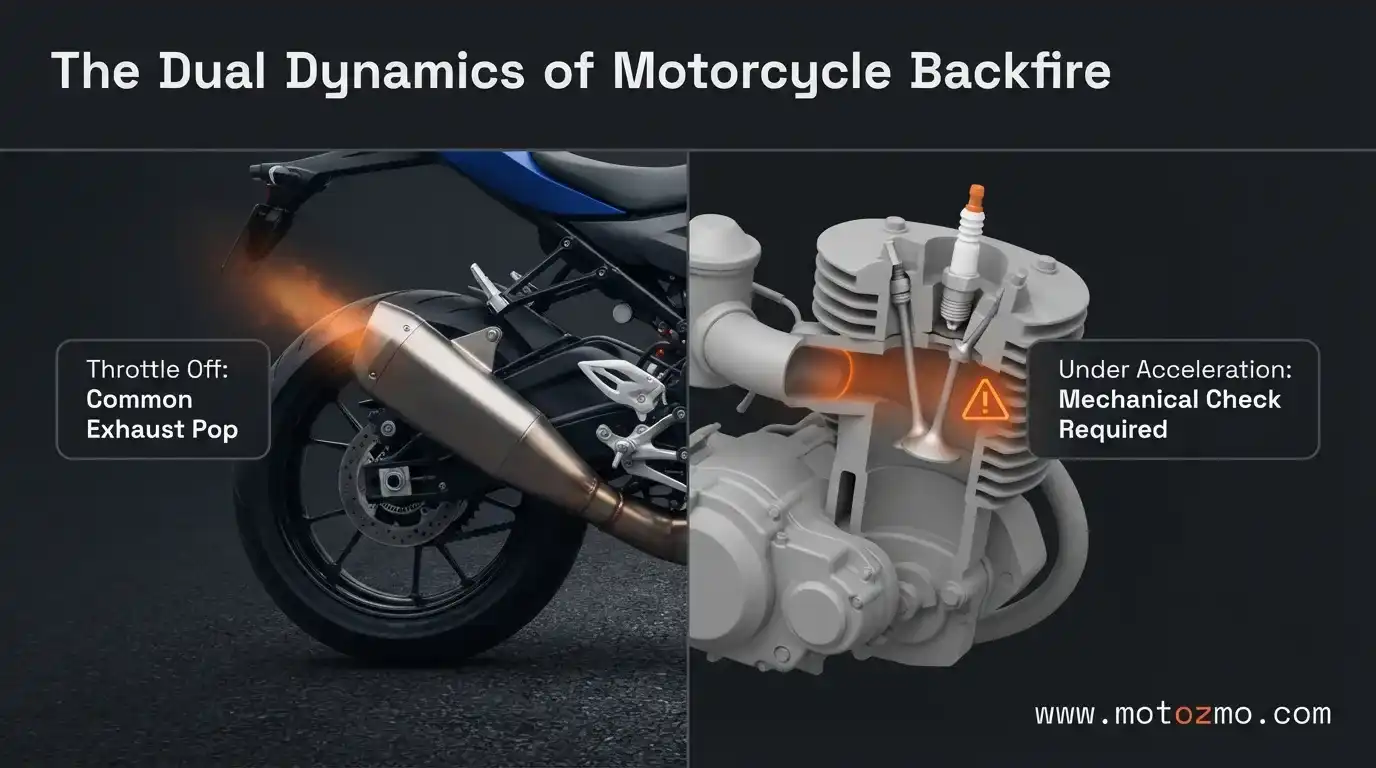
A pop when you roll off the throttle is common. It’s usually a rich or lean fuel mixture, often made worse by an aftermarket exhaust, and it’s rarely something to panic about. A pop or bang under acceleration is much rarer. It usually points to a real mechanical problem, like cam timing or a valve that isn’t sealing, and fuel tuning alone won’t fix it.
That difference is the point of this guide. Below is how to tell which one you’re dealing with, and what to do about it.
Key Takeaways
- Deceleration Pop vs. Acceleration Bang: Popping when closing the throttle is common (usually fuel mixture or exhaust leaks). Loud popping while accelerating signals serious mechanical issues (cam timing, bad valves).
- Backfire vs. Afterfire: True backfire explodes backward into the intake system. Most motorcycle “backfires” are actually afterfires (unburned fuel igniting inside the exhaust).
- #1 Quickest Fix: Worn, fouled, or improperly gapped spark plugs are the most common and inexpensive cause of unexpected pops.
- When to See a Mechanic Immediately: If backfiring occurs during acceleration, is accompanied by sudden power loss, or shows visible flames, stop riding and get a diagnostic scan.
Backfire or Afterfire? A Quick Clarification
A true backfire is rare. It happens when unburned fuel ignites back through the intake instead of the exhaust. What almost every rider means by “backfire” is technically afterfire. That’s unburned fuel igniting in the hot exhaust on its way out, which makes the same loud pop or bang. Same startling noise, different mechanism.
Most of what this article covers, and most of what’s happening on your bike, is afterfire. That’s a less serious situation than fuel actually detonating back through your intake.
For simplicity, this guide uses “backfire” the way most riders do, but the distinction is useful if you keep reading about the mechanism.
The Real Question: Deceleration or Acceleration?
This one distinction settles more than anything else here, so let’s answer it first.
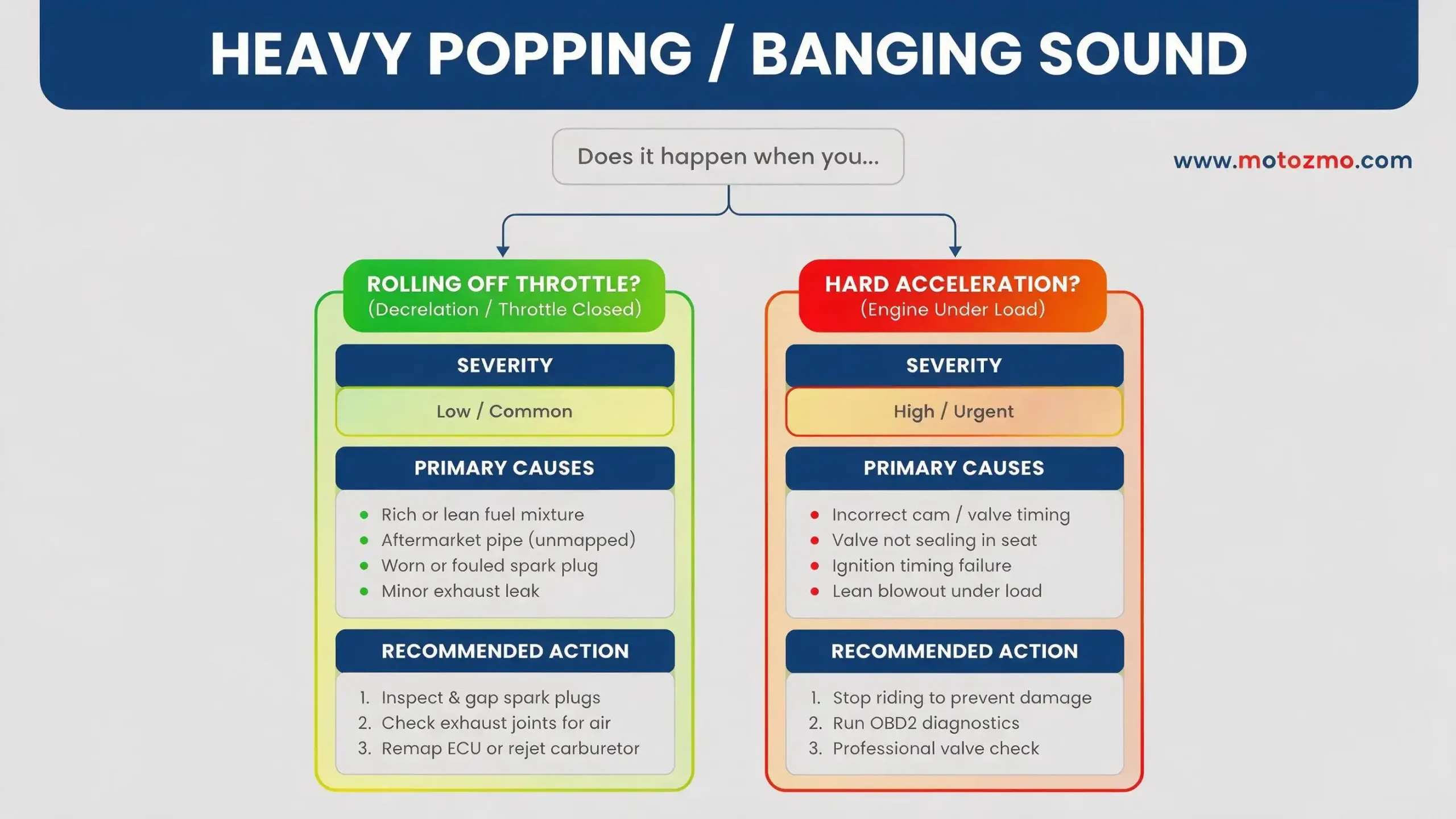
Popping when you roll off the throttle is the common case. It’s usually a rich or lean deceleration mixture. It shows up often right after an aftermarket exhaust install that hasn’t been remapped or rejetted to match the new airflow. It’s annoying, and sometimes loud enough to startle you or people nearby, but mechanically it’s rarely a worry.
Popping or banging under acceleration is a different situation. It’s much less common. It points to a real mechanical problem, like cam timing being off or a valve that isn’t sealing, and adjusting your fuel mixture won’t fix it on its own. If that’s what you’re hearing, read past the common-causes section below. It’s covered in “When It’s Actually Serious.”
The Common, Not-Serious Causes of Backfiring
If your backfire happens on deceleration, these are the usual suspects, roughly in order of likelihood:
- A rich or lean air/fuel mixture. Too much or too little fuel relative to the air entering the engine leaves unburned fuel to ignite later in the hot exhaust.
- An aftermarket exhaust without a matching remap or rejet. Changing the exhaust changes the airflow through the whole system. If the fuel mapping wasn’t adjusted to match, popping on deceleration is a common result.
- Low-quality or dirty fuel. Inconsistent combustion from poor fuel can leave unburned fuel behind more often than it should.
- A minor exhaust leak. A small crack or loose joint lets extra oxygen into the exhaust stream. That can ignite fuel that would otherwise have passed through harmlessly.
None of these are emergencies. All of them are fixable, usually without a big repair bill.
The Most Common Fixable Cause: Worn or Fouled Spark Plugs
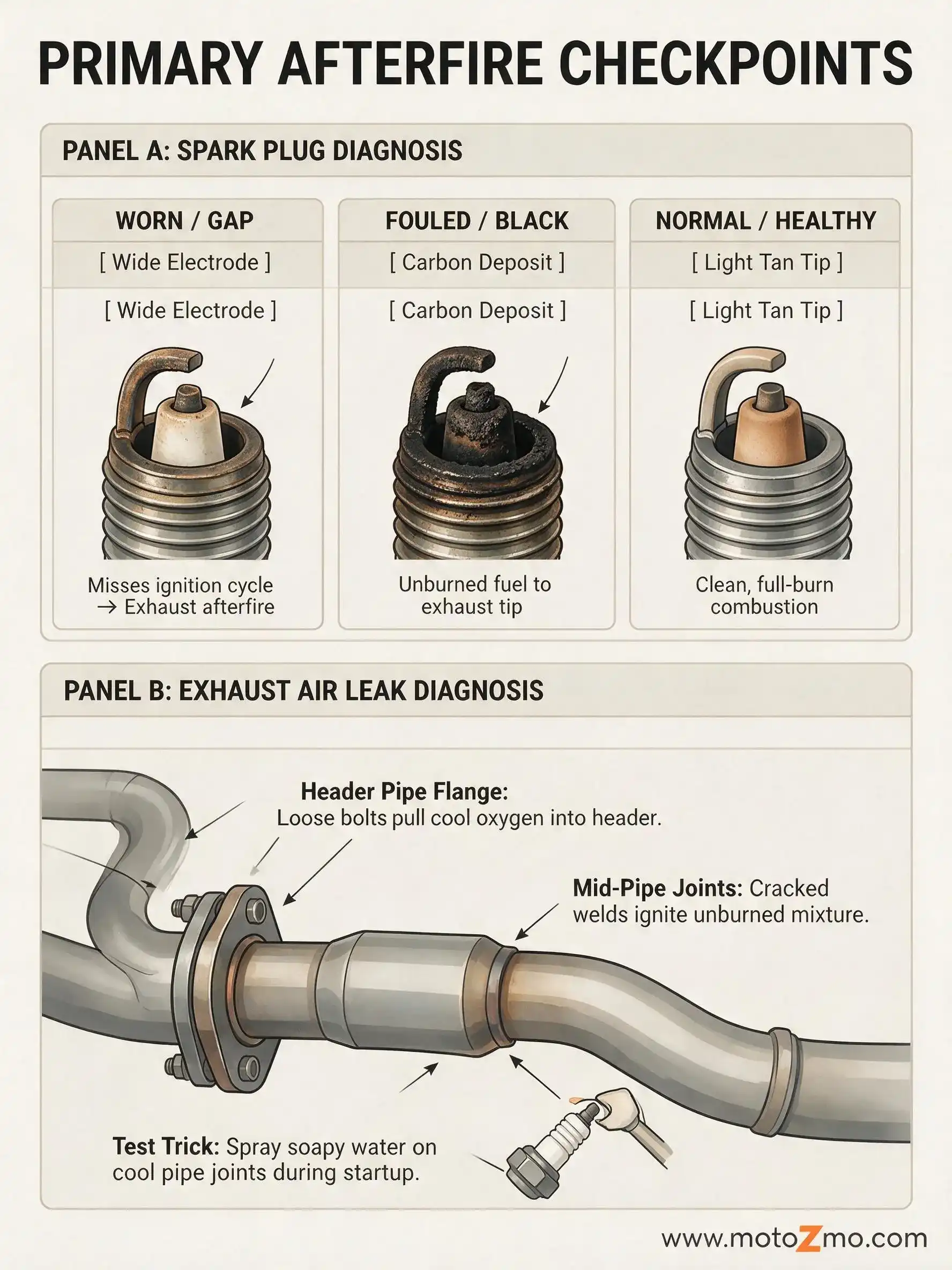
Across nearly every source on this topic, one cause comes up more than any other as both common and cheap to fix: a worn, fouled, or badly gapped spark plug.
When a plug isn’t firing consistently, it lets unburned fuel escape into the exhaust instead of burning cleanly inside the cylinder. That unburned fuel is what ignites in the hot exhaust and makes the pop you’re hearing.
Check this early, because it’s so easy to fix compared with everything else on this list. The plugs actually worth buying covers what to look for if yours need replacing. Whether the iridium upgrade actually helps here breaks down whether the pricier option is worth it for a backfire like this, or whether a standard plug does the job just as well.
When Backfiring Is Actually Serious
A few specific signs mean you’ve moved past “annoying but common” into serious territory:
- Backfiring under acceleration, not just on deceleration. As noted above, this points to a real mechanical problem rather than a simple tuning issue.
- Backfiring paired with a clear loss of power or rough running. A pop by itself is one thing. A pop that comes with the bike running worse is a different signal.
- Backfiring that’s frequent, loud, and getting worse. A trend in the wrong direction, rather than an occasional pop, suggests something is actively failing.
Backfiring during acceleration is a serious, engine-related problem, from causes like cam timing or a bad valve seat seal, and it can’t be fixed with air/fuel mixture adjustments alone, no matter how much tuning you throw at it.
Take it seriously without panicking. A visible flame with a pop is a real, if uncommon, fire risk. Any of the signs above is a good reason to get the bike properly looked at rather than ride on and hope it fixes itself.
Diagnosing Your Motorcycle Backfiring
If you have a fuel-injected bike and want more than a symptom checklist, a scan tool helps here in a way it doesn’t for every electrical problem. It can pull stored fault codes and live data on fuel trim, throttle position, and ignition timing.
Fuel trim readings show whether the engine computer is compensating for a rich or lean condition in real time, which turns “is it running rich or lean” from a guess into a measurement. That’s a useful shortcut over swapping parts one at a time and hoping.
If you’re shopping for a scan tool, here’s what to look for: the best OBD2 scanner for motorcycles. Motorcycles aren’t standardized the way cars are, so compatibility with your specific bike matters more than the tool’s feature list.
The Bottom Line
The deceleration-versus-acceleration split is the answer here. A pop when you roll off the throttle is common and usually just a mixture or exhaust issue. A pop or bang under acceleration is rare and points to something mechanical. Check the easy, cheap cause first, so start with the spark plugs. If you’re hearing this under acceleration, or with lost power, or getting worse over time, get it properly diagnosed instead of riding on and hoping.
FAQs
Is it bad if my motorcycle backfires when I let off the gas?
Usually not. Popping on deceleration is the common case, usually a rich or lean mixture, and on its own it’s rarely a sign of serious trouble.
Can backfiring damage my engine?
The common deceleration case rarely causes damage by itself, though it’s worth fixing rather than ignoring. Backfiring under acceleration is different. It points to a mechanical issue that can cause real damage if left alone.
Why did my bike start backfiring after I installed an aftermarket exhaust?
This is very common. A new exhaust changes the airflow through your engine. If the fuel mapping wasn’t remapped or rejetted to match, popping on deceleration is a typical result.
Does backfiring mean I need new spark plugs?
Not always, but it’s one of the most common and cheapest causes to check first. A worn or fouled plug lets unburned fuel escape into the exhaust, which is what makes the pop.