
Top Picks For You
NGK DPR8EIX-9 Iridium IX
An ultra-durable upgrade that stabilizes idle and crispens response in high-RPM engines. Premium anti-fouling geometry makes it ideal for performance-tuned bikes and air-cooled applications running hot.
Check Price
NGK BR8ES Standard Copper
High thermal conductivity delivers raw, predictable ignition at a fraction of the cost. Perfect for frequent maintenance schedules, vintage restorations, and budget-conscious riders seeking factory-matched reliability.
Check Price
E3 E3.34 DiamondFIRE
Innovative multi-point ground strap exposes maximum flame front to the combustion chamber. An ideal choice for custom builds when properly gapped to match your engine’s specific timing spec.
Check Price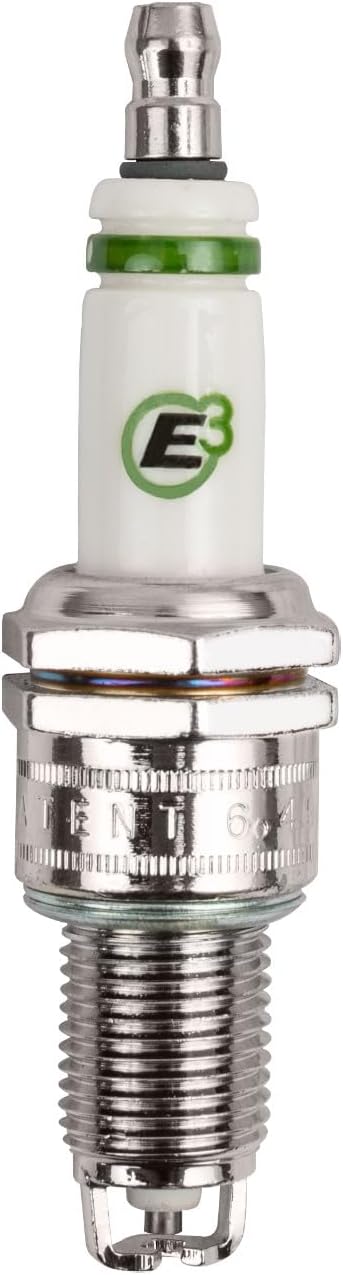
NGK DCPR7EIX (Harley-Davidson / Big Twins)
Tailor-made for heavy V-twins running hot under heavy loads. Protects upstream ignition components while preventing spark blowout during hard acceleration and heavy highway cruising.
Check Price
The NGK Iridium IX is the safest default pick for most riders. It’s the top choice across nearly every major bike manufacturer’s ignition system, with a long service life and OEM-level reliability.
But before you buy any plug on this list, know this. The best one for you depends on your specific bike’s fitment, not a general ranking. Here’s how four very different options compare, and the one buying mistake that matters more than brand loyalty.
What Matters Before You Buy
Exact Fitment Comes First, Before Brand and Material
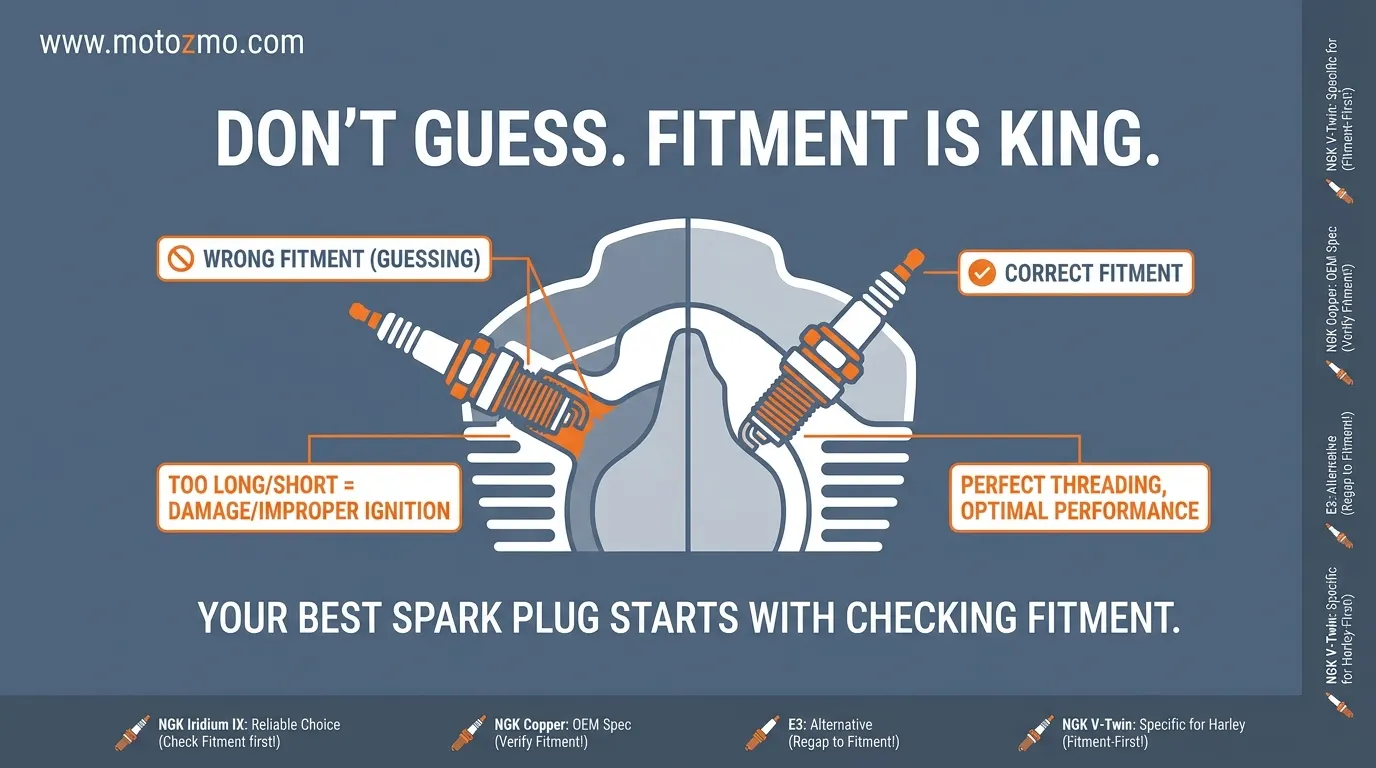
This is the biggest mistake you can make. Heat range, thread size, and reach all have to match your specific bike exactly.
Guessing by what “seems close” or what fits a similar-looking engine is how you end up with a plug that’s the wrong length for your cylinder head. On an aluminum engine especially, that can mean real damage, not just a bad fit.
Check your owner’s manual or a manufacturer cross-reference tool before you buy anything on this list. Every product below is excellent for the job it’s built for, and wrong for one it isn’t.
Material Tier (Don’t Overthink This Part)
Copper is the cheapest and shortest-lived option. Iridium lasts the longest and costs the most. Whether the iridium upgrade is worth the extra money for you deserves its own answer, not a quick generalization here.
Which material actually matters for your riding breaks down that tradeoff in depth. And if your bike has been backfiring, start by understanding why that happens.
A worn or fouled plug is one of the most common and cheapest causes to fix. Knowing that up front will help you decide which pick below solves your problem.
Best Overall: NGK DPR8EIX-9 Iridium IX
Iridium core · Laser-welded 0.6mm tip · Triple gasket seal
Key Features
- 0.6mm fine-wire tip minimizes voltage demand to ensure crisp ignitability during cold starts
- Trivalent metal plating provides anti-seizing and anti-corrosion protection without needing anti-seize compound
- Integrated resistor protect modern digital dash gauges and ECU sensors
- Thermo-edge design prevents carbon buildup in stop-and-go traffic
This plug shows up again and again as the top recommendation across nearly every major manufacturer’s ignition system, and it earns that reputation. The 0.6mm laser-welded iridium tip delivers a stable spark.
The tapered ground electrode reduces the electrical quenching effect that can rob a cylinder of a clean burn. The triple gasket seal keeps combustion gas from leaking past the threads over the plug’s service life.
The spark plug is a good option when you want one dependable upgrade that sharpens throttle response and gives easier starts, whether you’re running a smaller dirt bike or an air-cooled V-twin.
Air-cooled twins run hotter than liquid-cooled engines. If your engine’s real operating temperature matches the plug’s heat range, you’ll experience crisper throttle feel and easier starts.
If you regap this plug yourself, be careful. The iridium tip is delicate compared to a standard electrode, and it’s easy to damage if you aren’t gentle.
One thing to take seriously before you buy: counterfeit NGK plugs are a real, documented problem, especially on iridium models where a convincing fake earns the most profit. NGK’s advice is to buy only from authorized retailers and inspect the lot number stamped on the hex if you have any doubt.
If you question a set you’ve bought, NGK’s product support team can usually verify it from a few clear photos. That’s five minutes well spent for something sitting inside your cylinder head.
Best Budget/OEM Replacement: NGK BR8ES Standard Copper
Nickel electrode · 14mm thread · Original equipment spec on many bikes
Key Features
- Solid copper core provides superior thermal conductivity
- Nickel alloy sheath prevents rapid electrode degradation under high thermal cycling
- Corrugated ribbing prevents flashover misfires along the ceramic insulator body
- COEM factory spec matches exact factory ignition tolerances for vintage and standard Japanese motorcycles
If you want a straightforward, no-drama replacement for a worn stock plug, this does exactly that and nothing more. For a lot of riders, that’s the point. NGK is the world’s largest OEM spark plug supplier, and this standard copper-core plug is often the exact part your bike left the factory with.
Go for it if you’re doing routine maintenance, not chasing a performance upgrade, and you want a plug that fires up reliably from the first crank.
It won’t match the iridium plug’s service life, so expect to replace it more often. In exchange you get a lower price on a part you’re comfortable swapping on a regular schedule anyway.
Best Alternative Design: E3 E3.34 Spark Plugs (DiamondFIRE)
Copper core · Patented dual-leg ground electrode · Replaces common Champion and NGK part numbers
Key Features
- DiamondFIRE edge-to-edge design forces the spark closer to the air-fuel mixture for faster flame kernel expansion
- Dual-leg ground strap accelerates heat transfer out of the electrode to reduce localized hot spots
- Multi-fit cross compatibility replaces a wide range of standard Champion and NGK thread configurations
This one earns its spot because E3’s DiamondFIRE design is a different approach, not just a different material. Instead of a single ground electrode, a patented two-leg design aims to improve heat transfer and deliver a more complete burn. The manufacturer says this can improve power and fuel economy in the right application.
Choose this if you’re comfortable checking and adjusting your own gap rather than trusting an out-of-box setting. That’s the most important tip for this plug.
Some E3 plugs ship with a narrower factory gap (around .020 to .023″) than certain bikes call for, including many Harleys (often around .040″).
You may see no change at all if install this plug straight from the package without checking the gap. But taking a few minutes to open the gap to spec will give you a clear difference: faster starts, less time on the choke, smoother idle, and better low-end response.
Be skeptical of the specific performance percentages on the box. Independent dyno testing of spark plug designs in powersports applications has generally found that plugs alone rarely deliver dramatic horsepower gains.
A properly gapped plug in the correct heat range matters far more than the electrode geometry. That doesn’t make this a bad plug. It just means you should treat the marketing numbers as a claim, not a guarantee.
Best for Harley-Davidson Twin Cam / Classic Big V-Twins: NGK Iridium IX DCPR7EIX
Iridium core · Pre-gapped · Compatible with 1999 to 2016 Harley-Davidson Twin Cam
Key Features
- V-twin heat range tuning is engineered to withstand severe thermal heat cycles in heavy air-cooled V-twin engines
- Low voltage requirement reduces stress on starter motors, coils, and aging battery systems during crank
- High-alumina ceramic insulator resists thermal shock during sudden transitions from highway speeds to idling
This is a different NGK iridium part number from the Best Overall pick, for a reason. It’s matched to the Twin Cam’s ignition system rather than a general-purpose fitment. That’s the fitment-first principle this whole guide keeps coming back to.
The tiny center electrode reduces the voltage your ignition system needs to fire a clean spark, which extends the life of the ignition parts upstream of the plug. The plating on the metal shell resists corrosion over a long service life.
Choose this plug if you’re running a Twin Cam, maybe with other mods already in place like aftermarket exhaust, a reprogrammed ECU, or different pipes, and you want an ignition part that keeps up instead of becoming the weak link.
Installing the plugs on a 1999 to 2016 Twin Cam will provide quicker firing, smoother idle, and crisper throttle response right away, with clean, correct fitment as a matched pair out of the box. For a bike you ride regularly, it’s a worthwhile upgrade over a standard plug, not a marginal one.
The Bottom Line
Fitment comes before brand, and brand comes before marketing claims. Get the heat range, thread size, and reach right for your specific bike first, and every plug on this list will do its job well. The NGK Iridium IX is the safe, proven default for most riders. The standard copper plug covers routine maintenance without overspending. The E3 is worth trying if you’ll verify the gap yourself. The DCPR7EIX is the right call for a Harley Twin Cam. And if you landed here because your bike’s been backfiring, a fresh, correctly gapped plug in the right heat range is very often the fix.
FAQs
How do I find the right spark plug for my specific bike?
Check your owner’s manual for the exact part number or spec, or use a manufacturer’s cross-reference tool with your bike’s make, model, and year. Never assume a plug that fits a similar-looking bike will fit yours.
Can worn spark plugs cause backfiring?
Yes. A worn, fouled, or badly gapped plug is one of the most common causes of a motorcycle backfiring, since it lets unburned fuel escape into the exhaust instead of combusting cleanly.
How often should motorcycle spark plugs be replaced?
It varies by plug material and riding conditions, but iridium plugs generally last much longer than standard copper plugs before they need replacing. Check your owner’s manual for a baseline interval and adjust based on how the bike is running.
Do new spark plugs need to be gapped before installing?
Some come pre-gapped correctly for a specific application. Others ship with a generic gap that needs adjusting to your bike’s spec. Always check the gap against your owner’s manual before installing, even on a plug labeled “pre-gapped.”