
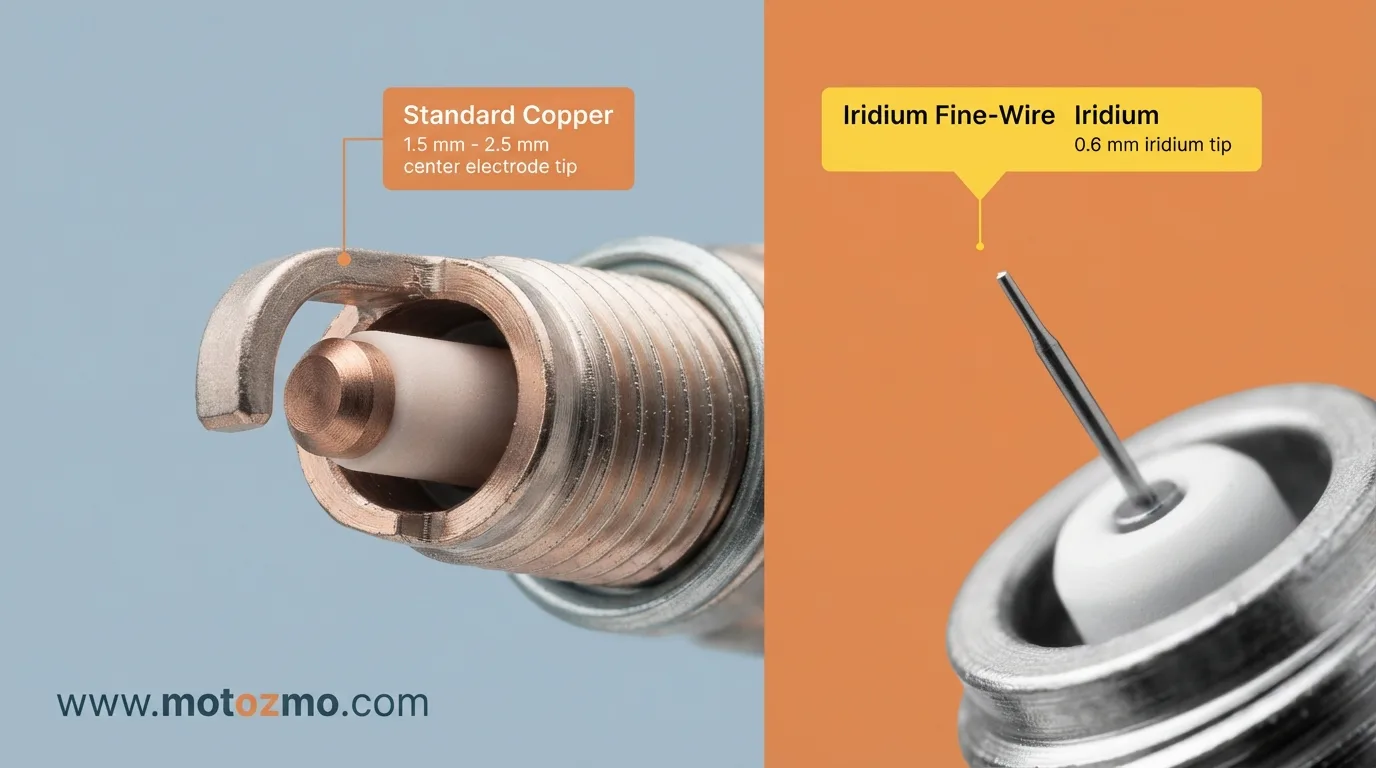
Real-world testing shows iridium plugs make little to no measurable difference in raw power over standard copper plugs. The honest case for iridium is that it lasts two to three times longer, holds its gap more consistently, and resists fouling better in stop-and-go riding.
That is a different pitch than how iridium usually gets marketed to you. You should hear it before you spend the extra money. The real decision isn’t “which one makes my bike faster,” it’s whether that longer life is worth the upfront cost for how you ride.
Key Takeaways
- Power Output is Identical: Dyno tests confirm iridium plugs produce no measurable horsepower gain over correctly gapped standard copper plugs.
- The Real Benefit is Lifespan: Iridium plugs last 2x to 3x longer and maintain a consistent gap, resisting wear and carbon fouling.
- Easier Starting: Fine-wire iridium electrodes require significantly lower ignition voltage to spark, improving cold starting and idle stability.
- Difficulty of Access Drives Choice: Upgrade to iridium if changing plugs on your motorcycle requires removing fairings or tight engine dismantling. Stick with copper if maintenance access is simple.
- Heat Range Rules All: Choosing the correct heat range according to your owner’s manual matters far more for engine safety than deciding between iridium or copper.
What Actually Makes Iridium Different
If you haven’t picked a specific plug yet, the full picks by material and fitment are a good read alongside this comparison. But first, here is what separates the two materials.
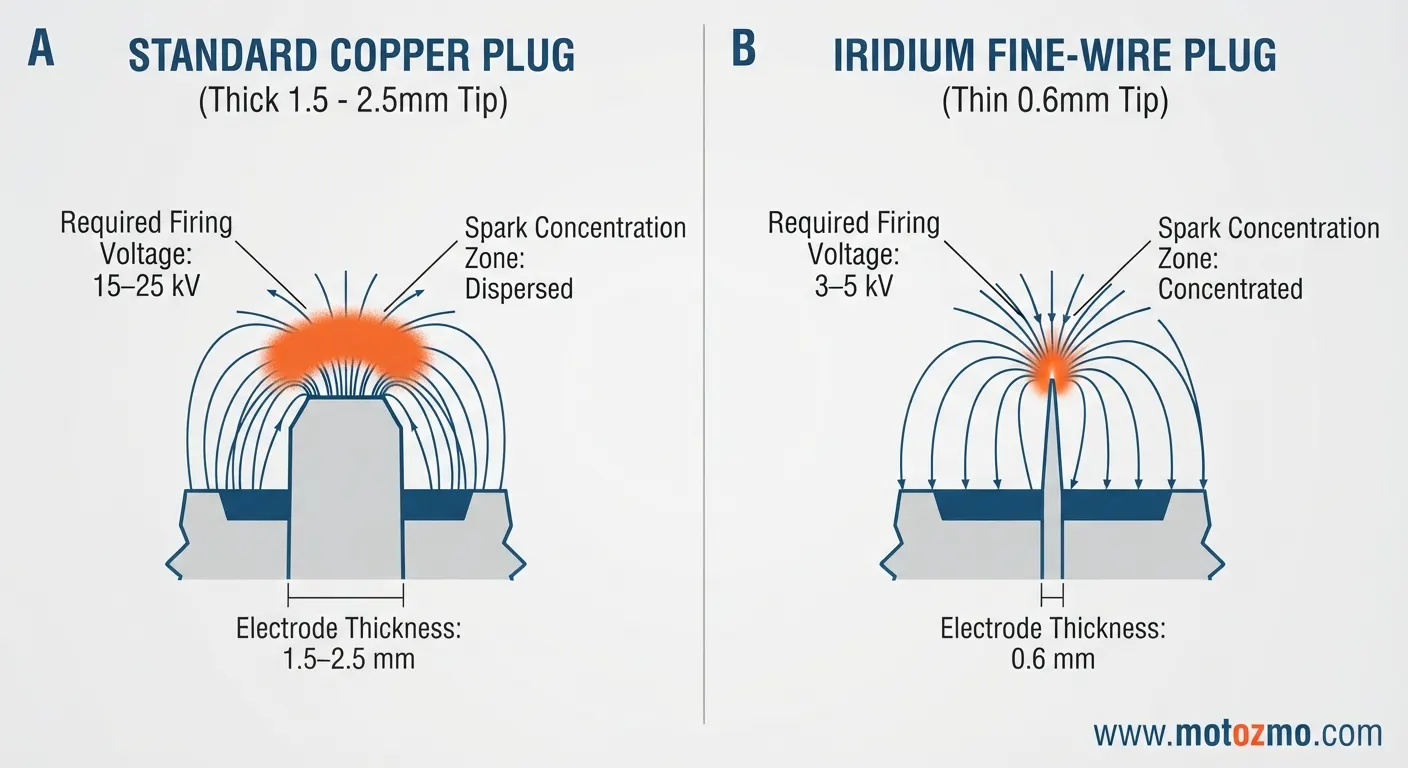
An iridium plug’s center electrode is much thinner than a standard copper plug’s. It’s often as fine as roughly 0.6mm, compared to copper’s noticeably thicker electrode.
That’s possible because iridium has an extremely high melting point and resists erosion far better than the softer nickel alloy copper plugs use. Manufacturers can machine it down without losing durability. That thinner electrode does require less voltage to fire a spark.
The physics is real, not just marketing. It also erodes far more slowly over the plug’s service life, which is where the real case for iridium lives.
Does Iridium Actually Add Power?
Most spark plug marketing glosses over this, so let me state it directly. Real-world dyno testing consistently shows little to no measurable horsepower difference between iridium and standard plugs when both are correctly gapped and matched to the right heat range.
You may experience slightly easier starting or a touch more smoothness, especially on cold mornings. But nothing close to the dramatic power gains some product marketing implies.
That’s not a knock against iridium. It’s a more honest starting point for the decision you’re actually making. That decision has nothing to do with horsepower and everything to do with what’s covered next.
Where Iridium Wins: Lifespan and Consistency
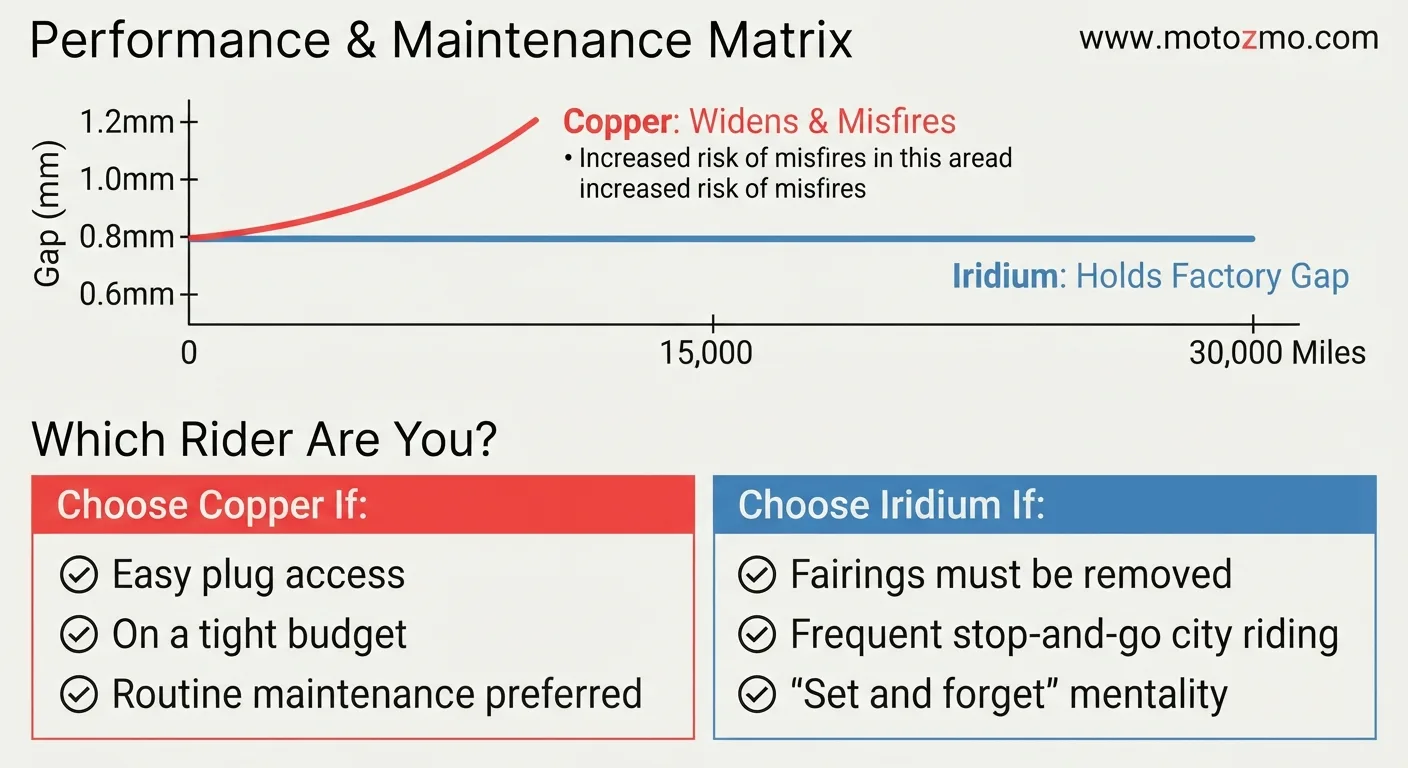
This is where the extra cost earns its keep. Iridium plugs typically last two to three times longer than standard copper plugs before they need replacing. The harder, more erosion-resistant material holds its shape over many more miles.
That gives you two practical benefits beyond longer life. The electrode gap stays more consistent over time, instead of gradually widening the way a softer copper electrode does. And iridium generally resists fouling better during stop-and-go city riding, where a plug spends more time at low RPM and is more prone to carbon buildup.
If you ride mostly in stop-and-go traffic, or you just don’t want to think about your plugs for a long stretch, that combination is the real value.
Where Copper Still Makes Sense
Plenty of riders don’t need to upgrade, and I’ll say so directly. Copper’s lower upfront cost is real savings if you’re on a budget or maintaining more than one bike. It also technically offers a larger spark surface area than iridium’s fine-wire design. Some riders and mechanics consider that a minor advantage in certain older or simpler ignition systems.
And if plug access on your bike is easy, with no fairings to remove and no awkward cylinder positioning, the “set it and forget it” argument for iridium matters a lot less. Swapping a copper plug more often isn’t a real hassle for you.
Heat Range Is a Separate Decision From Material
Let me be precise here, because this is a common point of confusion. Heat range is how quickly a plug dissipates heat, matched to your riding style and RPM range. It’s a completely different spec from material choice. You can buy the correct heat range in either copper or iridium. You can just as easily buy the wrong heat range in either one.
Choosing iridium doesn’t automatically mean you’ve also chosen the right heat range for your engine. Mixing up the two is an easy mistake when you’re comparing options side by side. Always confirm heat range against your owner’s manual, no matter which material you land on.
Who Should Upgrade Their Spark Plugs
The upgrade makes sense if plug access on your bike is difficult. Fairings, tight cylinder positioning, anything that turns a routine swap into a real chore. It also makes sense if you’d rather set it and forget it for a few years instead of thinking about plugs on a regular schedule.
It’s a solid call too if you ride mostly in stop-and-go conditions that foul plugs faster than open-road riding does.
Copper is still a perfectly reasonable choice if you’re on a budget, don’t mind the more frequent swap, or just want the simplest maintenance routine. Neither choice is a mistake. It comes down to your priorities, not a right answer and a wrong one.
And if the reason you’re comparing plugs at all is a backfiring bike, understand the actual causes first. A worn or badly gapped plug of either material is a common, cheap fix. Knowing that up front can save you from overspending on a material upgrade that isn’t your problem.
The Bottom Line
There is no way to just plainly label iridium as the better option. Iridium and copper perform almost identically in raw output. The real case for iridium is a longer service life, a more consistent gap, and better fouling resistance, not more power. Choose based on how you actually ride and how much you value not thinking about your plugs for a few years. Not on a horsepower promise neither material can deliver.
FAQs
Do iridium spark plugs really last longer than copper?
Yes. Typically two to three times longer, thanks to iridium’s much higher resistance to electrode erosion compared to copper’s softer nickel alloy tip.
Can I put iridium plugs in an older or carbureted bike?
In most cases, yes, as long as the heat range and physical fitment match your bike’s spec. Material choice and heat range are separate decisions. Confirm both rather than assuming iridium is a drop-in upgrade for every application.
Do iridium plugs increase horsepower?
Not really. Real-world dyno testing shows little to no measurable power difference between correctly gapped iridium and copper plugs. The real benefit is longer life and consistency, not raw output.
Is it safe to widen the gap on an iridium plug?
Handle it carefully. The ultra-fine electrode tip that makes iridium effective is also more delicate than copper’s thicker electrode. It’s easier to damage while regapping if you’re not gentle with the tool.