Change your motorcycle’s brake fluid every one to two years, based on the calendar, not your odometer. A bike that’s covered 15,000 miles and a bike that’s sat in a garage for the same two years both need it, since the thing that wears the fluid out isn’t friction or miles, it’s moisture soaking in from the air a little at a time.
Most riders check the wrong thing when they try to judge this themselves, which is what this page is about: how to tell when your fluid needs it, rather than guessing. For the full picture on pads, fluid, and bleeding, our full brake maintenance guide covers the rest of this cluster.
Why Is This Based on Time and Not Mileage?
Brake fluid on almost every bike is glycol based, and glycol is hygroscopic, meaning it pulls moisture straight out of the air around it. That happens whether the bike is parked in a garage or ridden every day, since the moisture gets in through tiny gaps in seals and hoses and even through the rubber lines themselves, not when someone opens the reservoir cap.
A bike sitting still for two years is absorbing water the entire time, at roughly the same rate as one that’s out on the road every weekend. That’s why the interval is written in years, not miles.
What’s Happening Inside the Fluid
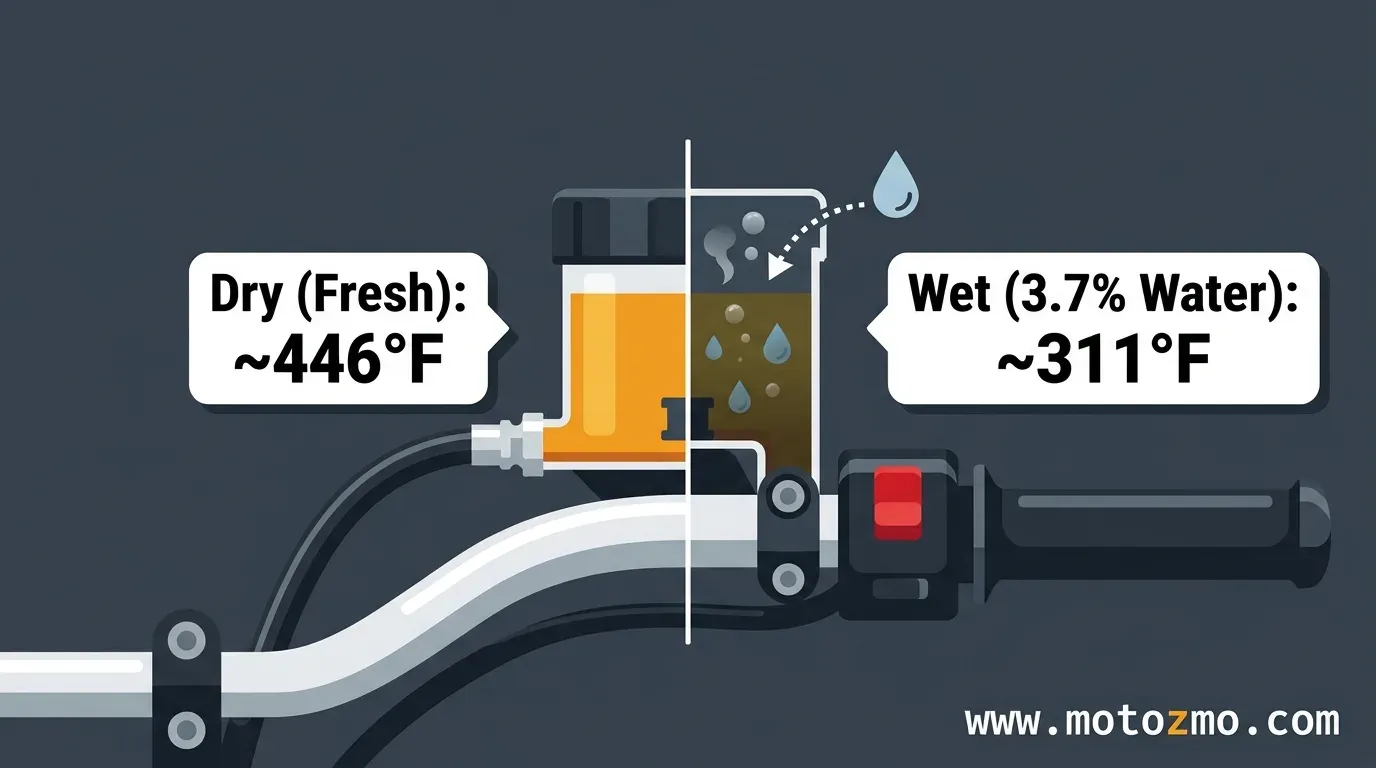
Fresh DOT 4 fluid has a dry boiling point of around 446°F. Once it’s absorbed enough water to reach the saturation point brake engineers test for, about 3.7% water by volume, that boiling point drops to roughly 311°F, a fall of well over 100 degrees. Once the fluid gets that hot under hard or repeated braking, the water inside it turns to vapor, and vapor compresses instead of pushing fluid through the lines the way a solid does. That’s what a spongy or fading brake lever is: gas bubbles where solid fluid should be.
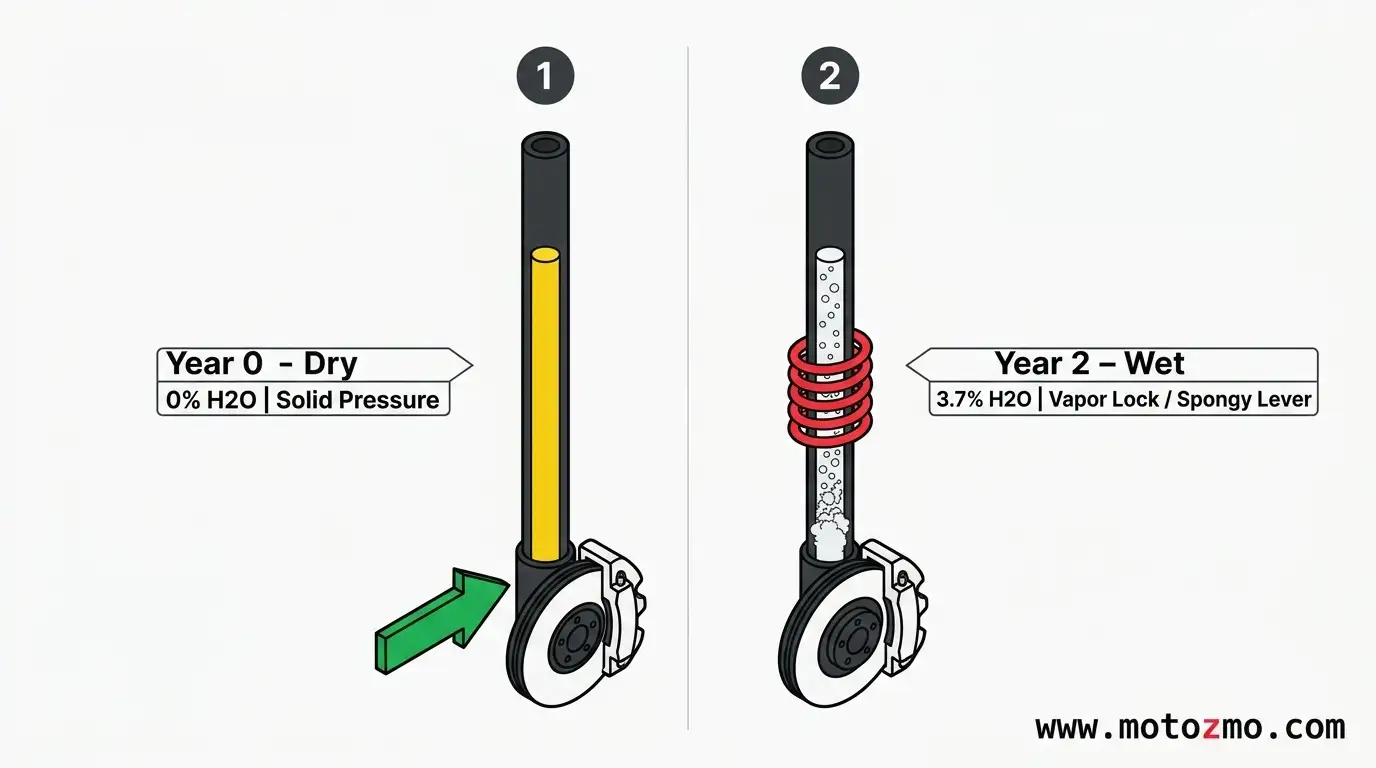
DOT 3 fluid, which absorbs water even faster than DOT 4, can pick up close to 2% water in a single year, which puts it within reach of that saturation point right around the two-year mark most manufacturers recommend.
| Condition | Typical boiling point |
|---|---|
| Fresh DOT 4, straight from the bottle | About 446°F |
| DOT 4 after absorbing about 3.7% water | About 311°F |
Don’t trust the color alone. A lot of riders tell you to change the fluid once it looks dark. Color is a real signal of degraded fluid, but it isn’t a reliable one, since fluid can pick up enough water to lower its boiling point well before it visibly darkens. Waiting for a color change is closer to waiting for a symptom than checking the thing that matters, which is how much water is in there.
A Simple Way to Check the Fluid
A brake fluid test strip gives you a real answer in under a minute, and it costs only a few dollars for a whole pack. Dip the strip in the fluid at the reservoir, compare the color change against the chart it comes with, and you’ll get a moisture percentage rather than a guess based on how the fluid looks.
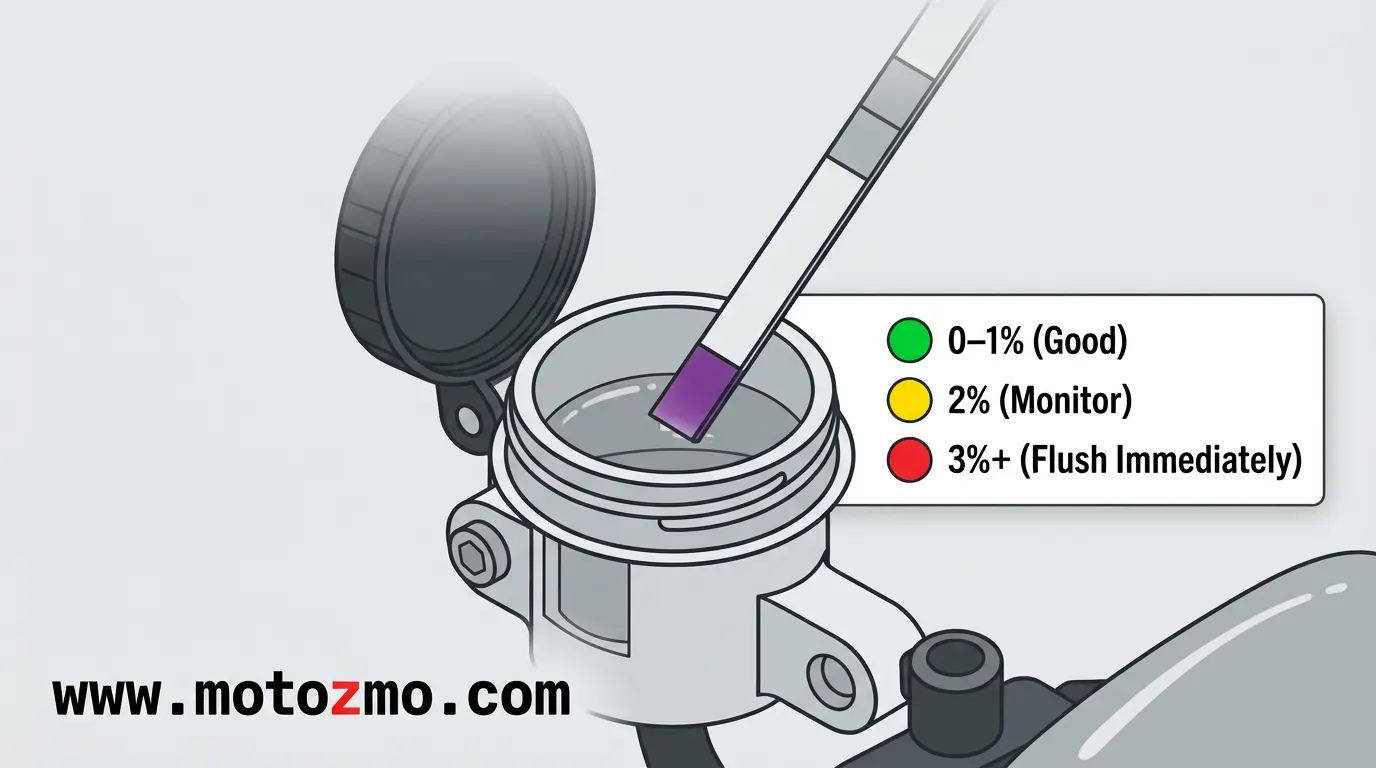
This is worth doing on a bike where you’re not sure how long it’s been since the last change, or one you’ve just bought used, before you assume the two year default still has time left on it.
Does the Type of Fluid Change the Interval?
Mostly no, with one real exception. DOT 3, DOT 4, and DOT 5.1 are all glycol based and hygroscopic, so the two year guideline applies to all three.
DOT 5 is different: it’s silicone based rather than glycol based, and silicone doesn’t absorb water the same way, which changes the whole reason a time-based interval exists in the first place. DOT 5 is uncommon on modern motorcycles and isn’t interchangeable with the others, so if you’re not sure which one is in your bike, our DOT 4 vs. DOT 5 comparison covers the difference before you decide anything about timing.
What Pushes You Toward the Shorter End of the Range
| Your situation | Lean toward |
|---|---|
| Humid or coastal climate | The 1 year end |
| Track days, hard braking, or mountain riding | The 1 year end |
| Bike has ABS | The 1 year end, since a contaminated ABS module is a far more expensive fix than a caliper |
| Mild climate, mostly easy street riding | The 2 year end |
| You already checked with a test strip and it reads low | Whichever the strip shows |
ABS deserves its mention here. A standard caliper is a simple, cheap part to service if old fluid has caused internal corrosion. An ABS module has much finer internal passages and valves, and cleaning or replacing one because it sat full of contaminated fluid for years is a far bigger repair bill than a routine flush would have been.
Once You Decide It’s Time
Flushing brake fluid is a job most riders can do themselves with the right tool. Our roundup of brake bleeder kits covers the options for getting the old fluid out and the new fluid in without trapping air in the line.
And since you’re already working on the brakes, it’s a natural point to check pad wear at the same time. Our picks for brake pads is worth a look if you haven’t checked yours in a while either.
Federal Standards Behind All of This
Brake fluid sold in the US has to meet Federal Motor Vehicle Safety Standard 116, which is the regulation that defines both a dry boiling point and a separate, lower wet boiling point for every DOT-rated fluid. That distinction exists because regulators recognize that all glycol-based brake fluid will absorb water over its service life, and a fluid needs to keep working safely even after it has.
Can I Top off My Brake Fluid Instead of Changing It?
Topping off replaces what’s low, but it doesn’t remove the water already dissolved in the fluid that’s still in the system. If the fluid is genuinely due, topping off buys you very little, since the bulk of what’s already in the lines is still the same aged fluid.
Is It Bad to Go Longer Than 2 Years If the Bike Barely Gets Ridden?
It’s a smaller risk than for a bike ridden hard, but the moisture absorption doesn’t stop just because the bike is parked. A test strip is the easiest way to find out if a low-mileage bike needs it yet rather than guessing either way.
The two-year number is a reasonable default for most riders, but it’s a starting point, not a rule that overrides what’s in your lines. A cheap test strip tells you more in a minute than staring at the color ever will.