Affiliate disclosure: This post may contain affiliate links. If you buy through a link on this page, MOTOZMO may earn a small commission at no extra cost to you. It helps keep our guides free. How we test and choose products.
Your waterproof gear isn’t dead. Its DWR coating is. Wash it with tech wash, tumble dry it on low heat to wake the coating back up, and reproof the spots that still soak through.
I learned this the hard way two seasons ago when my rain suit started drinking water through the shoulders. I priced a replacement, then a riding buddy told me to wash the thing first. It beaded like new after one wash and twenty minutes in the dryer.
Waterproof motorcycle gear rarely fails. What fails is the durable water repellent (DWR) finish on the outside, and dirt kills it faster than rain ever will.
This is the rider-specific routine I use now: strip the armor, wash it right, heat it, and reproof it. If your jeans are the problem, start with my guide to the best waterproof motorcycle jeans and wash them before you replace them.
Why Water Soaks into “Waterproof” Gear
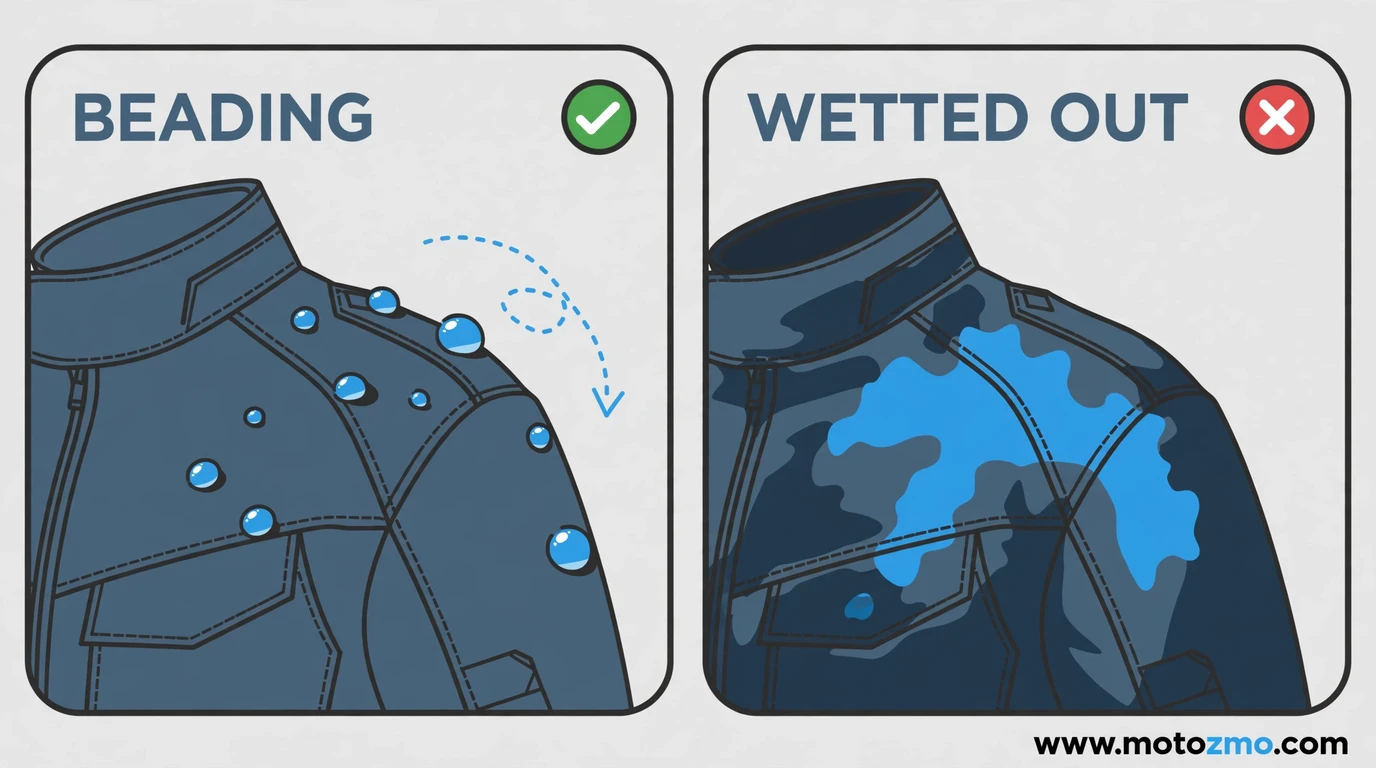
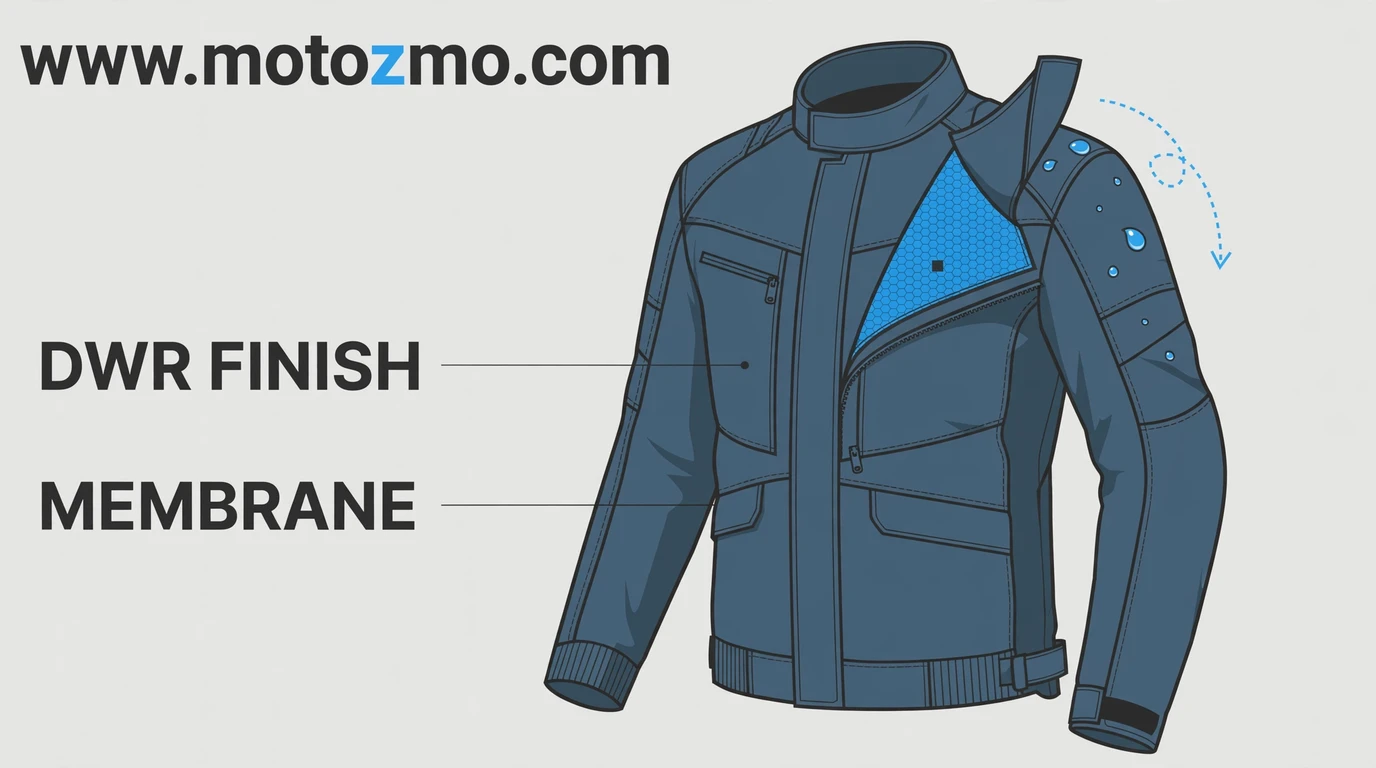
Waterproof motorcycle gear has two separate defenses. The membrane or coated layer underneath blocks water from reaching you. The DWR finish on the outer fabric makes water bead and roll off.
When the DWR dies, the outer fabric “wets out”: it soaks up water and feels heavy and cold. The membrane underneath is often still fine, so you stay dry but feel clammy and miserable. Riders mistake wetting out for a failed jacket and buy a new one.
Dirt is the usual killer. Road grime, bug splatter, and dried sweat contaminate the DWR until water can’t bead. That’s why the fix is counterintuitive: wash the jacket more, not less.
A clean DWR works. A dirty one doesn’t, no matter how much reproofing spray you throw at it. If you ride wet roads often, the basics of riding safely in the rain matter, and so does keeping the gear that protects you actually working.
Step 1: Strip the Gear before It Goes Near Water
Motorcycle gear has parts that never belong in a wash. Pull out every piece of armor: shoulders, elbows, back, knees, hips. Armor pockets trap sweat and grit, and tumbling armor in a machine deforms both the protector and the pocket it lives in. Wipe the armor down with a damp cloth and let it air dry. Don’t soak it.
Next, remove any thermal or waterproof liners. Liners often have different care labels than the shell, so wash them separately or by hand. Then empty every pocket, close every zipper, fasten every Velcro tab, and loosen the drawcords. Open zips and loose straps snag the outer fabric in the machine and chew up the DWR you’re trying to save.
Step 2: Wash with Tech Wash, Not Laundry Detergent
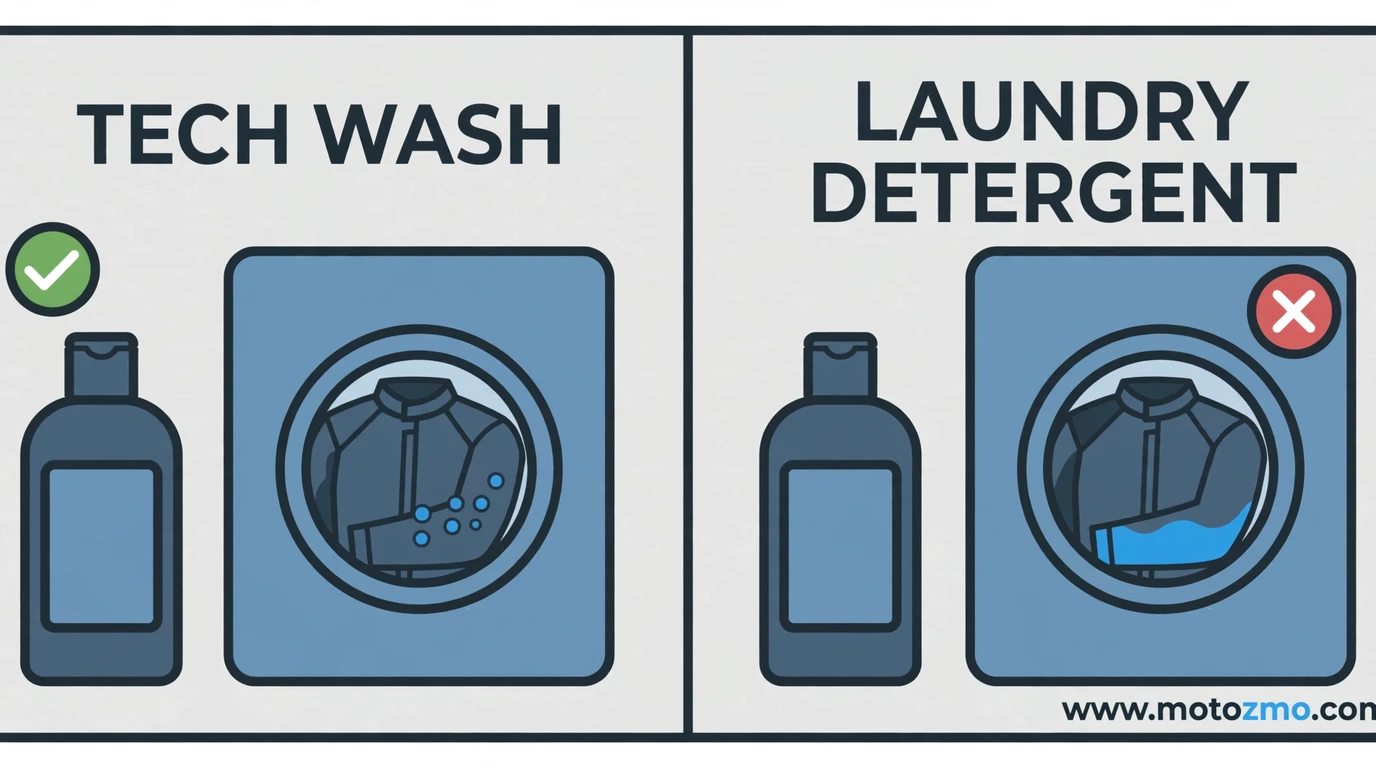
Regular laundry detergent is the fastest way to ruin DWR. It’s built to make fabrics soft and absorbent, the exact opposite of what waterproof gear needs.
The perfumes, softeners, and brighteners in normal detergent leave a film that attracts water. Once that film is in the fabric, the jacket looks like it failed even though the membrane is fine.
Use a dedicated tech wash made for waterproof outerwear. Put the garment in a front-loader or a top-loader without an agitator. Agitators beat up seam tape. Select a gentle cycle with warm water, around 40°C (104°F), and add an extra rinse cycle.
The extra rinse matters because leftover detergent residue does the same damage as the wrong detergent. My rain suit gets this treatment after any long wet tour, and the DWR comes back every time.
Step 3: Dry It with Heat to Wake up the DWR
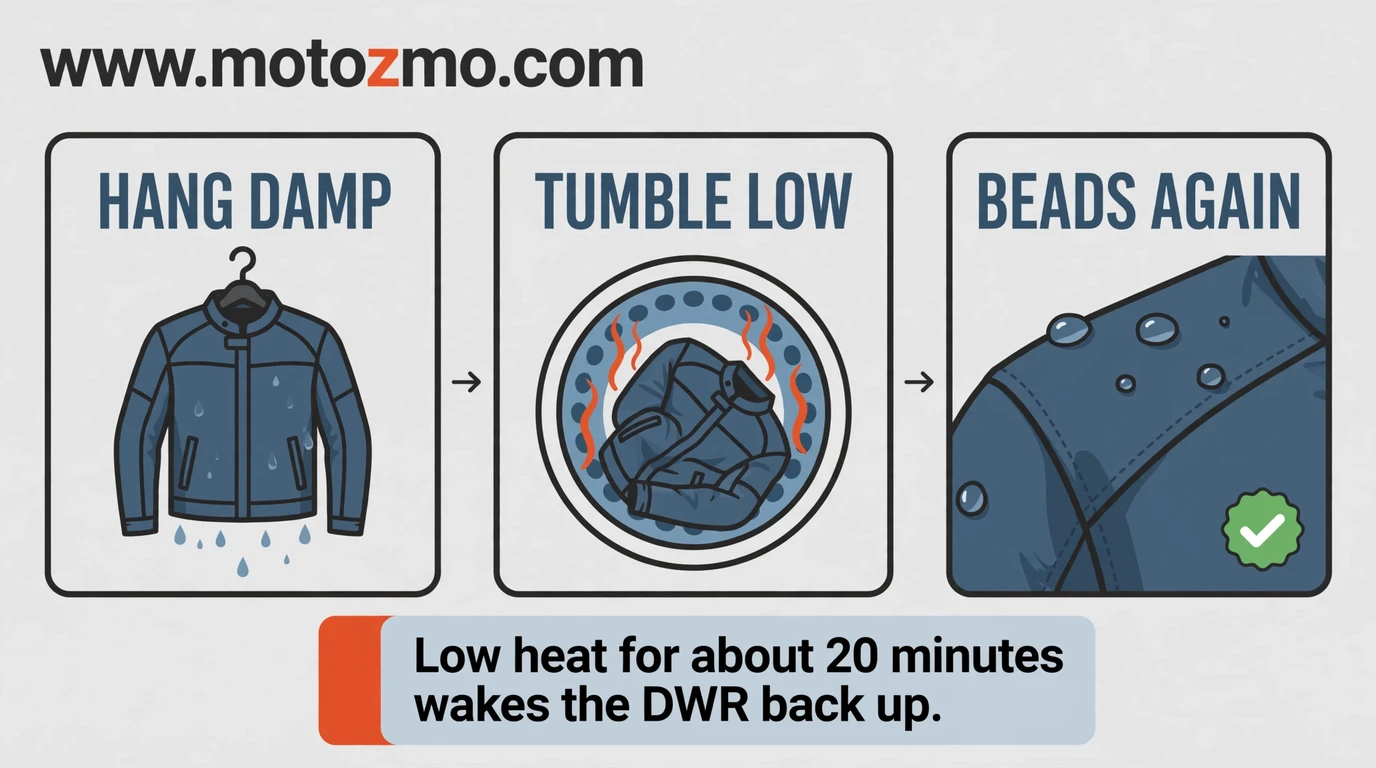
This is the step most riders skip because the dryer feels wrong. It isn’t. Heat reactivates DWR. Hang the garment until it’s mostly dry but still slightly damp: this lets water drain out of pockets and seams first.
Then put it in the dryer on low or warm heat for about 20 minutes. That short heat cycle is what makes water bead again, and it’s the step Danner recommends in its GORE-TEX apparel care guide for the same reason.
Don’t run it hot or leave it in for an hour. Excess heat degrades seam tape and trims over time. If your dryer feels too aggressive, a warm iron with a towel between the iron and the fabric does the same job.
After the heat cycle, sprinkle water on the shoulders and forearms. If it beads and rolls off, you’re done. No reproofing needed.
Step 4: Reproof Only the Spots That Still Soak Through
If washing and heat don’t bring back the beading, usually on high-wear zones like shoulders, cuffs, and the seat of pants, it’s time to reproof. You have two options, and they suit different situations. Mustang Survival’s DWR care guide prefers spray-on for the same reason I do: control.
| Type | Best when | Watch out for |
|---|---|---|
| Spray-on | Only some zones are worn; you want to target shoulders, cuffs, or knees | Mask zippers and reflective panels first; apply to damp fabric, then heat dry |
| Wash-in | The whole garment wets out evenly and you don’t want to fuss with a spray bottle | Coats the inside too, which can slightly reduce breathability on lined gear |
After applying either type, run the garment through the dryer on low heat again. The heat activates the new coating. Then repeat the water test. If it beads, the gear is ready to ride.
How Often to Wash and Reproof
| Riding pattern | Wash | Reproof |
|---|---|---|
| Daily commuter, all weather | Every 3–4 weeks | Once or twice a season |
| Weekend rider, occasional rain | Every 2–3 months | Once a year |
| Tourer, long wet trips | After every big trip | When beading fails after a wash |
Reproof on a schedule and you’ll waste product. Reproof on the water test: if washing plus heat doesn’t restore beading, coat it.
If beading comes back, skip the bottle. Gloves are the exception: they take the most abuse and need their own routine, which I cover alongside my waterproof glove picks.
Mistakes that Kill Waterproof Gear
- Regular detergent, fabric softener, or bleach leave a water-attracting film on the DWR.
- Washing with armor and liners still inside deforms protectors and gives liners the wrong treatment.
- Dry cleaning destroys DWR with solvents and damages the membrane. Never do it.
- Skipping the rinse leaves detergent residue that mimics DWR failure. Run an extra rinse every time.
- Drying on high heat or for too long ages the gear. Twenty minutes on low reactivates DWR; more heat just wears it out.
- Spraying reproofer on dirty gear keeps the coating from bonding. Wash first, always.
Frequently Asked Questions
How do I wash waterproof motorcycle gloves?
Hand wash them in lukewarm water with a drop of tech wash. Don’t wring them. Press the water out gently, reshape, and air dry away from heat. Glove liners and seams handle machine agitation poorly.
How long does a reproofing treatment last?
A season or more for casual riders. Daily commuters may need to recoat high-wear zones twice a year. Let the water test decide, not the calendar.