
Most motorcycle flats aren’t sudden blowouts, they’re the end result of a slow leak or worn tread that went unchecked for weeks, which means most of them are genuinely preventable.
Checking pressure before you ride, actually looking at the tire rather than just pumping it up, and knowing the difference between what fixes a wet road versus an icy one will catch the majority of what causes flats before they happen. You should also know about tire sealant and what “tubeless” actually protects you from.
Check Pressure Before Every Ride, Not Once a Month
Checking your tires monthly is better than never, but it’s not often enough. Tire pressure shifts with ambient temperature, and a bike that sat outside overnight in a cold snap can lose several PSI before you even swing a leg over it. Check pressure cold, before the tire has warmed up from riding, ideally before every ride or at minimum every week.
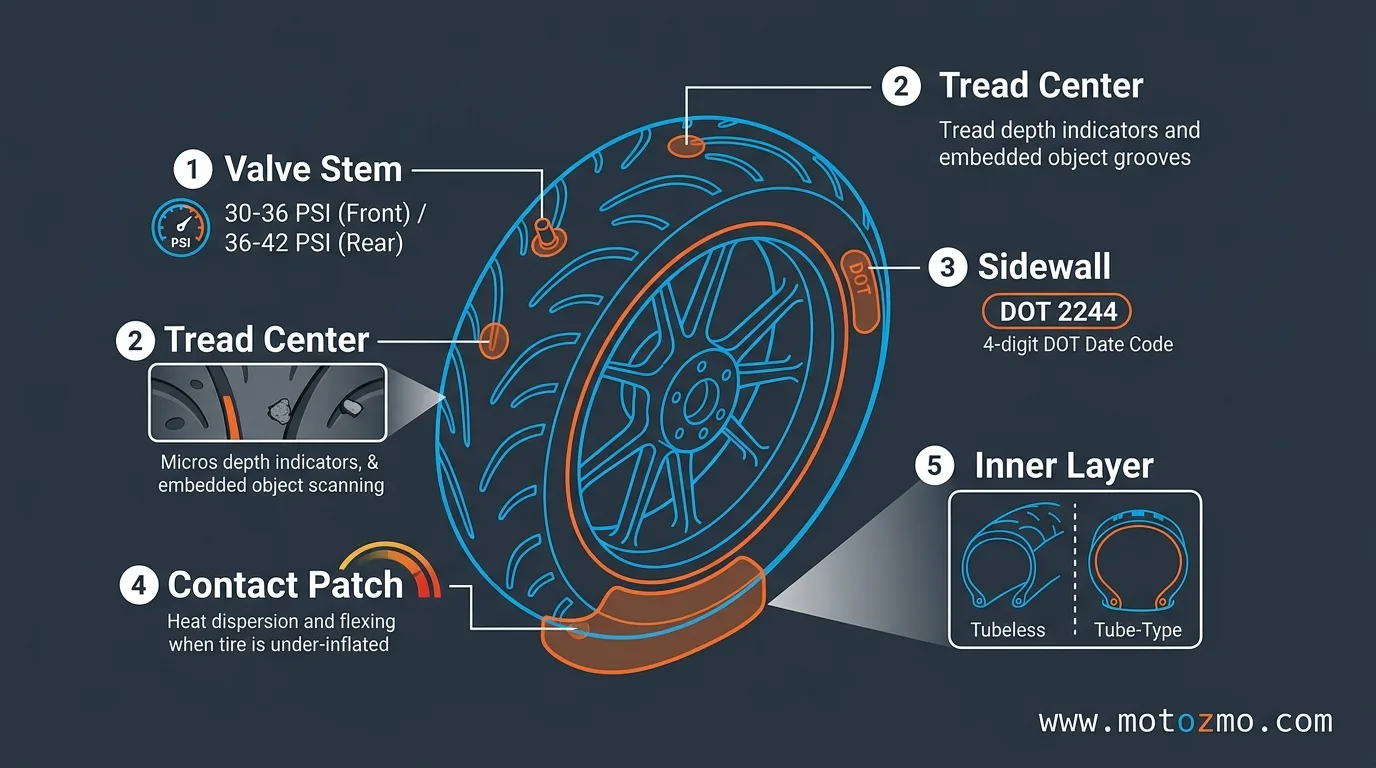
Front and rear tires usually run different pressures, commonly somewhere around 30–36 PSI front and 36–42 PSI rear, though the correct number for your specific bike is the one printed in your owner’s manual or on the swingarm/frame placard. If you’re carrying a passenger or heavy luggage, add a few PSI to the rear to compensate for the extra load.
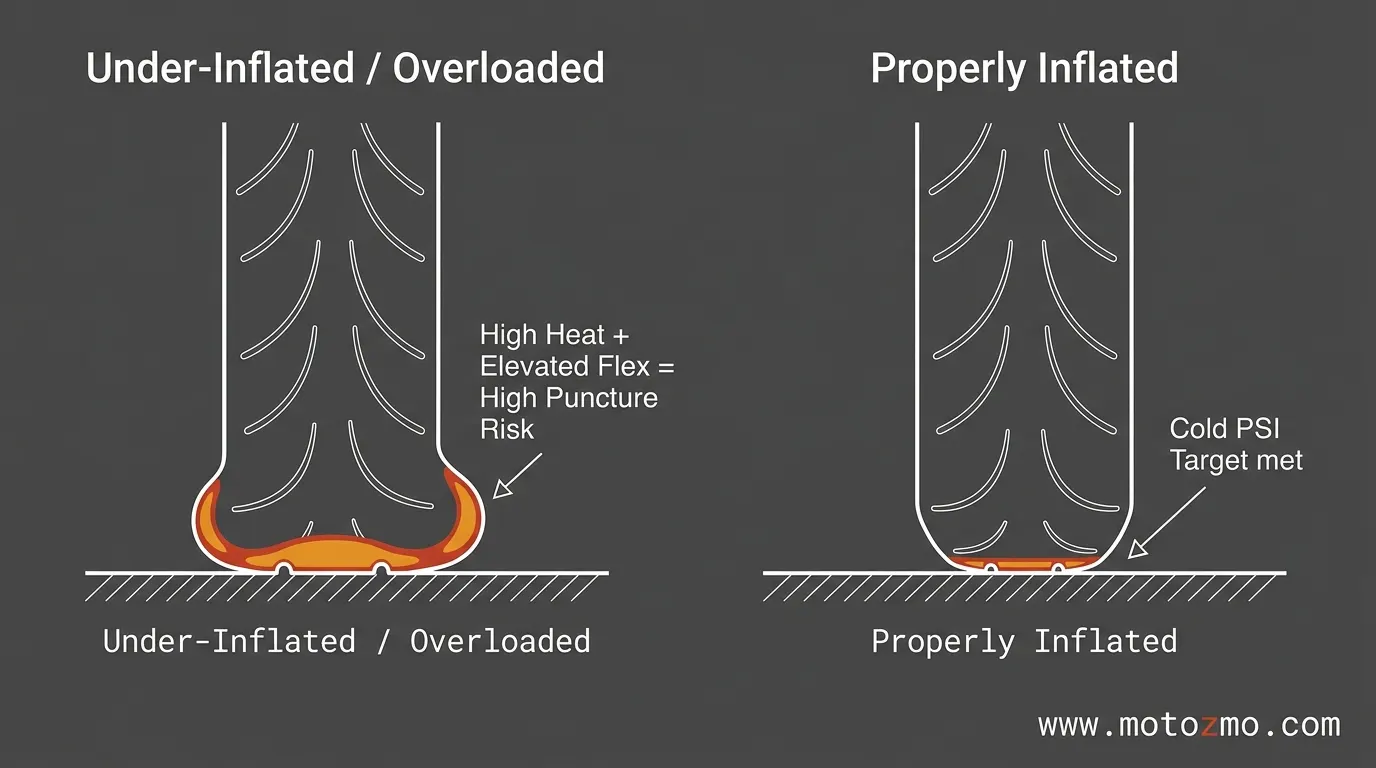
A low tire flexes more with each rotation, runs hotter, and is more likely to suffer a puncture simply because more of it is in contact with the road at any given moment.
Inspect the Tire (Don’t Wait Until You’re Already Adding Air)
Make it a habit to walk around the bike and look at the tires, not only when the gauge tells you something’s low. Look for cuts, embedded debris, bulges, or cracking in the sidewall, and check the area around the valve stem specifically, since a slow leak there is easy to miss until the tire’s noticeably soft.
Anything lodged in the tread, a nail, a screw, a piece of glass, should come out and get evaluated rather than left in place; sometimes it’s already sealed itself and pulling it starts a leak that wasn’t there before, so if you’re not sure, a shop can tell you whether it’s safe to remove roadside or needs a proper plug first.
Know When a Tire Is Too Old
Tread depth and age both matter independently of each other, a tire can look fine and still be unsafe. We cover the full replacement criteria, including the actual legal tread minimum versus the point where you should really replace it, in our guide to when to replace motorcycle tires.
The short version: rubber compounds degrade with age even on a tire that’s barely been ridden, so check the DOT date code on the sidewall rather than relying on tread alone.
Ride with Your Eyes up
The most reliable way to avoid a puncture is not riding over the thing that causes it. Gravel, broken glass, and construction debris are easiest to spot and route around if you’re actually scanning the road ahead rather than just the few feet in front of your wheel. This matters more at low speed and in parking lots than most riders expect, since that’s where debris tends to accumulate against curbs and in gutters.
If you do roll over something and feel it click or catch in the tread, a quick stop to check is worth the thirty seconds it costs you.
Rain and Ice Call for Different Tires (Not the Same Fix)
This is worth being precise about, because the advice genuinely differs. Riding smoothly and reducing speed in the wet is good practice, standing water and painted road markings, both cut available grip regardless of your tires.
But studded tires are a snow-and-ice-specific tool, not a general wet-weather upgrade; they’re designed to bite into ice and are commonly restricted to specific winter-only date windows in states that allow them at all.
Fitting studs for regular rain riding isn’t necessary and, depending on where you live, may not even be legal outside of winter months. If you ride through genuine winter conditions, that’s a distinct topic from ordinary wet-weather riding, and our guide to riding in winter covers what actually changes.
Carry the Right Emergency Fix
If you do get a puncture on the road, what you reach for matters. Automotive aerosol sealants like Fix-A-Flat are formulated and balanced for four-wheeled vehicles, and their own manufacturer doesn’t recommend them for motorcycles. The sealant settles unevenly inside a spinning tire, and an imbalance that’s just annoying vibration in a car becomes a genuine handling problem on two wheels leaning through a corner.
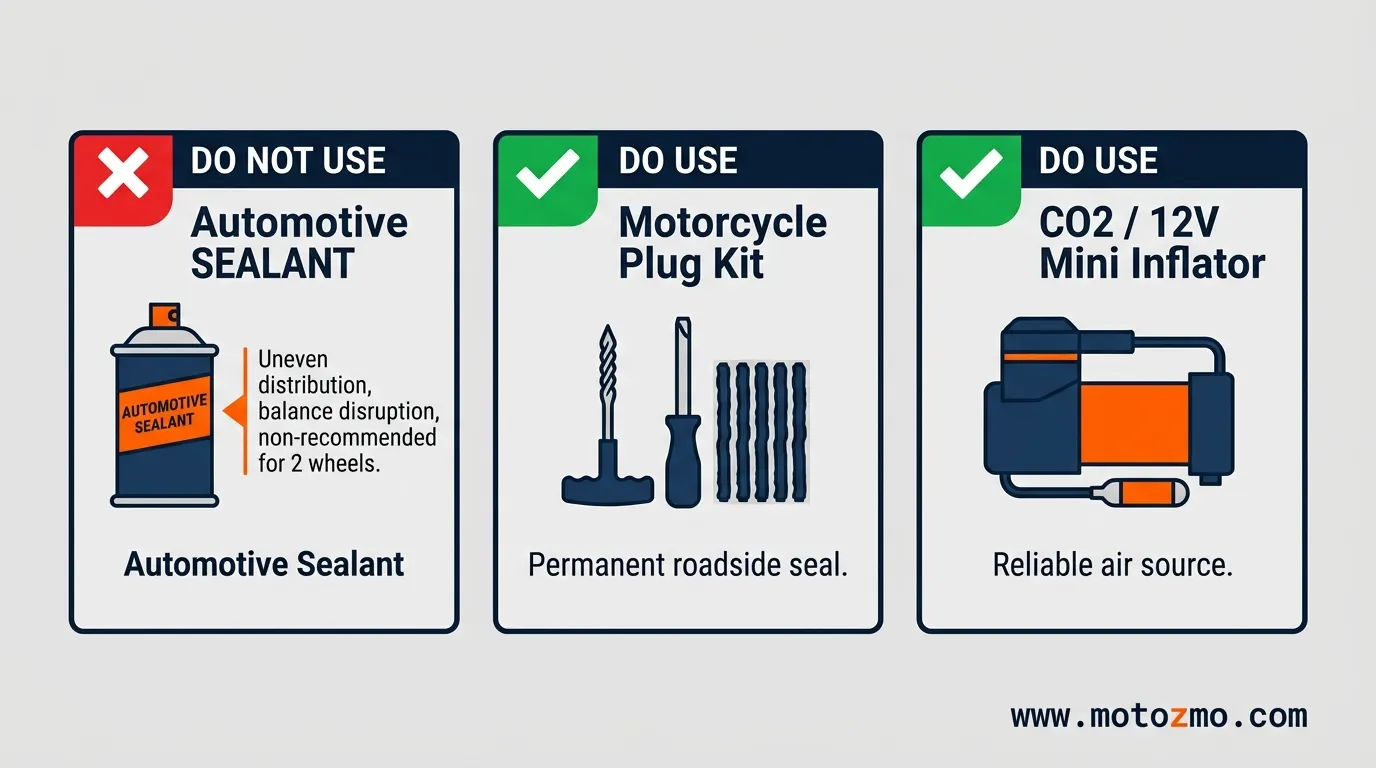
Motorcycle-specific tire sealants exist and are formulated for high-speed balance in a way automotive products aren’t, worth keeping in your kit instead.
A plug kit and a small CO2 or 12V inflator get you further than either: a properly installed plug is a more permanent fix than sealant, and carrying your own inflation source means you’re not stuck waiting for a ride to a gas station. None of these replace an actual tire repair or replacement once you’re somewhere that offers one.
Tubeless Helps with Slow Leaks (It Doesn’t Prevent Flats)
One more correction worth making clearly: tubeless tires can absolutely still go flat. What tubeless construction actually does is reduce the chance of a sudden, total deflation from a small puncture, since there’s no separate inner tube to also blow out, and a nail can sometimes stay lodged and hold pressure for a while rather than dumping all the air at once.
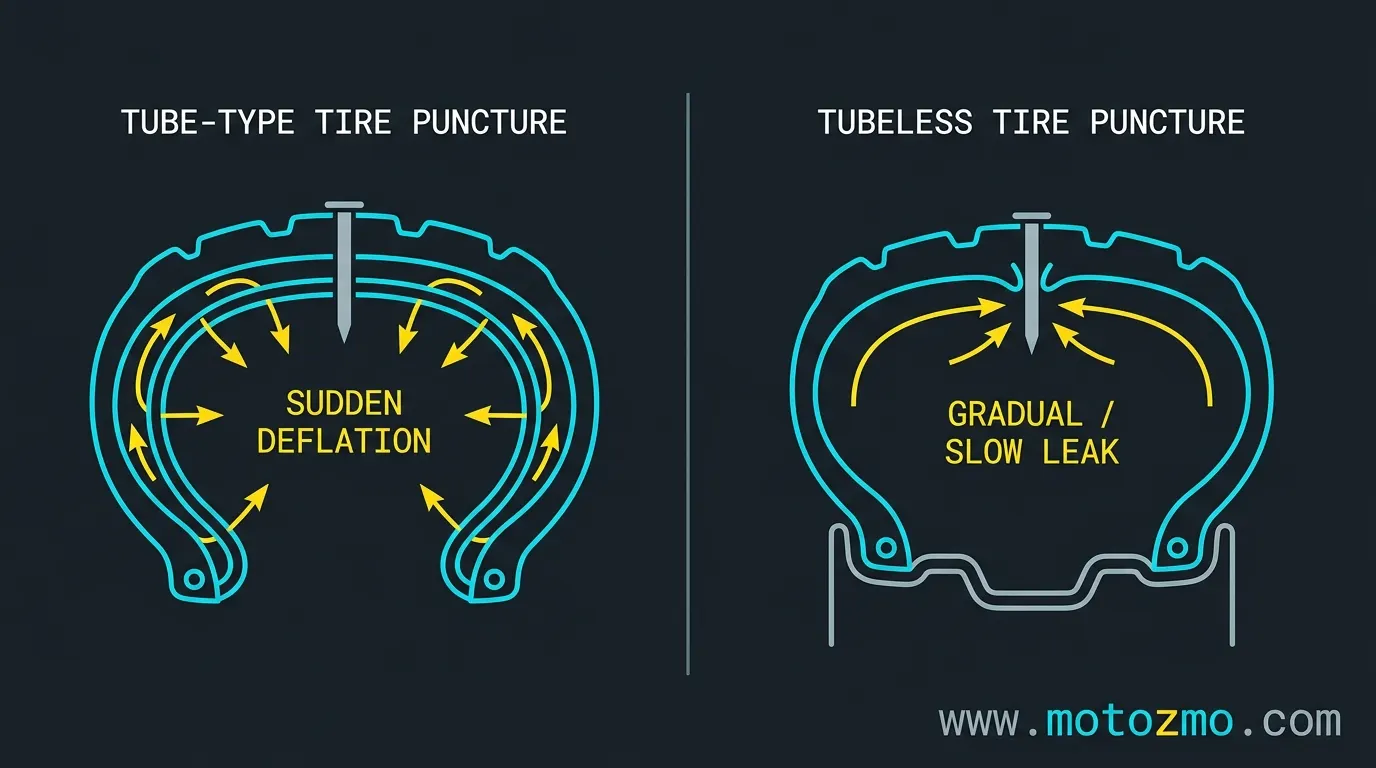
That’s a real, meaningful advantage over tube-type tires, but it’s a different thing entirely from “run-flat,” which refers to a specific reinforced-sidewall design (mostly a car technology) that lets you keep driving after a puncture. A tubeless motorcycle tire with a puncture still needs to be aired back up and repaired; it just tends to fail more gradually and predictably than a tube-type tire would with the same damage.
Long-Term Parking Causes a Different Kind of Flat
A tire that sits in one position for weeks or months can develop a flat spot, a small flattened section from the tire’s own weight pressing on one point of the tread, which is a separate problem from a puncture and needs a separate fix.
If your bike is going to sit for a while, proper winter storage covers this in more depth, but the short version is getting the weight off the tires with a stand, or at minimum rolling the bike forward a few inches every few weeks so it’s not resting on the same spot the whole time.