Affiliate disclosure: This post may contain affiliate links. If you buy through a link on this page, MOTOZMO may earn a small commission at no extra cost to you. It helps keep our guides free. How we test and choose products.
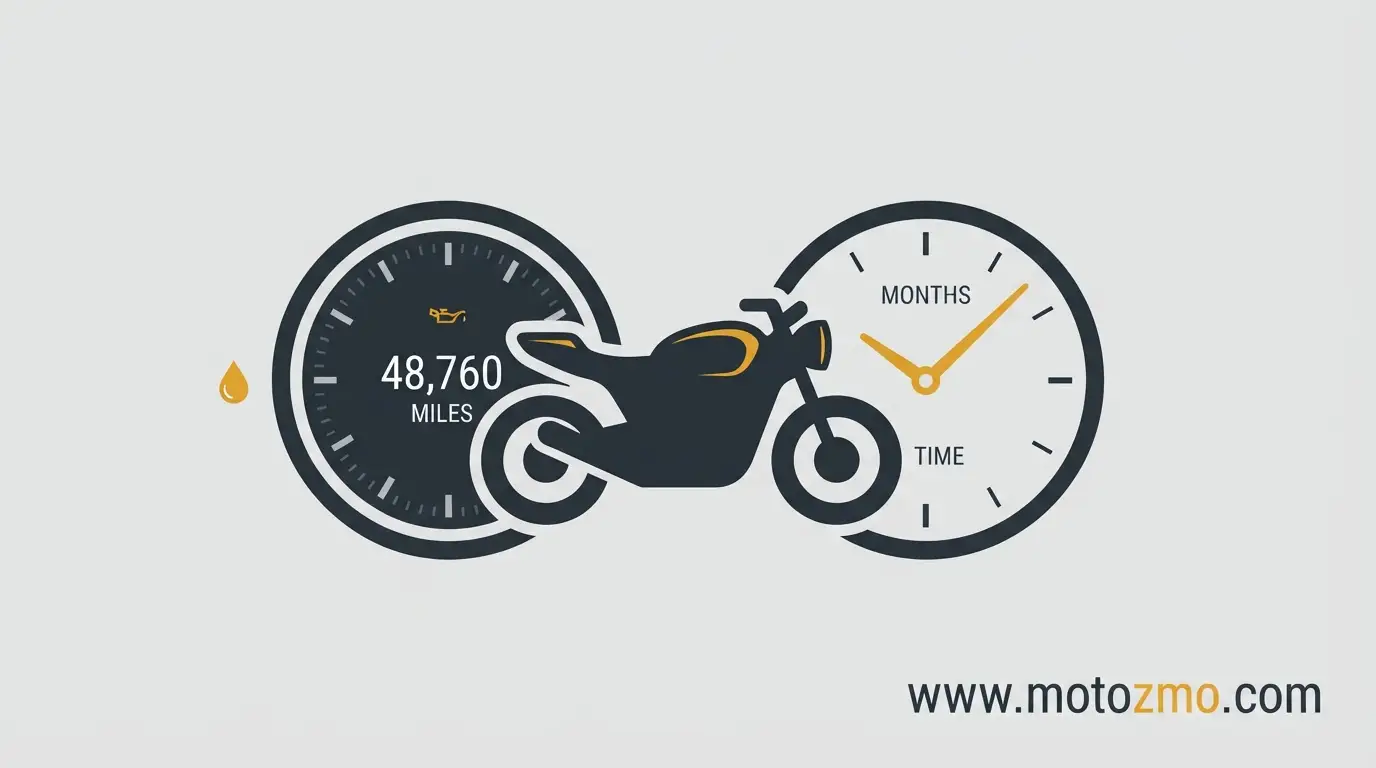
Change your motorcycle oil when either clock runs out: the miles clock or the time clock.
Most bikes need fresh oil every 2,000–3,000 miles on mineral oil, 5,000–6,000 on semi-synthetic, or 7,000–10,000 on full synthetic, or once a year, whichever comes first.
I used to watch only the odometer, until I checked a bike that had sat through one winter and found dark, spent oil with barely 2,000 miles on it. Miles tell half the story. Time, heat, short trips, and storage fill in the rest.
This guide lays out the two-clock system I use now: how to set your interval, what shortens it, and how to read the oil itself when you are unsure. Once the oil is due, here is how to change it yourself in about 30 minutes.
The Two-Clock Rule: Miles or Months, Whichever First
Your owner’s manual gives two numbers: a mileage and a time limit. The interval ends when the first one arrives. Riders who commute long distances hit the mileage first; riders who take the bike out twice a month hit the time limit first.
Both clocks matter, and the one you are ignoring is usually the one that is already out.
| Oil in your bike | Miles clock | Time clock |
|---|---|---|
| Mineral | 2,000–3,000 miles | 12 months |
| Semi-synthetic | 5,000–6,000 miles | 12 months |
| Full synthetic | 7,000–10,000 miles | 12 months |
| First change (new bike) | 600–1,000 miles | N/A |
Your manual wins over this table. Some bikes call for 8,000-mile synthetic intervals, others call for 4,000, and while the bike is under warranty you should follow the book exactly to protect your coverage.
The first change comes sooner because break-in sheds metal particles from new parts; skipping it is the most expensive oil change you will ever skip. If you are shopping for the right bottle, my 4-stroke engine oil picks walk through the grades worth buying.
Match the bottle to your manual’s spec: the viscosity grade and the JASO MA or MA2 rating on the label matter more than the brand. The MA rating exists because most motorcycles run a wet clutch in the same oil. Car oils carry friction modifiers that can make that clutch slip.
The JASO standards panel page explains what the ratings certify, and a bottle like Mobil 1 Racing 4T shows the combination most bikes call for on a real label: API SN plus JASO MA2.
What Makes Your Clock Run Faster
Two riders can buy the same bike and the same oil and need changes months apart. The difference is how the bike gets used. Check this table against your own riding and move your interval to match.
| Your riding | What to do |
|---|---|
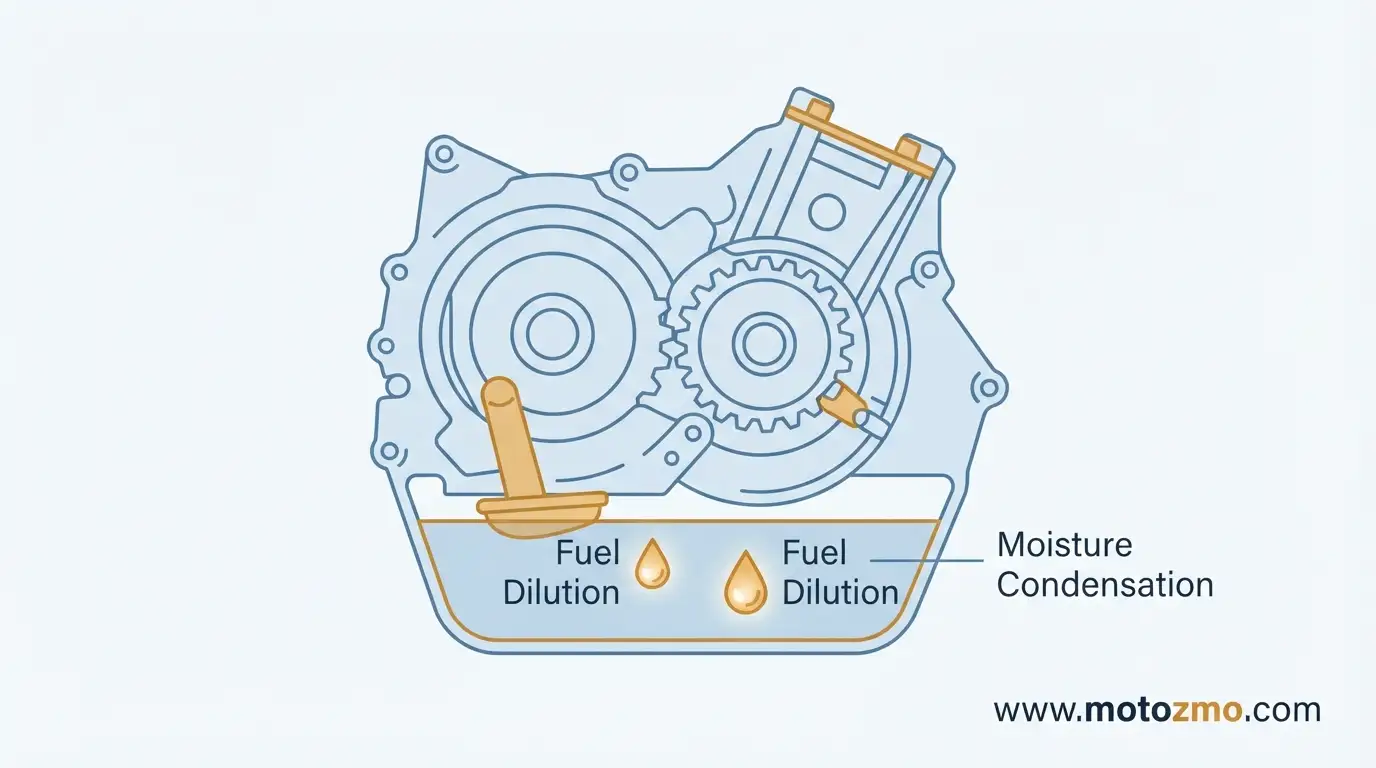
| Mostly short trips under 10 miles | Cut the interval by a third: a cold engine traps fuel and moisture in the oil |
| Track days or hard sport riding | Change it after the event, or halve the interval for the season |
| Dust, dirt roads, or salty coastal air | Change more often and check the filter too |
| Air-cooled engine in summer heat | Heat breaks oil down faster: stay at the short end of your range |
| Bike shares oil with the gearbox | Gear shearing wears oil out sooner: do not stretch the interval |
| High-mileage engine, over 50,000 miles | Blow-by contaminates oil sooner: shorten the interval |
Stop-and-go commuting lands in the same bucket as short trips: the engine rarely gets hot enough, long enough, to burn off the moisture that collects inside. One good hour-long ride a week does more for your oil than any additive.
How to Read the Oil Itself
When the miles say you are fine but the calendar says you are due, the dipstick settles it. Check on level ground with a warm engine, the bike upright and not leaning on the side stand. Pull the dipstick or look at the sight glass, then match what you see to this table.
| What you see | Verdict |
|---|---|
| Amber to light brown, flows clean | Healthy: keep riding |
| Dark brown but smooth, no grit | Normal for used oil: change on schedule, not early |
| Gritty between your fingers | Change it now: particles are wearing the engine |
| Milky or creamy | Coolant is mixing in: see a mechanic, do not just change the oil |
| Burnt smell | The oil overheated: change it and look for the cause |
Two things this check cannot tell you: dark color alone is not a verdict. Modern oils darken fast and still protect fine, and you cannot judge the additive package by eye. That is what the time clock is for. If the level sits below the low mark, top it up with the same grade you already run.
Do not overfill. Too much oil causes its own damage. If you find yourself topping up often, read up on how much oil loss is normal before you assume the worst.
Change It before You Store the Bike
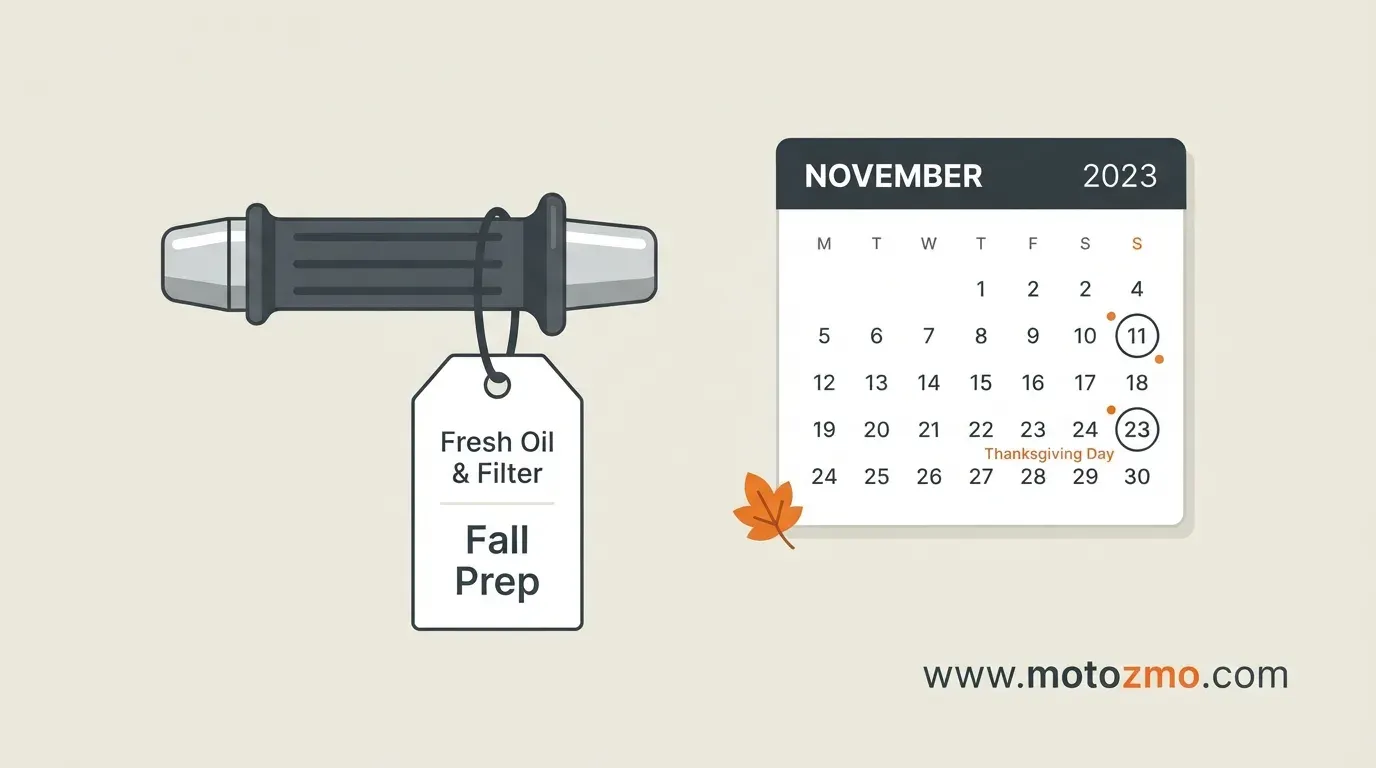
Used oil holds acids and moisture left over from combustion. Letting that mix sit in your engine all winter invites corrosion on bearings and cam lobes, the parts that matter most.
I make the oil change part of winter storage prep: fresh oil and filter in late fall, then a short ride to coat everything, and the bike wakes up in spring with clean oil already in it.
Skip the old habit of changing it in spring. Clean oil should be the thing waiting for you, not the job waiting for you.
What an Oil Change Costs
A dealer or shop charges roughly $80–$150 depending on the bike and the oil. Do it yourself and the bill drops to about $40–$70 for oil, a filter, and a crush washer: a 30-minute job once you have done it once. My full DIY vs shop cost breakdown covers where the money goes and when paying a shop makes sense.
Set both clocks, check the oil when you doubt either one, and you will never have to guess.
FAQs
Can I switch from mineral oil to full synthetic at my next change?
Yes. Drain the old oil fully, fit a new filter, and fill with the synthetic grade your manual lists. You do not need a flush, and the small amount of old oil left behind mixes in harmlessly.
Should I change the oil after one track day?
If you ran a full day hard, yes. Treat it as severe service. Sustained high rpm and heat shear the oil fast. After a casual half-day session, just cut your remaining interval in half.