
Match the CE safety rating inside the glove to how you ride, and the rest of the choice, cuff length, material, armor, falls into place fast.
The CE rating sewn into the cuff shows what the glove survived in a lab test, abrasion, seam pull, knuckle impact, and gives you a real number to check instead of a guess. Comfort still counts. A track-rated glove that locks up your hand on a two-hour commute misses the point too.
This guide breaks down what the CE rating means, which level fits your riding, and how season, cuff length, and material round out the pick.
What the CE Rating on a Motorcycle Glove Means
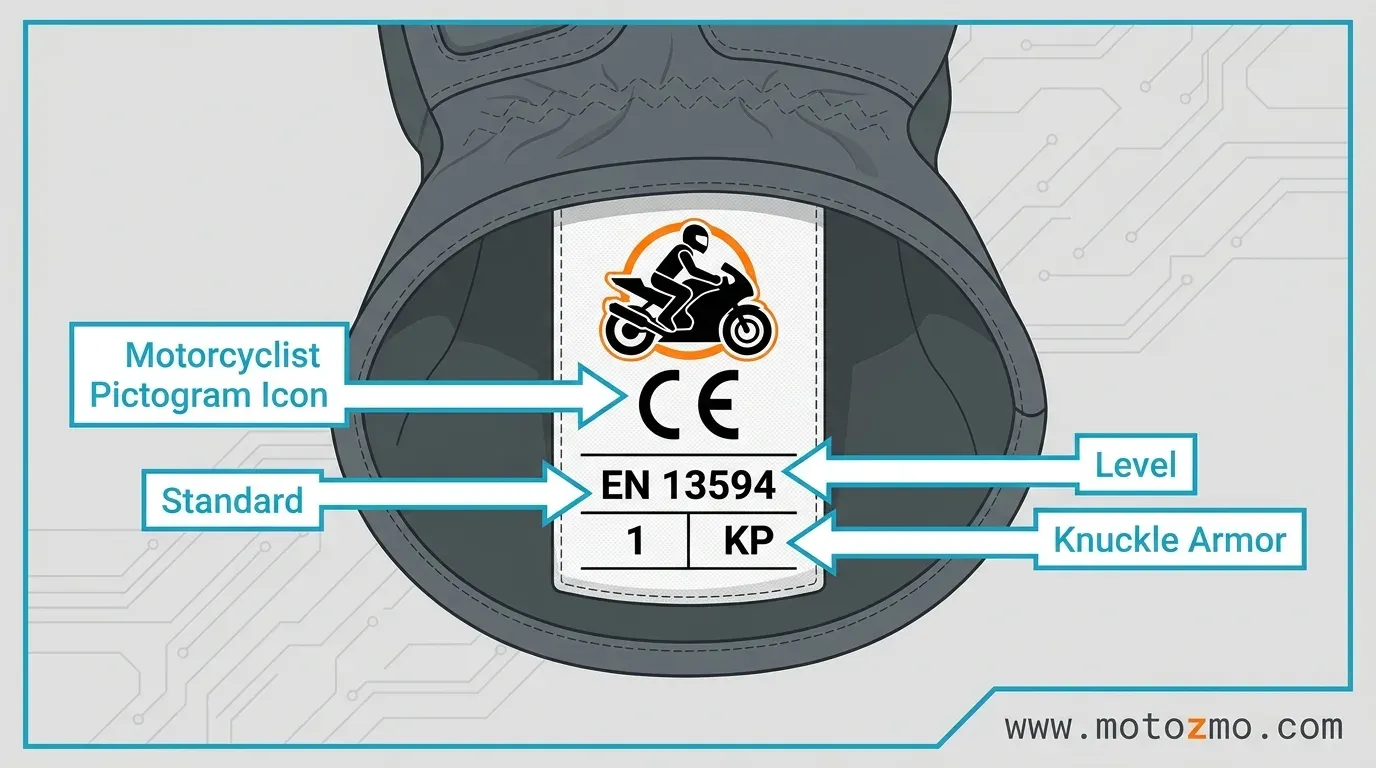
Every motorcycle glove built to a real safety standard carries a label sewn inside the cuff. That label points to EN 13594, the standard that grades a glove as Level 1 or Level 2.
The rating has nothing to do with brand name or price tag. It comes from lab tests that drag the glove across an abrasive belt, pull hard on the seams, and drive a weight into the knuckle area to measure how much force the material stops before it fails.
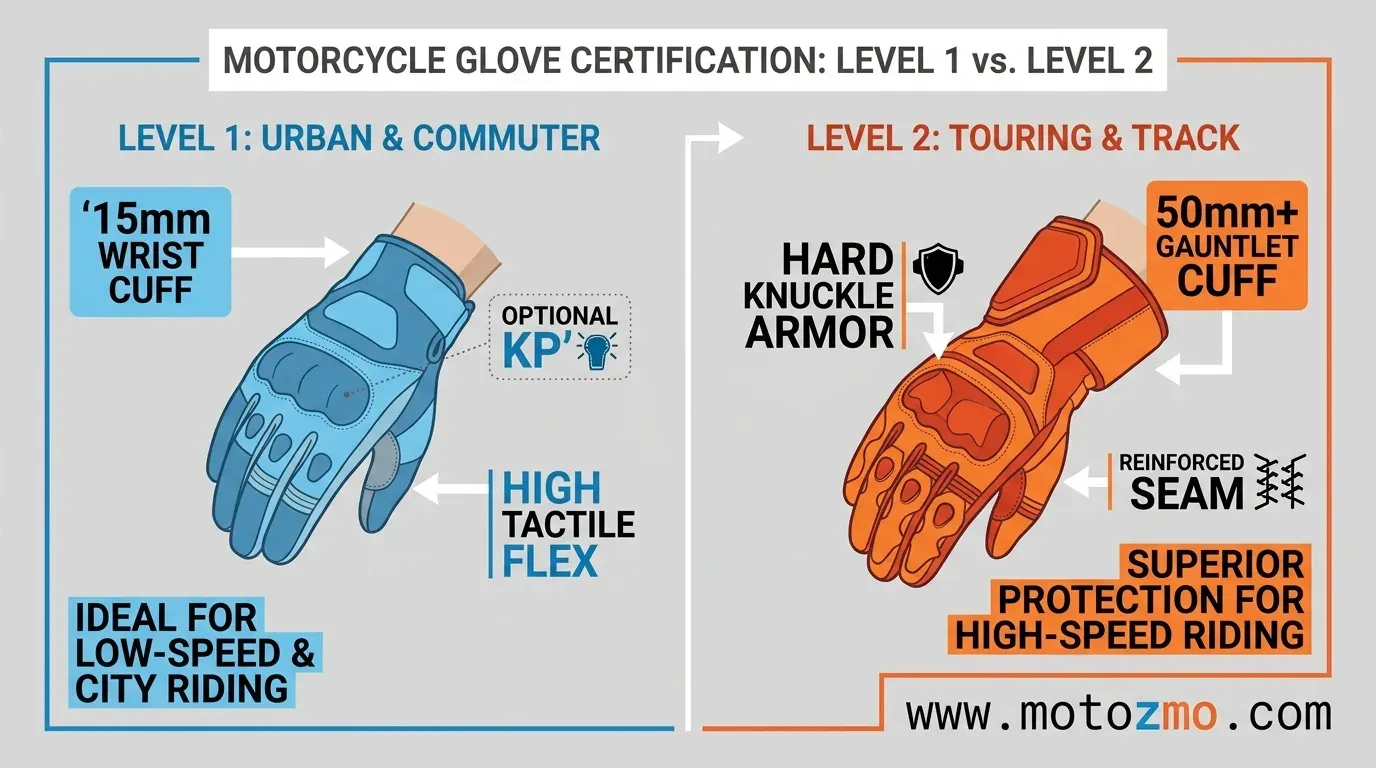
Level 1 gloves pass a lighter version of these tests and keep more flex in the fingers. Level 2 gloves pass a tougher version and trade some of that flex for a longer cuff and armor built into every pair.
Neither level beats the other on its own. The right one depends on how and where you ride, which the next section maps out.
| What it measures | Level 1 | Level 2 |
|---|---|---|
| Cuff length past the wrist | At least 15mm | At least 50mm, true gauntlet length |
| Knuckle armor | Optional, marked “KP” when included | Built into every glove |
| Abrasion and seam testing | Passes a lower force threshold | Passes a higher force threshold |
| Fits best | Lower speeds, more finger feel | Higher speeds, harder falls |
Which CE Level Fits Your Riding Style
A Level 2 glove protects more but costs more and moves less. Match the level to how you ride, and you avoid paying for protection you won’t use, or coming up short on a ride that calls for more.
| Your riding | CE level to look for | Why |
|---|---|---|
| Daily commuting or short errands | Level 1 | Lower speed means less force in a fall, and you want finger feel for clutch and brake control in traffic |
| Weekend rides on open roads | Level 1 with a “KP” mark | Adds knuckle armor without the stiffness of a full Level 2 build |
| Highway touring and long trips | Level 2 | Higher sustained speed raises the odds of a longer slide if you go down |
| Sport riding or track days | Level 2 | The abrasion and knuckle tests are built around this kind of crash |
| Cruiser riding at a relaxed pace | Level 1 | Matches typical cruising speed; check the cuff still reaches your jacket sleeve |
Skip Level 2 if you ride a scooter or small commuter bike under 35 mph around town. A stiff Level 2 glove costs you grip feel every day in trade for protection you won’t need at that speed. A Level 1 glove with a KP knuckle mark closes most of that gap.
New to riding? Our picks built around a first pair of motorcycle gloves weigh price and fit alongside the rating, since a beginner’s budget and hand strength matter as much as the level number.
And if you already know you want hard armor no matter which level you land on, our knuckle armor roundup picks up from here.
This two-level system isn’t tied to one brand or price range. Testing lab Intertek notes that the current version of EN 13594 replaced an older edition covering professional racers only, extending coverage to any two-wheeled rider, whether the glove comes from a budget import or a premium racing brand.
Gauntlet or Short Cuff: Let Your Jacket Decide
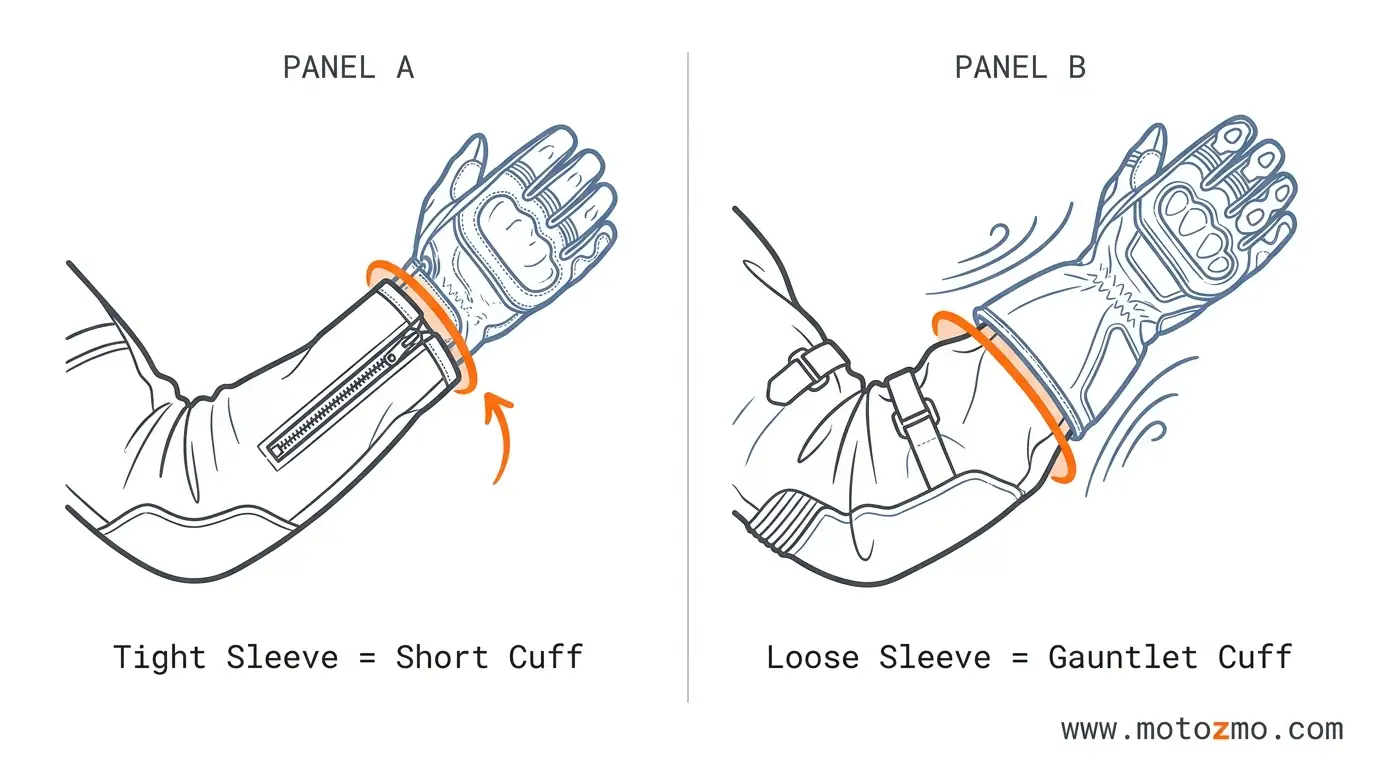
The cuff length in the table above isn’t a random number. A true gauntlet, cut to reach 50mm past the wrist or more, tucks under your jacket sleeve and blocks wind and rain at the wrist.
A short cuff sits closer to that 15mm Level 1 minimum and goes over the sleeve instead, trading that seal for an easier on-and-off and a cooler wrist in summer heat.
If your jacket sleeve closes tight over the glove, you need a short cuff. If the sleeve is loose enough to tuck a glove underneath, a gauntlet keeps the gap shut. Our full gauntlet versus short-cuff comparison lines up fit, weather sealing, and which style favors each kind of riding.
Leather or Textile: What Changes on the Hand
Leather holds its shape, grips the bar well, and slides across pavement instead of catching, which is why most Level 2 sport gloves still use it across the palm.
Textile trades some of that slide for a lower price, easier waterproofing, and lighter weight, so it shows up more in touring and commuter gloves built for mixed weather.
Neither wins outright; the choice comes down to your budget and how often you ride in the rain. Our leather versus textile breakdown lines up cost, weather resistance, and break-in time side by side.
Match the Glove to the Season, Not Just the Ride
Heat and cold change what protection means. A glove that traps sweat in July or lets wind cut through in January stops doing its job, even with the right rating on the label.
For hot weather, mesh panels and perforated leather move air without dropping the CE rating. Our summer and mesh glove picks cover models that keep Level 1 protection while staying cool on a long ride.
For cold weather without a heat source, an insulated liner inside a Level 1 or Level 2 shell blocks wind first and traps warmth second. Our non-heated winter glove roundup covers options built around that order.
If you ride through real cold on a regular basis, it’s worth reading whether heated gloves earn their price and how they compare in our heated gloves versus heated grips breakdown, since the two solve the same problem in different ways.
Do You Need Armor Beyond the Base Rating
A Level 2 glove already carries built-in knuckle armor, but riders who stay at Level 1 for the flex can still add a KP-marked pair for extra coverage without the full stiffness jump.
The trade-off is weight and a slower fist-close on the clutch lever, so weigh that against how often you ride at real speed.
Mistakes Riders Make When Buying Motorcycle Goves
- Guessing the glove size from a regular winter glove. Motorcycle gloves run tighter through the palm. Measure around your knuckles with a soft tape and check that number against the brand’s own chart, since sizing shifts between brands.
- Buying a short cuff for a jacket sleeve too loose to cover it. That gap at the wrist is where cold air and road spray get in.
- Choosing an all-leather glove in a climate with frequent rain. Leather soaks up water and stays wet for hours after a ride, while textile or a leather-textile hybrid dries faster.
- Skipping the CE label check and buying on look alone. A “motorcycle style” glove with no EN 13594 marking has passed no test at all, no matter how it’s sold.
Testing house SATRA, which writes the EN 13594 standard, lists the exact marks a genuine label carries: the standard number, the level (1 or 2), and a KP mark if knuckle protection passed its own test. If a glove’s tag skips all three, treat the safety claim as unverified.
Quick Checklist Before You Buy
- Check the label for EN 13594 and a level number, not just a generic “CE” mark
- Match the level to your actual riding speed and distance, not your dream ride
- Line up cuff length with how your jacket sleeve closes
- Pick leather, textile, or a mix based on your climate and budget
- Add a KP-marked knuckle guard if you stayed at Level 1 and want more coverage
- Measure your hand before you order, and check the brand’s own size chart
Once you’ve matched the level to your riding, the rest, cuff, material, and season, are details you fit around it.