
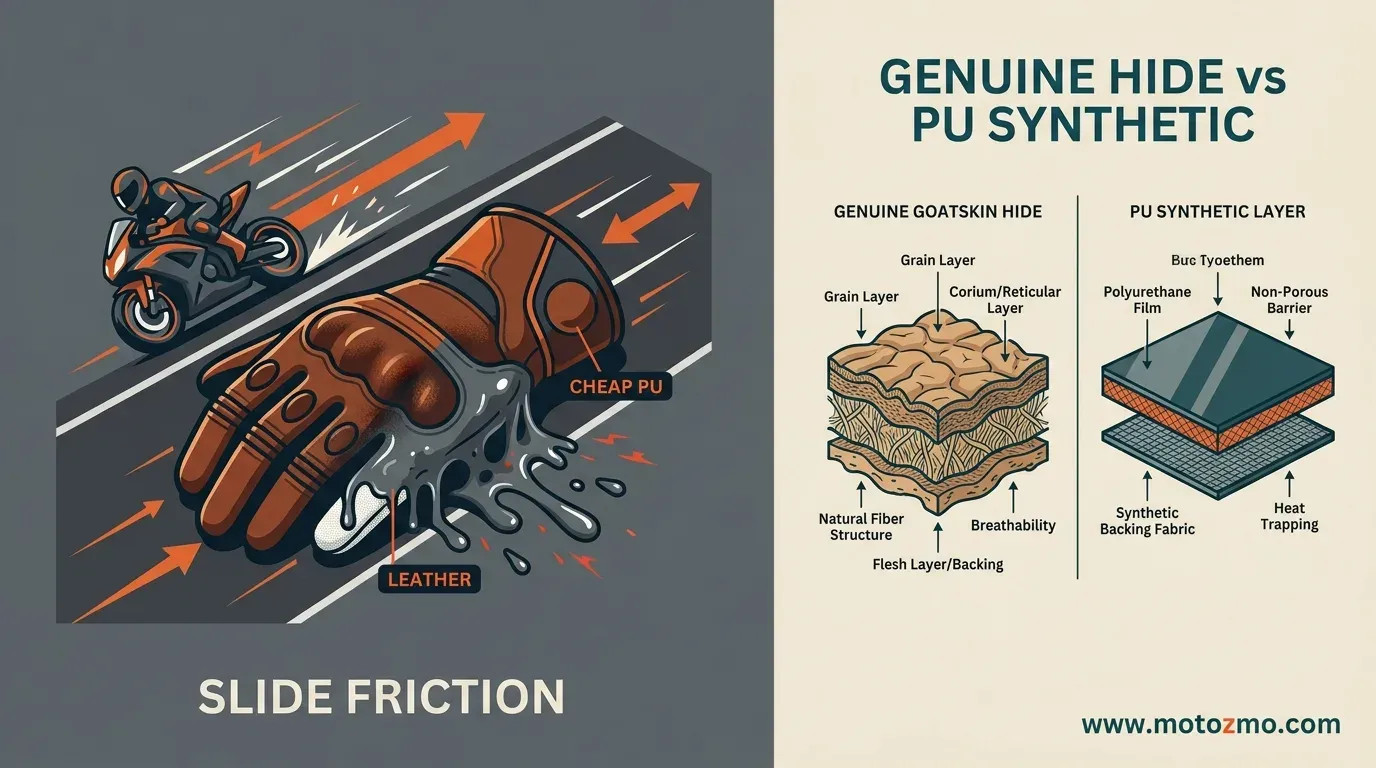
Leather wins on abrasion resistance and control feel, textile wins on weather and price, but that comparison only holds if the “leather” glove in front of you is leather.
Most comparisons jump straight to warmth and breathability and skip the part where a large share of gloves marketed as leather online use PU or bonded synthetic material that looks the same in a photo but doesn’t hold up the same way in a slide.
This guide covers the real trade-offs between leather and textile, and how to check what you’re buying before you order. For the safety rating that applies to either material, see our guide to choosing motorcycle gloves by CE level.
Check This Before You Compare Anything Else: Is It Real Leather?
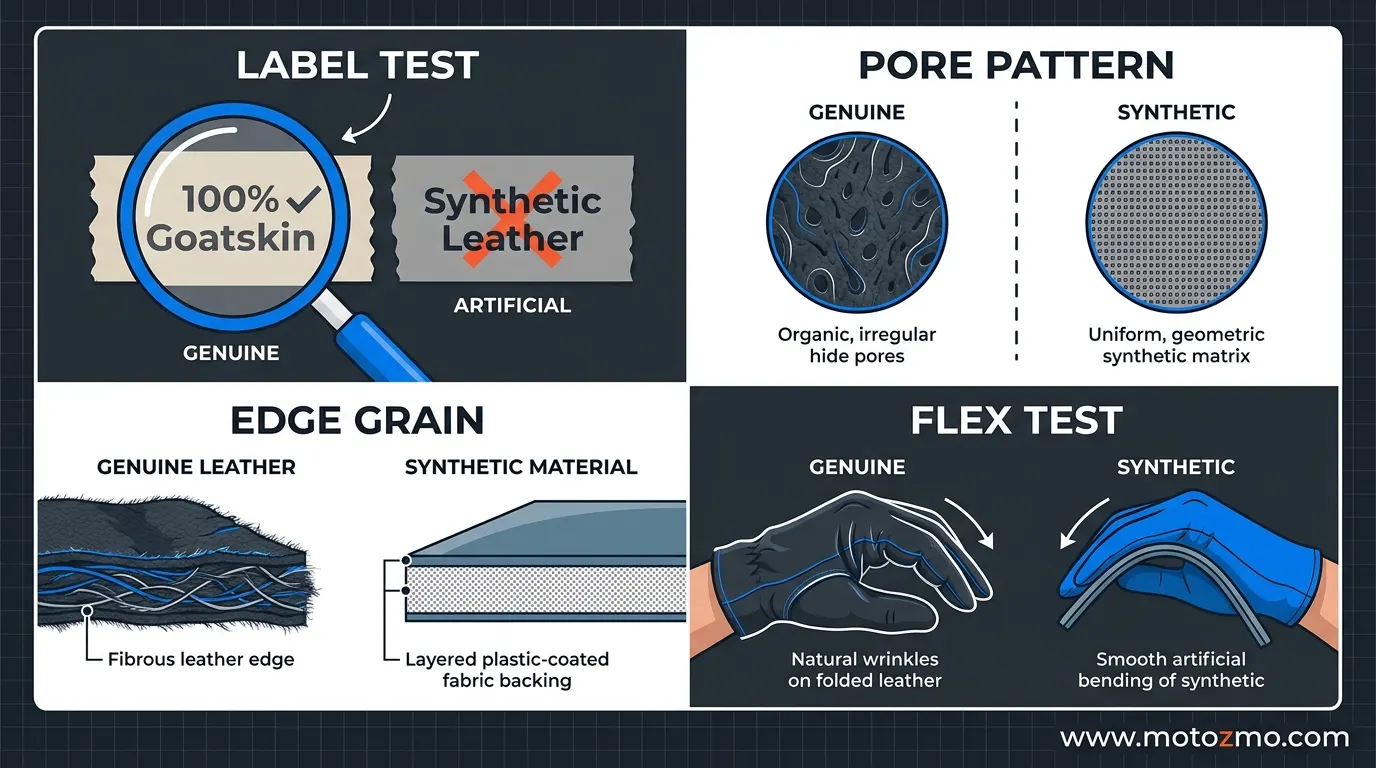
“Leather,” “leather style,” and “genuine leather” don’t all mean the same thing on a product listing. Real leather comes from an actual hide, cowhide, goatskin, deerskin, or kangaroo being the ones you’ll see most in motorcycle gloves.
PU leather, faux leather, and bonded leather are built from a plastic coating or shredded leather scraps pressed onto a fabric backing, and they can look nearly identical in a photo while behaving nothing like the real thing under friction.
This isn’t guesswork on the seller’s part either. The FTC’s Guides for Select Leather and Imitation Leather Products require any material that looks like leather but isn’t to say so on the label or listing, whether that’s “simulated leather,” “vinyl,” or a bonded-leather blend with the leather-fiber percentage spelled out.
If a listing just says “leather” with no hide named and no material breakdown, that’s worth a second look before you trust it in a slide.
Our beginner glove roundup runs into this problem head on, since several of the budget picks there lean on synthetic suede rather than real hide to hit their price point, which is a fair trade at that stage but not something to assume by default once you’re shopping for protection first.
Leather vs Textile at a Glance
| Leather | Textile | |
|---|---|---|
| Abrasion resistance | Best in class when genuine and full grain | Depends on the weave; Kevlar or Dyneema blends close the gap |
| Break-in | Stiff at first, molds to your hand over weeks | Soft and flexible from the first ride |
| Rain and wet weather | Soaks up water unless treated | Often built with a waterproof membrane |
| Hot-weather airflow | Needs perforation to breathe well | Mesh panels move more air by default |
| Maintenance | Needs cleaning and conditioning | Wipes down, dries fast |
| Typical price | Higher for genuine hide | Lower to mid-range |
Who Should Skip Each One
Skip leather if most of your riding sits in a wet climate and you don’t want to treat and dry a glove after every ride, or if budget rules out genuine hide and you’d rather have honest textile than leather-look synthetic that fails the same slide test it claims to pass.
Skip textile if you ride at higher speed on a regular basis and want the most abrasion resistance a glove can offer, or if you want a glove that shapes itself to your hand over time instead of holding its factory form.
If knuckle protection matters more to your decision than the shell material, our knuckle armor roundup covers gloves built around that feature alone, in both materials.
Why Most Gloves You’ll Buy Mix Both
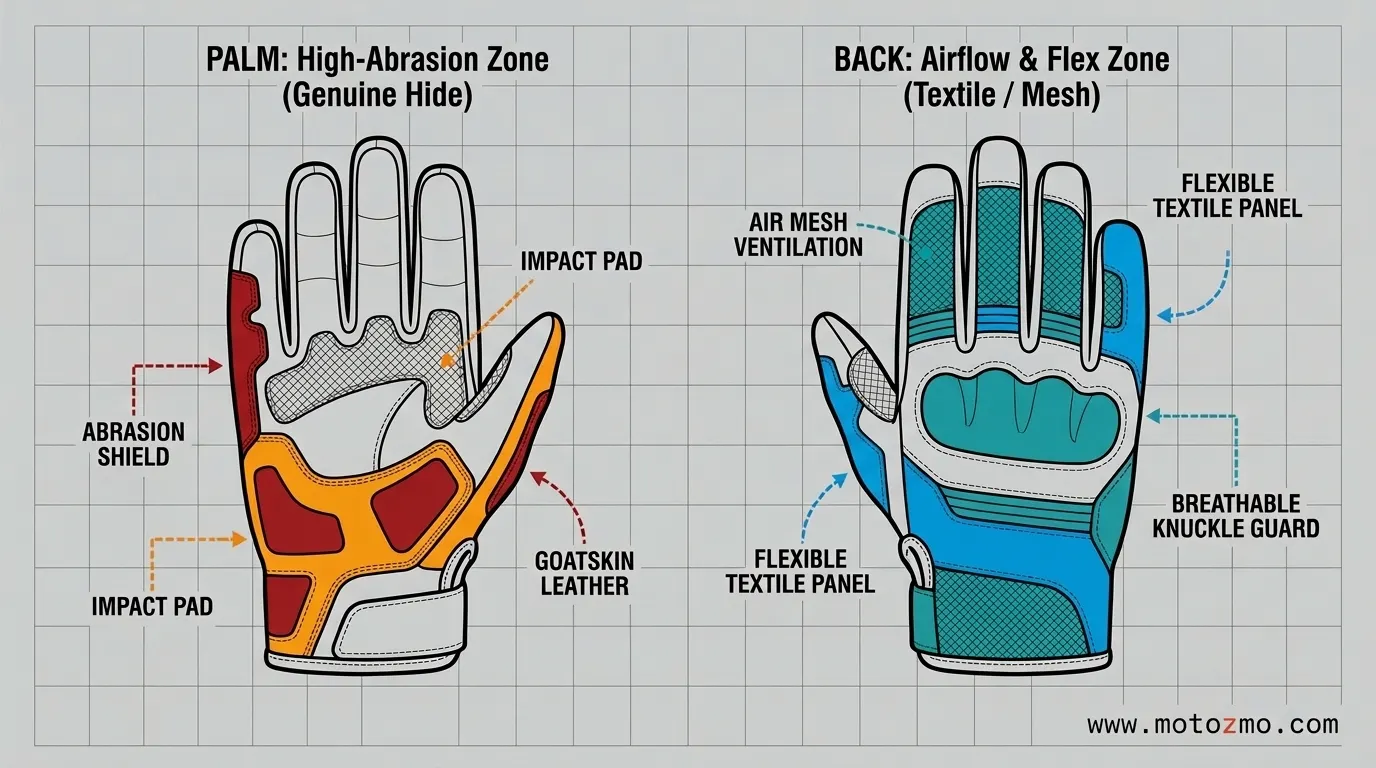
Look inside almost any mid-range or higher glove and you’ll find leather on the palm and fingers with textile or mesh across the back of the hand. That split isn’t decoration. The palm and the outer edge of the fingers are what touch the ground first in a slide, so that’s where the abrasion-resistant material earns its keep. The back of the hand carries far less slide risk and benefits more from airflow and flex, which plays to textile’s strength.
SATRA’s testing bulletin on impact abrasion resistance describes how this zone-based thinking runs through the actual safety standards: high-risk areas like the palm get tested to a tougher standard than low-risk zones, which is why a hybrid build isn’t a compromise so much as the material matched to the job each part of the glove does.
Match It to Your Season and Riding
Hot climates and daily commuting favor textile or a perforated leather-textile mix for the airflow; our summer and mesh glove picks lean that direction for that reason.
Cold and wet climates flip the math toward a treated leather or a textile glove with a built-in waterproof membrane; our non-heated winter glove roundup covers builds suited to that.
Cuff length plays into this too, since a longer cuff seals better against the weather regardless of which material you land on; our gauntlet versus short-cuff comparison covers that half of the decision.
Mistakes Riders Make Comparing Leather and Textile
- Trusting the word “leather” on a listing without checking for a named hide or a material breakdown. Real hide costs more to source, so a leather glove priced like the cheapest textile option on the page is worth a second look.
- Buying all-leather for a climate with regular rain and expecting it to handle the season untreated. Leather needs a waterproofing treatment to do what a textile membrane does by default.
- Assuming textile is always less protective. A well-built textile glove with a real CE rating can outperform a poor-quality or fake leather glove with no rating at all.
- Judging the whole glove by the shell material alone. Stitching quality, palm reinforcement, and knuckle protection change the outcome in a slide as much as leather or textile does.
Quick Pick Checklist
- Check the listing for a named hide, cowhide, goatskin, deerskin, or a stated material breakdown, not just the word “leather”
- Wet climate or daily rain: lean textile with a waterproof membrane, or treated leather
- Hot climate or commuting: lean textile or perforated leather for airflow
- Want the most abrasion resistance available: genuine full-grain leather at the palm
- Either material: check the CE label before you trust the safety claim
Get the material right and the rest of the leather-versus-textile debate comes down to comfort, not protection.