
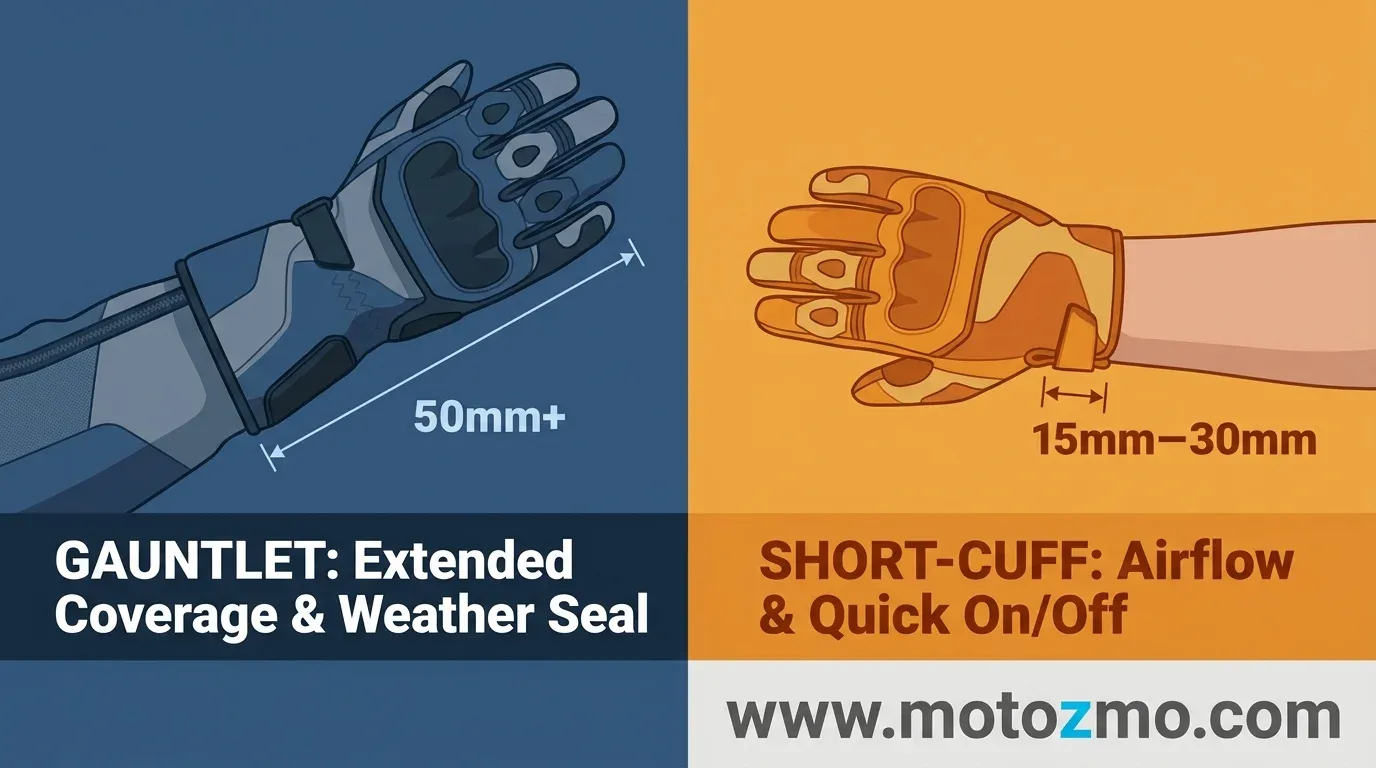
Pick a gauntlet if you ride in the cold, in the rain, or for long stretches at highway speed. Pick a short cuff if most of your riding stays short, warm, and in town.
Most comparisons stop right there. What they skip is that a gauntlet worn the wrong way against your jacket sleeve can work against you instead of for you, and that “gauntlet is safer” is a claim almost nobody backs with real numbers.
This guide covers the full comparison, the sleeve mistake that undoes a gauntlet’s seal, and what the actual injury data says about wrist coverage. For the safety rating behind both styles, see our guide to choosing motorcycle gloves by CE level.
Gauntlet vs Short-Cuff at a Glance
| Gauntlet | Short-cuff | |
|---|---|---|
| Wind and rain at the wrist | Seals the gap when worn right | Leaves a gap unless your jacket cuff covers it |
| Cold-weather warmth | Traps more heat at the wrist and lower arm | Loses heat fast in cold air |
| Hot-weather comfort | Traps heat, can feel heavy in summer | Breathes better, cooler on the hand |
| Wrist and forearm coverage | Covers more skin if you go down | Stops at or near the wrist bone |
| On-and-off speed | Slower, more so with a buckle or strap | Fast, pull on and go |
| Typical CE cuff length | 50mm or more, matches the Level 2 minimum | Often near the 15mm Level 1 minimum |
| Best fit | Touring, highway miles, cold or wet rides | Commuting, city riding, hot climates |
Who Should Skip Each One
Skip a gauntlet if your jacket already has a tight cuff that seals on its own, most of your riding stays under 30 minutes in town, or you ride somewhere that stays warm all year. The extra bulk buys you little there and costs you feel on the controls at every stop.
Skip a short cuff if you spend real time on the highway, ride through cold mornings, or want your gear to cut down on the amount of skin exposed if a slide reaches your wrist. A short cuff alone won’t cover that gap.
If wrist and knuckle protection is the deciding factor either way, our knuckle armor roundup covers gloves built around that goal, gauntlet or not.
Wear a Gauntlet the Right Way, or It Works Against You
A gauntlet only seals the gap when it sits over your jacket sleeve, not under it. The cuff flares out so it can rest on top of the sleeve and shed rain and wind down and past the joint, the same way one roof shingle sheds water past the one below it.
Tuck that same cuff under a snug jacket sleeve instead, and the seal flips backward: water and wind now run down the outside of the sleeve and straight into the open top of the glove.
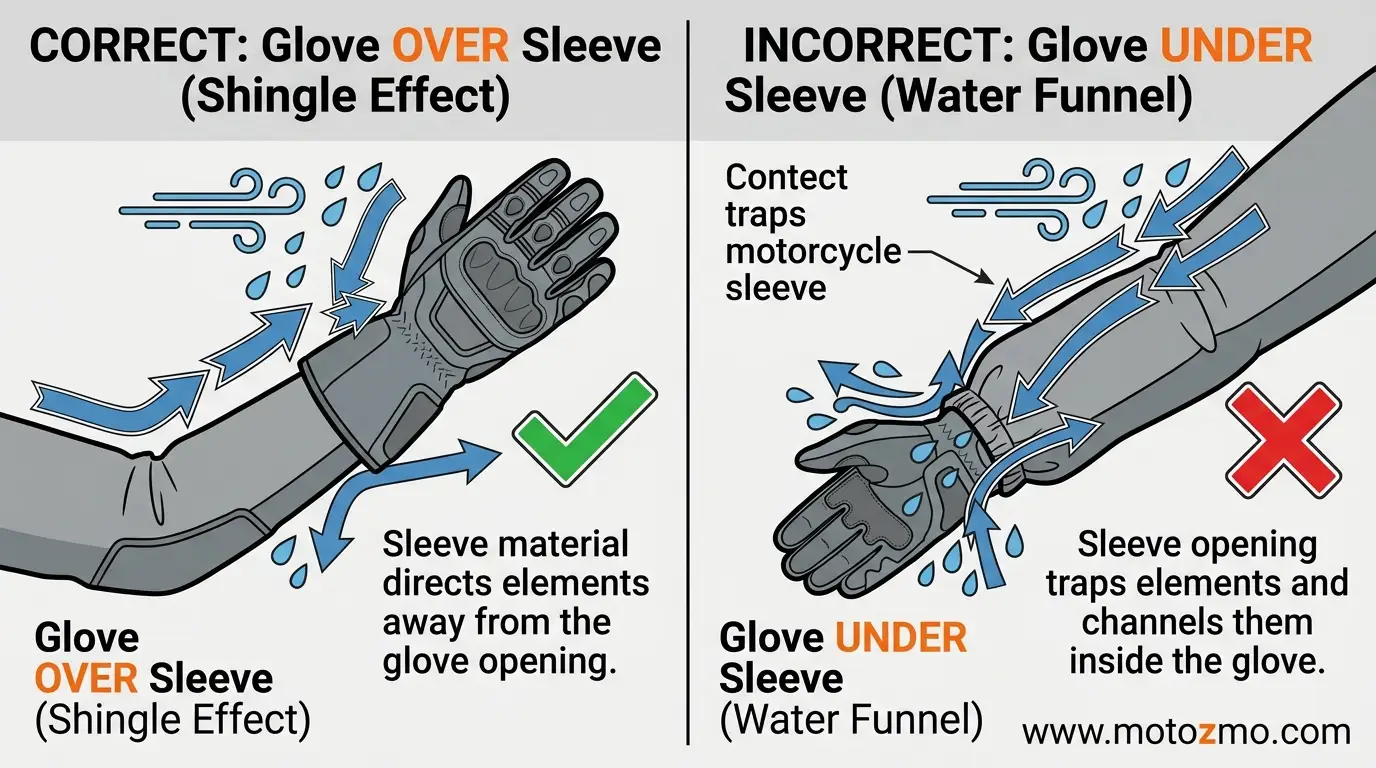
Check this before you buy. Try the glove on with the jacket you ride in most. If the jacket sleeve is snug enough to close over a short cuff, that’s the pairing you want. If the sleeve is loose enough to let a gauntlet cuff sit over it with room to spare, that’s the setup that seals right.
What the Injury Data Says About Wrist Coverage
Every gauntlet-vs-short-cuff guide claims the gauntlet is “safer,” but few explain why. Two studies help fill that gap.
A U.S. trauma-center review of 571 motorcyclists treated for arm and hand injuries after a crash found hand fractures and forearm fractures were the two most common injury types, together making up about half of the injuries recorded, according to a study published in SICOT-J.
A separate study of real motorcycle crashes, led by road-safety researcher Liz de Rome, found riders wearing gear fitted with body armor had close to half the risk of a hand or wrist injury compared to riders without it, based on research published through The George Institute for Global Health.
Neither study singles out gauntlet cuffs by name, but both point the same way: the wrist and hand rank high on the list of places that get hurt in a fall, and covering more of that area with armored gear cuts the risk. That builds the case for a gauntlet on longer or faster rides, even before you factor in the weather.
How This Matches the CE Rating on the Label
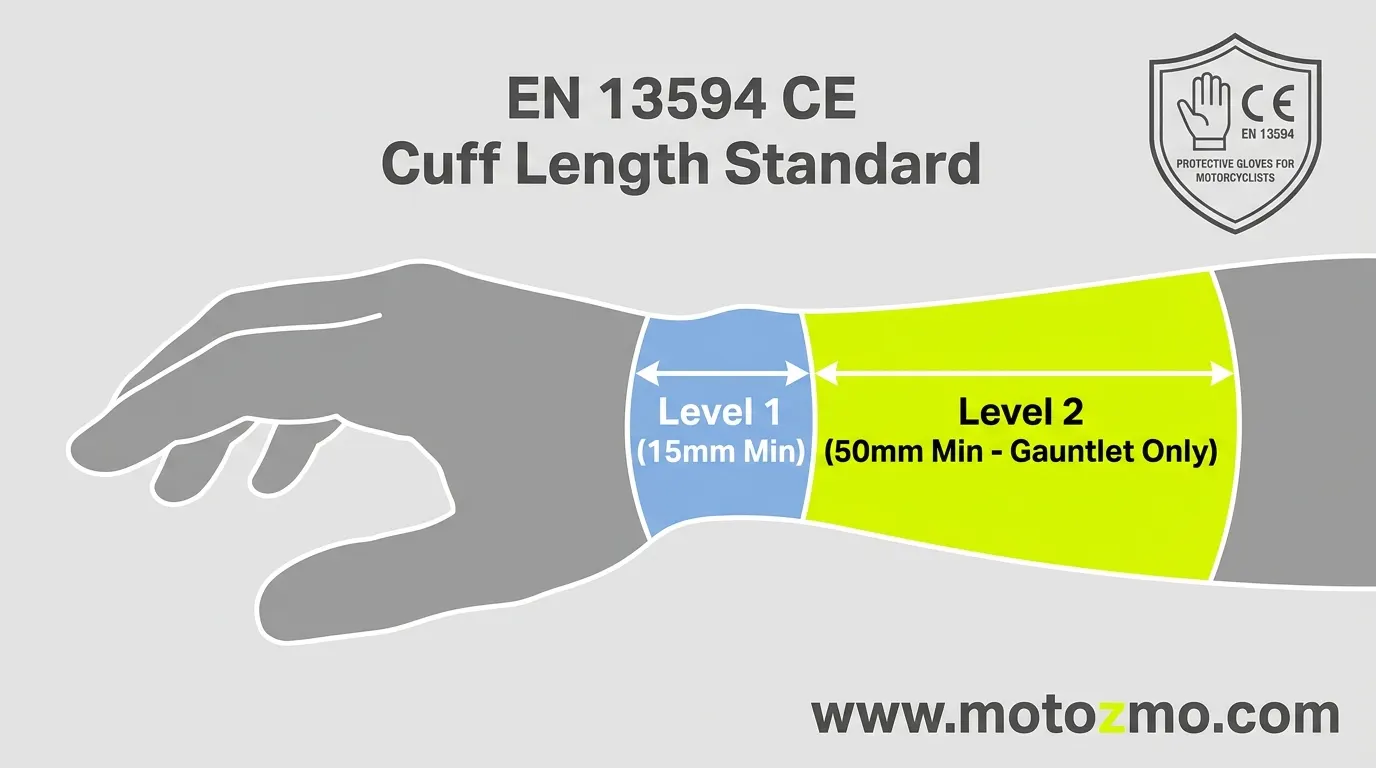
Every Level 2 CE-rated glove is a gauntlet by definition. The EN 13594 standard sets a 50mm minimum cuff length for Level 2, so a glove can’t earn that grade with a short cuff, no matter how the rest of it performs.
A gauntlet-cut glove without a Level 2 test result might still reach that length, but it hasn’t passed the harder abrasion and knuckle tests that come with the rating. That’s the same Level 1 versus Level 2 split covered in our CE-rating buying guide, viewed from the cuff side this time.
Match It to Your Season
Cold and wet climates lean gauntlet by default, since the weather that pushes you toward a longer cuff is the same weather where a short cuff struggles most. Riders dealing with real winter should also check our non-heated winter glove roundup for insulated builds that pair well with a gauntlet cut.
Hot, dry climates flip that math. A perforated short cuff moves air where a gauntlet just traps heat. Our summer and mesh glove picks stick to short-cuff and vented builds for that reason.
Mistakes Riders Make When Choosing Between Them
- Matching cuff length to the season and skipping the jacket check. A gauntlet stuffed under a jacket with no spare room bunches at the elbow and cuts circulation on a long ride.
- Buying a leather gauntlet for a wet climate and expecting it to stay dry. Leather still soaks up water over a full day of rain; our leather versus textile breakdown covers builds that handle wet weather better.
- Assuming any long-cuff glove counts as CE Level 2. Check the label for the actual rating, not just the cuff length. A long cuff alone doesn’t mean the glove passed the tougher abrasion and knuckle tests.
- Picking a gauntlet for a first bike before testing fit and finger feel. New riders often do better starting with a short cuff and moving up once they know their riding pattern; our picks for a first pair of gloves cover that stage.
Quick Pick Checklist
- Cold, wet, or highway miles: go gauntlet, worn over the jacket sleeve
- Hot, short, or stop-and-go city riding: go short cuff
- Jacket sleeve already snug: match a short cuff to it
- Jacket sleeve loose enough to tuck a glove under: a gauntlet fits the setup
- Want the CE Level 2 rating: the cuff has to hit 50mm minimum, gauntlet only
- Check the label, not just the cuff, before you trust the rating
Get the cuff length and the sleeve pairing right, and the glove does the job it’s rated for instead of fighting your jacket.