
Top Picks For You
Alpinestars SP-8 V3
Ideal for everyday street riders needing dependable, track-tested impact defense without cumbersome bulk. Certified protection delivers high-end peace of mind for daily commutes and spirited road riding.
Check Price
MSR ADV Air Glove with D3O
Perfect for long-distance adventure riders who prioritize all-day control and flexibility. Responsive armor hardens only during an impact, preserving effortless grip over hours in the saddle.
Check Price
Steel Outdoor Knuckle Motorbike Powersports Gloves
A cost-effective solution for budget-conscious riders seeking hard, highly visible joint protection. Offers raw impact shield capability over crucial strike zones at an entry-level price point.
Check Price
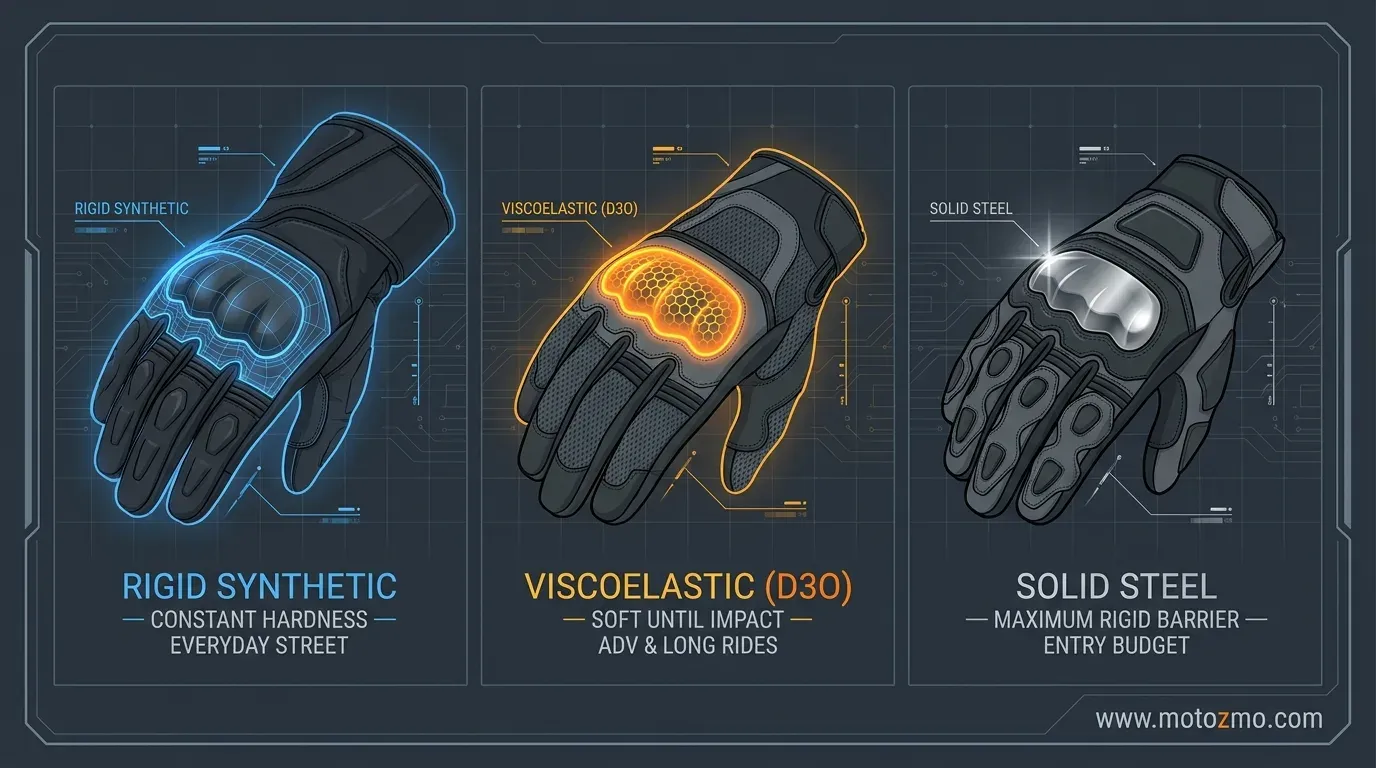
Knuckle armor comes in two types, rigid shells that stay hard all the time and viscoelastic pads like D3O that stay soft until the moment of impact, and most roundups never tell you which one a glove uses.
They just say “hard knuckle protection” as if every version works the same way. It doesn’t. Rigid armor and impact-activated padding feel different on the bar and protect the hand in different ways in a fall, and a lot of budget gloves marketed with knuckle protection don’t name a material or point to any test result at all.
This roundup picks one glove per armor type, with praise and complaints buyers left. For how knuckle protection factors into the CE rating on the label, see our guide to choosing motorcycle gloves by CE level.
Which Armor Type Are You Buying
| Product | Armor type | What it is | Best for |
|---|---|---|---|
| Alpinestars SP-8 V3 | Rigid dual-density shell | Hard plastic or composite that stays firm all the time | Everyday street riding, maximum coverage |
| MSR ADV Air Glove with D3O | Viscoelastic (D3O and similar) | Soft and flexible until impact, then hardens on contact | Long rides, ADV and dual-sport comfort |
| Steel Outdoor Knuckle Motorbike Powersports Gloves | Rigid steel plate | Solid metal knuckle guard, no give at all | Budget buyers who want visible, maximum-hardness coverage |
Alpinestars SP-8 V3: Best Overall (Rigid Dual-Density Armor for Everyday Street Riding)
Key Features
- MotoGP-derived rigid dual-density knuckle guard
- Certified EN 13594:2015 CE Level 1 KP rating
- Extended cuff with full goat leather and synthetic construction
- Touchscreen-compatible index fingertip
The Alpinestars SP-8 V3 is a full gauntlet built from goat leather and synthetic panels, carrying a MotoGP-derived dual-density knuckle protector and a genuine CE Level 1 KP rating under EN 13594:2015. It’s a current best seller in its category, with more than 600 sold in a typical month, so demand and stock both look solid.
Owners praise the extended cuff, the touchscreen fingertip, and the fact that the protection and build quality hold up well against gloves that cost far more.
The complaints are specific: the glove lacks hard armor on the palm and cuff itself, finger lengths run a little inconsistent between sizes, and the perforation isn’t quite enough for hot summer riding.
One long-term reviewer also noted a competing glove at a similar price offers more hard armor in more places, so this isn’t the pick for a rider chasing maximum coverage everywhere, it’s the pick for a rider who wants certified knuckle protection without gauntlet-level bulk.
MSR ADV Air Glove with D3O: Best for Adventure and Dual-Sport Comfort (D3O Soft-Until-Impact Protection)
Key Features
- Flexible D3O viscoelastic armor that hardens strictly upon impact
- Full-grain leather palm combined with high-airflow upper ventilation
- Light, barely-there feel for maximum lever feel and feedback
- Specialized ergonomics designed for standing peg positions
The MSR ADV Air Glove with D3O pairs a full-grain leather palm with a D3O knuckle pad instead of a hard shell. D3O stays soft and flexible during normal riding, then stiffens on impact to spread the force, which is why adventure and dual-sport riders who spend hours standing on the pegs tend to prefer it over rigid armor.
Owners back that up: several call out the ventilation and the light, barely-there feel on the controls, with one saying they could manage the clutch and brake without even noticing the gloves were on.
The complaints are specific. More than one buyer found the palm seam where the thumb attaches bunches up and gets uncomfortable after about an hour of riding, and sizing runs inconsistent enough that one rider had to gamble on a size up after their first choice sold out.
Worth trying on before a long ride, not just ordering and going.
Steel Outdoor Knuckle Motorbike Powersports Gloves: Best Budget Pick (Steel-Plate Knuckle Armor)
Key Features
- Solid steel metal plate covering the primary knuckle strike zone
- Hard, non-malleable physical barrier against direct impacts
- Old-school heavy-duty aesthetics with high visual presence
- Low-cost design for riders prioritizing basic joint armor
The Steel Outdoor Knuckle Motorbike Powersports Gloves skip composite materials for a solid steel plate over the knuckles, an old-school approach that still shows up often in budget gloves.
Buyers who’ve hit something confirm the plates aren’t hollow show pieces: several describe them as sturdy metal rather than painted plastic, and multiple reviewers call them worth the price for the protection they add over a plain leather glove.
The trade-off shows up in the same reviews. One buyer summed it up well: the price is fair, but in a serious get-off, don’t expect to walk away without losing some skin elsewhere on the hand.
That’s the limit of this pick, the steel plate guards the knuckle impact point well, but the rest of the glove is built to a budget, not to a full CE standard. Treat it as knuckle protection on a budget, not full crash protection.
Check This Before You Trust “Knuckle Protection” on a Budget Listing
A knuckle shape sewn into the back of a glove isn’t the same as tested knuckle protection. The CE system marks a glove “KP” only after the knuckle piece passes an impact test under EN 13594, and D3O’s product pages list the specific standard each of their inserts is certified against, which is the kind of detail a listing should give you and a vague one won’t.
If a product page says “hard knuckle” with no material named and no standard referenced, treat the protection claim as unverified until you see otherwise. Intertek’s motorcycle glove testing page covers how labs run this specific impact test, separate from the abrasion and seam tests the rest of the glove goes through.
Our leather versus textile breakdown covers the same verification problem on the shell material side, and our beginner glove roundup runs into budget knuckle claims that don’t hold up the same way this one does.
Match the Armor Type to Your Riding
Rigid armor works well for short, stop-and-go rides where you’re not gripping the bar for hours at a stretch. Viscoelastic padding earns its keep on long days in the saddle, touring, or standing on the pegs, since it doesn’t fight your hand the way a hard shell can.
Cuff length plays into comfort here too; our gauntlet versus short-cuff comparison covers how that choice pairs with armor placement. For season-specific builds, our summer and mesh glove picks and non-heated winter glove roundup cover armored options suited to each.
Quick Pick Checklist
- Everyday street riding, want certified protection without gauntlet bulk: rigid dual-density armor
- Long days, ADV or dual-sport, standing on the pegs: D3O or similar viscoelastic padding
- Tight budget, want visible maximum-hardness coverage: steel-plate armor, with realistic expectations for the rest of the glove
- Any budget level: check for a named material and a referenced standard before you trust the claim
The armor type changes how a glove feels for the next three years of riding as much as it changes what happens in the one moment it’s built for.