
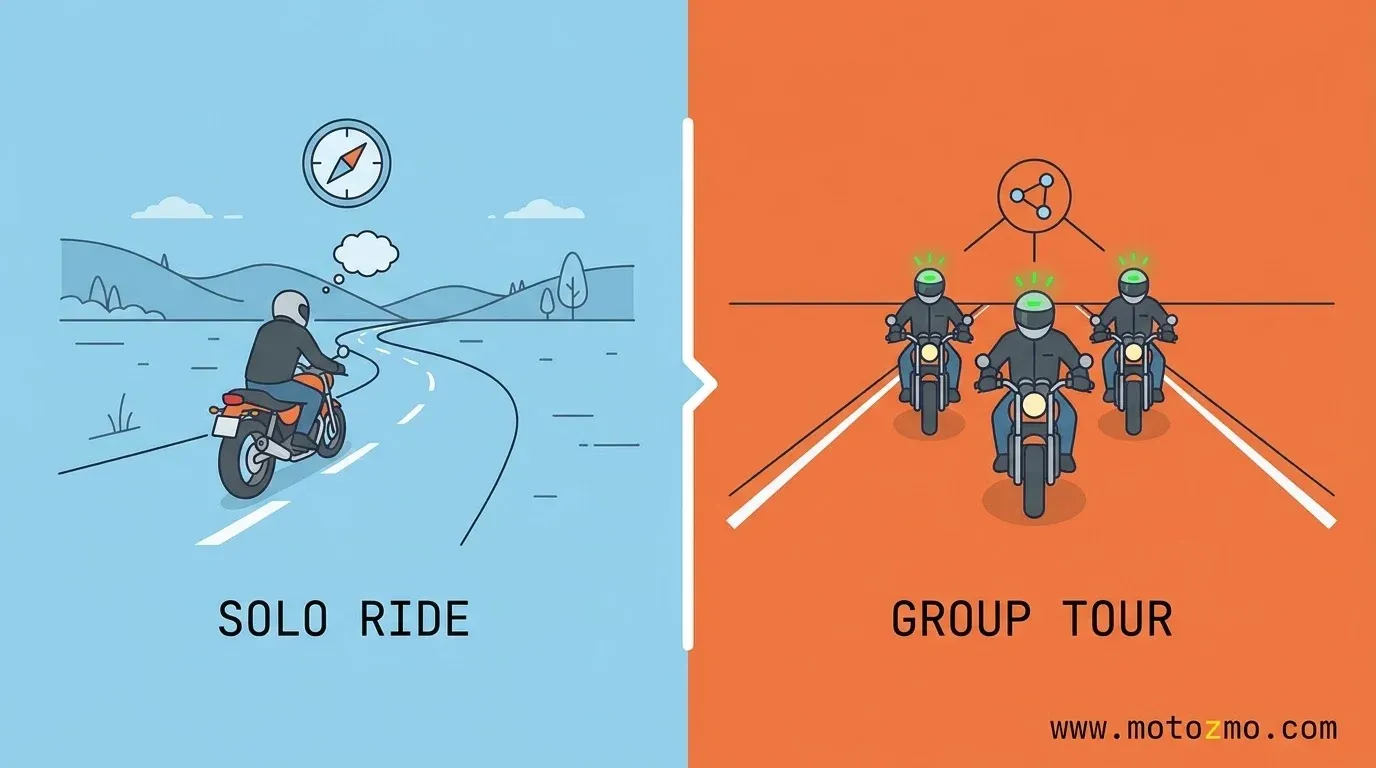
Search this question anywhere else and you’ll get the same answer: yes, buy one, here’s why. That’s not an honest answer, it’s a sales pitch wearing a question mark. The real answer depends on how you ride, not on what an affiliate site wants to sell you.
This guide walks through who genuinely benefits from a communication system, who’s better off saving the money, and a middle option almost nobody mentions. If you land on “yes,” our complete buyer’s guide to motorcycle Bluetooth communication systems picks up from there.
The Honest Answer Depends on Three Things
Before you spend $150 to $450, answer these: Who do you ride with? What do you already use for directions and music? And does your state even let you wear something in your ears while riding? Get those three answers first, and the rest of this decision gets easy.
You probably need one if…
- You ride with the same group regularly and need to call out hazards, fuel stops, or a wrong turn before it happens.
- You carry a passenger often and want to talk to them without shouting into your helmet.
- You tour long distances and rely on GPS, since a system that reads turns into your ear beats glancing down at a phone mount.
- You want calls that stay legal if a cop pulls alongside you, not calls that are merely possible.
You probably don’t if…
- You ride solo most of the time and have nobody to talk to on the road.
- Your rides are short commutes where music or calls barely matter before you’re already parked.
- Your gear budget is tight and a better helmet or jacket would protect you more than a comm system would.
- You’d rather ride without another screen or menu competing for your attention.
None of these are permanent. A rider who rides solo today might join a group next season. The point isn’t to talk yourself out of ever owning one, it’s to buy at the moment it actually solves a problem you have, not before.
The Middle Path Nobody Mentions
Full mesh systems get all the attention, but plenty of riders don’t need one. One rider on a motorcycle forum put it well: after pricing out a Cardo or Sena setup, he realized he rides alone most of the time and just wanted decent Bluetooth sound in the helmet, nothing more. He ended up shopping for a basic Bluetooth speaker set instead of a full communicator, and saved most of the cost.
That middle option is real: a simple pair of Bluetooth speakers that fit inside your helmet, no boom mic, no mesh, no group pairing, just music and calls through your phone.
If your bike has room for them, our handlebar speaker roundup covers an even simpler setup that skips your helmet entirely.
And if a full system still makes sense once you’ve weighed everything here, our budget motorcycle intercom picks start well under what the big brands charge.
What a Communication System Won’t Fix
A comm system won’t turn a riding partner who never signals lane changes into a better rider, that’s a conversation, not a gadget. It won’t replace hearing protection either.
Better speakers just make it easier to hear over wind and engine noise, they don’t cancel that noise out, and riders who skip earplugs because their headset already sounds clear are still doing damage over a long ride.
Our guide to motorcycle earplugs covers options that still let intercom audio through. And a system won’t guarantee smooth talk with a riding buddy on a different brand, mesh networks from different manufacturers generally don’t connect, so check what your group already owns before you buy anything.
The Legal Wrinkle Nobody Mentions
Most articles tell you to “check your local laws” and leave it there. Here’s the part that surprises people: in several states, the law is harder on plain earplugs than it is on a helmet-integrated headset.
NPR reported on a rider in Ohio who was ticketed for wearing simple foam earplugs, since the state’s law bans earplugs in both ears with only narrow exceptions, while headsets built into a helmet are treated differently under most state rules. Maryland, Washington, and a handful of other states have similar language that trips up riders who assume hearing protection is automatically fine.
None of this makes a comm system mandatory, but it does mean the device in your ears carries legal weight, not only comfort, and it’s worth five minutes on your state’s actual statute before you buy either one.
Even where hands-free calling is legal, it isn’t the same as distraction-free. The National Safety Council has found that a phone conversation pulls your attention from the road whether you’re holding the phone or not.
A headset keeps your hands on the bars, which is real value, it just isn’t a free pass to talk as much as you want in heavy traffic.
If You’ve Decided You Need One
Start with our Cardo vs Sena comparison if you’re ready to spend on a premium system, or the budget intercom picks if you’d rather keep the cost around $150 while you figure out how much you’ll use it.
FAQs
Is it illegal to ride a motorcycle without any hearing protection or headset?
In most states, yes, it’s legal to ride with nothing in your ears at all. The laws that exist mostly restrict what you can wear, not require you to wear something.
Can I just use regular wireless earbuds instead of a motorcycle-specific headset?
You can, and plenty of riders do, but earbuds sit loose enough to fall out under a helmet and don’t hold up to rain or sweat the way a purpose-built unit does. They also don’t give you a microphone that works well against wind noise. For solo listening on short rides they’re fine; for anything longer or with other people, a real headset earns its price.