Affiliate disclosure: This post may contain affiliate links. If you buy through a link on this page, MOTOZMO may earn a small commission at no extra cost to you. It helps keep our guides free. How we test and choose products.
Check the oil level with the engine warm, the bike held upright, and the method your owner’s manual prescribes, since dipstick, sight glass, and dry-sump bikes each need a different check.
I used to check every bike the same way, and that habit once handed me a phantom low reading that nearly talked me into overfilling a crankcase. The three mistakes I see most often: trusting a cold reading, checking on the side stand, and screwing the dipstick in (or not) against what the manual says.
Below is how to tell which of the three oil-level systems your motorcycle has, how to check it in under two minutes, and how to read what the result tells you. If you top up from a bad reading you can overshoot, so here is where the overfill danger line sits.
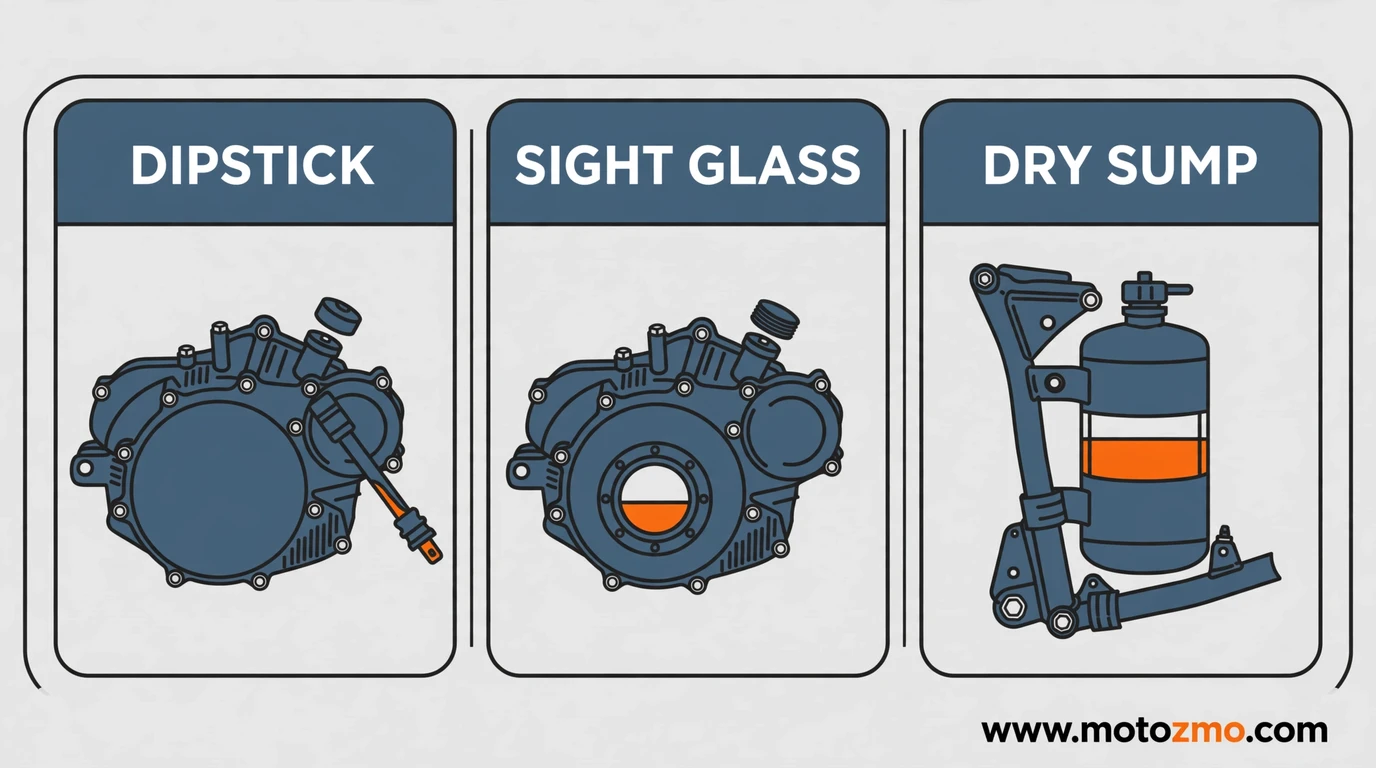
Which Oil-Level System Does Your Bike Have?
Start here. Every step below changes depending on the system, and grabbing the wrong procedure is where bad readings begin.
| System | What to look for | Common on |
|---|---|---|
| Dipstick | A filler cap with a stick attached, usually on the engine’s right side | Older standards, cruisers, dirt bikes, many nakeds |
| Sight glass | A small round window low on the engine case, with min and max marks beside it | Most modern Japanese and European bikes |
| Dry sump / external tank | Dipstick on a separate oil tank or filler neck, often on the frame or swingarm | Harley-Davidson, some BMW and KTM models |
How to Check Oil with a Dipstick
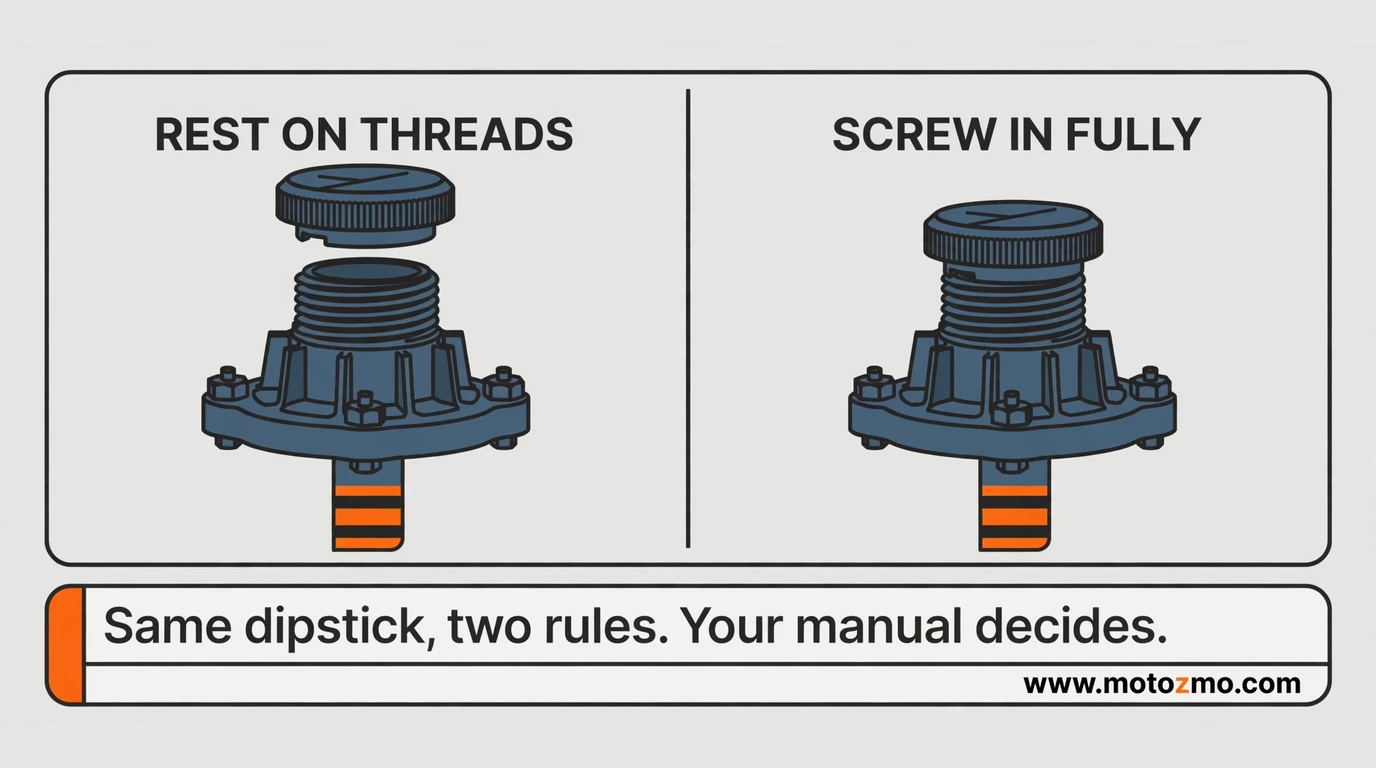
The dipstick is the most common system and the easiest to get wrong, because one critical step differs from brand to brand.
- Warm the engine (ride for about ten minutes or idle for three to five), then shut it off and wait three to five minutes so the oil drains back into the sump.
- Hold the bike upright. Use a center stand, a paddock stand, or a helper. A bike on its side stand leans far enough to move the oil away from the dipstick and lie to you.
- Pull the dipstick and wipe it clean with a lint-free rag. First pulls always read wrong.
- Reinsert it exactly the way your owner’s manual says. This is the trap: Yamaha manuals say, word for word, “Do not screw the dipstick in when checking the oil level.” Harley-Davidson’s official procedure says the opposite: insert the dipstick and screw it in completely. The brands disagree, so your manual is the only tie-breaker. (Yamaha service manual)
- Pull it out and read the film between the min and max marks. Top up in small pours if it sits under the minimum, and recheck after each pour. Never push it above the max line.
How to Check Oil with a Sight Glass

The glass is faster and cleaner than a dipstick, but it reads only as straight as you hold the bike.
- Same warm-up and settle routine: warm engine, shut off, wait three to five minutes.
- Hold the bike upright and wipe the outside of the glass clean. View it at eye level, because looking down at an angle causes a parallax error that shifts the reading.
- The level should sit between the two marks beside the window. Somewhere between the middle and the upper mark is the happy zone.
- If the glass looks empty, you are running low. If it looks completely full, you have overfilled. Both demand action, not a shrug.
How to Check Oil on a Dry-Sump Bike
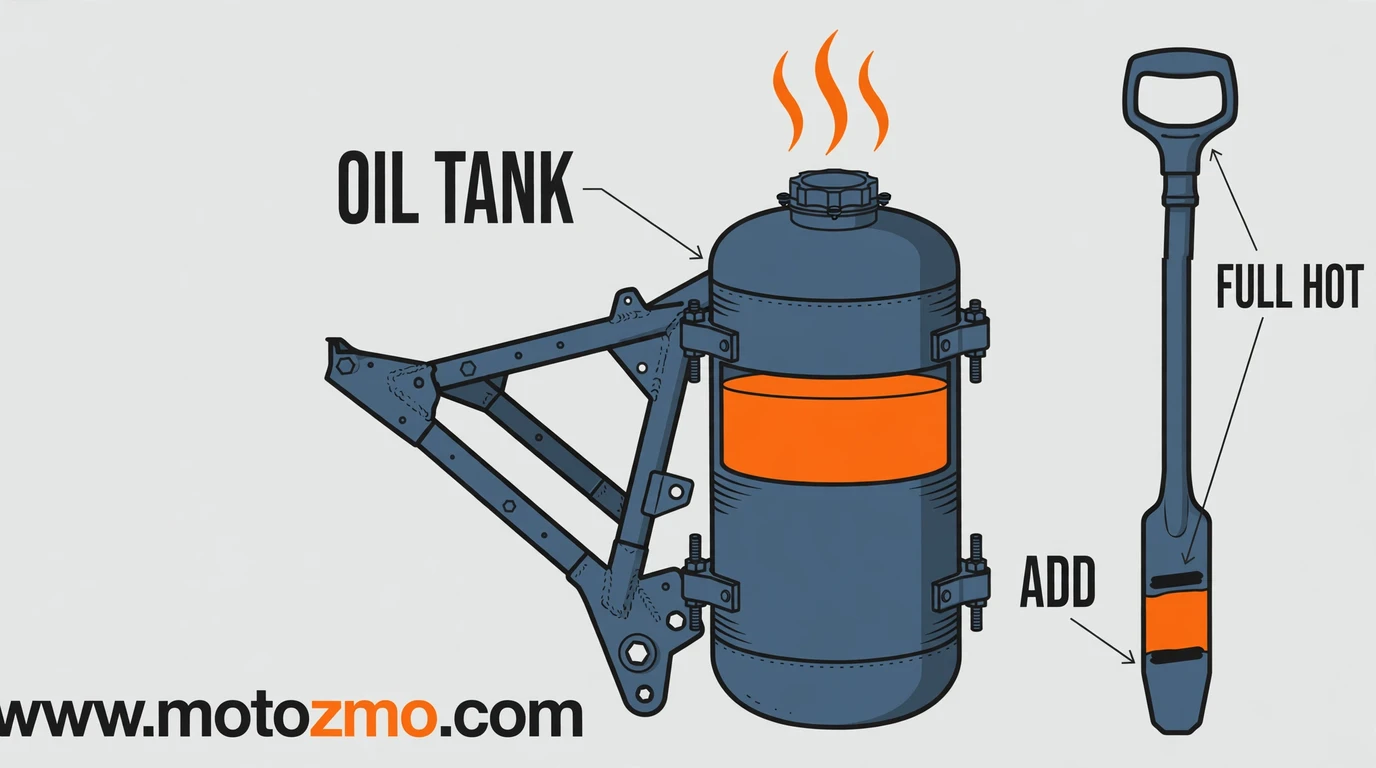
This is the system most articles skip, and it is the one most likely to fool you. On a dry-sump bike the oil lives in a separate tank, and the level only reads true with the engine at full operating temperature. A cold reading means almost nothing.
- Ride for about ten minutes so the oil gets genuinely hot. Harley-Davidson’s official procedure then has you idle for one to two minutes, shut the engine off, and wait a couple of minutes before reading; checking sooner gives a false reading. (Harley-Davidson service procedure)
- Wipe the dipstick, screw it in fully, remove it, and read between the ADD and FULL HOT marks.
- If you must check cold (a pre-ride glance, say), read the level as midway between the marks, never at FULL HOT. Harley’s own manual warns that readings taken with colder oil lead to an overfull engine. Topping up a cold reading is the number-one way riders overfill these bikes.
The Three Reading Traps
Most “wrong” oil readings are not wrong oil. They are wrong procedure. Run through this table before you add a drop.
| Trap | What goes wrong | The fix |
|---|---|---|
| The cold check | Cold oil contracts and sits low, so the level reads short and you pour in oil you don’t need | Check at operating temperature; on a cold engine read only the midway mark |
| The side-stand check | A leaned bike shifts oil away from the dipstick or glass, so the level reads low | Hold the bike upright, unless your manual, like some Harleys, approves the stand |
| Screw vs rest | Screwing in a dipstick meant to rest pushes the stick deeper and reads high; resting one meant to be screwed reads low | Match your owner’s manual: the big brands genuinely disagree |
When to Check, and What the Reading Tells You
Build the habit to fit how you ride. A commuter can check weekly; a tourer should check every morning and at fuel stops. If you just bought a used bike, check every ride for the first month until you know how much oil it drinks; every engine has its own appetite.
The level is only half the story. If the level drops a little between checks, that is normal consumption, so top up with the right grade and keep an eye on it. Here is how much oil loss counts as normal before you start worrying.
If the oil on the dipstick looks dark and gritty or smells burnt, change the oil instead of topping it up. Use the two-clock rule to decide when that change is due. And if you find yourself topping up often enough to care, learn the full oil change procedure; a fresh fill with a new filter beats endless top-ups.
FAQs
Can I just rely on the oil pressure light instead of checking the level?
No. The light measures pressure, not level. When it comes on at idle, the engine is already running oil-starved. It is a damage alarm, not a gauge. Check the level yourself.
My sight glass looks cloudy. Can I clean it?
Wipe the outside with a soft cloth and a little soapy water. If the haze is inside the glass, the window or its seal is aging; have it replaced. A glass you cannot read is worse than no glass at all.