Affiliate disclosure: This post may contain affiliate links. If you buy through a link on this page, MOTOZMO may earn a small commission at no extra cost to you. It helps keep our guides free. How we test and choose products.
Top Picks For You
Gerbing 12V Heated Pant Liner
The benchmark for serious winter touring: 12V bike power means the heat never runs out, with Microwire zones on legs and hips.
Check Price
Firstgear Generation 4 Heated Liner Pants
The highest heat output here at 48 watts, with moisture-wicking fabric and built-in plugs for heated socks.
Check Price
DEWBU 12V Heated Pants
A standalone softshell pant with its own 12V battery pack: 5 heat zones and up to 10 hours on low, no bike wiring needed.
Check Price
ORORO Heated Pants
The value pick: slim 7.4V battery pants that work on and off the bike, from the best-reviewed heated apparel brand on Amazon.
Check Price
Buy heated motorcycle pants only after you pick a power source: 12V bike-powered liners for all-day heat, 7.4V battery pants for short rides and off-bike use.
I ride through winters where the wind finds every gap in my layers, and my legs were the last thing I fixed. Cold thighs and knees drain your energy on long rides, and no base layer stops 60-mph wind chill.
The picks below cover both power types, and the heated gear guide shows how pants fit into a full heated setup. If your hands or core still get cold first, fix those before you buy pants.
Do You Need Heated Pants?
Not every cold-weather rider does. Your core and hands lose heat first on a bike, and most riders feel fine once those are handled. A good pair of heated gloves plus a heated jacket liner solves the problem for short commutes and cool-weather rides.
Heated pants earn their place in three situations. You tour in freezing temperatures. You commute through winter and your legs go numb before you reach work. Or you ride for hours at highway speed, where wind chill strips heat from your thighs and knees faster than any base layer can trap it.
If that sounds like you, keep reading. If your rides are short and your legs only feel cool, spend the money on a jacket liner first.
Pick Your Power Source First
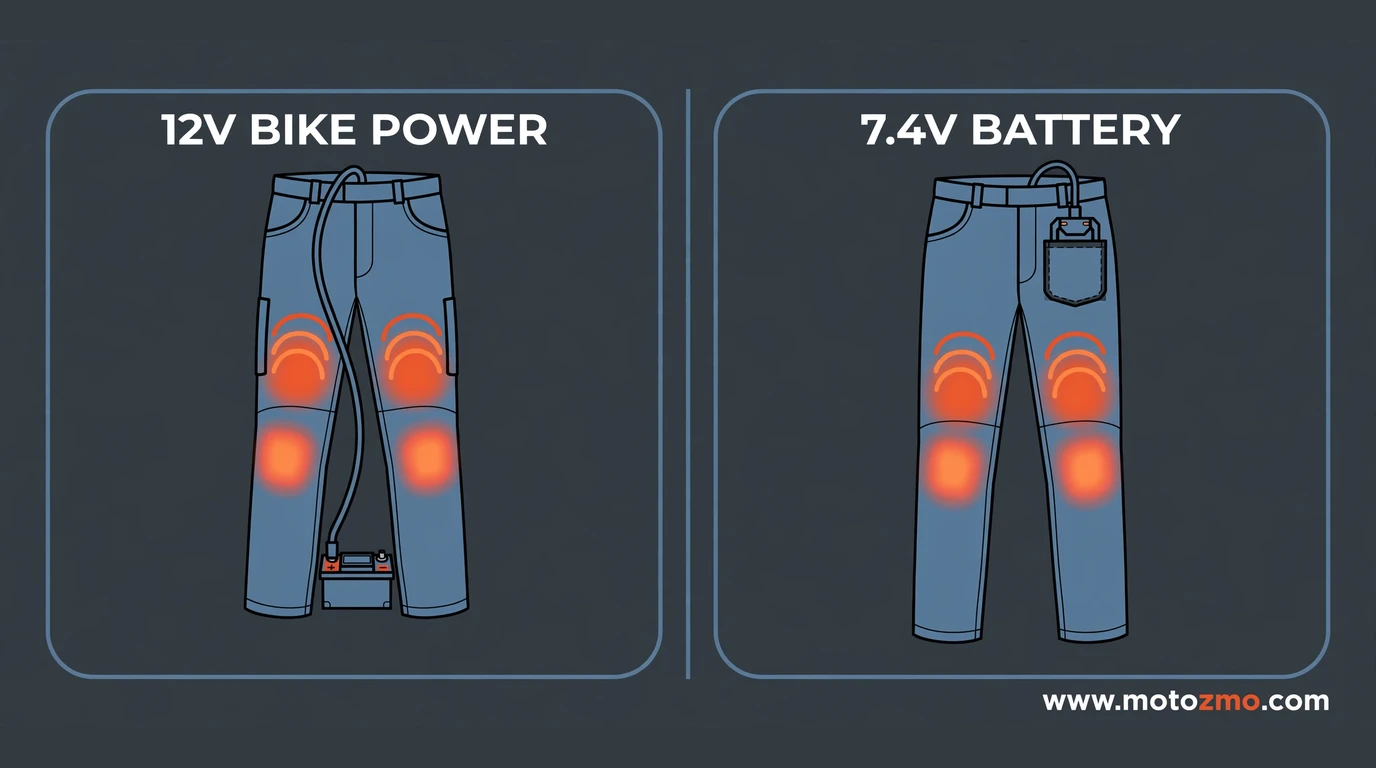
Every heated pant decision starts here, because the two power systems behave nothing alike.
| 12V bike-powered | 7.4V battery-powered | |
|---|---|---|
| Heat source | Your motorcycle’s electrical system | Rechargeable battery pack in a pocket |
| Runtime | Unlimited while the engine runs | 2 to 10 hours, depending on heat level |
| Off the bike | No heat once you unplug | Stays warm at gas stops and walks |
| Setup | Wire a fused harness to the battery; buy a controller separately | Charge the battery, plug it in, ride |
| Heat output | Higher (32 to 48 watts typical) | Lower, and it fades as the battery drains |
| Best for | Touring and all-day winter rides | Commuting, short rides, and multi-bike owners |
Battery pants die at the worst moment: halfway through a long ride, on high, in the cold. Cold also cuts battery efficiency, so the rated runtime shrinks exactly when you need it most.
Carry a spare battery if you go this route. The 12V route never dies, but it tethers you to the bike and adds wiring work plus the cost of a controller, which makers sell separately.
Liner or Standalone Pants?
A heated liner is a thin mid-layer you wear under your normal riding pants. It keeps your armored outer pants doing their job, which matters: heated pants have no crash protection of their own.
Standalone heated pants are softshell outerwear with heat built in. They work as your outer layer, but they replace your riding pants instead of pairing with them.
For motorcycle use, the liner wins for most riders. You keep your abrasion protection, the fit stays slim under textile pants, and the heat sits closer to your skin where it transfers better.
Standalone pants make sense if you also want heated pants for skiing, fishing, or work, since you can wear them anywhere without bike wiring.
Where the Heat Zones Should be
On a motorcycle, wind hits your knees and thighs straight on, and your seat goes cold on long rides. Those are the zones that matter. Hip and waist zones add comfort but face less wind.
Cheap generic heated pants often heat only the knees, which leaves your thighs cold and wastes the battery on the wrong spot. Look for zones across the thighs and knees at minimum, and treat hip or waist zones as a bonus.
Fit matters as much as zones. Heat transfers through contact, so a liner should fit snug, not loose. Size down if you sit between sizes, and try it on with the base layer you will actually wear under it.
The 4 Best Heated Motorcycle Pants
1. Gerbing 12V Heated Pant Liner
Key Features
- Patented Microwire stainless-steel fiber heating elements
- Draws 4.6 amps from the bike’s 12V system
- Pre-wired cuff connections for heated socks or insoles
- Eight sizes from XS to 4XL including tall options
Best for: all-day winter touring, where the heat must never run out.
Gerbing built the category, and the pant liner shows why. Four Microwire heat zones sit on the legs and hips, the mini-ripstop nylon shell blocks wind, and it plugs straight into your bike’s 12V system for heat as long as the engine runs.
It also connects to a Gerbing jacket liner, so one harness powers your whole lower and upper body, and the cuffs come pre-wired for heated socks.
The honest tradeoff is cost and complexity. The battery harness and temperature controller sell separately, and Gerbing warns against running it without a controller.
It only heats while plugged into the bike, so gas stops go cold fast. The fit runs snug by design, which helps heat transfer but means careful sizing.
2. Firstgear Generation 4 Heated Liner Pants
Key Features
- 48-watt heating system, the strongest in this roundup
- Moisture-wicking antibacterial stretch fabric
- Integrated sock plugs cut cable clutter
- Elastic waistband with drawstring for a snug fit
Best for: extreme cold and riders who want maximum heat output.
Firstgear’s Gen 4 liner pushes 48 watts, the most heat in this group, aimed at riders facing serious cold. The stretch fabric wicks sweat and resists odor on long days, and built-in plugs for heated socks mean fewer cables to route. Like the Gerbing, it runs on 12V bike power, so the heat lasts as long as you ride.
The catch is bulk. It runs thicker than the Gerbing liner and can feel bulky under slim riding pants. It only comes in black, and it still needs a controller and bike wiring, so budget for those. Riders who run cold will forgive the bulk; riders in milder cold will not need this much heat.
3. DEWBU 12V Heated Pants
Key Features
- 54Wh 12V battery pack included in the box
- USB port on the battery charges your phone
- Water-resistant softshell with fleece lining
- Zippered pockets hold the battery and valuables
Best for: riders who want long battery runtime without touching the bike’s wiring.
DEWBU splits the difference between the two power worlds. It runs on a 12V battery pack instead of the bike, so you get five heat zones across thighs, waist, and knees with up to 140 degrees of heat, and the pack lasts 9 to 10 hours on low.
The fleece-lined softshell works as standalone outerwear for skiing, work, or walking the dog, and the battery’s USB port charges your phone.
The downside is bulk and no armor. As a standalone pant it runs thicker than a liner and has no crash protection, so it cannot replace riding pants.
On high the pack lasts around 3 to 4 hours, which covers a commute but not a touring day. You also carry the battery’s weight in a pocket all day.
4. ORORO Heated Pants
Key Features
- 7.4V rechargeable battery system, up to 10 hours on low
- Carbon fiber heating elements heat up in seconds
- Slim fit layers under riding pants or wears alone
- Machine washable with the battery removed
Best for: value-first riders buying their first pair of heated pants.
ORORO owns the battery-powered heated apparel space on Amazon, with tens of thousands of reviews across its heated line.
The pants run on a 7.4V battery, heat up in seconds, and keep a slim profile that layers under riding pants or works as everyday winter pants. They are the easiest entry point: charge the battery, plug it in, and ride.
A 7.4V system cannot match 12V output in deep cold, and high heat drains the battery in a few hours. Some listings ship without the battery, so check the box contents before you buy, and count on a spare battery for long days.
The 12V Cost Nobody Lists
The liner price is not the full price. A 12V setup needs a fused battery harness wired to your bike and a temperature controller, and makers sell both separately.
Gerbing states it plainly on every 12V garment page: all installations require a battery harness and temperature controller for operation, and it warns against running the gear without one. Budget for those parts when you compare a 12V liner against a battery pant that ships with everything in the box.
Wiring is a one-afternoon job on most bikes: ring terminals on the battery, a fused lead routed under the seat, and a plug where your leg reaches it. Small bikes with weak charging systems deserve a check first, since heated gear plus grips plus lights can outdraw the stator at idle.
Care: Wash Them Right or Kill Them
Heat elements hate tumble dryers. Remove the battery, tuck the connector into its pocket, and machine wash cold on gentle in a mesh bag, then hang dry. That routine keeps the wiring alive for years; a hot dryer does the opposite.
Savior’s heated gear guide repeats the same rule across its lineup, and it applies to every brand here.
My Verdict
Pick the Gerbing liner if you tour in real winter and want heat that never quits. Pick the Firstgear Gen 4 if you run cold and want the strongest output. Pick the DEWBU if you want long battery life with zero wiring. Pick the ORORO if you want a cheap first pair for commuting. Whichever you choose, sort your hands and core first, since staying warm on a winter ride starts with the parts that go numb earliest.
Frequently Asked Questions
Will 12V heated pants drain my motorcycle battery?
Not while the engine runs, since the charging system covers the draw. At long idle stops with the engine off, unplug the gear. If your bike has a small stator, add up the draw of all heated gear before a winter tour.
Can I wash heated pants?
Yes. Remove the battery, tuck the connector into its pocket, machine wash cold on gentle in a mesh bag, and hang dry. Never tumble dry heated apparel.