
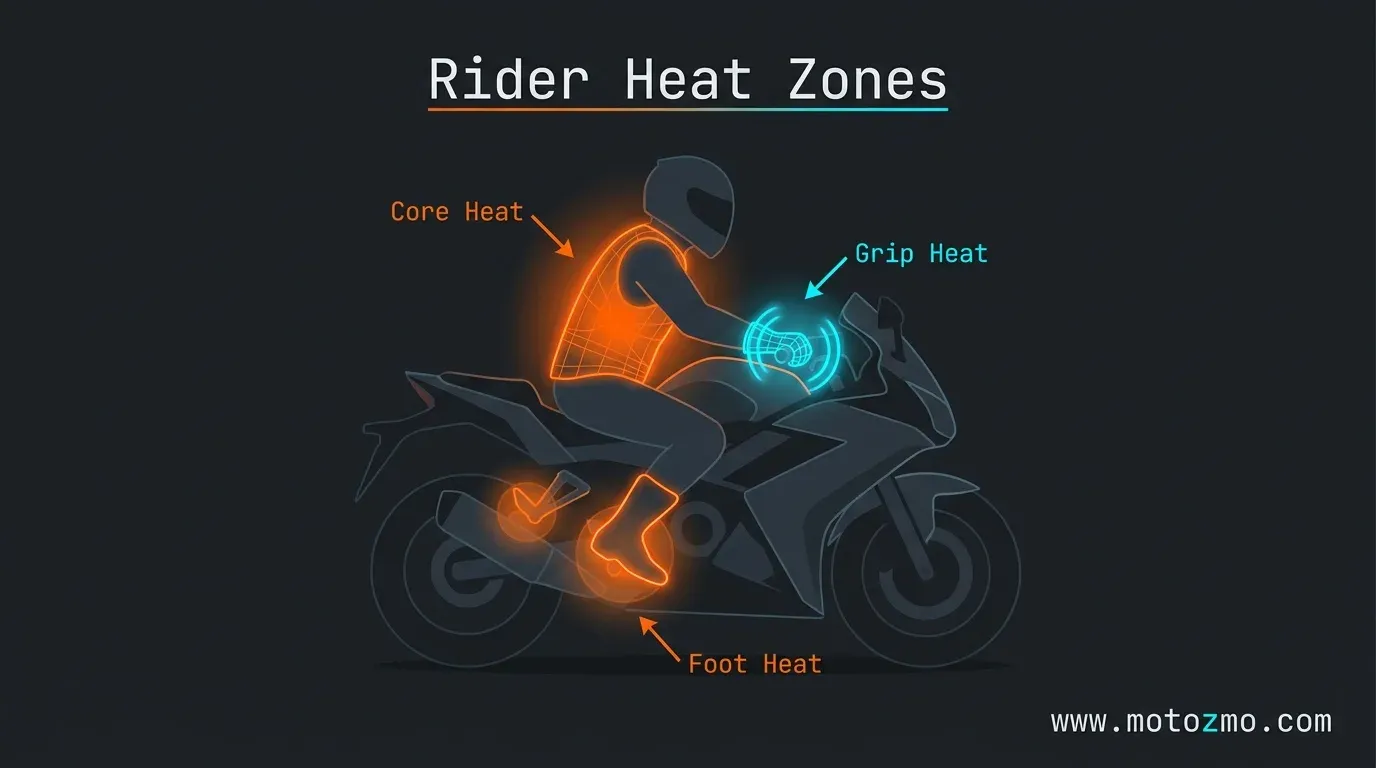
If you can only buy one piece of heated motorcycle gear this year, buy for whichever part of your body gives out first on a cold ride. That means a vest or jacket liner for your core, heated grips for your hands, or heated socks for your feet. Trying to fix everything at once with a full head-to-toe kit is how riders end up with gear stuffed in a drawer by February.
Heated vests, jacket liners, grips, and socks all share the same setup: a heating element draws power from a battery pack or your bike’s electrical system, and a small controller sets the temperature. What matters is runtime, how much power each piece pulls, and which cold spot it fixes.
This guide covers how to pick the right piece, wire it into your bike, and skip the gear you won’t wear twice. If you haven’t nailed the basics of layering yet, start with our guide on staying warm riding a motorcycle in the winter and come back here for the heated layer.
What Heated Gear Does for a Motorcycle Rider
Heated motorcycle gear splits into two groups. Vests, jacket liners, and socks are wearable pieces you put on under your riding jacket, pants, or boots.
Heated grips bolt onto your handlebar and never leave the bike. Both groups fight the same problem: wind chill at highway speed strips heat off your body far faster than standing still in the same temperature.
This guide skips heated gloves on purpose. See our heated gloves roundup for that side of cold-weather gear. What follows covers the four pieces that roundup doesn’t touch: vests, jacket liners, grips, and socks.
Which Piece to Buy First
Skip the “top 10 heated gear” lists and start with a simpler question: where do you get cold first on a ride? That answer points straight to the piece worth buying first.
| Where the cold hits first | Buy this first | Why it works |
|---|---|---|
| Chest and back | Heated vest | Warms your core without adding bulk to your arms |
| Chest, back, and arms | Heated jacket liner | Covers the sleeves a vest leaves bare |
| Hands, even in good gloves | Heated grips | Fixes cold hands at the source instead of adding a garment |
| Feet on rides over an hour | Heated socks | Boots trap almost no warm air on their own |
If your core stays warm but your fingers go numb on a 45-minute commute, more core heat won’t fix that. Buy for the part that fails first, not the part that sounds most useful.
If you’re still not sold on spending money on this at all, our piece on whether heated vests are worth it walks through when the upgrade pays off and when it doesn’t.
Battery-Powered or Wired to Your Bike: How to Pick a Power Source
Every heated piece needs power from somewhere, and that choice matters more than the brand you pick. You have two options: a rechargeable battery pack strapped to the garment, or a wire that runs to your motorcycle’s battery.
| Battery pack | Wired to your bike (12V) | |
|---|---|---|
| Setup | Charge the pack before each ride | One wiring job, then plug in each time |
| Runtime | Around 3 to 6 hours on low, less on high | Runs as long as your engine runs |
| Best for | Short commutes, borrowed bikes, wearing gear off the bike too | Long tours and daily cold-weather riding on one bike |
| Ongoing cost | Replacement packs every few seasons | One harness, usually $20 to $30, lasts for years |
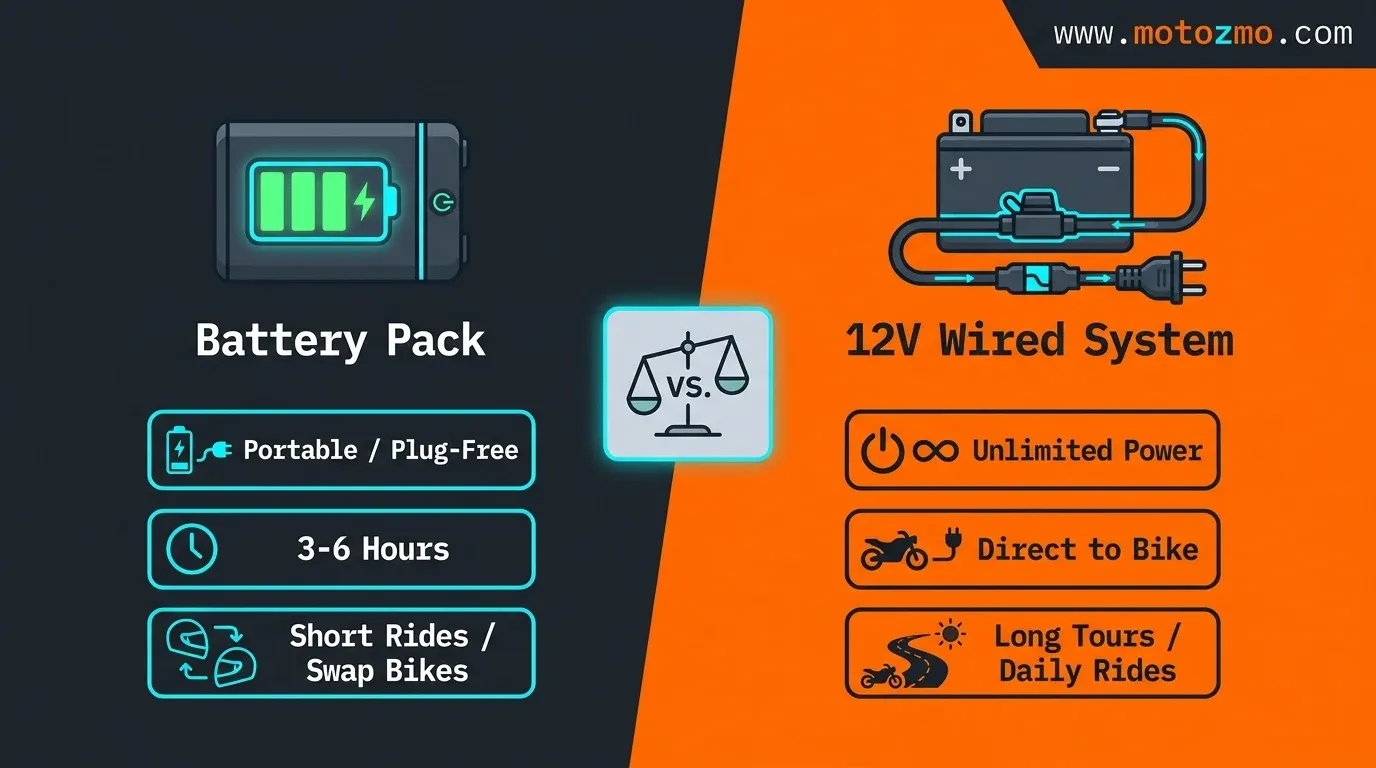
Pick battery power if you swap bikes often or want to wear the vest walking around at a stop. Pick a wired setup if you ride the same bike through a whole winter and don’t want to charge something the night before every ride.
A bike that already struggles to hold a charge is a poor candidate for a wired system. Sort out a battery that keeps dying before you add a load that runs the whole ride.
How Much Power Heated Gear Pulls from Your Battery
Wired heated gear pulls real current, and stacking pieces adds up fast. As a rough guide: heated socks and glove liners each draw around 2 amps, a vest draws close to 5, and a jacket liner draws 6 to 7.
Wire a vest and a pair of socks together and you’re pulling about 7 amps. Add grips on top and you’re past 10. Gerbing publishes its amp-draw and fuse chart, and most other 12V brands land in a similar range.
Most battery harnesses ship with a 15-amp fuse, which covers one or two garments without issue. Add the numbers up before you wire in a third piece, a blown fuse mid-ride kills your heat right when you need it most.
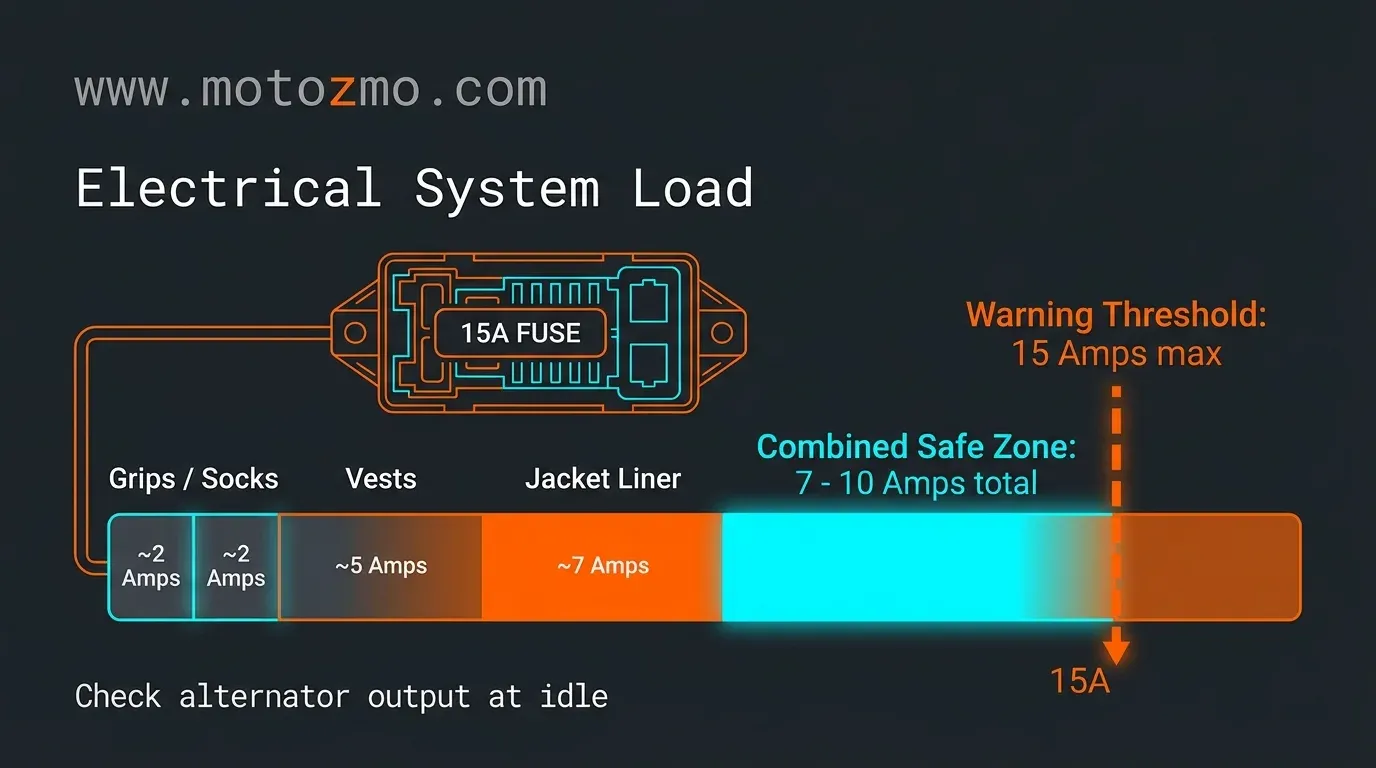
Your bike’s charging system matters here too. At idle or in stop-and-go traffic, your alternator puts out less power than it does at highway speed, so a full heated setup can pull more than the bike replaces while you sit at a red light. That gap matters more on an older or marginal battery, so check yours before you add a full system.
Heated Vest or Jacket Liner: The Core Decision
Vests and jacket liners solve the same problem in different amounts. A vest covers your chest, back, and sometimes your collar, and stays low-bulk enough to wear under a snug riding jacket. A jacket liner covers your arms too, which matters most on bikes with little wind protection, where the sleeves take the brunt of the chill.
The tradeoff is bulk and price: liners cost more and add a layer to your arms that some riders find stiff under a tight jacket sleeve. If you already run a windshield or fairing that blocks most of the wind from your arms, a vest usually covers the gap for less money.
For a full breakdown of both, see our heated vest roundup, our heated jacket liner roundup, and our direct heated vest vs jacket liner comparison.
Heated Grips: The Piece That Never Leaves Your Bike
Heated grips work differently from everything else on this list. They mount on your handlebar and wire into your bike, so there’s nothing to put on, charge, or leave at home. That makes them the lowest-effort heated upgrade on this page, and often the cheapest.
Grips warm your palms but not your fingers, which is why some riders pair them with plain winter gloves instead of buying heated gloves at all.
If your hands stay cold even with grips running, see our heated gloves vs heated grips comparison to find out which one solves your problem. For options across different bar diameters, check our heated grips roundup.
Heated socks: fixing cold feet without touching anything else
Feet lose heat fast on a motorcycle because boots trap almost no warm air on their own, and your feet sit closest to the cold pavement the whole ride.
Heated socks fix that without changing anything else in your setup — no new jacket, no rewired grips, just a thin heating element built into a normal-looking sock.
Most heated socks run on their own small battery pack rather than wiring into your bike, since running a cable down each leg to your boots isn’t practical. That makes them the easiest heated piece to add on top of an existing non-heated base layer.
See our heated socks roundup for options, and pair them with our motorcycle winter base layer guide if your legs run cold too.
Is Heated Gear Safe to Run for Hours at a Time?
Yes, when you buy from a real heated-gear brand and follow the instructions. Quality heated garments use regulated heating elements with overheat protection, so the element can’t climb past a safe temperature even on the highest setting.
Burns happen almost only when riders use damaged gear, run a piece with a torn wire, or leave a garment on a setting meant for riding while sitting still off the bike.
The bigger risk with heated gear isn’t burns. It’s misjudging the cold. Heated gear raises your comfort, but it doesn’t stop hypothermia or frostbite if you ignore how cold you’re getting on a long ride.
Watch for the same early signs you’d watch for without heated gear: shivering that won’t stop, clumsy hands, or slow thinking. The CDC’s guide to preventing hypothermia covers the signs worth knowing before a long winter ride.
Buying Checklist Before You Order Anything
- Name the one body part that gives out first on your rides, and buy for that spot, not a full kit.
- Decide between battery power and a bike-wired setup based on how long your rides run.
- Add up the amp draw of every piece you plan to wire together, and match your fuse to that total.
- Check your battery’s condition before you add a wired system that runs the whole ride.
- Confirm the connector type matches across pieces if you plan to add more gear later.
Start with one piece, ride with it for a season, and add the next piece only once you know where you still get cold. For the rest of your winter setup, from storage to tires, see our full winter motorcycle riding and storage guide.
FAQs
Can I run heated grips and a heated vest at the same time?
Yes, as long as your total amp draw stays under your fuse rating. Grips typically draw 2 to 3 amps and a vest draws close to 5, so most 15-amp harnesses handle both without trouble.
Does heated gear drain my battery while the bike is parked?
Only if you leave it plugged in and powered on. Unplug wired gear when you park, the same way you’d unplug a phone charger, so it draws nothing while the engine is off.
Can a passenger use heated gear on the same bike?
Yes, but each rider needs a separate harness, power cord, and controller. Sharing one harness between two people isn’t something any heated-gear maker recommends, and it throws off your fuse math.