
Top Picks For You
EBC FA296HH
Delivers top-tier stopping power and thermal stability for heavy cruisers or street sportbikes. Choose this if you prioritize maximum wet or dry stopping confidence and proven durability.
Check Price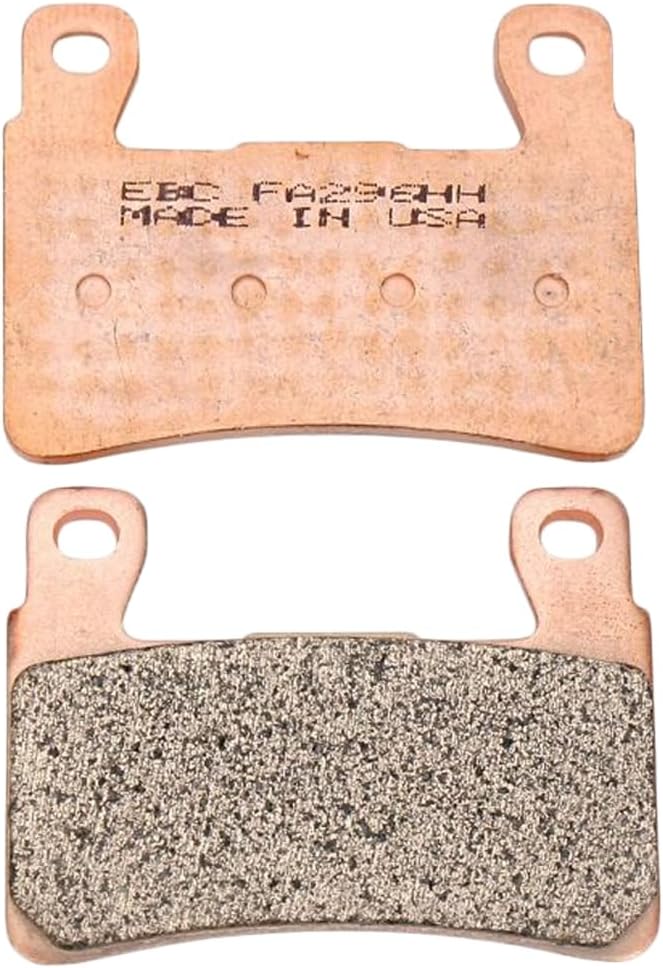
DP Brakes SDP947HH+
Engineered for aggressive sportbike riders seeking extreme bite and thermal fade resistance without mileage penalties. Ideal if you push hard through canyons or spirited street routes.
Check Price
Sixity Q6 Organic
Provides smooth, progressive stopping force while extending rotor longevity on touring and dual-sport bikes. Perfect for casual commuters wanting low rotor wear and easy lever feel.
Check Price
Vesrah SD Series Ceramic
Designed for daily commuters and small-displacement bikes wanting whisper-quiet, dust-free performance. A smart, budget-friendly pick if you prioritize clean wheels and minimal maintenance over aggressive bite.
Check Price
For most street riders, EBC’s Double-H sintered pads remain the safest default upgrade, but “best” really depends on how you ride, since a pad that tests strongest on paper can still feel numb at the lever, and the perfect pad for a Harley cruiser is the wrong choice for an aggressive sport bike.
Below are four genuinely different picks, not one crowned winner, organized by material and riding style so you can match the pad to your bike instead of just grabbing whatever’s first on the list.
What Matters Before You Buy
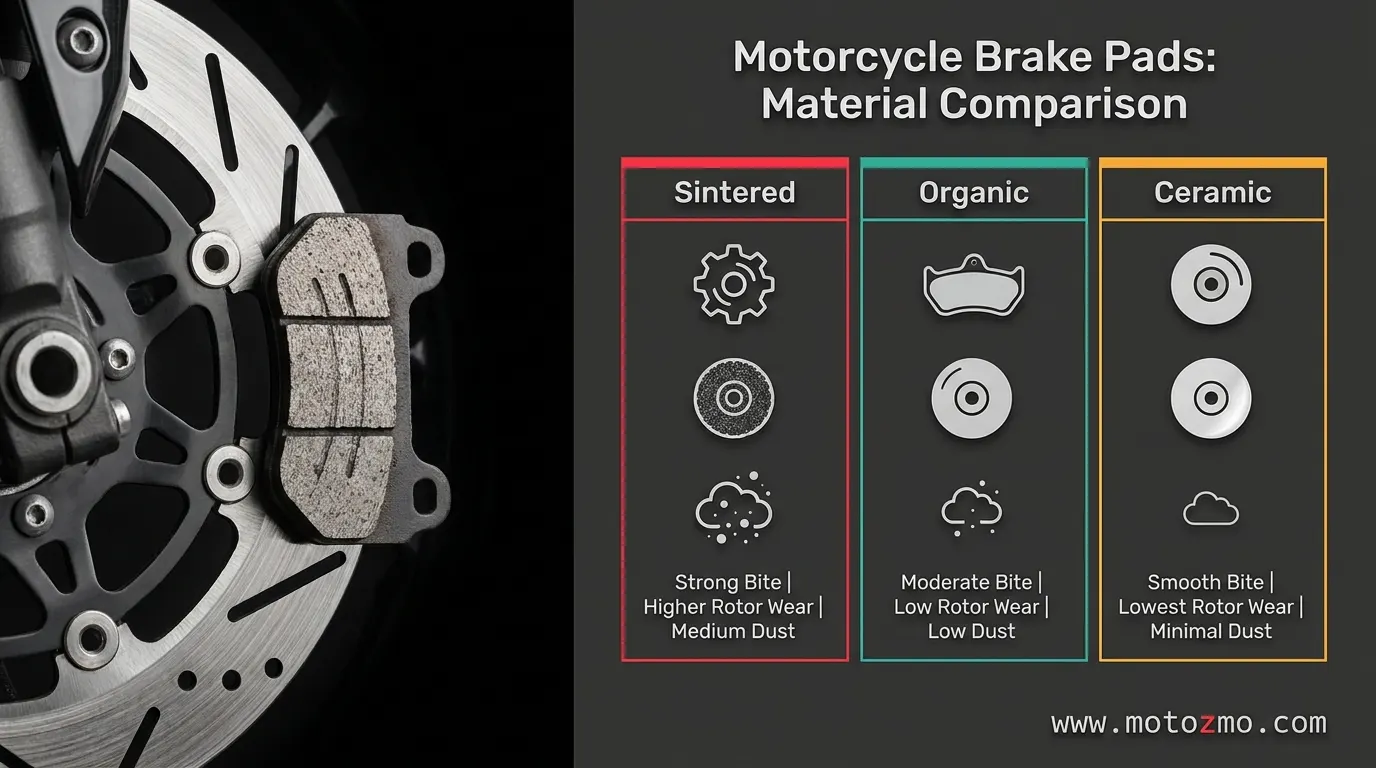
Material tier first. Sintered, ceramic, and organic pads behave very differently under braking, and picking the wrong tier is the most common mistake riders make. Sintered pads, metal particles fused under heat, deliver the strongest all-weather bite and are OEM on most modern bikes.
Organic and semi-metallic pads are gentler on your rotors but wear faster and bite less aggressively. Ceramic pads run quieter and cleaner but need more patience to bed in. For the full breakdown of when each tier makes sense, see which pad material fits your riding.
Exact fitment, every time. Brake pads are caliper- and model-specific. There’s no such thing as a genuinely universal motorcycle brake pad, no matter what a listing claims. Confirm the exact fitment against your bike’s make, model, and year before you buy.
Watch for vague “universal fit” listings. This one’s worth calling out directly, because most roundups skip it. Search “motorcycle brake pads” on any marketplace and you’ll find listings from unfamiliar, generically-named brands claiming to fit an oddly specific, unrelated mix of models, with description text that reads like it was stitched together from several other products.
On a part this safety-critical, that’s a real red flag, not a bargain. If a listing can’t clearly tell you who manufactures the pad, or the fitment list looks copy-pasted rather than verified, buy from an established brand instead. The savings aren’t worth the risk on something your stopping power depends on.
Feel and bite matter as much as raw stopping power. A pad that tests strongest in a lab can still feel numb or wooden at the lever. Your sense of modulation and confidence matters just as much as a spec sheet number.
Best Overall (Sintered) — EBC FA296HH
Key Features
- Perforated stainless steel heat and noise backing plates
- High-density copper alloy sintered compound
- Industry-highest HH friction rating
EBC’s Double-H line has been the sintered benchmark since the early 2000s, and the FA296HH continues that reputation.
If you run these on Harley-Davidson cruisers, including Street Bob and Fat Bob 114 owners, you’ll experience a snug, factory-style fit, noticeably less brake dust than stock, and performance that holds steady well past a year of daily riding. And it won’t be unusual to get up to 18 months of everyday commuting out of a set before needing a replacement.
They’re also priced well below what similar all-metal sintered pads run elsewhere, which adds up if you’re outfitting more than one bike.
For the full deep-dive on this line’s certification, longevity claims, and the one thing worth watching for when you buy, see our full EBC HH review.
Best Alternative Sintered Pick — DP Brakes SDP947HH+
Key Features
- High-tech ceramic heat shield backing layer
- Zero-fade performance under aggressive thermal loads
- Industry-leading HH+ friction coefficient
If you ride something more aggressive than a cruiser, DP Brakes’ HH+ line is worth cross-shopping against EBC rather than assuming EBC automatically wins. Motorcycle Mojo’s extended real-world brake pad comparison found DP Brakes pads outperformed several sintered competitors, including EBC’s HH line, on drag, dust, and outright bite.
Swap these onto a Kawasaki Ninja 1000 or a Suzuki GSX-R, and you’ll get a genuinely noticeable jump in stopping power over stock, with installation and fitment matching the factory pads exactly.
Expect them to run a little louder than stock, and give them the recommended stretch of easier riding, roughly the first 100 miles, to properly seat against the rotor before you lean on them hard. If your rotors aren’t significantly worn already, you likely won’t need to resurface them first.
These come sold front-only, in pairs, so check your specific model against DP Brakes’ fitment list, confirmed applications include the Kawasaki Z1000 and ZX-10R, plus a range of Suzuki GSX-R and Boulevard models, before you order.
Best for Gentler Rotor Wear — Sixity Q6 Organic
Key Features
- High-strength polymer binder with ductile metal filaments
- Universal compatibility with cast iron, steel, and stainless rotors
- Medium-hard matrix balancing pad life and rotor preservation
If you’re not chasing maximum bite, say, you ride a touring bike or split time between street and dirt, Sixity’s Q6 organic pads trade a bit of outright stopping power for genuinely longer rotor life.
The Kevlar aramid fiber and fine metallic particle construction is built to extend pad life beyond a basic organic compound while keeping wear on your rotors to a minimum, which matters if you’re running polished or chrome rotors you’d rather not chew through.
They’re designed for smooth, controlled braking across wet, muddy, or sandy conditions rather than aggressive track-style bite, making them a sensible pick for touring and dual-purpose riding rather than a sport bike.
Best for Low Dust and Quiet Operation — Vesrah SD Series Ceramic
Key Features
- Japanese-engineered ceramic-organic composite formulation
- Integrated phenolic resin binder with built-in lubricants
- Ultra-low disc rotor abrasion profile
Vesrah’s SD Series pads are a genuine ceramic-organic blend, aramid fiber, metallic fiber, and ceramic powder bound with phenolic resin, built specifically for scooters, commuters, and smaller motorcycles that prioritize clean wheels and quiet operation over outright bite.
They need very little bed-in time compared to a full sintered pad, which is convenient if you don’t want to babysit a new set of brakes for the first 100 miles.
Worth knowing before you buy, though: ceramic motorcycle pads don’t necessarily deliver the dramatic stopping-power upgrade that ceramic car pads are often marketed around.
Motorcycle.com’s hands-on test of a comparable ceramic pad found only a modest improvement over stock braking power, with some fade showing up under hard braking from higher speeds, which is a fair, honest tradeoff to weigh if outright stopping power matters more to you than clean wheels.
If quiet, low-maintenance daily riding is genuinely your priority, that tradeoff is a reasonable one to make. If you ride aggressively or carry a passenger regularly, lean toward the sintered picks above instead.
Bottom Line
There’s no single “best” motorcycle brake pad, just the right material for how you ride. Sintered pads like the EBC FA296HH or DP Brakes SDP947HH+ suit aggressive and daily-commuter riding; organic pads like the Sixity Q6 protect your rotors on touring and dual-purpose bikes; ceramic pads like the Vesrah SD Series trade some outright bite for a cleaner, quieter ride. Whichever you land on, this is only one half of the picture, see the full brake maintenance rundown for when to replace them and how fluid and bleeding fit into the same routine.
FAQs
How do I know which brake pad material is right for my bike?
Start with how you ride, not your bike’s specs. Aggressive or all-weather riders want sintered; touring or dirt-adjacent riders benefit from organic; commuters who value clean wheels can lean ceramic.
Do sintered pads really wear rotors faster than organic pads?
Generally, yes. Sintered’s stronger bite comes with more rotor wear over time. It’s a fair tradeoff for most riders, but worth knowing if you’re precious about your rotors.
How long does it take to bed in new brake pads?
Roughly the first 100 miles of progressively harder braking, following the manufacturer’s break-in guidance. Ceramic pads typically need less bed-in time than sintered ones.
Can I mix pad brands between front and rear?
Yes, as long as each pad is correctly fitted and rated for its specific caliper. There’s no requirement to match brands front to rear.
Is it safe to buy motorcycle brake pads from an unfamiliar brand online?
Not automatically. If the listing can’t clearly identify the actual manufacturer or the fitment claims look inconsistent, stick with an established brand instead.