Top Picks For You
D.I.D DKH-003 525VX
A precise, model-specific OEM replacement that swaps in without any cutting or fabrication. It’s a low-risk choice if you just want it done right the first time.
Check Price
Vortex CK6130
A bolt-on performance upgrade that changes how your bike actually feels to ride, not just how long the parts last.
Check Price
JT Sprockets JTSK2037
Premium-grade materials at an entry-level price. Pick it if you want a kit that outlasts your riding experience level.
Check Price
RZEOZU Chain and Sprocket Kit
A complete, tool-included upgrade kit that lets you tune your electric dirt bike’s character, not just replace worn parts.
Check Price
There’s no single “best” chain and sprocket kit. The right one depends on your bike’s exact chain pitch and whether you’re chasing durability, quicker acceleration, or just a straightforward OEM replacement.
What you can count on is that a properly matched kit, fitted to your specific bike, will outperform a generic “universal” set every time. Here’s how four genuinely different kits compare, and what to check before you buy any of them.
What Actually Matters Before You Buy
Getting the Pitch Right (420/428/520/525/530)
This is the single most consequential mistake you could make. Chain size numbers aren’t arbitrary. The first digit tells you the pitch, which is the distance between roller pins. The remaining digits tell you the internal width.
A chain with the wrong pitch simply won’t seat on your sprockets, full stop. So never guess. Check your owner’s manual, the stamped marking on your old chain, or your bike’s exact model and year.
Kits like the ones in this roundup are matched to a specific application, not sold as a “fits everything” part.
Steel vs. Aluminum Rear Sprocket
RevZilla’s own breakdown of this decision puts it plainly. For street and even dirt use, steel is almost always the right call. Aluminum saves real rotating weight, but it wears out in a fraction of the mileage, often faster than your rear tire. That makes it a track-day and race-bike material more than a daily-rider one.
If you’re chasing every ounce for a dedicated track bike, aluminum earns its keep. For everything else, steel’s durability is worth more than the weight savings.
OEM Replacement vs. Gearing Conversion
A straight OEM-spec kit restores your bike’s stock gearing exactly as it left the factory. That’s what you want if your only goal is replacing a worn-out chain and sprockets with an equivalent.
A gearing conversion kit changes your final drive ratio instead. It trades a bit of top speed for noticeably quicker acceleration, or the reverse. You’ll see this play out directly in two of the kits below.
Best Overall OEM-Match: D.I.D DKH-003 525VX
Fits Honda CBR600RR 2007–2011 · X-Ring seal · 16/42 tooth gearing
Key Features
- Exact factory-spec fitment for 2007–2011 CBR600RR, no guesswork on gearing
- Rivet-style master link included, rated for a secure, permanent connection
- No chain cutting or custom sizing required at install
This is the pick for you if you just want your motorcycle back to exactly how it left the factory, done right. D.I.D’s X-Ring design twists between the side plates instead of compressing under load. That cuts friction and reduces power loss compared to a standard O-ring. It’s a real, measurable advantage, not just a marketing claim.
The front sprocket is chrome-moly steel for strength, and the rear is heat-treated high-carbon steel. Together they give you a durable, low-maintenance pairing built for real mileage rather than track-day weight savings.
It’s great if you’re replacing a worn OEM chain on a bike you actually ride regularly, and you want the confidence of matching the factory spec.
Installing this exact kit on a 2007–2008 CBR600RR is quite easy with no chain cutting required, and smooth performance when running the bike hard afterward. That’s exactly what you want from a kit that’s supposed to disappear into the background and just work.
Best for Performance Gearing: Vortex CK6130
Fits Yamaha R6 2003–2009 · Dual-pocket O-ring (SV3) · Gearing conversion (15/48 vs. stock 16/48)
Key Features
- Ready to install straight out of the box, no chain cutting needed
- One-tooth front sprocket drop noticeably sharpens throttle response through the gears
- Rivet-type master link included, with clip-type available separately if preferred
- Made in Japan to tight manufacturing tolerances
If quicker acceleration off the line matters more to you than outright top speed, this is the kit built for that tradeoff. Vortex’s SV3 chain uses a dual-pocket sealing system rated for up to seven times longer wear life than a standard O-ring chain. So you’re not sacrificing durability to get the performance change.
The kit drops the front sprocket by one tooth from stock (15 vs. 16), which sharpens acceleration and makes lower gears feel noticeably quicker. You’ll give up a bit of top-end speed in exchange. That’s a trade worth knowing before you commit, not discovering on the highway.
Get this kit you ride your R6 more for spirited backroad riding or track days than long highway stretches, and you’d rather have snappier throttle response through the gears than an extra few mph at the very top.
Confirmed direct fits on both 2005 and 2006 R6 models make this a straightforward bolt-on, not a project requiring extra fabrication.
Best Value: JT Sprockets JTSK2037
Fits Kawasaki Ninja 300 2013–2014 · X-Ring seal (X1R2) · 14/42 tooth gearing
Key Features
- Quad-riveted chain pins resist the lateral forces that loosen plates over time
- Chromoly front sprocket paired with high-carbon C49 steel rear for balanced durability
- Confirm the master link is included in your box before starting the install
For an entry-level sportbike like the Ninja 300, this kit delivers serious build quality without the premium price of some big-name kits. The X1R2 chain uses quad-riveted pins engineered to resist the lateral forces that eventually work outer plates loose. The X-Ring seals cut friction versus a conventional O-ring design while still locking in lubrication.
It works for a newer rider on an entry-level bike who wants a kit built to last, not a bargain-bin part that’ll have you back here again in a year. The chain ships pre-lubed straight out of the box, so you’re not stuck sourcing your own lube before the first install. Its fitting on the Ninja 300 is clean, with solid, no-bind installs and sprockets that feel like real quality metal.
Best for Mini Bikes and Pit Bikes: RZEOZU Chain and Sprocket Kit
Fits Razor MX650, MX500, SX500, RSF650 and similar electric dirt/pit bikes · 35 chain, 65-tooth rear sprocket · Swappable 9T/11T/13T motor sprockets
Key Features
- Built specifically for Razor-style electric dirt and pit bikes, not full-size motorcycles
- Three swappable motor sprockets let you choose top speed or hill-climbing torque
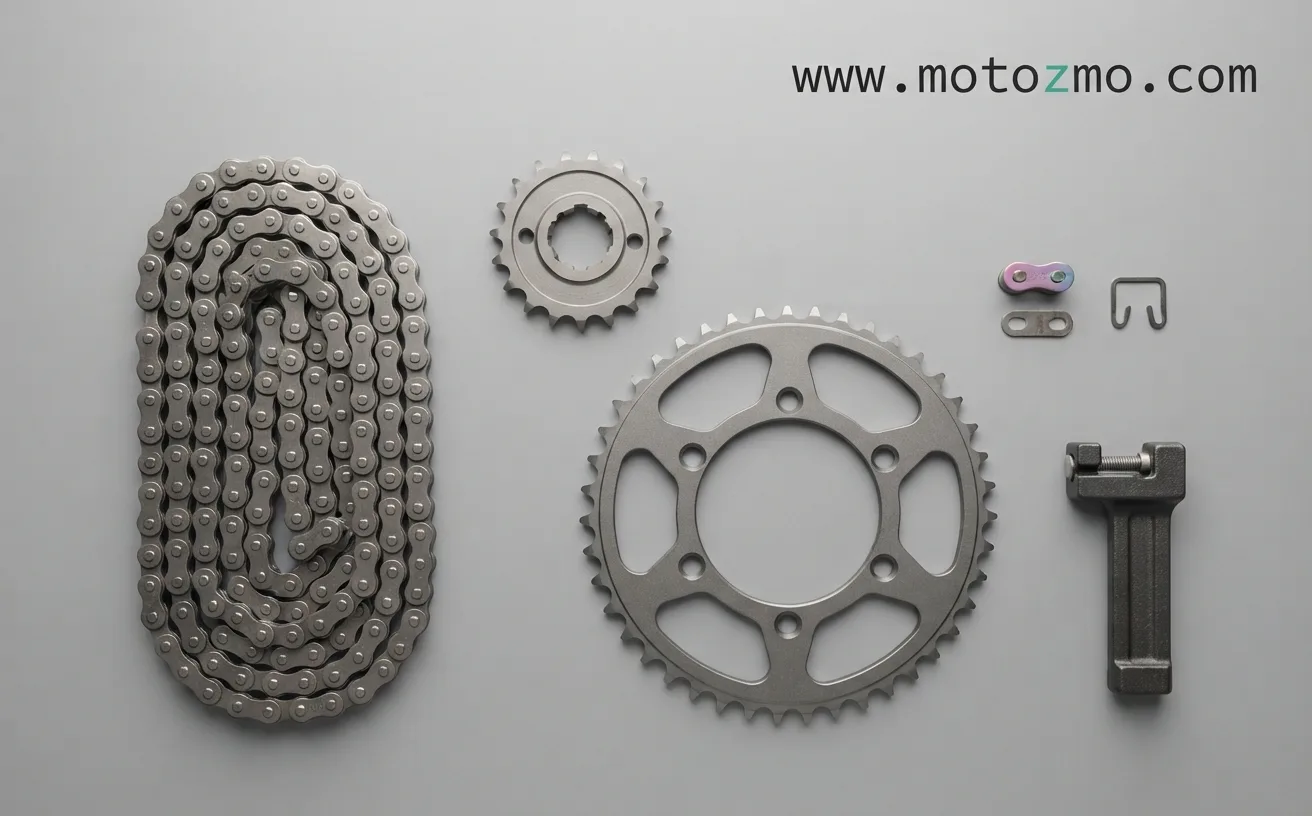
- Includes a chain breaker tool, so no separate shop equipment is required
Let’s be clear: this is a different category of vehicle from the other three kits here, and it deserves to be treated that way. It’s built for electric dirt bikes and pit bikes, smaller machines with a 35-size chain, not the 420-530 range covered above.
So if you’re shopping for a full-size street or sport motorcycle, this isn’t your kit. If you’re maintaining or upgrading a Razor-style electric dirt bike, though, it’s a well-thought-out option.
The kit has a set of three interchangeable motor sprockets (9T, 11T, and 13T). This lets you tune the bike to what you actually want from it. A larger front motor sprocket gives higher top speed and easier cruising.
A smaller one gives stronger hill-climbing and quicker acceleration off the line. That’s a useful bit of flexibility that full-size motorcycle kits rarely offer, since it’s built into the kit rather than requiring a separate sprocket. The kit also includes a chain breaker tool, master links, and mounting hardware, so it’s a complete upgrade, not one requiring extra shop tools you may not own.
If you’re upgrading a MX650, the setup will hold up cleanly at speeds in the low 50-mph range on a modified electric drivetrain, with everything fitting and installing without issue.
The Bottom Line
Match the kit to how you actually ride, not the other way around. The D.I.D covers you if you just want your bike back to factory spec. The Vortex is worth it if quicker acceleration matters more to you than top speed. The JT delivers real quality at a fair price for an entry-level sportbike. The RZEOZU is the right call only if you’re working on a mini bike or pit bike, not a full-size motorcycle. Whichever you choose, keep the new one lasting with the right lube for your riding conditions. And if you’re still not sure replacement is what you need, start with the full diagnostic guide before you spend a dollar.
FAQs
How do I know what chain pitch my bike uses?
Check your owner’s manual first, or look for a stamped number on your existing chain’s side plate. If neither is available, your bike’s exact make, model, and year (like the kits in this roundup) will tell a parts retailer which pitch you need.
Do I need to replace both sprockets, or just the rear?
Replace them together, along with the chain, whenever you’re replacing due to wear. Pairing a new chain with an old, worn sprocket accelerates wear on the new chain fast, often forcing a second replacement much sooner than expected.
Steel or aluminum sprocket for daily riding?
Steel, in almost every case. It holds its tooth profile far longer than aluminum, which keeps your chain running cleanly for many more miles. The weight savings aluminum offers matters far more on a dedicated track bike than a daily rider.
How many miles should a new chain and sprocket kit last?
It varies a lot based on chain type, riding style, and maintenance habits. But a quality sealed chain (O-ring or X-ring) paired with steel sprockets, kept clean and lubricated, will outlast a cheap, unsealed setup by a wide margin. The seal type matters more than almost any other spec once you’re comparing quality kits against each other.