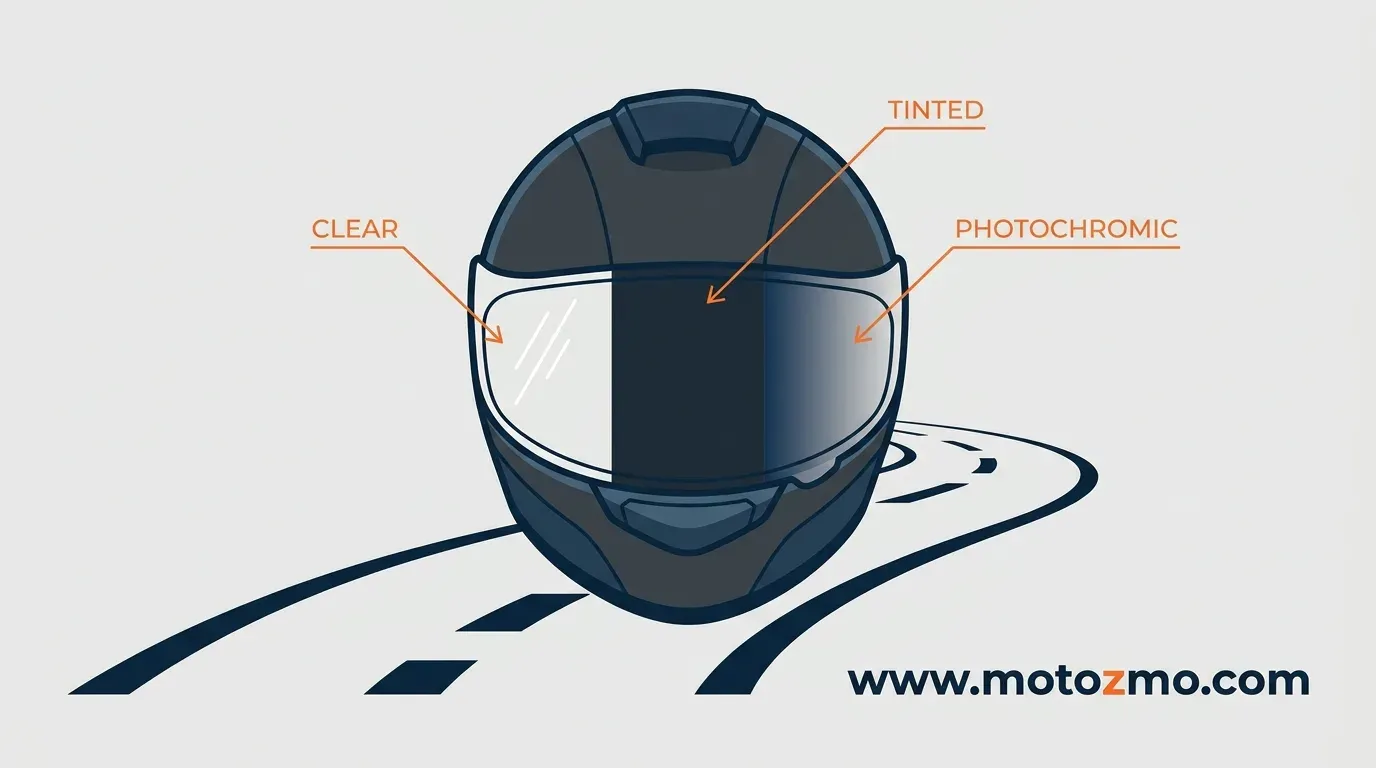
Most riders are best served by a clear visor plus a pair of sunglasses or an internal sun visor. Tinted visors are great in bright sun but dangerous after dark, and photochromic visors are the convenient middle ground if you can stomach the price and the slow transitions.
I learned this the expensive way: a dark smoke visor I loved all summer nearly stranded me after a long lunch, facing twenty miles of dusk on an unlit road.
Your visor choice should start with one question: when do you actually ride? Get that wrong and nothing else matters. The right helmet for visibility only helps if the shield matches the light you ride in.
The Quick Pick by Riding Pattern
| You ride… | Buy this | Why |
|---|---|---|
| Mostly at night or before dawn | Clear | Nothing beats full light transmission in the dark |
| Daytime only, bright sun | Dark tint | Best glare control, cheapest of the three |
| Dawn to dusk, mixed light | Photochromic | One visor that adapts, no swapping at dusk |
| Variable weather, touring | Clear + internal sun visor | Cheapest flexibility if your helmet has the slider |
Clear Visors: The Default That Never Gets You In Trouble
A clear visor transmits 90 to 95 percent of light, which makes it the only genuinely safe choice for night riding, dawn commutes, tunnels, and overcast winter days. It is also the cheapest replacement and the easiest to keep: no coatings to baby, no transition chemistry to age.
Who should NOT rely on clear alone: if you ride mostly in bright sun, a bare clear visor is a squint-fest, and stuffing sunglasses under a full-face helmet gets uncomfortable fast. Clear is the foundation, not the whole answer, for daytime riders.
Tinted Visors: Sunglasses Built into Your Helmet
Tinted visors come in shades, and the shade matters more than most riders realize. Light smoke blocks roughly 30 to 50 percent of light, medium smoke 50 to 70, and dark smoke up to 85. A light smoke is usable in overcast conditions; a dark smoke is a daytime-only tool, full stop.
The case for tint is simple: nothing cuts glare better, it covers your whole field of view (unlike sunglasses, which leave gaps), and replacement tinted visors are the cheapest of the three options.
Forum riders who swear by them almost always run a two-visor system, dark tint by day, clear in the tank bag or top case for dusk. That works fine if your helmet has a quick-change mechanism, and it is a pain if it doesn’t.
Two warnings:
- Legality: in many US states and most of Europe, tinted visors are legal only in daylight. Enforcement is spotty, but a crash at night with an illegal tint gives an insurance company a gift-wrapped excuse.
- Iridium and mirrored finishes scratch if you look at them wrong. Multiple long-term owners report the coating flaking after a couple of cleanings even with the recommended cleaner. If you want the look, accept that it is a consumable.
Who should NOT buy tinted: night riders, commuters whose ride home regularly stretches past sunset, and anyone who does not want to carry a second visor everywhere.
Photochromic Visors: The Adaptive Middle Ground
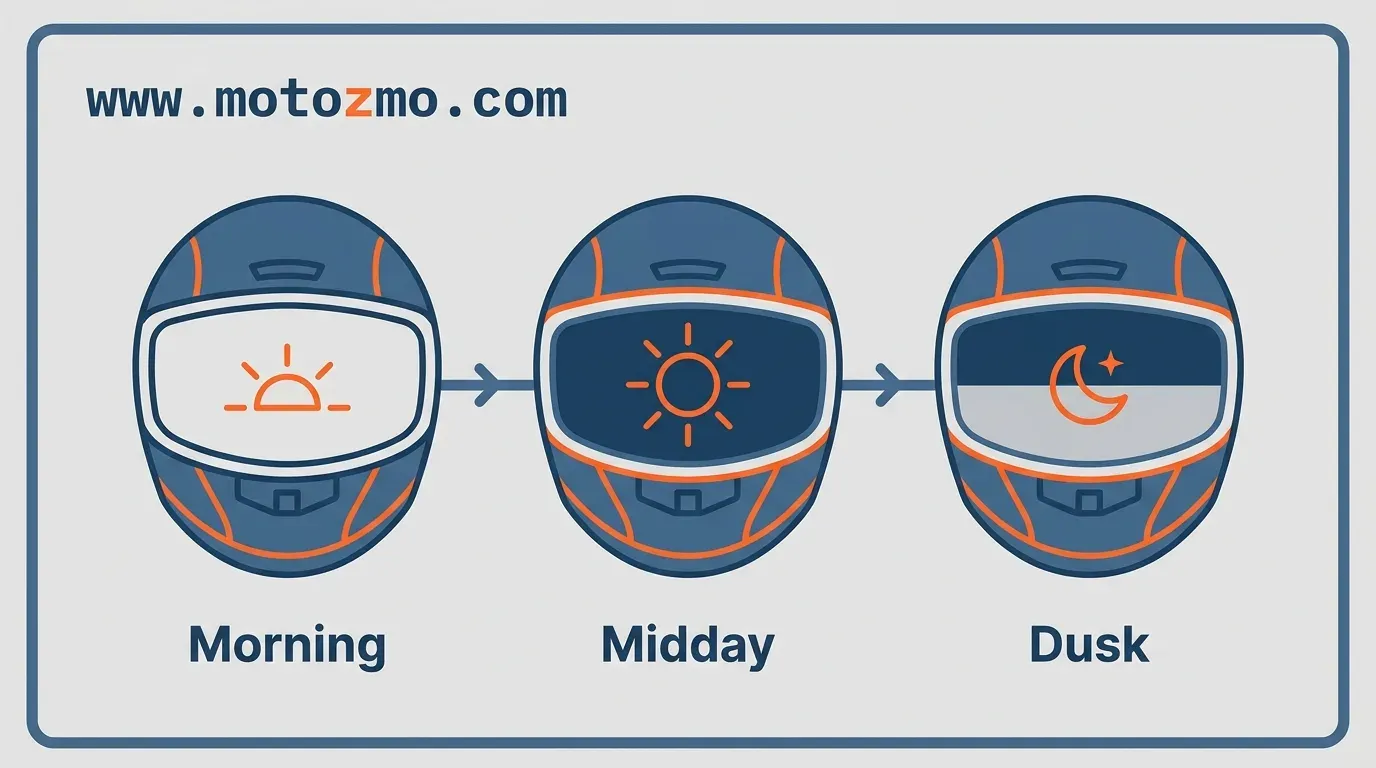
Photochromic visors darken in UV light and clear up in the dark, going from nearly clear to about a 50 percent tint over one to three minutes.
Bell’s Transitions-based shields, Shoei’s photochromic options, and LS2’s new IRID line all work on the same basic idea, with LS2 claiming sub-second transitions using a solar-powered liquid-crystal film instead of slow chemistry.
The appeal is obvious: leave the house in the dark, ride home in bright sun, never swap a visor, never wear sunglasses under your helmet. Riders who own them tend to become evangelists.
The tradeoffs are real, though, and most product pages gloss over them. The transition is slow: 30 to 90 seconds to darken, and several minutes to clear again, which means riding out of a tunnel into full sun leaves you squinting, and riding into a tunnel from sun leaves you temporarily blind.
Cold weather slows the chemistry further. And the visor is UV-activated, so it will not darken properly behind UV-blocking glass, a detail car drivers already know from their glasses.
If you wear glasses, the anti-fog insert guide matters here too, because some photochromic visors complicate fog control, which I’ll get to below.
Who should NOT buy photochromic: riders on a budget (these cost two to four times a standard visor), track riders who need maximum tint fast, and anyone who rides in and out of tunnels or tree cover constantly and cannot tolerate the lag.
The Decision Matrix
| Clear | Tinted | Photochromic | |
|---|---|---|---|
| Night riding | Excellent | Dangerous | Excellent when clear |
| Bright sun glare | Poor | Excellent | Good |
| Changing light | Manual swap needed | Manual swap needed | Automatic, with lag |
| Cost | $ | $ | $$$$ |
| Maintenance | Easy | Iridium coatings scratch | Slow aging of transition chemistry |
| Legality risk | None | Daytime-only in many places | None |
| Pairs with anti-fog inserts | Yes | Yes | Check compatibility first |
The Photochromic and Pinlock Problem
Here is the compatibility trap that catches people: some photochromic visors are not Pinlock-ready. Bell’s photochromic shield for the Race Star, for example, has no Pinlock posts, so you gain adaptive tint and lose the best anti-fog system in the business.
If you ride in cold or wet weather, that tradeoff can easily be worse than the problem you were solving.
The workaround is a stick-on insert like the Fog City Pro Shield, which fits any visor, or simply choosing a helmet whose photochromic option keeps its pins. Either way, check before you buy, not after.
Pinlock’s documentation explains which insert grades fit which visors and why the seal needs the right posts.
What About Internal Sun Visors?
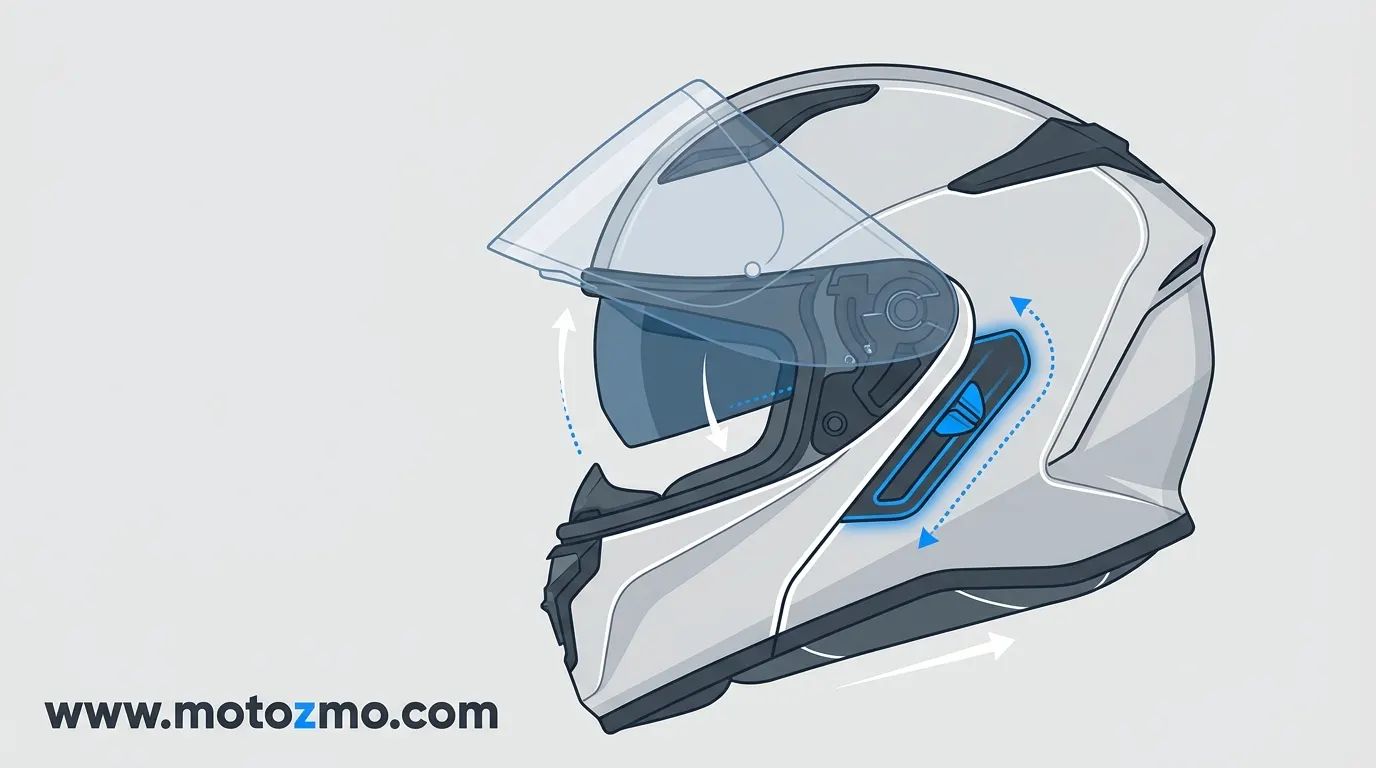
Plenty of touring and modular helmets now ship with a drop-down internal sun shade, and it deserves a mention as the fourth option.
It is not as optically clean as a tinted outer visor and it can interfere with glasses, but it costs nothing extra, deploys in a second, and pairs perfectly with a clear outer visor for night riding.
If your helmet already has one, you may not need this article at all. If you are shopping, helmets with the widest field of view tend to integrate sun visors without shrinking your sight lines, and good helmet ventilation matters just as much once the sun comes out.
The tech is still moving. Shark’s IRID visor, which Visordown reported on, uses a tiny solar panel to drive a liquid-crystal film and claims to switch in under a second, no slow chemistry involved.
If that survives real-world testing, the transition-lag complaint that holds photochromic back could disappear within a generation of helmets.
FAQ
Will a photochromic visor darken behind my car’s windshield or my bike’s windscreen?
Not properly. Photochromic lenses react to UV, and modern automotive glass blocks most UV, which is why your transition glasses stay clear in the car. A motorcycle windscreen is usually plain polycarbonate or acrylic without UV blockers, so the visor still darkens behind it, but the moment you are in a car or behind UV-coated glass, the effect stalls partway.