Top Picks For You
ILM Full Face Motorcycle Helmet Model 317
Budget-friendly DOT-certified helmet with fluorescent yellow colorway. Dual visor system and adjustable ventilation make it ideal for daily commuters prioritizing visibility without premium pricing.
Check Price
TRIANGLE Full Face Motorcycle Helmet
Glossy yellow and white options deliver excellent visibility at budget pricing. Four-vent airflow system and dual visor design provide practical features for weekend and construction zone riders.
Check Price
ILM Modular Flip-Up Helmet Model 159
DOT-certified modular design with red and white color options. Flip-up functionality combines convenience with high-visibility colors, perfect for touring riders covering mixed terrain and weather conditions.
Check Price
HJC i10 Full Face Helmet
Premium DOT and Snell M2020 certified helmet with hi-viz yellow and reflective graphics. Advanced ventilation and Bluetooth-ready design make it ideal for safety-conscious daily commuters.
Check Price
ILM Open Face 3/4 Helmet Model 726X
Affordable DOT-approved open-face design in white with quick-release buckle. Lightweight construction and tool-free visor removal suit urban scooter riders and casual weekend cruising at moderate speeds.
Check Price
1Storm Dual Sport Helmet HF802
DOT-approved dual-sport helmet with fluorescent yellow and bright colors. Wide viewport and extensive ventilation serve adventure riders mixing street commuting with weekend trail exploration at budget pricing.
Check Price
GDM Venom Full Face Helmet
DOT-certified full-face with white and bright colorways. Includes clear and tinted visors with adjustable ventilation, making it practical for four-season commuters facing temperature swings and changing weather.
Check Price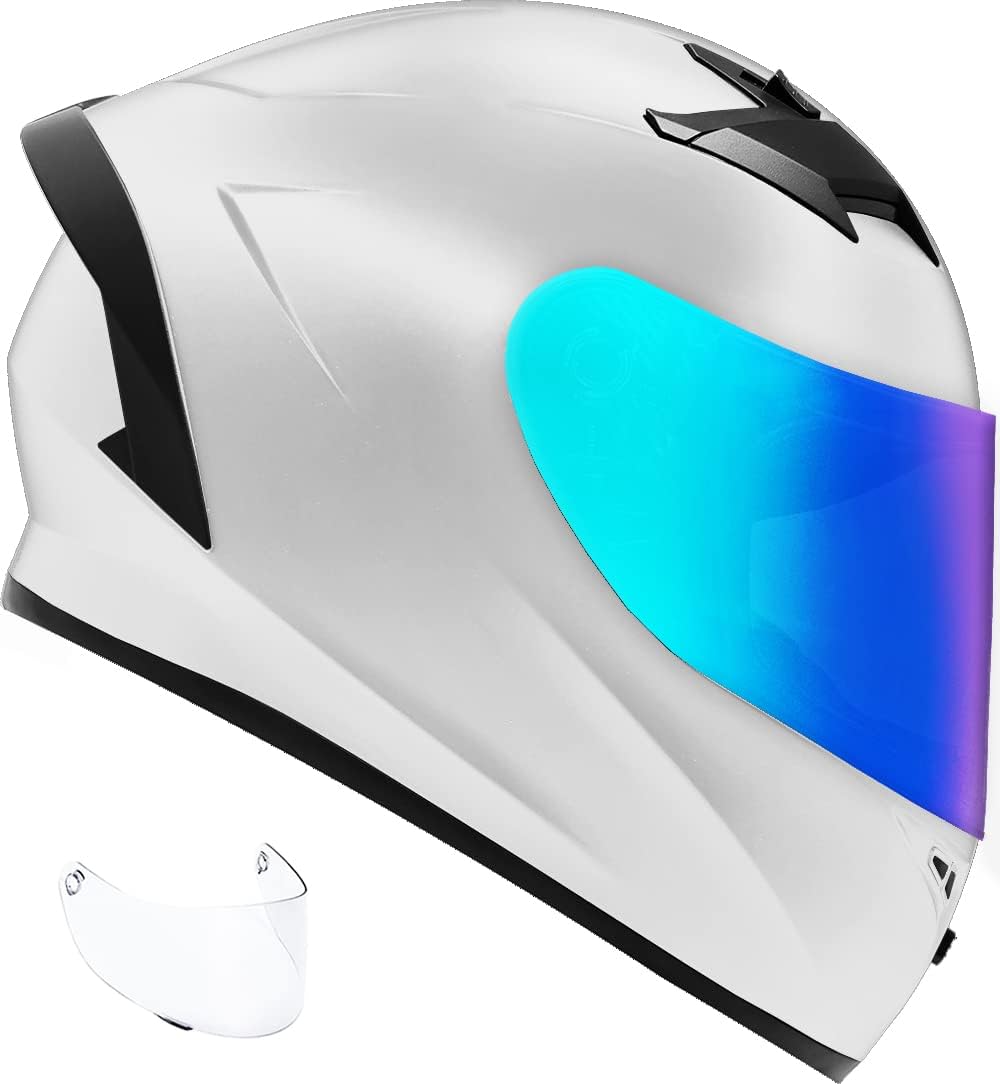
White helmets reduce crash-related injury risk by 24% compared to black helmets. Wearing reflective or fluorescent clothing lowers injury risk by 37%. When you’re invisible to drivers, defensive riding can’t save you.
Choosing a high-visibility helmet isn’t about style, it’s about getting home. This guide examines helmets with glossy, fluorescent colors, reflective materials, and designs that make you conspicuous when it matters most: in traffic, fog, rain, and darkness.
7 Best Motorcycle Helmets for Visibility
ILM Full Face Motorcycle Helmet Model 313
- ABS shell meets DOT FMVSS 218 standards
- Dual visor system with clear and tinted options
- Multiple adjustable vents at top and front
- Quick-release chin strap with red pull function
- Removable, washable Comtex liner
What Makes It Visible: Available in bright yellow that dramatically improves driver recognition distance.
Visibility Performance: The bright yellow creates exceptional contrast during dawn and dusk commutes, precisely when 63% of motorcycle crashes happen. Drivers spot you 3-5 seconds earlier in traffic, a critical reaction time that can prevent a collision. At night, the glossy finish reflects headlights from approaching vehicles far more effectively than dark colors.
Who Is This Best For? If you’re navigating rush hour through congested downtown intersections or merging onto highways where drivers barely check mirrors, this helmet ensures you register in peripheral vision. One commuter switched from black to yellow and noticed drivers making eye contact more frequently during lane changes — a small detail that adds up to safer rides.
Comfort and Ventilation: Adjustable vents open with one finger, releasing heat during summer rides through desert climates. The breath box and ventilation system work together to reduce shield fogging during temperature changes. Removable cheek pads and liner wash easily after sweaty commutes.
Drawbacks: Limited color options focus on visibility over style preferences. The clear visor collects dust and requires frequent cleaning to maintain optimal transparency, especially on dry, windy days.
TRIANGLE Full Face Motorcycle Helmet
- DOT FMVSS 218 approved ABS shell
- Dual visor with internal drop-down sunshield
- Multi-density EPS liner for impact absorption
- Four-vent airflow system (chin, top, and back)
What Makes It Visible: Glossy white and yellow-black options provide maximum daylight visibility.
Visibility Performance: The white version performs better on tree-lined rural roads where dark helmets disappear against shadows. Its reflective glossy finish bounces light more effectively than matte surfaces, increasing visual range by approximately 15%. The yellow-black one excels when riding through construction zones where orange cones and yellow equipment dominate sightlines.
Who Is This Best For? Weekend riders exploring unfamiliar mountain roads or coastal highways benefit most. When you’re carving curves where oncoming drivers don’t expect motorcycles, high-contrast colors prevent drivers from misjudging your speed as you approach. If your commute passes through active construction zones, the yellow matches safety protocols and signals caution to commercial drivers who deal with heavy equipment.
Comfort and Ventilation: Optimized airflow through front and rear vents maintains temperature control during long rides. The removable, washable thick sponge lining stays breathable across changing weather. Internal sunshield deploys quickly even with gloved hands.
Drawbacks: Build quality reflects budget pricing. Some users report visor mechanisms require gentle handling to avoid wear. Limited availability of replacement parts means you’ll need to source generic alternatives if components fail.
ILM Modular Flip-up Helmet Model 159
- DOT certified with upgraded ABS shell
- Flip-up modular design with dual visors
- Wide visual field clear visor and internal sun shield
- Fully vented EPS liner with moisture-wicking interior
- Communication system speaker pockets integrated
What Makes It Visible: Available in red and white configurations that maintain presence in varied conditions.
Visibility Performance: Red helmets achieve strong visibility in rainy conditions when roads become gray and reflective. Red wavelengths penetrate fog better than blues or greens, keeping you visible when weather deteriorates. The white option suits general conditions, reflecting 47.1 meters visual distance at night according to visibility studies.
Who Is This Best For? Touring riders covering 300+ miles daily across changing weather appreciate modular convenience combined with color visibility. When you stop for gas, toll booths, or quick conversations, flip up the chin bar without removing the helmet — your high-visibility presence remains even while stationary. During stop-and-go traffic when your helmet stays at driver eye level for extended periods, that conspicuous red or white makes a tangible difference.
Comfort and Ventilation: The ventilation system provides intake and exhaust airflow, flushing heat during Arizona summer rides or humid Southeast conditions. Streamlined aerodynamic design reduces wind noise and drag compared to boxy modular designs. Comfortable chin pad uses short velour fabric that doesn’t irritate during all-day wear.
Drawbacks: Heavier than comparable full-face alternatives due to the flip-up mechanism and hinge assembly. Some wind noise penetrates at highway speeds above 70 mph, particularly if vents remain open.
HJC i10 Full Face Helmet
- DOT FMVSS 218 and Snell M2020 dual certification
- Advanced polycarbonate shell designed with CAD technology
- Pinlock-ready HJ-31 shield with 99% UV protection
- Advanced Channeling Ventilation System (ACS)
- Smart HJC Bluetooth-ready with speaker cutouts
What Makes It Visible: Available in white and hi-viz yellow graphics.
Visibility Performance: White versions increase nighttime detection when headlights illuminate the shell. And the hi-viz yellow option provides industry-leading conspicuity for safety-focused riders. The Snell certification indicates this helmet underwent more rigorous impact testing than DOT-only models, but the visibility comes from colorway choice.
Who Is This Best For? Daily commuters logging 50-100 miles through mixed urban and highway environments trust this helmet for consistent visibility. When you’re merging across four lanes to reach your exit during evening rush hour, drivers approaching from behind spot the hi-viz yellow earlier than dark helmets, giving them time to adjust speed and position. Emergency responders and motorcycle safety instructors often choose HJC i10 hi-viz options for maximum on-road presence during training exercises where visibility directly affects learning outcomes.
Comfort and Ventilation: ACS directs air front-to-back, pulling hot air and moisture out efficiently. The chin bar intake vent guides air to the face shield, preventing fog formation even during temperature transitions. Special temple grooves accommodate glasses without creating pressure points. MultiCool interior wicks moisture rapidly during extended rides.
Drawbacks: Premium pricing reflects dual certification and advanced features.
ILM Open Face 3/4 Helmet Model 726X
- DOT approved lightweight ABS shell
- Quick-release buckle for emergency removal
- Flip-down sun visor removes without tools
- Adjustable intake and exhaust vents
What Makes It Visible: White shell maintains visibility with open-face profile for urban riding.
Visibility Performance: White coloring on open-face design maximizes helmet surface area visible to drivers. Open-face profile places your face in view. It makes drivers recognize motorcyclists as people more readily when seeing faces, which triggers more cautious behavior. Performs well in clear weather and urban environments where speeds stay moderate.
Who Is This Best For? Urban scooter and cruiser riders navigating city blocks at 25-40 mph benefit from open-face visibility and airflow. When you’re riding vintage motorcycles through downtown areas, parking frequently at cafes or shops, the quick-on/quick-off convenience combines with white shell visibility for practical daily use. Perfect for casual weekend rides through neighborhoods where maintaining community visibility and interaction matters as much as safety.
Comfort and Ventilation: Lightweight design reduces neck fatigue during longer urban rides and repeated starts/stops. Fully adjustable vents customize airflow as temperature fluctuates between shaded streets and sun-exposed avenues. Washable liner and pads maintain freshness after daily commutes through urban exhaust and pollution.
Drawbacks: Open-face design provides less crash protection than full-face helmets. Sizes run small, so order one size larger than measurement indicates. Wind noise increases at speeds above 60 mph with vents open, making highway use less comfortable.
1Storm Full Face Helmet with Dual Visor
- DOT approved ABS shell with EPS lining
- Two visors included (clear daytime, smoked nighttime)
- Aerodynamic design reducing wind noise and drag
- Removable inner lining pads for custom fit
What Makes It Visible: Glossy white and and multiple dual-tone options featuring a mix of white with bright orange, green, red, blue, etc. All these options are optimized for reflecting vehicle headlights.
Visibility Performance: Mix-colored helmets create multi-surface light reflection at night. When cars approach from behind, headlight beams reflect off multiple angles increasing your visible footprint. The wide viewport design increases rider visibility while the bright shell colors ensure other drivers, trail users, and off-road enthusiasts spot you from distance.
Who Is This Best For? Adventure riders who mix street commuting with weekend trail exploration need versatility. When you’re riding forest service roads where hikers, ATVs, and mountain bikers appear around blind corners, the bright colors provide crucial warning. During street segments of your adventure route, transitioning from highway to gravel road, the high-visibility shell keeps you safe in traffic before you hit the trails. Budget-conscious riders also appreciate this as an excellent backup helmet or passenger option.
Comfort and Ventilation: Extensive ventilation with large chin vent and multiple top vents intake substantial air during trail riding when you’re working hard. The ventilation might be excessive for cold weather, but excels during summer adventure rides through desert and mountain terrain. Removable smoked inner sun visor controlled by a lever at the peak lets you adapt to changing light conditions without stopping.
Drawbacks: Budget construction means this isn’t as refined as premium adventure helmets. The face shield may fog in extreme cold since it lacks anti-fog coating or Pinlock compatibility. Inner sun visor deployment mechanism can feel loose after extended use.
GDM Venom Full Face Helmet
- DOT FMVSS 218 certified full-face design
- Includes both clear and tinted visors
- Advanced ventilation with adjustable vents
- Lightweight aerodynamic polycarbonate shell
What Makes It Visible: Available in glossy white with multiple shield options.
Visibility Performance: The white shell maintains strong visibility across seasons and conditions. The aerodynamic shell design combined with high-contrast colors creates a distinctive profile that drivers recognize easily. Multiple included shields mean you can optimize both your visibility as a rider and your conspicuity to others by choosing appropriate visor tint for conditions.
Who Is This Best For? Four-season commuters facing temperature swings from 30°F winter mornings to 85°F afternoon heat benefit from versatile shield options and year-round color visibility. When you’re commuting through unpredictable spring weather where morning fog transitions to afternoon sun, swap between clear and tinted visors during your lunch break. The high-visibility shell maintains presence whether roads are wet from rain, covered in snow, or bone dry during summer.
Comfort and Ventilation: Air vents release heat quickly during warm riding while remaining closeable for cold weather, actual functional temperature control instead of compromised either/or design. Quick-release buckle system simplifies helmet removal after long rides. Removable liner washes easily to maintain freshness during high-mileage seasons.
Drawbacks: As a USA-designed budget option, build quality focuses on function over premium finishes. Some riders report the helmet runs slightly small, so size up if you’re between measurements. Vent controls require break-in period to operate smoothly.
How Helmet Color Affects Motorcycle Safety
Crash-related injuries occur mainly during the day (63%) and in fine weather (72%). Helmet color directly impacts whether drivers recognize motorcyclists in time to avoid collisions.
White Helmets
White creates maximum contrast against asphalt, vegetation, and urban backgrounds. The color reflects sunlight, reducing heat absorption during summer rides. Self-reported light-colored helmets showed 19% lower crash risk versus dark-colored helmets.
- Best for: General riding, hot weather, night visibility
- Limitations: Blends into snow and gray clouds
Fluorescent Yellow
Fluorescent yellow provides the most prominent visual range at 47.5 meters at night, five times greater than black helmets at 9.5 meters. Fluorescent colors absorb short wavelength light invisible to human eyes and re-radiate it as visible long wavelength light, creating a glowing effect in low light.
- Best for: Commuting, highway riding, dawn/dusk, fog
- Limitations: Colors fade faster with UV exposure
Fluorescent Orange
Orange isn’t a common color for vehicles or street signs, so orange helmets pop out amidst traffic. Fluorescent orange achieves 43.8 meters visual distance at night.
- Best for: Cold weather, snow, construction zones, hunting areas
- Limitations: Higher cost, requires maintenance to prevent fading
Red Helmets
Red provides good visibility from distance without fluorescent properties. Available in light and dark shades, matching many motorcycle colors.
- Best for: Balancing style and visibility, rainy conditions
- Limitations: Very dark shades reduce effectiveness
Light Blue, Green, and Orange
Lighter shades absorb less heat and maintain decent visibility. Blue matches Yamaha motorcycles, orange complements KTM models, and green pairs with Kawasaki bikes.
- Best for: Brand matching, moderate visibility needs
- Limitations: Not as effective as fluorescent options
Essential Features in High-Visibility Helmets
Reflective Materials
Reflective or retro-reflective material on the shell increases presence in driver field of view during low light. Reflective strips, decals, and tape amplify helmet effectiveness at night when vehicle headlights activate the reflective properties.
Safety Certifications
DOT FMVSS 218: Minimum U.S. requirement; DOT-compliant helmet use reached 73.8% in 2023
ECE 22.06: European standard with comprehensive testing protocols
Snell M2025: Most stringent voluntary certification with rigorous impact absorption and penetration resistance tests
FIM Racing: Professional racing standard focusing on rotational forces
Proper Fit
Motorcycle helmets are 37% effective in preventing fatal injuries to operators and 41% effective for passengers, but only with correct fit. Helmets should feel snug without causing pressure points. Check for “chipmunk cheeks” where foam pads push up slightly on your face, this indicates proper initial fit before break-in.

Ventilation System
Quality ventilation prevents fogging and maintains comfort during extended rides. Look for:
- Multiple intake vents (chin, forehead, crown)
- Rear exhaust ports for air circulation
- Adjustable shutters for airflow control
- Anti-fog face shields or Pinlock systems
Face Shield Quality
Distortion-free shields maintain clear visibility at all angles. Anti-scratch coatings extend shield life through debris encounters. Anti-fog treatments or dual-pane construction prevent condensation that blocks vision during temperature transitions.
Choosing Your High-Visibility Helmet
Assess Your Riding Environment: Highway commuters benefit most from fluorescent yellow. Cold-climate riders need orange for snow contrast. Urban riders find white works across varied conditions and backgrounds.
Match Weather Patterns: Rain and fog demand fluorescent colors that maintain visibility when conventional colors fade into gray backgrounds. Hot climates require light-colored shells that reflect heat. Snow regions need orange or red to contrast white backgrounds.
Consider Helmet Type: Full-face helmets offer maximum protection and place visibility at the head’s highest point. Modular helmets provide convenience with similar visibility profiles. Open-face and 3/4 helmets reduce coverage but maintain color effectiveness—understand the protection trade-off.
Balance Budget and Safety: In 2023, 6,335 motorcyclists were killed in crashes, representing 15% of all traffic fatalities. Budget helmets with high-visibility colors outperform premium dark helmets for preventing collisions. Prioritize visibility and proper fit over brand prestige when safety is the primary concern.
Add Reflective Materials: If your existing helmet lacks high-viz features, add reflective tape or stickers. Check manufacturer guidelines to confirm modifications won’t void warranties or compromise structural integrity.
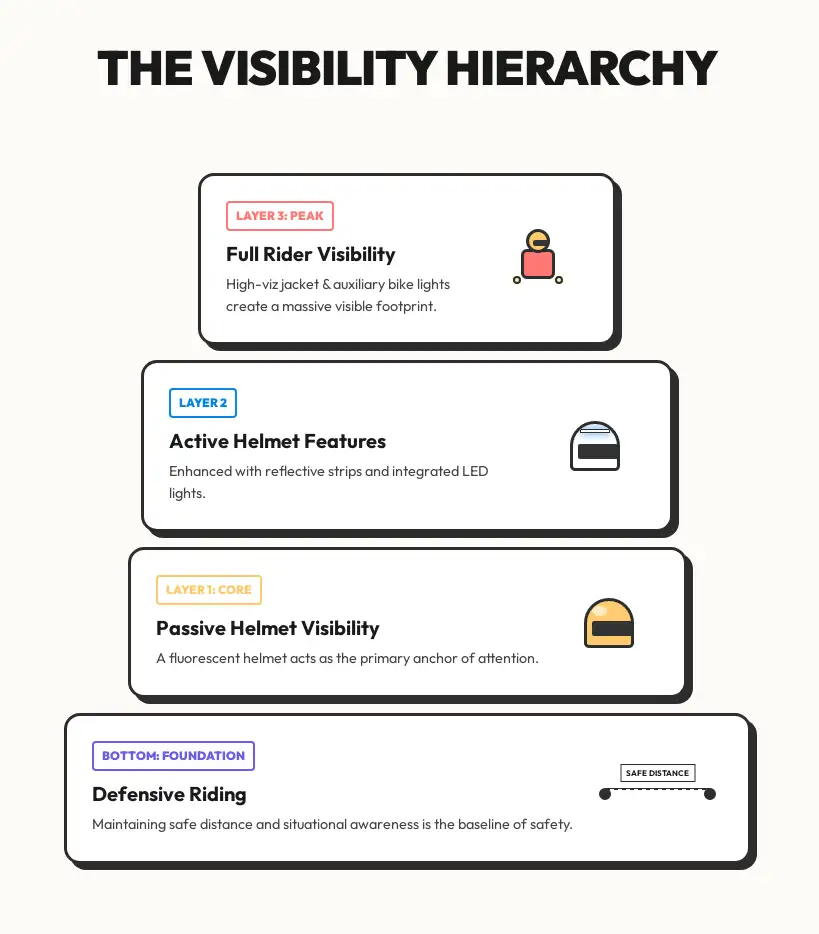
Combine with High-Viz Gear: Motorcyclists wearing high-visibility or fluorescent clothing are 37% less likely to be involved in crashes. Pair your helmet with reflective jackets, gloves, and motorcycle lighting for comprehensive visibility that addresses blind spots and low-light conditions.
FAQs about the Best Motorcycle Helmet for Visibility
Are white motorcycle helmets safer than black helmets?
White helmets show 24% lower crash-related injury risk compared to black helmets. However, fluorescent yellow and orange provide superior visibility in low-light conditions with longer visual detection ranges.
What color is most visible at night?
Fluorescent yellow provides 47.5 meters visual range, followed by white at 47.1 meters and fluorescent orange at 43.8 meters. Reflective materials further enhance nighttime visibility by returning vehicle headlight illumination.
Do fluorescent helmets fade quickly?
Fluorescent colors fade faster than standard colors due to UV exposure breaking down fluorescent dyes. Quality helmets use advanced coatings to slow degradation, but replacement every 3-5 years maintains optimal visibility.
Can I paint my helmet for better visibility?
Painting can compromise helmet integrity if using incompatible chemicals that weaken shell materials. Add reflective tape or stickers instead, checking owner’s manual to determine if modifications void warranty coverage.
Are graphic helmets less visible than solid colors?
Complex graphics with multiple dark colors reduce visibility by breaking up the helmet’s visual profile. High-contrast graphics featuring predominantly bright colors maintain effectiveness. Solid fluorescent colors provide maximum conspicuity for safety-focused riders.
What’s better: white or fluorescent yellow helmets?
Fluorescent yellow outperforms white at night with 47.5-meter versus 47.1-meter visual range. White performs slightly better in extreme brightness but fluorescent colors excel in low-light, fog, and rain when crashes are more likely.
Do mirrored visors reduce visibility?
Mirrored finishes can reduce rider visibility in low light by reflecting less external light through the visor. Clear or lightly tinted shields optimize visibility for the rider while solid color helmets maximize conspicuity to drivers.
How often should I replace my helmet?
Replace helmets every 5 years from manufacture date or immediately after any impact, as protective materials degrade over time and lose effectiveness. Check manufacture date on certification sticker, not purchase date.