Top Picks For You
ILM Full Face Helmet (Model 313)
Ideal for budget-conscious daily commuters needing full coverage, dual-visor versatility, and maximum fluorescent daytime pop without paying extra for lightweight track-grade materials.
Check Price
HJC i10 Plus
The ultimate pick for safety-focused riders who demand premium, double-certified impact protection and comms integration at a middle-tier price point.
Check Price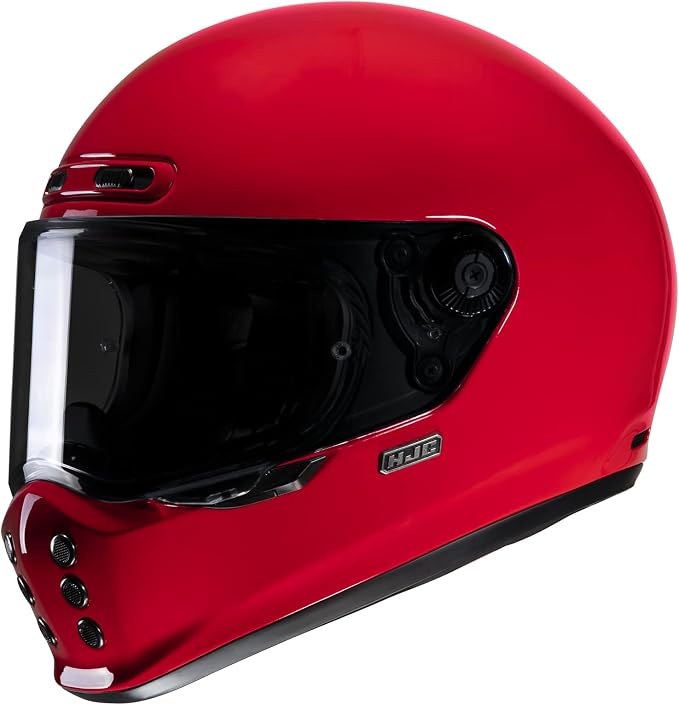
HJC i90
Best for touring and long-distance riders prioritizing quick stop-and-go convenience and superior internal airflow without losing the high-contrast visual footprint of a full shell.
Check Price
Scorpion EXO-AT950
Perfect for adventure riders needing high-visibility protection across changing terrains, featuring an expanded view port and adaptable sun peak tailored for dual-sport environments.
Check Price
ILM Open Face 3/4 Helmet
Great for urban cruisers on low-speed, quick trips who value maximum airflow, easy on-and-off convenience, and a clear, approachable human profile to surrounding traffic.
Check Price
A white or fluorescent yellow full-face helmet is the single most effective visibility upgrade you can buy, backed by a real study showing white helmets cut crash risk 24% compared to black ones, but color alone isn’t the whole story.
The same New Zealand research that produced that number also found that most fatal motorcycle crashes happen in broad daylight, not at night or in fog, which means “visibility” has to work against a bright, cluttered background, not just the dark.
Below are five helmets worth considering across budget and use case, and the actual research behind why color and contrast matter as much as they do.
The Research Behind “Visibility,” and What Most Guides Get Wrong
A lot of helmet-visibility content throws around statistics without saying where they came from, and some of the numbers end up contradicting each other. Here’s what the actual research says, sourced so you can check it yourself.
The most-cited study in this space is Wells et al., published in the BMJ in 2004, a case-control study out of Auckland, New Zealand. It found two related but distinct results, which is why you’ll see two different percentages quoted: riders wearing a white helmet had a 24% lower crash risk compared to riders in a black helmet, and self-reported light-colored helmets overall (not just white) were associated with a 19% lower risk than dark-colored ones.
The same study found reflective or fluorescent clothing linked to meaningfully fewer injuries, a finding echoed in later research, with estimates in the range of 37% fewer injuries for high-visibility gear.
| Factor | Effect on crash/injury risk | Source |
|---|---|---|
| White helmet vs. black helmet | 24% lower crash risk | Wells et al., BMJ, 2004 |
| Light-colored vs. dark-colored helmet (any color) | 19% lower crash risk | Wells et al., BMJ, 2004 |
| Reflective/fluorescent clothing | Meaningfully fewer injuries (estimates around 37%) | Wells et al., 2004; later replications |
| Daytime headlight use | 27% lower crash risk | Wells et al., BMJ, 2004 |
| Helmet use generally (any color) | 37% effective preventing operator deaths, 41% for passengers | NHTSA/Deutermann |
Here’s the part most visibility guides skip entirely: according to NHTSA’s most recent full-year crash data, 56% of motorcyclist fatalities happened in daylight, compared to 39% in the dark, 4% at dusk, and 1% at dawn. That’s a genuinely useful correction to how most people think about this topic.
A hi-viz helmet isn’t primarily a nighttime purchase; drivers fail to see motorcyclists constantly in broad daylight too, usually because a motorcycle’s visual profile is small and easy to lose against a busy background, not because it’s literally dark out. That’s exactly why contrast against typical daytime backgrounds, not just brightness in low light, is the property actually worth buying for.
For more on how much a helmet itself does once you’re in a crash, separate from color, here’s the real data on how effective helmets are at preventing head injuries.
Which Rider are You?
Before the product list, it’s worth matching helmet style to how you actually ride, since the “best” hi-viz helmet changes depending on the answer.
| You mostly ride | Best-fit style | Why |
|---|---|---|
| City streets, daily commute | Full-face, budget-friendly | Maximum coverage at intersections, where most urban crashes happen |
| Long highway stretches, touring | Modular (flip-up) | Convenience at gas stops and tolls without sacrificing full-face protection on the road |
| Mixed pavement and dirt/gravel | Adventure/dual-sport | Taller visor opening and venting suited to both riding styles |
| Short trips, cafes, casual cruising | Open-face or 3/4 | Better peripheral awareness and airflow, less coverage in a crash |
The 5 Best High-Visibility Motorcycle Helmets
1. ILM Full Face Helmet (Model 313) — best budget hi-viz
Key Features
- Dual Visor System: Integrated sun visor alongside primary clear shield
- Washable Interior: Fully removable liner for easy maintenance and hygiene
- Adjustable Air Vents: Customizable airflow control across multiple intake ports
- Budget Polymer Shell: Cost-effective, accessible entry-level full-face coverage
This is a genuinely popular, DOT-certified full-face helmet in various colors (including white, yellow, bright red, and blue), and it’s one of the more consistently well-reviewed budget options on the market.
You get a dual-visor setup, adjustable venting, and a removable, washable liner, which covers the basics most riders actually need without paying for features they won’t use.
Tradeoff: at this price point, you’re getting a single-density EPS liner rather than the multi-density foam premium helmets use to manage different impact speeds, and the shell is a heavier polymer than fiberglass or carbon options. For a commuter doing city miles at moderate speed, that’s a reasonable tradeoff.
Skip this one if you’re doing regular highway speeds above 70 mph or track days, where the lighter, more advanced shells on certified premium helmets earn their price difference.
2. HJC i10 Plus — best certified value
Key Features
- Dual Safety Standards: Both DOT and voluntary Snell M2020 certified
- CAD Polycarbonate Build: Precision-molded shell engineered for structural impact absorption
- Comms Ready: Factory-designed cutouts tailored for seamless Bluetooth headset integration
The i10 Plus carries both DOT and Snell M2020 certification, which is unusual at its price point; Snell’s voluntary standard involves more rigorous impact testing than DOT alone requires, and finding it on a genuinely affordable helmet is rare.
It comes in a bright red color, uses a CAD-designed polycarbonate shell, and is built to accept HJC’s own Bluetooth communicator if you want to add one later without replacing the helmet.
Tradeoff: the polycarbonate shell is heavier than the fiberglass or carbon shells on premium helmets, so long days in the saddle will tire your neck faster than a lighter lid would.
Skip this one if all-day touring comfort matters more to you than the extra certification, in which case a lighter, less-certified helmet might genuinely suit you better.
3. HJC i90 — best modular hi-viz
Key Features
- Flip-Up Chin Mechanism: Single-action modular bar transition
- Advanced Channeling System: Shell-integrated direct flow ventilation passages
- Ergonomic Latch System: Secure locking mechanism built for high-mileage durability
For riders who want the convenience of flipping the chin bar up at a gas station or toll booth without removing the whole helmet, the i90 in its white and black graphics covers that need with a genuinely capable ventilation system, HJC’s Advanced Channeling system with multiple intake and exhaust vents built into the shell.
Tradeoff: modular helmets are inherently heavier than an equivalent full-face, since they carry the hinge mechanism and a reinforced chin bar latch, and that added weight and the moving hinge are two more failure points than a one-piece shell has.
Skip this one if you ride mostly around town and rarely need the flip-up convenience; a standard full-face gives you the same visibility in a lighter, structurally simpler package.
4. Scorpion EXO-AT950 — best for adventure and dual-sport riders
Key Features
- Removable Off-Road Peak: Aerodynamic sun and debris shade visor
- Dual-Shield Configuration: Swappable street visor combined with inner retractable shield
- Expanded Eye Port: Taller field of view designed for off-road goggles
- Hybrid ADV Shell: Designed specifically for seamless pavement-to-trail performance
Built for riders who split time between pavement and gravel, the AT950 in a hi-viz hyper-silver color pairs a taller eye port and peak visor (useful for sighting over a windscreen and shielding sun on unpaved roads) with a removable clear inner shield and street-style visor for pavement stretches. Scorpion has built a solid reputation in the ADV segment specifically for combining that versatility with genuine DOT-level protection.
Tradeoff: the peak visor that helps off-road creates more wind noise and drag at sustained highway speeds than a smoother street-focused shell.
Skip this one if you’re exclusively a street rider; a dedicated street or sport-touring helmet will be quieter and more aerodynamic for the riding you’re actually doing.
5. ILM Open Face 3/4 Helmet — best for urban and casual riding
Key Features
- Quick-Release Buckle: Fast, hassle-free chin strap fastening and removal
- Tool-Free Shield Removal: Quick-change visor mechanism for fast maintenance
- Facial Conspicuity: Open-face profile allowing direct face-to-face visual recognition by motorists
- Lightweight 3/4 Design: Reduced neck fatigue with maximum natural airflow
For riders who want visibility without a full-face helmet’s coverage, this white, DOT-approved open-face model keeps your face visible to drivers, which some research suggests makes other motorists register you as a person rather than an obstacle, on top of the white shell’s own conspicuity advantage. Quick-release buckle and tool-free visor removal make it genuinely convenient for short, frequent trips.
Tradeoff: an open face means no chin bar protection at all, which is the single biggest protection gap compared to every other helmet on this list.
Skip this one if you ride at highway speeds regularly or you’re newer to riding; the protection gap matters most exactly when things go wrong unexpectedly, which is harder to predict as a newer rider.
Beyond the Helmet: What a Real Visibility Strategy Includes
A bright helmet is one layer, not the whole plan. The research above also points to daytime headlight use (27% lower risk) and reflective or fluorescent riding gear as independently useful, meaning a hi-viz helmet paired with a dark jacket and no headlight leaves real visibility gains on the table.
Here’s a broader look at visibility products worth adding beyond the helmet itself, from reflective vests to auxiliary lighting, if you want to build out the rest of the strategy.
None of this replaces defensive riding. A bright helmet buys other drivers more time to see you; it doesn’t guarantee they will. Lane positioning that keeps you out of blind spots and constant awareness of where drivers are looking still do more for your safety than color alone ever will.
Certifications, Decoded
- DOT (FMVSS 218): the legal minimum in the U.S. Every helmet sold here must meet it.
- ECE 22.06: a European standard with its own comprehensive testing protocol, common on helmets sold internationally and increasingly on U.S. models too.
- Snell M2020: a voluntary U.S. standard with more rigorous impact testing than DOT alone requires. Not every helmet has it, and it usually signals a manufacturer went beyond the legal minimum.
- FIM: a racing-specific standard focused on rotational impact forces, mostly relevant if you’re buying for track use.
Common Mistakes People Make Chasing “Visibility”
Assuming color alone is enough. A bright helmet with a dark jacket and no headlight on during the day still leaves you harder to spot than the research supports being comfortable with. Visibility is a combination of choices, not one purchase.
Buying based on graphics instead of solid color. Complex, multi-color graphics break up a helmet’s visual profile compared to a solid fluorescent or white shell, which reduces the contrast advantage that makes hi-viz work in the first place.
Not replacing a faded fluorescent helmet. Fluorescent pigments degrade under UV exposure faster than standard paint. A hi-viz helmet that’s a few years old and sun-faded may not be delivering the contrast it did when new; if the color’s visibly dulled, it’s doing less for you than it used to.
Bottom Line
Color genuinely matters, the research backs that up clearly, but it’s one part of a bigger picture that also includes daytime headlight use, reflective gear, and riding defensively regardless of what you’re wearing. Pick the style that actually fits how you ride first, then get it in white or fluorescent yellow if visibility is the priority driving the purchase.
FAQs about the Best Motorcycle Helmet for Visibility
Are white motorcycle helmets actually safer than black ones?
Research from a widely cited New Zealand study found white helmets associated with a 24% lower crash risk compared to black helmets. Fluorescent yellow and orange also perform well, particularly in low light.
Does helmet color matter more during the day or at night?
More fatal crashes happen during the day than at night, according to NHTSA data (56% daylight vs. 39% dark). That means daytime contrast against a busy background matters just as much as nighttime brightness.
Is a hi-viz helmet enough on its own?
No. The same research that supports hi-viz helmets also links daytime headlight use and reflective clothing to lower crash risk independently. Combine all three rather than relying on the helmet alone.
What’s the difference between DOT and Snell certification?
DOT is the legal U.S. minimum every helmet must meet. Snell M2020 is a voluntary standard with more rigorous impact testing; not every helmet carries it, and finding it on a budget helmet is genuinely notable.
Do fluorescent helmet colors fade over time?
Yes. Fluorescent pigments break down under UV exposure faster than standard paint. A faded fluorescent helmet delivers less contrast than it did new, which is worth checking on an older helmet.
Is a modular helmet as safe as a full-face?
A quality modular helmet meets the same certification standards as a full-face, but the hinge and chin-bar latch are additional mechanical points that a one-piece full-face shell doesn’t have.