
Top Picks For You
REV’IT! Tornado 4 H2O
Delivers incredible box-fan-level airflow for hot summer rides, featuring versatile multi-season adaptability with a removable dual-purpose liner, high-end armor, and a comfortable, adventure-ready design.
Check Price
Klim Induction Pro
Premium, highly durable mesh jacket built for maximum protection, featuring an exceptional AA safety rating, heavy-duty abrasion panels, and top-tier flexible armor for maximum airflow and confidence.
Check Price
Joe Rocket Ion
An ultra-affordable entry-level mesh jacket offering exceptional airflow and budget-friendly protection, complete with an adaptable two-stage liner system that handles sudden temperature drops effortlessly.
Check Price
Alpinestars Andes v3 Drystar
All-weather touring jacket featuring a permanently bonded waterproof shell that keeps you bone-dry in downpours, making it ideal for wet, unpredictable climates over extreme heat.
Check Price
The best hot-weather motorcycle jacket for most riders is a true mesh jacket with properly CE-rated armor and a liner you can pull out, not a “ventilated” textile jacket that only opens a few zippers.
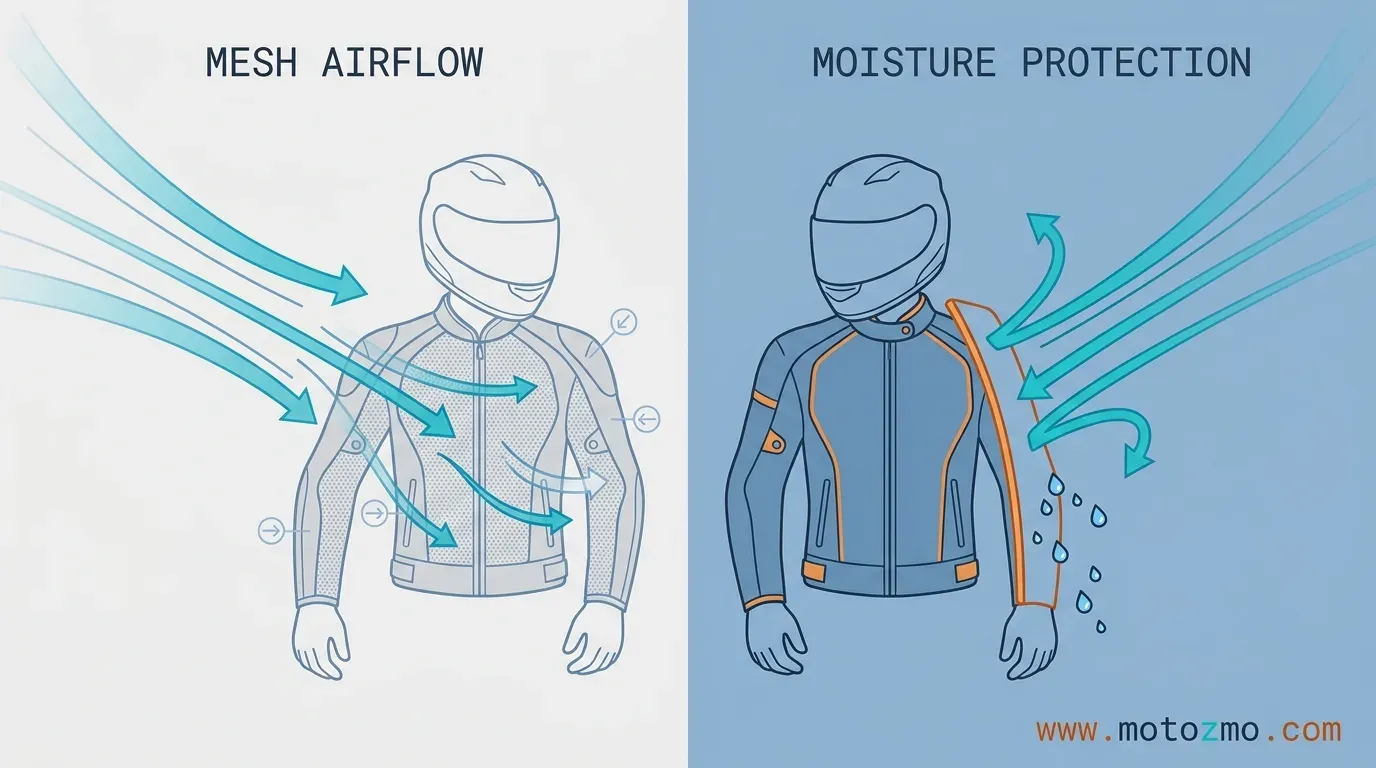
Mesh moves air through almost the whole garment, while a textile jacket’s zip vents only crack open small patches, so a jacket marketed as “ventilated” can still leave you soaked through a July commute. The trade-off shows up the moment it rains: a bonded waterproof membrane keeps you dry without you doing anything, but it throttles the same airflow you bought the jacket for.
None of that matters much if the armor doesn’t stay where a crash needs it, or if you’re stuck choosing between a jacket you love and one you can afford this summer. Here’s what to look for, four jackets riders keep buying, and the specific trade-offs nobody puts on the hangtag.
If you’re building out your whole hot-weather kit rather than just the jacket, what to wear when riding a motorcycle in hot weather covers the rest of it.
Which Hot-Weather Jacket Fits Your Riding?
| If you’re this rider… | …reach for this |
|---|---|
| Want one do-everything jacket and don’t mind paying for it | REV’IT! Tornado 3/4 |
| Want the best armor and materials money can buy, rain gear be damned | Klim Induction Pro |
| Need certified crash protection without blowing the budget | Joe Rocket Phoenix Ion |
| Ride in genuinely unpredictable weather and want zero-effort rain protection | Alpinestars Andes v3 Drystar |
What Features Should I Look for In a Hot-Weather Motorcycle Jacket?
Four things matter more than anything else on the spec sheet.
Ventilation type comes first, because “vented” and “mesh” aren’t the same claim (more on that below).
Armor rating comes second: look for the actual standard printed on the hangtag, EN 1621-1 Level 1 or Level 2 for the shoulders and elbows, not just the word “armored.” A lot of jackets in this category ship with nothing but a foam pad where the back protector should be and treat the certified one as an accessory, so check that before you assume it’s covered.
Fit is third, and it goes beyond comfort, since armor that shifts off your elbow in a crash isn’t doing its job (more on that below too).
And liner setup is fourth: a jacket that zips a rain layer and a thermal layer in and out gives you one jacket for three seasons instead of a closet full of them.
The same logic carries over to summer riding pants: mesh panels, a certified armor rating, and a liner you can remove, not “breathable” printed on the label and little else.
Mesh vs Ventilated Textile: Which Keeps You Cooler?
Mesh wins on raw airflow, and it isn’t close. A true mesh jacket is built from open-weave fabric across most of the body, with solid panels only where abrasion resistance matters most: shoulders, elbows, upper back. Air passes through nearly the entire garment instead of a single vent you unzip.
A “ventilated textile” jacket is a different animal: solid fabric with zippered vents cut into the chest and back. The Alpinestars Andes v3 below uses this approach with a waterproof membrane bonded to the inside, and the trade-off is exactly what you’d expect. Even with both vents wide open, you may get overheated in this jacket, because the non-removable membrane underneath limits how much air gets through no matter how far you unzip.
The same logic applies above your neck. A well-ventilated helmet makes a bigger difference on a hot ride than most riders expect, and it’s worth pairing with whichever jacket style you land on below.
Bottom line: if peak hot-weather comfort is the goal and you’re fine layering rain gear over the top when needed, mesh wins. If you want one jacket that handles rain without a second thought and don’t mind sweating more on the hottest days, a vented textile jacket like the Andes v3 is the better trade.
4 Hot-Weather Motorcycle Jackets Worth Buying
REV’IT! Tornado 4 H2O — Best Overall
- Stock armor: CE Level 2 shoulders/elbows, back protector sold separately
- Includes: Removable rain + thermal liner
- Best for: Overall pick, most versatile
Key Features
- High-flow mesh shell construction
- CE Level 2 Seeflex armor (shoulders/elbows)
- Dual-purpose removable Hydratex liner
This jacket does everything what a mesh jacket is supposed to do. Its airflow at speed as strong as standing in front of a box fan on full blast. It pairs CE Level 2 Seeflex armor at the shoulders and elbows with a pocket for an optional CE Level 2 back protector, and the removable Hydratex liner works either under the jacket for wind and light rain or over it as an outer shell in a downpour, so it genuinely covers three seasons rather than one.
The catch shows up in two places. For riders built heavier through the torso, the fit may run snug and about an inch short at the waist, so sizing up from your usual number is the standard advice. And because so much of the shell is open mesh, dust and dirt get inside more than a solid jacket, which means it needs cleaning more often than you’d expect (more on that at the end).
If you’re already thinking about longer days in this jacket, pair it with proper hydration and break habits, since heat catches up with you faster than you’d expect on a bike.
Skip this one if you’re built heavier through the chest and don’t want to size up, or if you’d rather never think about cleaning gear more than once a season.
Klim Induction Pro — Best Armor and Materials
- Stock armor: CE Level 2 shoulders/elbows, CE Level 1 back
- Includes: Separate rain shell sold apart
- Best for: Best armor and materials
Key Features
- Heavy-duty Karbonite mesh with 1000D Cordura
- Complete D3O CE Level 1 & 2 armor set included
- CE AA garment safety rating
- Perforated leather elbow reinforcements
This is the jacket for riders who want the most protection a mesh jacket can offer without giving up airflow. It pairs D3O CE Level 2 armor at the shoulders and elbows with a CE Level 1 D3O back protector, and it’s one of the few mesh jackets on the market rated AA under the European garment standard, meaning the shell fabric itself, and not only the armor inside it, is built to hold up in a slide. The shell doesn’t flap or drum at highway speed the way cheaper mesh does, a sign of tighter construction rather than marketing copy.
The trade-offs: there’s no rain liner included. Klim sells a separate Gore-Tex shell instead, worn over the jacket rather than zipped inside it, so you’re carrying and buying a second piece of gear for wet days. The Velcro cinch on the sleeves can work loose over time. And it’s the priciest jacket on this list by a wide margin.
If you’re spending this much on shoulder and elbow protection, don’t stop at the jacket. Proper summer gloves close the same protection gap for your hands that this jacket closes for your torso.
Skip this one if a built-in liner matters more to you than the best armor and materials in this list, or if the price doesn’t fit a once-a-summer jacket.
Joe Rocket Ion — Best Under $200
- Stock armor: Basic padding, foam back pad
- Includes: 2-stage rain + thermal liner
- Best for: Tightest budget
Key Features
- Open-weave mesh outer shell
- Independent removable rain & thermal liners
- Removable armor padding with back pocket
- Low-maintenance, washable shell design
Joe Rocket is often credited with popularizing the mesh motorcycle jacket back in 2002, and the Ion is the modern, budget-friendly descendant. It includes a two-stage liner, a full rain liner plus an insulated vest, both zipping in and out independently so you can shed layers as the day heats up. It holds up to repeated use, and you can machine wash the shell after pulling out the armor pads.
The armor is the honest weak point. It’s basic, removable padding, and the back protection is a foam pad rather than certified armor, so budget for a proper back protector separately if you ride serious highway miles. The rain liner also has a known design flaw: water can funnel down into your riding pants at the waist seam during an actual downpour instead of staying inside the jacket.
Since this jacket runs cooler than most thanks to how open the mesh is, a cooling neck gaiter is a cheap way to stretch that comfort further on the worst days.
Skip this one if you ride hard highway miles regularly and want certified armor everywhere out of the box; budget extra for a back protector insert if you buy this jacket.
Alpinestars Andes v3 Drystar — Best for One Jacket, All Weather
- Stock armor: Nucleon Flex Plus, back protector sold separately
- Includes: Bonded waterproof membrane, thermal liner
- Best for: One jacket for every season

Key Features
- Integrated waterproof Drystar inner membrane
- Direct zippered airflow chest & back vents
- Flexible Nucleon Flex Plus armor
- Removable full-body thermal liner
This is the pick for riders who’d rather not own a separate rain jacket. The Drystar membrane is bonded into the shell, so it’s waterproof by default. It will keep you completely dry, even when you’re riding through a heavy hour-long downpour, seams included, without adding anything. The included thermal liner runs genuinely warm too, and our research found owners reporting comfortable rides down to around 45°F.
The cost of that always-on waterproofing is airflow, as covered above; one long-term tester specifically reported overheating despite both vents being open. It also ships with thinner Nucleon Flex Plus armor at the shoulders and elbows and no back protector at all, just a pocket for one, so you should add a CE-rated back insert separately if you take this jacket seriously as protective gear.
Since the bonded membrane cuts into breathability even with the vents open, a moisture-wicking base layer underneath does more work here than it would in a pure mesh jacket.
Skip this one if peak hot-weather cooling is your top priority; the Tornado or Induction Pro will keep you cooler, and you can layer rain gear over either on the rare day you need it.
Is CE Armor In a Hot-Weather Jacket Enough, or Should I Upgrade?
It depends entirely on what’s inside the jacket, and the label tells you more than the word “armored” does.
Armor inserts are rated under their own standard, EN 1621-1, which covers shoulder, elbow, and hip armor. Level 1 caps the force reaching your body at around 35kN; Level 2 cuts that closer to 20kN, a meaningful drop in what your body absorbs in a hit. The shell fabric carries a separate rating (EN 17092, graded A through AAA) for how well it resists abrasion in a slide, which is a different question from what’s stuffed inside it. A jacket worth buying states both, not one and not the other.
Where riders get caught out most is the back. Three of the four jackets above ship with either a foam pad or an empty pocket where certified back armor should go, treating the real thing as optional add-on gear rather than something you need on day one. The Klim is the only one of the four that includes certified back armor out of the box. It isn’t, if you’re riding at highway speed with any regularity.
Government crash research backs this up directly: well-built, impact-resistant riding gear can prevent arm and leg fractures and serious spinal injuries that a foam pad simply isn’t designed to absorb. If your jacket’s back pocket is empty or foam-only, a Level 2 back protector insert is one of the cheapest upgrades you can make to any jacket on this list.
How Should a Hot-Weather Jacket Fit So the Armor Stays Put and It Doesn’t Flap at Speed?
Armor only protects you if it’s still over your shoulder or elbow when you hit the ground, not wherever it happened to be sitting when you put the jacket on. That means snug enough that the armor pockets don’t shift when you reach forward to the bars, but loose enough through the body to let air move.
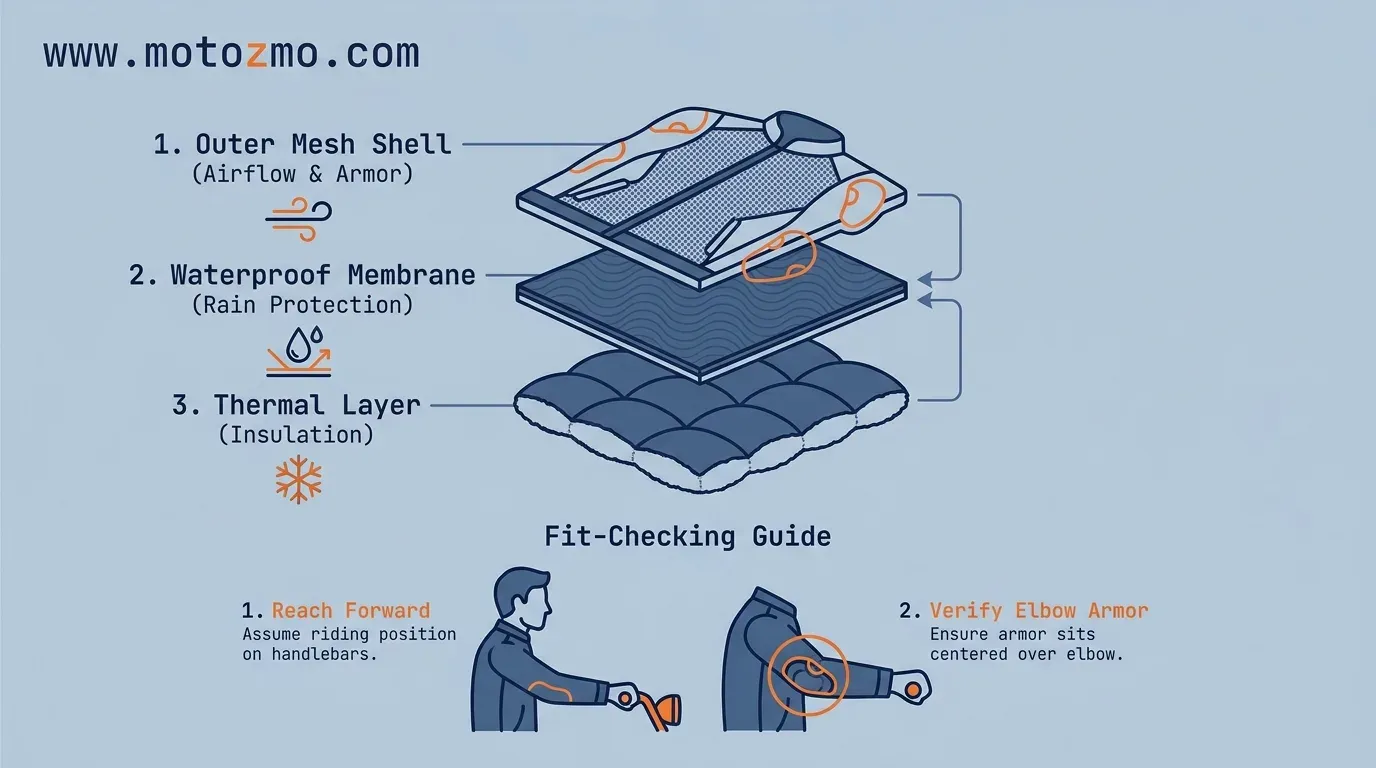
Riders who size a mesh jacket the way they’d size a T-shirt usually end up with both problems at once: the armor placement might be fine, but a form-fitting mesh jacket also blocks the airflow you bought it for in the first place.
Wind flap is more a build-quality tell than a sizing one. Owners of well-constructed mesh jackets specifically note the fabric holds its shape at highway speed instead of drumming against your arms, which comes down to tighter stitching and better-tensioned panels rather than anything a size change fixes.
The Motorcycle Safety Foundation’s own gear guidance calls out wind flaps and fitted cuffs specifically as design features of a jacket built for crash protection, not just comfort, which is exactly the detail worth checking before you buy.
Can a Mesh Jacket Handle Light Rain, or Do I Need Something Else?
It depends which of the four picks above you’re wearing, which is a useful way to think about the whole category.
A pure mesh jacket with no liner offers close to no water resistance; expect to get soaked within minutes. The Tornado’s removable Hydratex liner solves this two ways: worn under the jacket, it blocks wind and light rain from the inside; worn over the jacket, it works as a proper outer shell in a genuine downpour. The Induction Pro takes the opposite approach and skips a liner entirely, on purpose, so Klim sells a separate Gore-Tex shell to wear over it. That’s an extra thing to carry and remember, but the mesh jacket itself is never compromised for airflow because of it.
The Andes v3 solves it a third way, with a membrane bonded permanently into the shell rather than a separate piece, so you’re never caught without rain protection, but you’re also never getting that membrane out of the way on a scorching day.
For most riders doing genuine mixed-weather commuting, a removable liner beats a bonded one: you get to make the call on any given morning, rather than the manufacturer making it for you.
What Shell Materials Give the Best Abrasion Resistance without Killing Airflow?
Denier rating and reinforcement placement matter more than the fabric name on the tag. A 600-denier mesh panel and a 1000-denier mesh panel can look nearly identical from a few feet away but behave very differently in a slide, and where the heavier fabric sits matters as much as the number itself. The jackets that hold up best put solid, heavier material exactly where a rider’s body tends to contact pavement in a low-side: shoulders, outer forearm, upper back. True open mesh covers everywhere else.
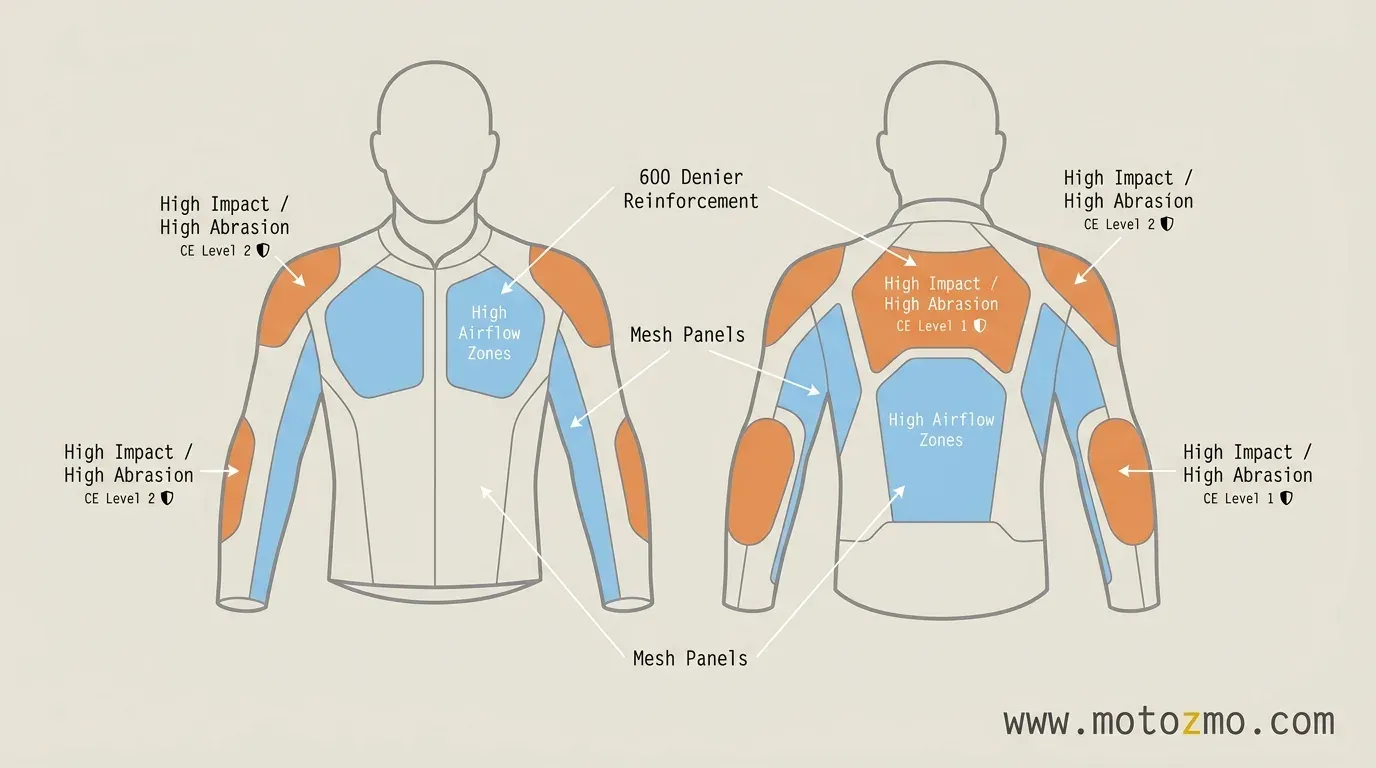
The Induction Pro is a good example of doing this well: its Karbonite mesh covers most of the jacket, but the back of the shoulders switches to 1000-denier Cordura, with perforated goat leather specifically at the elbows, one of the highest-wear contact points in a slide.
The Tornado follows similar logic, layering reinforced panels under its mesh in the same zones. Cordura and ballistic nylon both show up across this category for a reason: both resist abrasion well relative to their weight, which matters when the entire point of the jacket is not adding bulk.
Is a Removable Thermal Liner Worth It If I Mostly Ride Above 70°F?
Honestly, not really, and it’s one of the easier places to save weight, bulk, and money if your riding genuinely stays warm-weather.
A thermal liner earns its keep on jackets people wear across three seasons, like the Tornado or the Andes v3, where mornings and evenings get cold enough to need it. But if 70°F-plus is your baseline, that liner mostly sits in a saddlebag taking up space you could use for something else. A proper moisture-wicking layer underneath does more for genuine hot-weather comfort than a thermal liner you’ll never zip in, since it manages sweat instead of trapping warmth you don’t want.
If you’d still like the option for the occasional shoulder-season ride, treat it as a bonus rather than a deciding factor. None of the four jackets above are worse for having one, and the Phoenix Ion and Andes v3 both make it easy to leave it home when you don’t need it.
What Are the Best Hot-Weather Jackets Under $200?
Of the four above, the Joe Rocket Phoenix Ion is the one that regularly lands at or under $200 and still includes a two-stage liner system and shoulder and elbow padding, which makes it the honest answer here. Just budget separately for a proper back protector, since the stock one is a foam pad, not certified armor, and that gap matters more at highway speed than anywhere else on the jacket.
If your budget has to stay firm below $200 including a back protector, look for last season’s colorway or an odd size run on any mid-tier mesh jacket. Brands routinely discount those to clear inventory, and the armor and construction don’t change between colors.
How Do I Test a New Summer Jacket Before a Long Trip?
Do this at home, not on day one of a five-hour ride.
Zip it up fully and reach forward like you’re gripping the bars; the armor should stay put on your shoulders and elbows through that motion, not slide toward your ribs. Raise both arms overhead, then cross them in front of you, checking the torso doesn’t ride up past your waistband either way. If you’ll run the liner on cooler days, zip it in and repeat both checks, since armor position can shift once there’s an extra layer underneath.
Then take it for a real ride, not a walk around the driveway. A 20 to 30 minute loop mixing city and highway speeds tells you whether the mesh flows air the way the listing promised, whether anything rubs raw at the wrists or collar, and whether the fit holds up once you’re sweating instead of standing still. Fix or return it now. That’s a lot cheaper than finding out four hours into a trip.
What Upkeep Keeps a Mesh Jacket and Its Armor Working Over Time?
Mesh jackets pick up more dust, dirt, and road grime than solid textile jackets simply because more of the fabric is open weave, so plan on cleaning them more often, not less.
Pull the armor and any liners out first, always. Hand wash the shell, or run it on a gentle, cold-water machine cycle if the label allows it, using a mild detergent made for technical fabrics rather than bleach or fabric softener, both of which break down the weave and any waterproof coating over time. Wipe armor inserts down with a damp cloth instead of soaking or machine-washing them; most foam and D3O-style padding isn’t built to survive a full wash cycle. Air dry everything away from direct sun, then reinsert the armor once the shell is completely dry.
Check the armor itself every season, not just the fabric. Look for cracked or compressed foam, padding that’s stopped snapping firmly back into its pocket, or a velcro cinch (a known wear point on some mesh jackets) that no longer holds its tension. None of that shows up on a five-minute test ride the way fit problems do, so it’s worth a proper look before the season starts, not only after a wash.