Affiliate disclosure: This post may contain affiliate links. If you buy through a link on this page, MOTOZMO may earn a small commission at no extra cost to you. It helps keep our guides free. How we test and choose products.
You can ride safely in real heat, even past 100°F, but the riders who do it well follow a different rulebook than the usual “drink water, wear mesh” advice.
I learned this on a July run across west Texas, when the air through my vents felt like a hair dryer and my soaked shirt dried in minutes without cooling me at all.
That day taught me three things most heat guides skip: your cooling strategy has to match the humidity, not just the temperature; some very common medications quietly raise your heat risk; and your riding starts going sloppy before you feel sick, which makes your own performance the earliest warning sign you have.
Here is the full system, including the hydration schedule and the heat-illness ladder every rider should know. If your kit is not sorted yet, start with what to wear when riding in hot weather.
Heat Does Not Hit Every Rider the Same
Most heat guides talk as if every rider faces the same risk. They do not. Federal workplace safety researchers list a set of personal risk factors for heat illness, and several of them describe ordinary riders: age over 60, alcohol use in the past 24 hours, a previous bout of heat illness, and not being used to the heat yet, like the first brutal week of summer. If any of those sound like you, build in wider safety margins than the next rider.
Medications deserve their own warning. The CDC notes that many common drugs make heat illness more likely: diuretics (“water pills”) and blood pressure medications that shift fluid balance, antihistamines including ordinary over-the-counter allergy pills, antidepressants and other psychiatric medications, and stimulants prescribed for ADHD. Some limit sweating, some dull thirst, and some push body temperature up.
Doctors at UCLA Health add that heat can also damage the drugs themselves, so pills baking in a tank bag may lose strength. If you take any daily medication, ask your pharmacist how it handles heat before a summer tour, and read the UCLA Health breakdown of heat and medications and the CDC’s heat-stress risk factors.
The Humidity Rule: Match Your Cooling to the Air
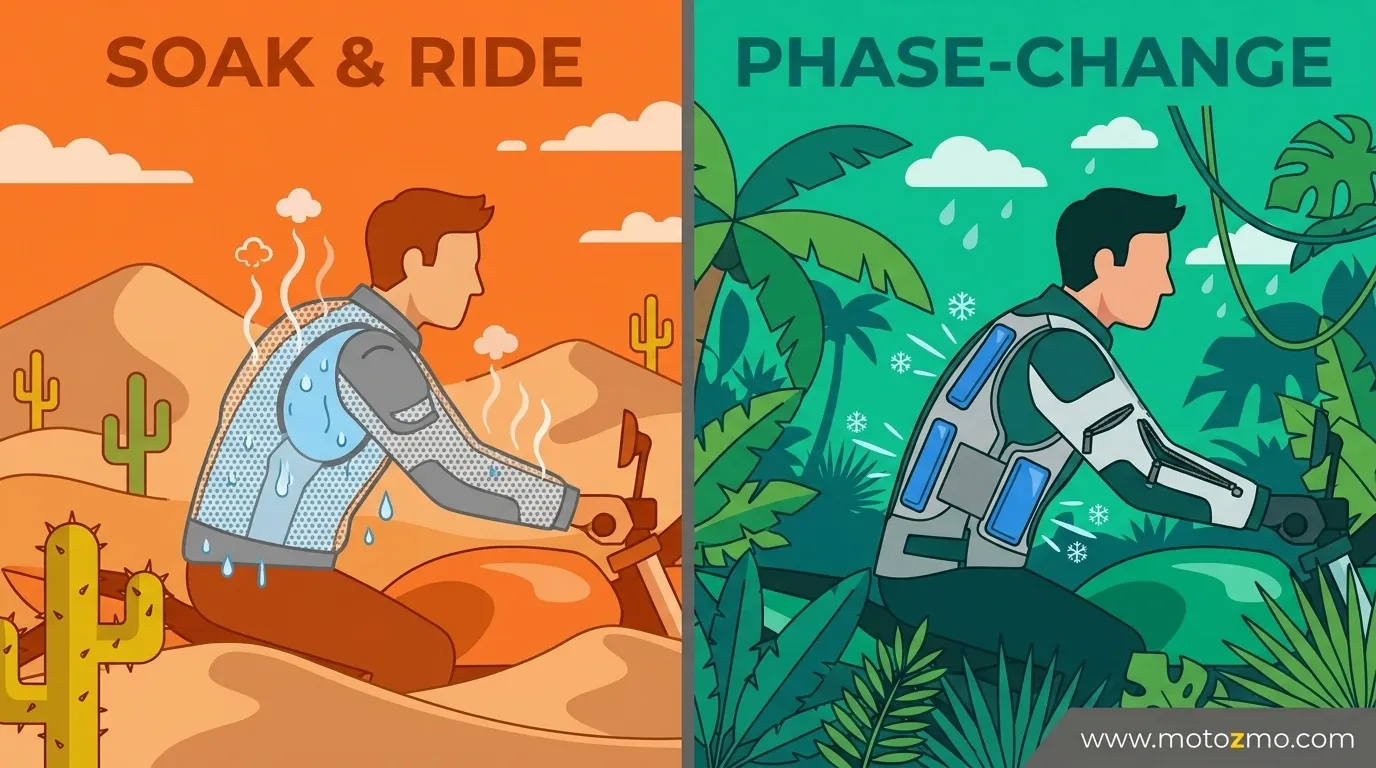
Here is the piece almost no riding guide explains properly. Sweat cools you only when it evaporates, and evaporation needs dry air. In desert heat, a soaked synthetic base layer under a mesh jacket works brilliantly: moving air keeps the cycle going and each round of drying pulls heat off your skin. That is the whole trick behind evaporative cooling vests too.
But when humidity climbs, the trick stops working. A thermal-manikin study published in Scientific Reports found that high humidity and low airflow sharply cut evaporative cooling performance.
In plain terms: at very high humidity, a wet vest gives you almost no cooling at all. Worse, if the air is hotter than your skin, roughly above 98°F, the water in a soaked vest warms up and can start heating you instead of cooling you.
So the rule is simple. Dry heat: soak it and ride. Humid heat: skip the wet rag and use a phase-change cooling vest with frozen inserts, which needs no evaporation, and keep air moving through your vents.
One more threshold worth knowing. Once the air temperature passes your skin temperature, around 97°F, wind stops cooling you. At that point fast-moving hot air heats you the way a convection oven heats food. That is why covered skin with airflow beats bare skin in extreme heat: fabric blocks the hot blast while vents still let sweat do its job.
Your Riding Warns You before Your Body Does
Heat dulls the brain before it turns the stomach. On a bike that matters, because riding eats attention for breakfast: scanning mirrors, reading traffic, judging curves, covering the brake.
When heat fatigue sets in, the first things to go are judgment and reaction speed, not comfort. You feel a bit dull and heavy, and everything keeps working well enough that you tell yourself you are fine.
Watch for the riding tells instead of waiting for classic symptoms. Missing a familiar exit. Sloppy or missed shifts. Braking later than you meant to. Staring at the car ahead instead of scanning.
At a fuel stop, try simple math in your head, like 8 times 3, and notice if it feels harder than it should. If you catch yourself riding dumb, that is the warning.
Pull over, find shade, drink, and cool down. Do not negotiate with it and do not try to push through to the next town. A rider who cannot think straight cannot ride straight.
Heat Cramps, Heat Exhaustion, and Heat Stroke: Know the Ladder
These are not three names for the same thing. They are an escalating sequence, and the right response changes at each rung. This chart lays out the signs and the exact actions for each stage.
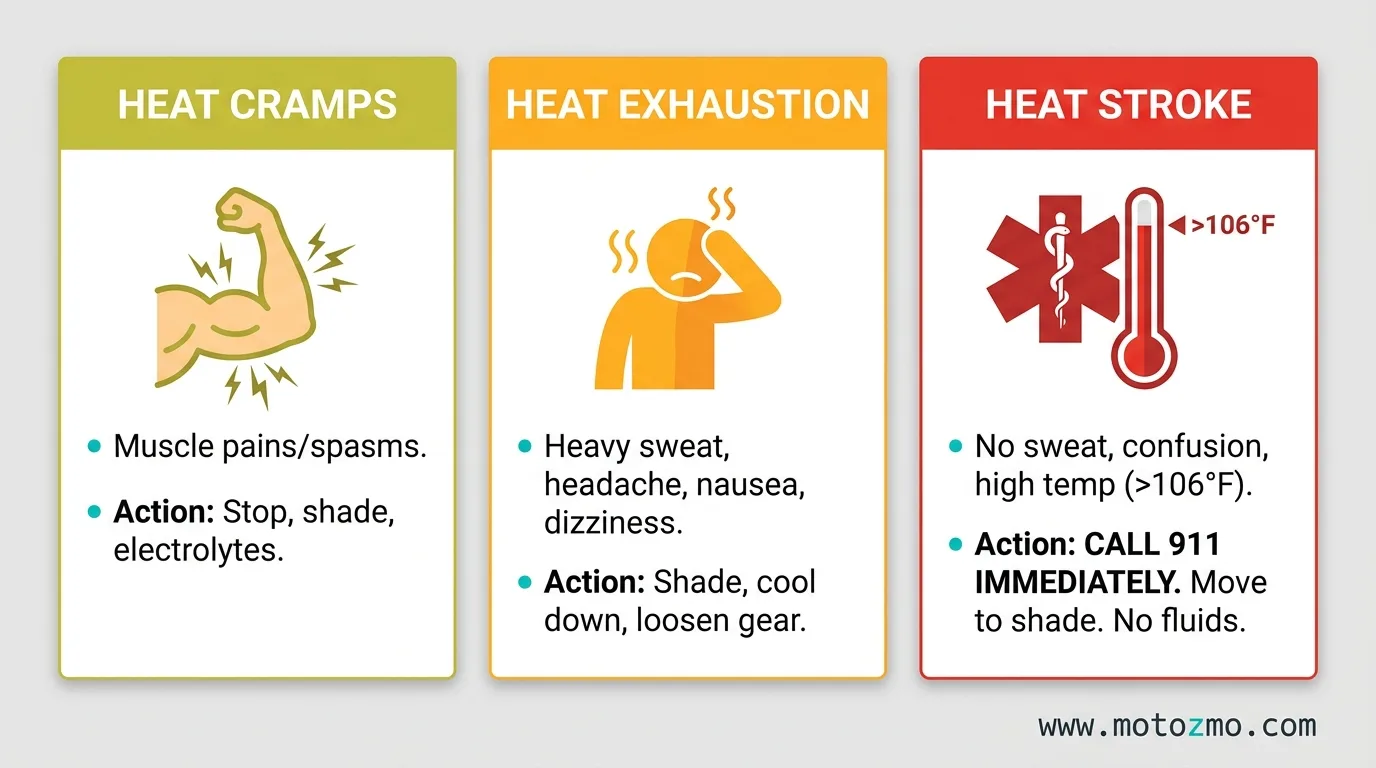
Heat cramps come from salt and fluid loss during heavy sweating: painful muscle cramps, usually in the legs or abdomen. Stop, rest in the shade, and rehydrate with something that includes electrolytes, not just water.
Heat exhaustion is the body’s broader distress signal: heavy sweating, weakness, dizziness, nausea, headache, and confusion. Stop riding immediately. Get to shade or air conditioning, sip fluids, and cool your skin with water or wet cloths. If symptoms do not ease within about 30 minutes, or confusion sets in, get medical help.
Heat stroke is a medical emergency. The cooling system has failed: skin turns hot and may go dry, and confusion, slurred speech, fainting, or seizures can follow. Call emergency services right away, move the person to shade, and cool them with water and fanning until help arrives. Do not leave them alone.
Hydrate on a Schedule, and Know When Water Alone Is Not Enough
Waiting until you feel thirsty means you are already behind. Federal heat guidance for people working hard in heat calls for roughly a quart of water per hour, closer to a full bottle every hour than the sip-here-and-there approach most riders default to.
Drink 16 to 20 ounces in the hour or two before you leave, not as you are pulling on your helmet. A hydration pack earns its place here: small sips often beat big gulps at stops, because your body absorbs steady intake better than a sudden flood.
Past about an hour of heat exposure, plain water stops being enough on its own. You are losing sodium through sweat, and replacing volume without replacing salt can dilute your blood sodium, a real condition called hyponatremia whose symptoms look unsettlingly like dehydration itself: nausea, headache, confusion. For anything beyond an hour in serious heat, drink an electrolyte mix alongside water, not instead of it.
When you shop for an electrolyte product, sodium is the mineral that matters most, since it is what you lose the most of through sweat. Most standard sports drinks are light on it, often only 100 to 200mg per serving. For genuine heat exertion over a long ride, look for something closer to 300 to 700mg of sodium per serving with some potassium alongside it.
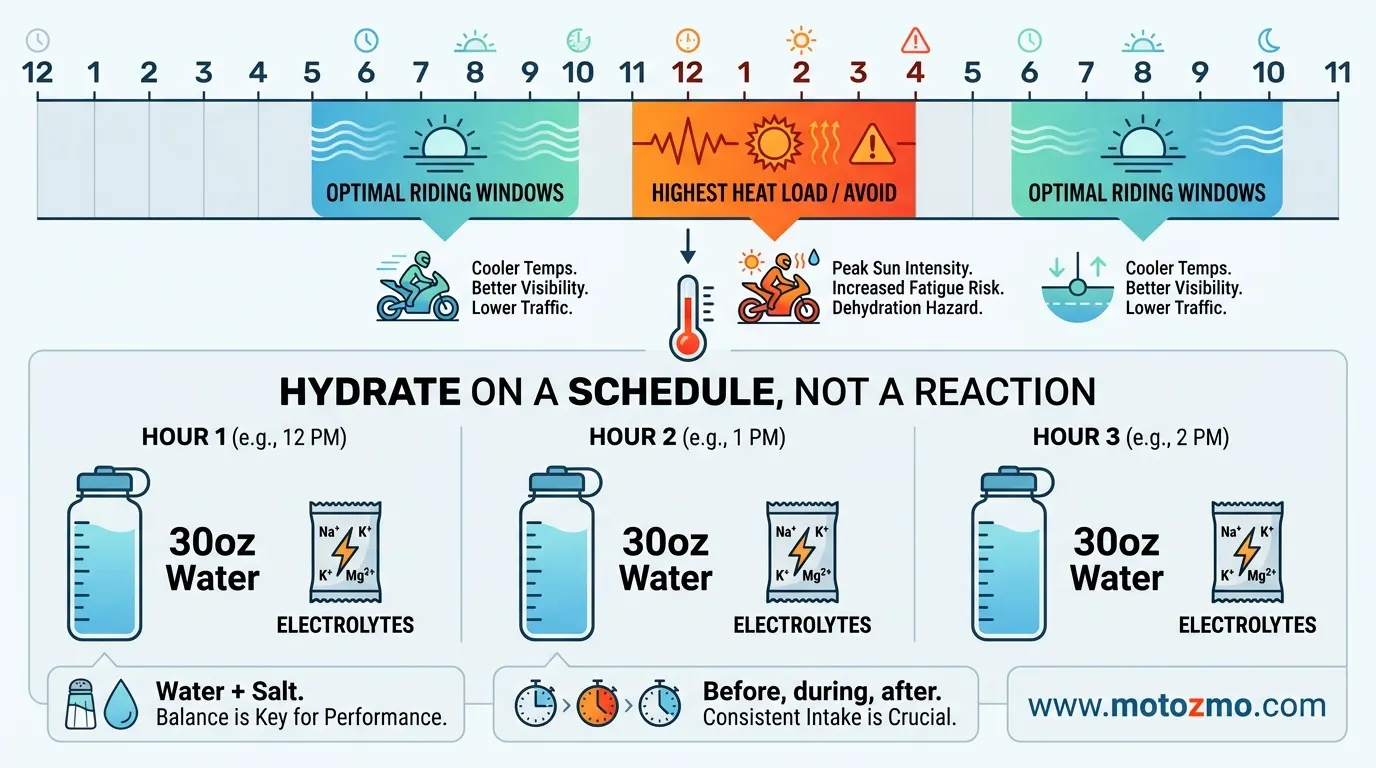
Skip caffeine and alcohol before and during a hot ride; both work against hydration. This chart pairs riding times with hydration volumes for a long day in serious heat.
Plan a real stop every 60 to 90 minutes in triple-digit heat: shade if you can find it, water, and a few minutes off the bike.
A four-hour ride at 102°F is a different undertaking than the same ride at 75°F, and treating it with a plan is most of what separates riders who handle it from riders who end up on the shoulder feeling terrible.
Dress for Airflow, and Keep Your Skin Covered
A mesh jacket with armor is the summer workhorse: protection plus airflow in one piece. The same airflow logic applies below the waist: summer riding pants with mesh panels keep your legs cool without giving up abrasion resistance. Wear light colors to reflect sun, keep every vent open, and never ride in cotton. Cotton soaks up sweat and holds it against your skin, which kills the evaporation you are counting on.
A full-face helmet with working vents still beats an open face in heat, since it shields your head from direct sun and hot wind.
It feels wrong, but do not strip down when the temperature climbs past the high 90s. As covered above, once air temperature tops skin temperature, bare skin takes the full hot blast. Covered skin with moving air stays cooler and avoids the sunburn that makes the next day’s ride miserable.
Keep Your Grip When Your Hands Sweat
Sweaty hands slip on grips and make fine clutch and brake control harder, which is the last thing you want when your reactions are already dulled by heat.
Perforated summer gloves keep air moving across your palms. At stops, wipe your grips and the inside of your visor; a fogged or sweat-streaked visor narrows the vision you need most in traffic.
Time the Ride around the Heat
The cheapest cooling strategy is timing. Leave at dawn and you can cover serious miles before the heat builds; desert roads that hit 115°F by afternoon can sit near 75°F at sunrise. Avoid the 11 a.m. to 3 p.m. window when temperatures peak.
Plan your route through towns with shade and water rather than long empty stretches, and check the forecast for heat advisories before you commit to a big day.
Bottom Line
Staying healthy in summer heat comes down to three habits the generic guides skip. Know your personal risk before you roll, especially medications and age. Match your cooling to the humidity instead of trusting one trick everywhere. And read your riding for the first warnings, because your brain fades before your body complains. Add the hydration schedule and the heat-illness ladder on top, and triple-digit days stay something you ride through, not something you survive.