
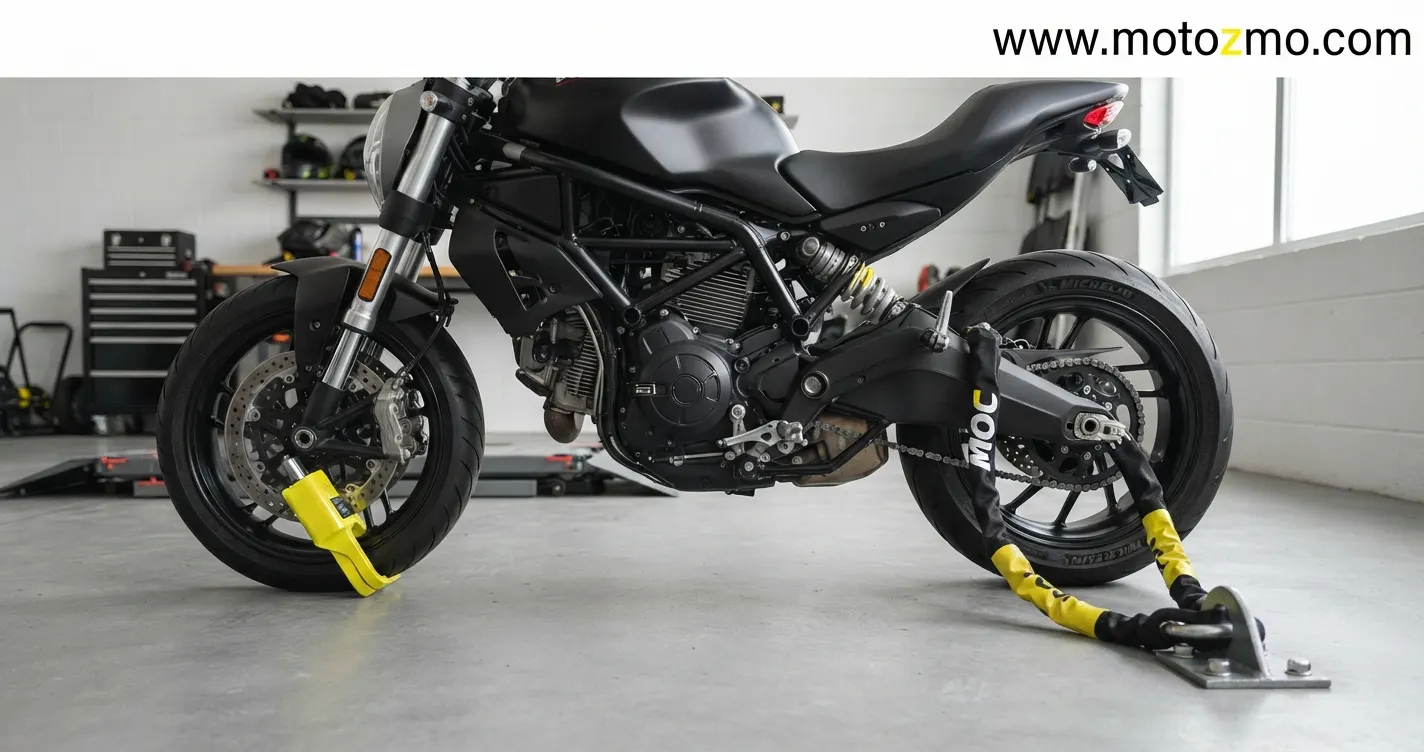
They solve two different theft problems, not the same one. A disc lock stops your bike from being ridden or rolled away. A chain lock anchored to something fixed stops it from being lifted into a van at all.
Most riders benefit from carrying both, just in different situations. But if you can only choose one right now, the question isn’t “which is stronger.” It’s “which theft mode am I actually exposed to, based on how and where I park.” Here’s how to make that call.
Key Takeaways
- A disc lock stops ride-away and roll-away theft by locking the wheel but does nothing if the bike is physically lifted.
- A chain lock + ground anchor stops lift-away theft by tethering the bike to something fixed, regardless of whether the wheels can turn.
- Real insurance data shows a basic disc lock cuts theft risk by roughly 3x, and a quality chain setup makes a bike less likely to be stolen than a car.
- Use a disc lock alone for short, visible stops, such as coffee runs, fuel stops, quick errands.
- Use a chain and anchor for overnight parking, street parking, or anywhere the bike sits unattended for hours.
- Most riders genuinely benefit from carrying both: a disc lock for quick stops, a chain at home, not an either/or purchase.
What Each One Actually Stops
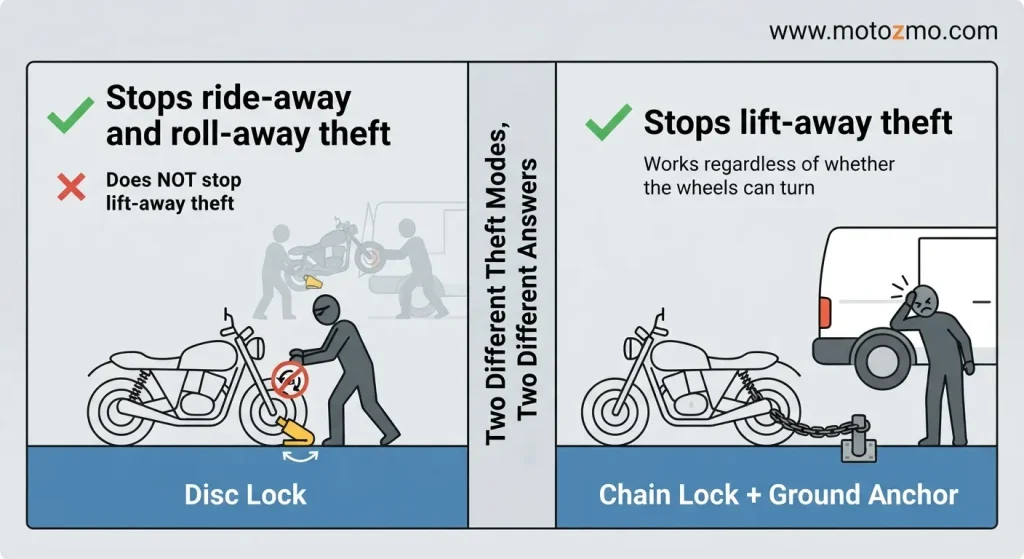
Disc Lock, Stops Ride-Away and Roll-Away Theft
A disc lock threads through your brake disc and physically blocks the wheel from turning in either direction. That defeats the most common opportunistic theft method: snapping or bypassing the ignition and simply riding or rolling the bike away.
What it doesn’t do is stop the bike from being picked up entirely. A disc lock attached to a bike that gets lifted into a van is still attached to the bike when it’s gone.
Chain Lock + Ground Anchor, Stops Lift-Away Theft
A hardened chain locked to something fixed (a ground anchor, a solid post, part of a building) solves the problem a disc lock structurally can’t. It doesn’t matter whether the wheels can turn if the bike itself is physically tethered to the ground.
This is the layer that addresses organized theft, where a van and two people can defeat any lock that only secures the bike to itself.
Speed, Weight, and Everyday Portability
This is where the honest tradeoff lives, and it matters more than either lock’s raw strength on a spec sheet. Disc locks are small, light, and pocketable. You’ll actually carry one on a quick coffee run or a fuel stop.
A quality chain heavy enough to resist an angle grinder is bulky and adds real weight to a saddlebag, which means it tends to stay at home rather than travel with you.
That distinction matters more than it sounds like it should. A lock nobody carries is a lock that isn’t protecting anything. The right move isn’t always “buy the heaviest chain available.” It’s matching the lock’s weight and convenience to where it’ll realistically get used.
The Real Numbers: How Much Does Each Actually Reduce Risk
Ground this in real data rather than taking it on faith. Bennetts BikeSocial’s own theft-claims research, drawn from actual insurance claims data rather than a marketing survey, found that using even a basic disc lock reduces the chance of a bike being stolen by roughly a factor of three, and that a quality chain-and-lock combination makes a motorcycle statistically less likely to be stolen than a car.
Given that motorcycles are stolen at much higher rates than cars to begin with, a heavy-duty chain setup closing that entire gap is a significant number, not a marketing rounding error.
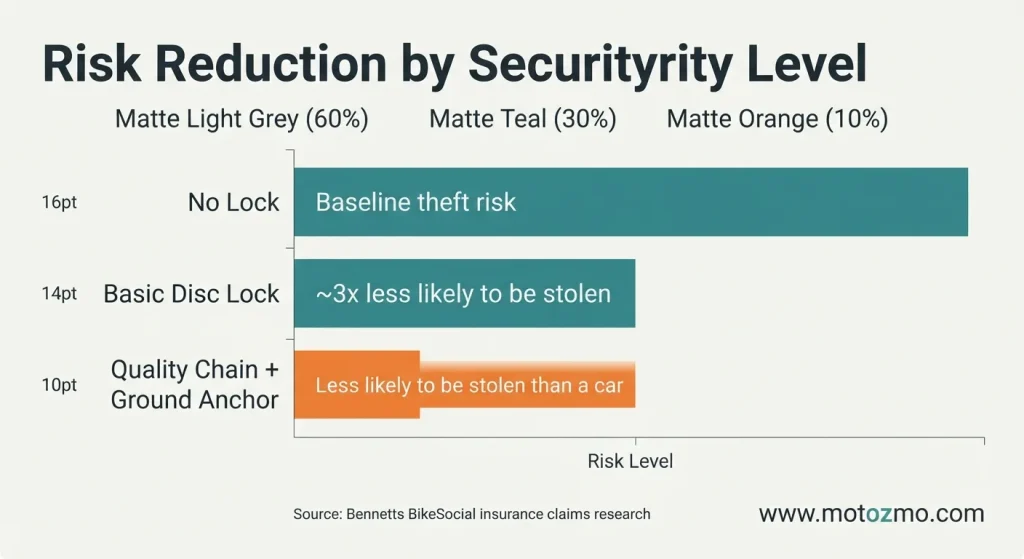
Neither lock needs to be “unbeatable” to be worth carrying. Locks work mainly by making your bike measurably less attractive than the unlocked or lightly-secured bike parked next to it, and the data backs that up directly.
When a Disc Lock Alone Is Enough
A disc lock alone is a reasonable, proportionate choice for short stops in visible, high-traffic areas: a coffee run, a quick errand, a fuel stop where the bike stays in sight or near-sight the whole time.
In these situations, the realistic threat is opportunistic ride-away theft, which is exactly what a disc lock is built to stop. Carrying the heavier chain for a five-minute stop isn’t a proportionate response to the actual risk.
When You Need a Chain (and a Ground Anchor)
The calculation changes the moment the bike sits unattended and out of sight for hours rather than minutes: overnight parking, street parking in an unfamiliar or higher-risk area, or an apartment lot without a private garage.
In such cases, a disc lock alone leaves the lift-away theft mode completely open. A thief with time, privacy, and a vehicle isn’t slowed down much by a wheel that can’t turn if the whole bike can simply be lifted away.
The Real Answer: Use Both
For most riders, the honest answer isn’t picking a side. It’s using both, in different situations.
A disc lock covers the ride-away risk on quick stops away from home. A chain locked to a ground anchor covers the lift-away risk for overnight or extended parking.
That’s not an either/or purchase. It’s two tools solving two different problems, and it’s the same layered logic that runs through every part of an effective motorcycle security setup.
If you’re shopping for the disc lock half of that pairing, see our top disc lock alarm picks for models that combine the physical lock with a real alarm deterrent in one product.
The Bottom Line
Match the lock to the theft mode, not the other way around: a disc lock for quick, visible stops, a chain and ground anchor for anywhere the bike sits unattended for hours, and ideally both if you want real coverage across how you actually ride and park. This decision is one piece of a bigger picture. See the full layered security plan this fits into, including parking habits, alarms, and GPS tracking as recovery insurance if a lock is ever defeated anyway.
FAQs
Can thieves just cut through a chain lock with bolt cutters?
A budget chain, yes, fairly easily. A properly hardened, thick-gauge chain resists standard bolt cutters. It’s angle grinders and dedicated cutting tools that pose the real threat to quality chains, which is why chain quality and thickness matter more than the word “chain” alone.
Does a disc lock stop a motorcycle from being lifted into a van?
No. A disc lock only prevents the wheel from turning. It does nothing to stop the entire bike, disc lock and all, from being physically picked up and carried away. That’s exactly the theft mode a chain-and-anchor setup is built to close.
What chain thickness actually matters for motorcycle security?
Thicker is generally more resistant to cutting tools, though a very thick chain is also heavier and less practical to carry daily. A quality mid-to-heavy gauge hardened chain, dedicated to home or overnight parking rather than daily carry, is the realistic sweet spot for most riders.
Should I get an alarmed disc lock or a plain one?
An alarmed disc lock is generally worth the modest extra cost. It adds a real deterrent on top of the physical lock, and several models also help remind you the lock is still attached before you try to ride off.