Affiliate disclosure: This post may contain affiliate links. If you buy through a link on this page, MOTOZMO may earn a small commission at no extra cost to you. It helps keep our guides free. How we test and choose products.
Yes, motorcycle tire sealants seal small tread punctures, but Ride-On and Slime are different animals, and Slime’s own website warns against using its sealant as preventive protection at highway speed.
I ran Ride-On in my touring bike for two seasons and Slime in an old dual-sport, and the real difference showed up in the garage: one rinsed out with a hose, the other fought me for an hour. Both sealed nails. Only one claims to balance the wheel while it works. Only one tells you to pull it back out within 100 miles.
Sealant is one tool in the flat-prevention kit, not the whole kit. I lay out the rest in my guide to preventing flat motorcycle tires. Below: how they seal, what they do to balance, the TPMS catch, the mess, and when a plug kit beats them both.
Do They Actually Seal a Puncture at Highway Speed?
Small ones, yes. Both brands seal tread-area punctures up to a quarter inch: a nail, a screw, a thorn. Ride-On claims 85 to 95 percent efficiency on those.
The seal forms because escaping air pressure shoves the fibers into the hole, where they tangle into a plug. That only works in the tread crown. Sidewall punctures, bead leaks, and gashes do not seal with any brand, and Slime says so outright.
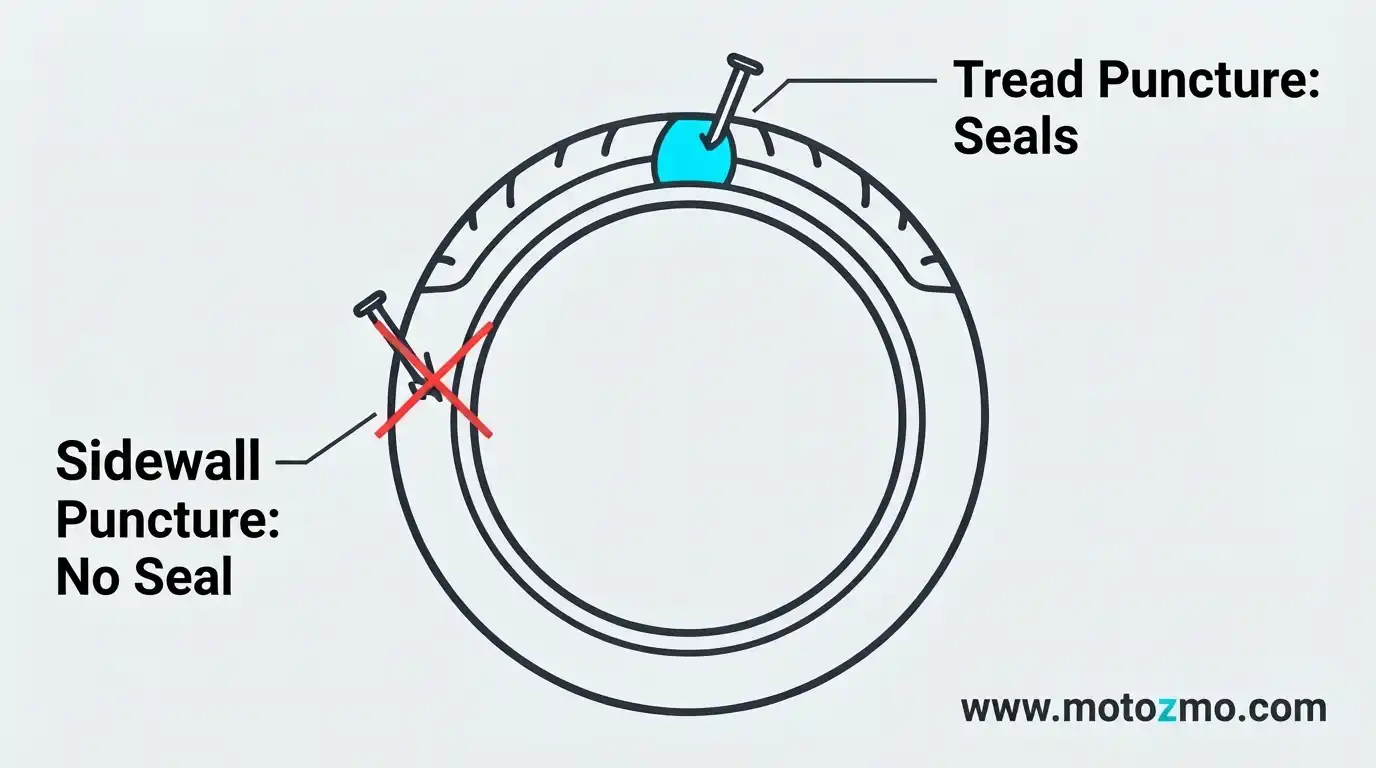
Two things riders get wrong. First, sealant is not a repair. It is a get-you-home aid or a leave-it-in preventive, depending on which label you bought. Second, more sealant does not seal bigger holes.
The right dose for your tire size matters, and under-dosing is the most common reason a seal “fails.”
Do They Unbalance Your Wheels?
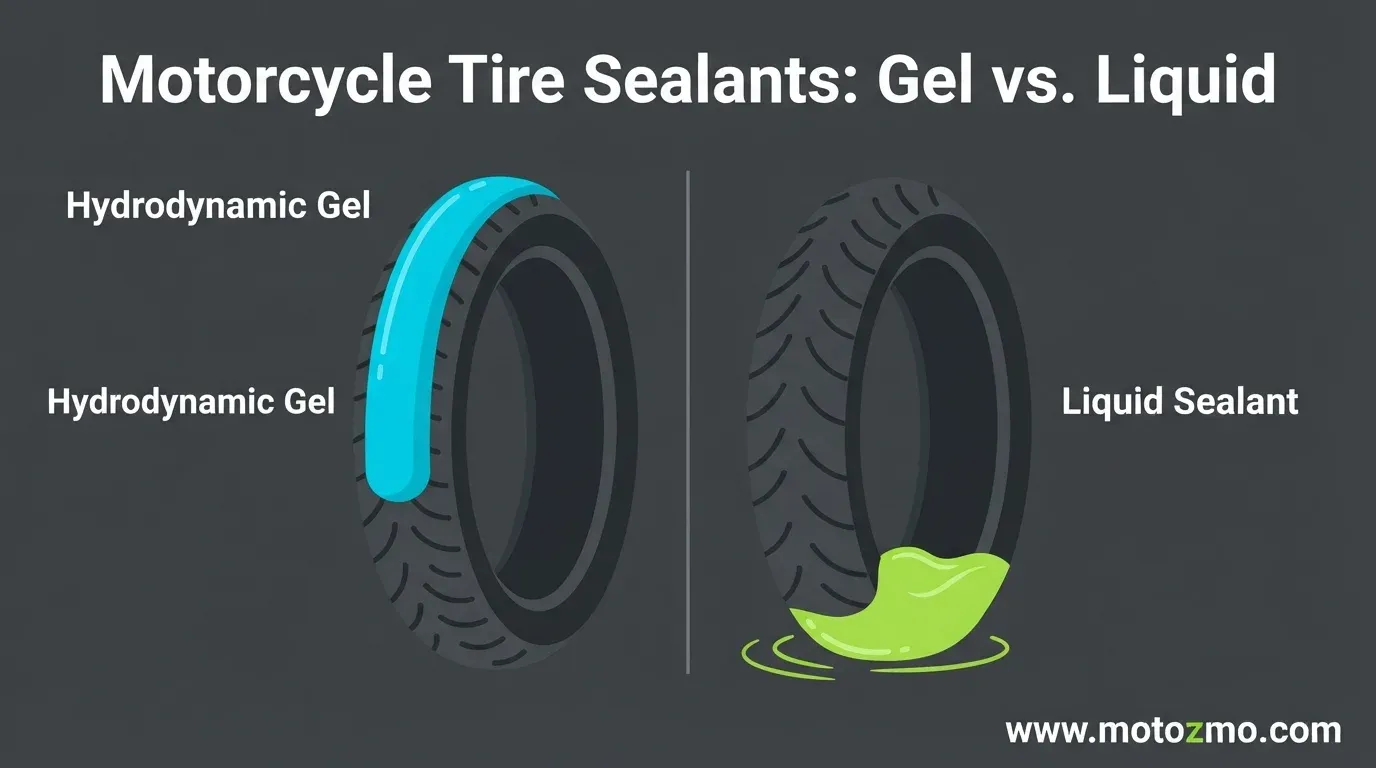
This is the question that splits the two brands. Slime’s site warns that above 65 mph the sealant should be used only as a repair, and that it may cause excessive vibration when installed in front tires.
The liquid pools and shifts, and at speed you can feel it. Slime does not claim to balance anything.
Ride-On claims the opposite: its gel hydrodynamically balances the tire as it rolls, which is why some riders install it instead of wheel weights.
But read their own install notice: expect slight vibration for the first 2 to 5 miles until the gel warms up and spreads evenly, and they tell you not to rebalance the wheel afterward, because a spin balancer will read the gel as imbalance.
You can read how the gel and balancing claim work on Ride-On’s product page.
My take: if you commute at 80 mph, Ride-On is the only one of the two I would run as prevention. If you run Slime, treat it as the emergency fix Slime designed it to be.
What about TPMS?
Ride-On is TPMS-friendly, with one exception that matters. Their technical bulletin says the sealant is fine with sealed sensors, but they do not recommend it for sensors that are not hermetically sealed: specifically 2009, 2010, and 2012-and-newer Honda Gold Wings and certain KTM 1190 and 1290 Adventures.
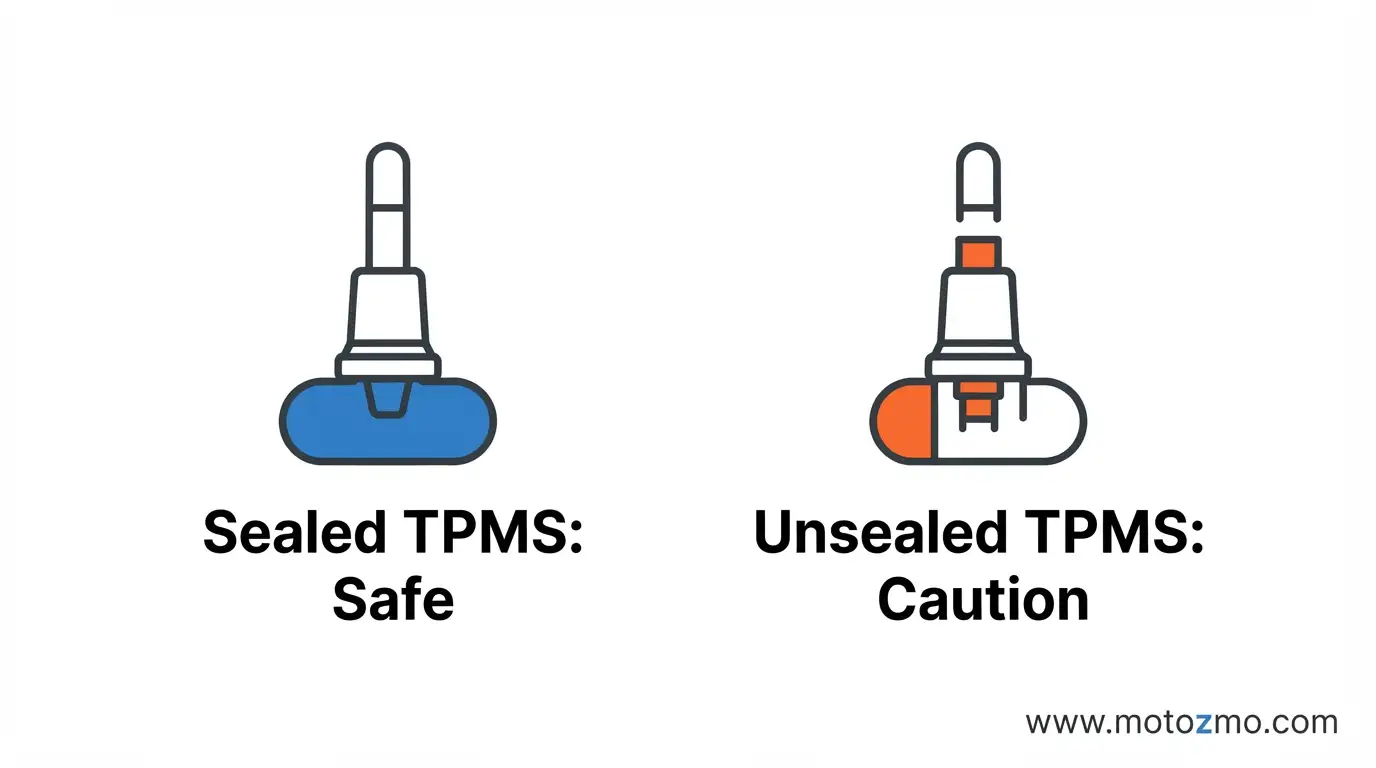
Moisture from plain compressed air can hurt those sensors too, so check with your dealer whether your sensors are sealed before you pour anything in. Slime’s yellow-label emergency sealant makes no TPMS promise at all. Another reason to treat it as a 100-mile fix.
The Tubed-Tire Warning Nobody Reads
Slime’s black-label 2-in-1 sealant works in tubes. It seals tube punctures up to an eighth of an inch.
But one veteran BMW rider’s warning is worth hearing: sealant leaking between tube and tire can let the tube slip and yank the valve stem, which ends the ride fast. Keep tubes properly inflated and dose exactly. A soft tube plus sealant is the risky combo.
Ride-On seals eighth-inch punctures in tube tires too (quarter inch in tubeless). Either way, sealant in a tube is prevention for thorns and wire, not a fix for a pinched or split tube. Split tubes get patches or replacement, the old way.
The Mess Your Tire Shop Will Hate You for
Here is the part the product pages skip. Slime is a liquid when it goes in and a sticky mess when it comes out. It clogs valve cores, so carry a spare core and the little removal tool.
It coats everything inside the tire, and multiple riders report shops that refuse to work on Slime-filled tires because it fouls their machines. Tell the shop it is in there before they break the bead. Surprise Slime has ended friendships.
Ride-On is a gel, not a liquid. It stays in the tread band, and it washes out with water. The shop complaint threads about Ride-On are far shorter. That alone is worth the higher price if you pay someone else to change your tires.
And the yellow-label rule, straight from Slime’s science page: the emergency sealant must come out within 100 miles or 3 days. It is not a leave-it-in product. The black label is the preventive one, and it is rated for off-highway tires: dirt bikes and ATVs, not your freeway commuter.
Sealant vs Plug Kit: Which Job Is Which?
A plug kit is the better roadside tool for a real puncture: it fixes the actual hole. My tire repair kit guide covers what to carry. Sealant is the better preventive tool. It seals the nail you never noticed. Many long-distance riders run both: Ride-On inside, plug kit in the tail bag.
| Situation | Best pick |
|---|---|
| Daily commuting, want prevention | Ride-On |
| Nail found at home, tire holds air | Plug kit, then ride |
| Flat on the roadside, no plug kit | Slime yellow label, then 100 miles max |
| Thorn-prone back roads, tubed tires | Slime black label or Ride-On, dosed right |
| Sidewall damage or big gash | Neither: new tire |
If you flat on the road with neither, my flat-tire-on-the-road guide walks through the options.
What Sealant Cannot Do
Sealant cannot save a worn-out tire. If the tread is thin or the tire is past its age, no gel changes that. Check my guide to checking your tires and the tire age rule before you spend money on prevention for a tire that needs replacement.
Bottom Line
Sealant works on small tread punctures. Ride-On earns its price with balancing and clean removal. Slime earns its shelf space as a cheap emergency fix with strict limits. Match the product to the job, dose it right, and keep a plug kit anyway.
FAQs about Motorcycle Tire Sealants
Does tire sealant expire inside the tire?
Slime’s 2-in-1 lasts up to two years in the tire. Ride-On stays active for the legal life of the tire. Check pressure monthly either way. Sealant is no excuse to skip it.
Can I use Slime’s yellow-label sealant as prevention?
No. Slime says to remove the emergency sealant within 100 miles or 3 days. For prevention, use the black-label 2-in-1 on off-highway tires, or Ride-On.