
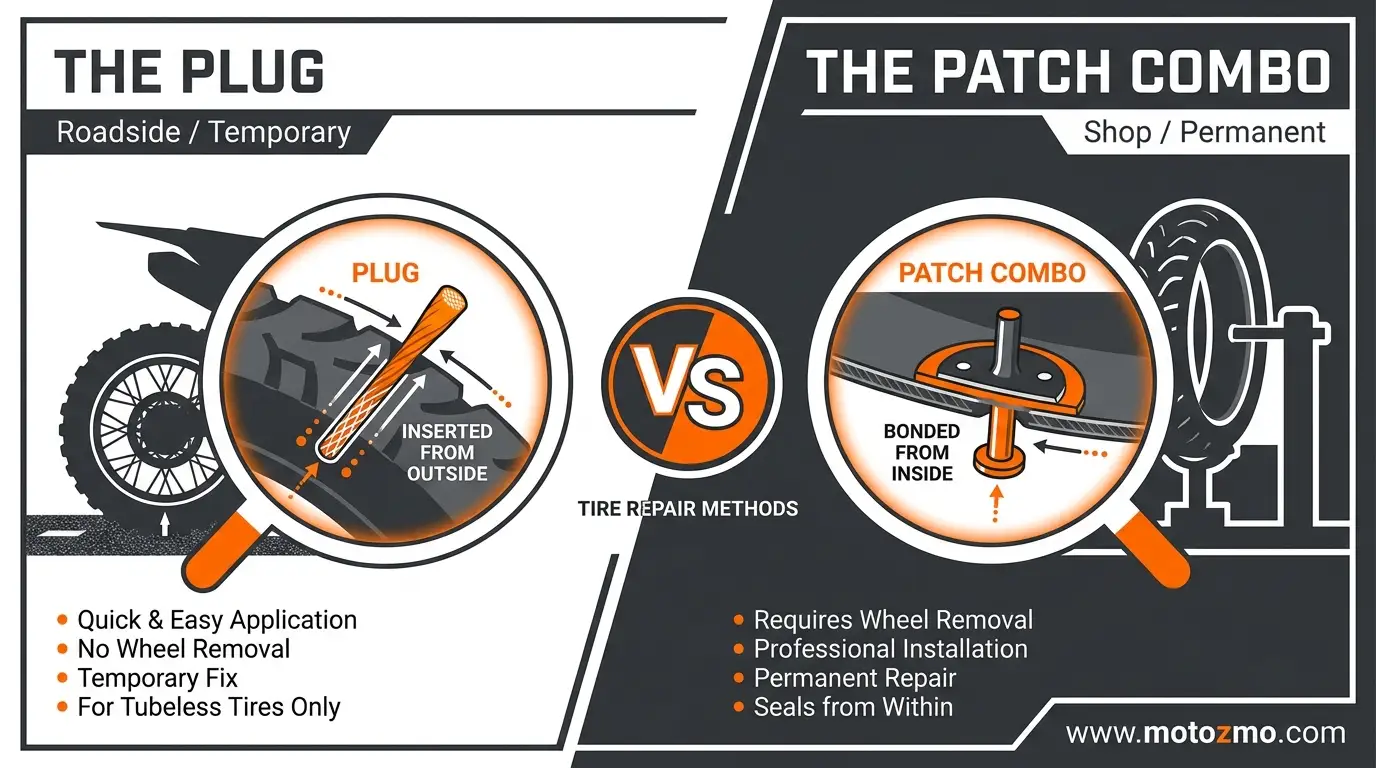
A plug is the fast, roadside fix for a small tread puncture. You can install it without pulling the wheel. A patch, done with the tire off the bike, is the stronger, more thorough repair. And a combination of both, installed by a shop, is the only repair tire makers actually back as permanent.
Which one you need comes down to two things. Where the damage is, and whether you’re fixing this on the shoulder or back in your garage. Get the location wrong and you risk trusting a repair that was never built to hold. Below is how each one works, which holds up longer, and when the honest answer is neither.
How Plug and Patch Kits Work
Plug. You install it from the outside, with the tire still on the wheel. No wheel removal, no special shop tools. Just a reamer, an insertion tool, and a rubber plug that fills the hole. That’s why it’s the roadside option. You can do it in a gas station parking lot with a kit that fits under your seat. The catch is that a plug only works on tread punctures, not sidewall damage.
Patch. You install it from the inside, so you have to dismount the tire from the wheel first. The patch bonds directly to the tire’s inner liner. It covers a wider area than a plug fills and seals against the tire’s own structure. You won’t do this roadside. It needs a shop with a tire machine, or at least a way to break the bead and remount the tire yourself.
| Plug | Patch | |
|---|---|---|
| Installed from | Outside, tire stays on the wheel | Inside, tire dismounted |
| Tools needed | Reamer, insertion tool, plug | Tire machine, patch, buffing tool |
| Where you can do it | Roadside or garage | Shop (or a well-equipped garage) |
| Works on | Tread punctures only | Tread punctures only |
| Backed as permanent | No, temporary | Only as part of a plug-patch combo |
If you’re stranded and just need to get home, a plug is the realistic choice. If your bike is already at a shop for something else, ask them to patch it properly instead.
Plug vs Patch Kit: Which One Holds up Longer
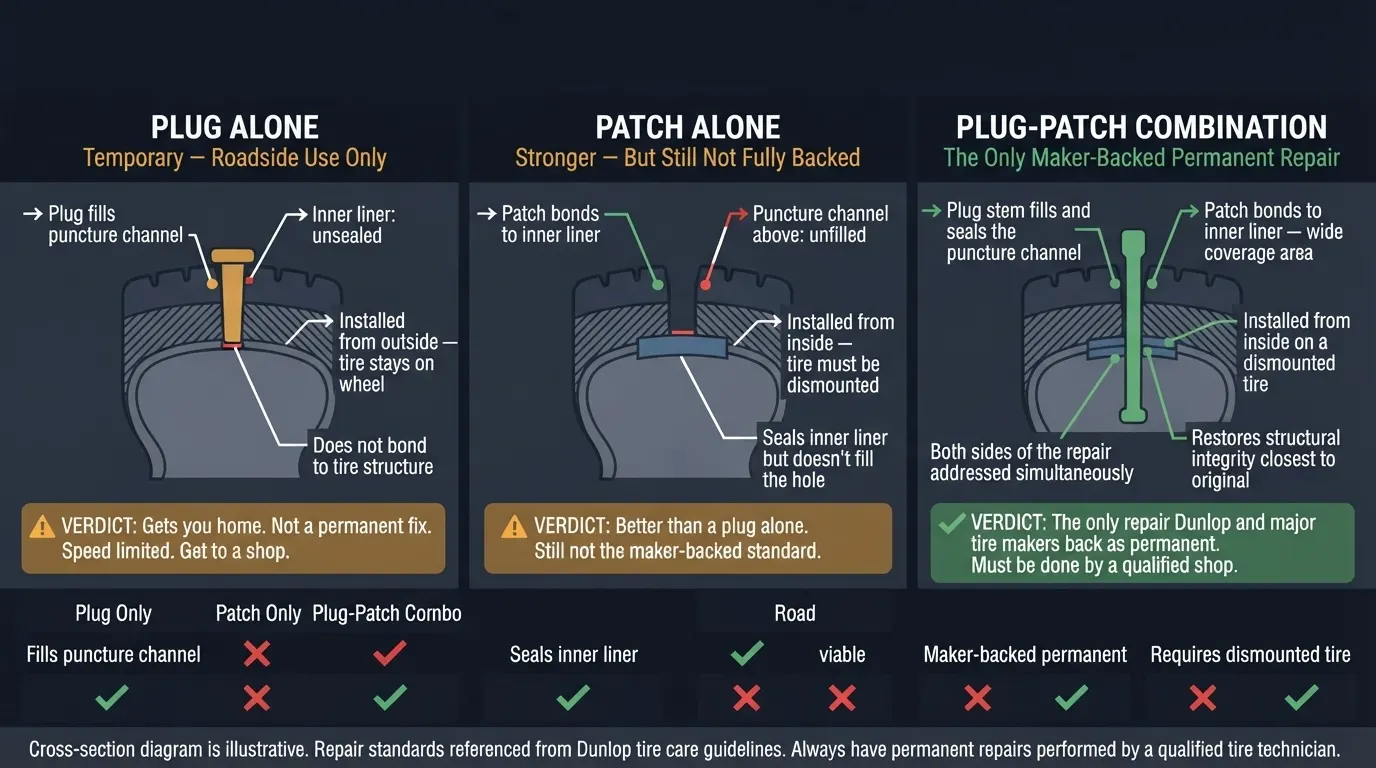
A patch usually holds up better than a plug on its own. It seals a larger area against the tire’s inner liner instead of just filling the hole from outside.
But neither one, used alone, is what tire makers call a permanent fix. The real answer is a plug-patch combination, and I’ll get to why below.
Where the Damage Is Decides More Than Anything Else
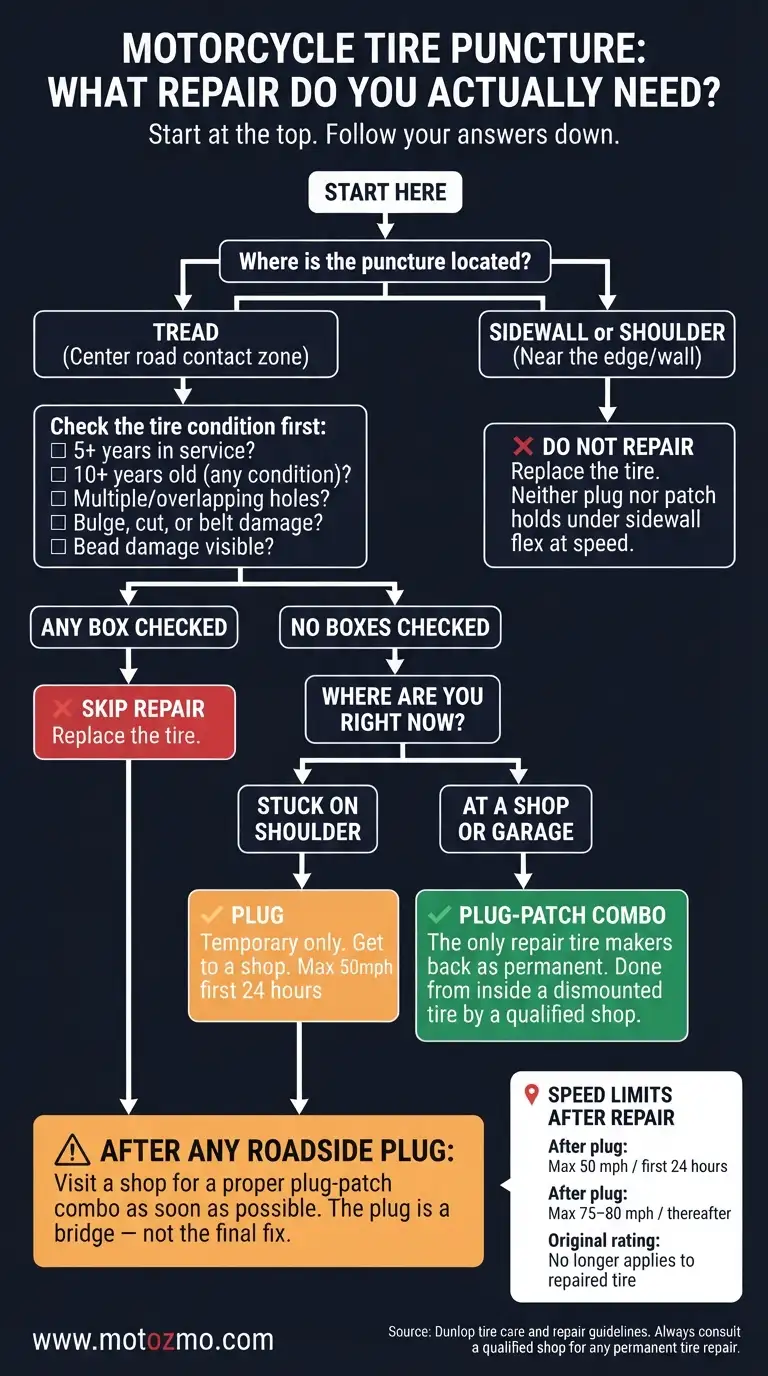
Before you choose between a plug and a patch, check where the puncture actually is.
Tread punctures, anywhere in the center section that touches the road, are fair game for either repair. A plug is simply faster if you’re doing it yourself.
Sidewall or shoulder damage is a different story. That part of the tire flexes constantly as you ride. Neither a standard plug nor a standard patch holds up there. On a street motorcycle tire, damage that close to the sidewall usually means replacement, not repair. Our guide to when a motorcycle tire actually needs replacing covers the signs to check for.
When You Actually Need Both (the Plug-Patch Combo)
The plug-patch combination is what most makers back as a permanent repair. It’s worth understanding why, because it explains the limits of everything above.
Dunlop’s own tire care and repair guidelines call for exactly this. A small tread puncture repaired from inside a dismounted tire, using a combined plug and patch, done by a qualified shop. A plug alone won’t do it, and neither will a patch alone. The combination covers the hole from both sides and brings the tire’s structure back close to its original strength.
That’s why you should treat a roadside plug as a bridge to this repair, not a substitute for it. It gets you moving. It doesn’t replace the trip to the shop.
When Neither One Is the Right Choice
Sometimes the honest answer is: don’t repair this tire at all.
Skip the plug and the patch if you’re looking at any of the following:
- Multiple or overlapping punctures
- A tire that’s been in service five years or more
- A tire over ten years old, no matter how much tread is left
- A visible bulge, cut, bead damage, or sign of internal belt separation
One detailed breakdown of tire makers’ repair standards lays out these same replace-not-repair triggers straight from the major brands. If your tire checks any of these boxes, a new tire costs less than what a bad repair could cost you.
The Realistic Roadside Answer
If you’re stuck on the shoulder right now, here’s the practical sequence. Plug it to get moving safely. Treat that plug as temporary. Get a proper patch or plug-patch combo done at a shop soon after.
Our pillar guide on what to do the moment your tire goes flat walks through the full roadside sequence, from stopping safely to reinflating. And once you’re shopping for gear to keep in your saddlebag, the repair kits built for this exact situation are worth a look before your next long ride.
The Bottom Line
Plug or patch comes down to where the damage is and where you’re standing when you find it. Tread puncture, stuck on the road: plug it and get moving. Same puncture, bike already at a shop: ask for the patch, or better yet, the full plug-patch combo. Sidewall damage, multiple punctures, or an aging tire: skip the repair and replace it.
FAQs
Can a patched motorcycle tire be trusted long-term?
Yes, when it’s done right, as part of a plug-patch combination installed from inside a dismounted tire by a qualified shop. A patch alone, or a plug alone, isn’t the same standard of permanent repair.
Is a plugged tire safe to ride at highway speed?
Not at full speed. Most makers cap a repaired tire at 50 mph for the first 24 hours and around 75 to 80 mph after that, well below what the tire was originally rated for.
Can you repair a puncture that’s close to the sidewall?
No, not safely. Sidewall and shoulder damage flexes constantly as you ride, and neither a plug nor a standard patch can hold there. Punctures that close to the sidewall usually mean replacement, not repair.
How many plugs can one tire safely have?
There’s no universal number, but most shops won’t repair a tire with multiple or overlapping punctures. If you’re looking at a second or third hole, treat it as a sign you need a new tire.