
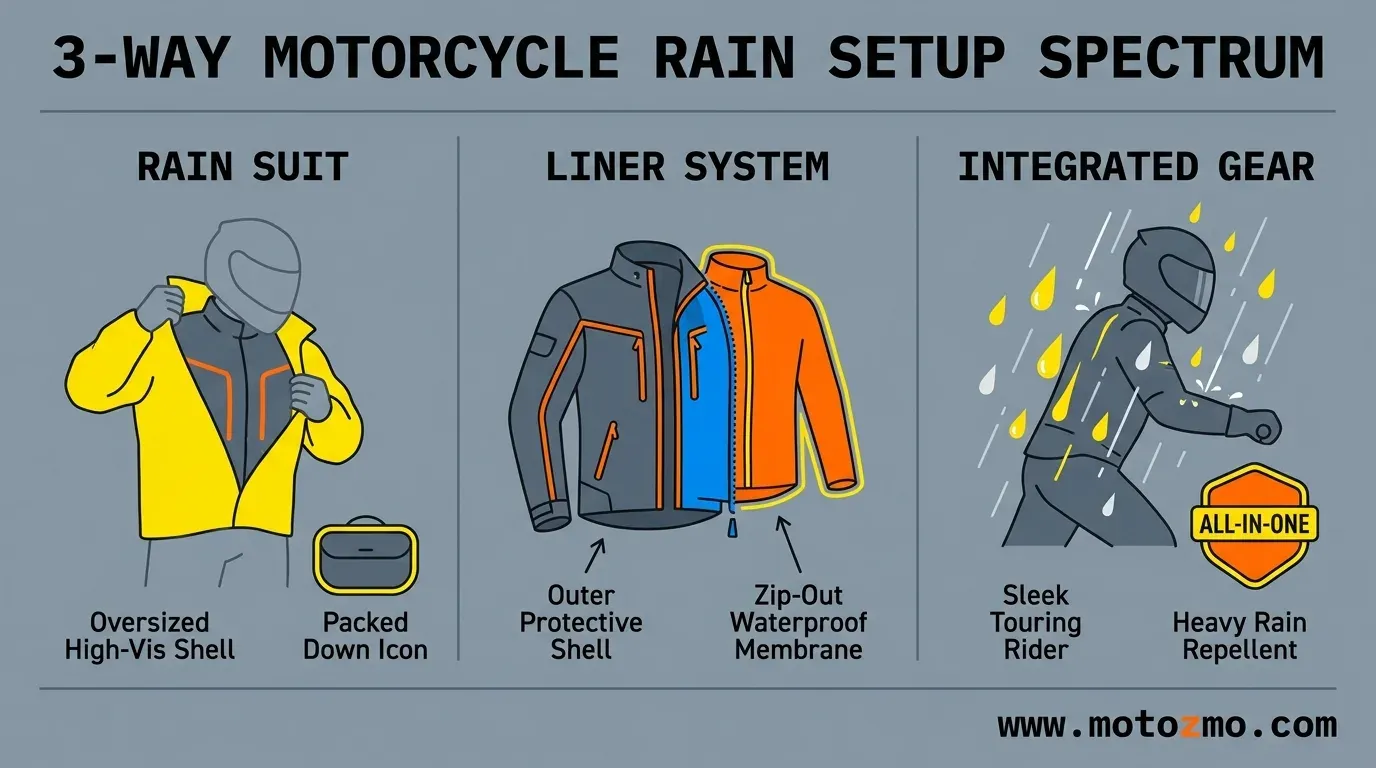
Most guides treat this as a two-way choice, but there’s a third setup that solves problems neither one fixes on its own. A rain suit is a shell you pull on over your regular jacket and pants. Waterproof riding gear builds the membrane into a jacket and pants you wear every day, rain or shine.
The option most articles skip is a jacket with a removable waterproof liner, gear you already own that becomes a rain suit and an everyday jacket depending on what’s zipped in.
Riding in the rain already cuts into the grip you have to work with, so the gear question is which setup keeps you focused on the road instead of on being wet. Here’s how the three stack up, and which one fits how you ride.
Three Ways to Stay Dry, Not Two
A rain suit is a separate shell, a jacket and pants (or a one-piece suit) that lives under your seat or in a saddlebag until the sky opens up. You still wear your normal riding jacket underneath it. It does one job.
Waterproof riding gear builds a waterproof, breathable membrane into the jacket and pants themselves. There’s no second layer to pull on. You ride in it every day, and it happens to handle rain too.
The setup most guides never mention is a three-season jacket with a zip-out or zip-in waterproof liner. On a dry day, you wear the shell alone. When rain shows up, you zip the liner in, or it’s already there, and the same jacket does both jobs.
It’s a middle path between buying a separate rain suit and committing to gear that’s built waterproof from the start.
What Each One Costs You
The sticker price only tells part of the story. A rain suit is money on top of the jacket you already own. Waterproof riding gear and a liner jacket replace that jacket, so the real comparison is total cost, not just the price tag on the rain gear itself.
| Rain suit | Waterproof riding gear | Liner jacket | |
|---|---|---|---|
| What you pay | ~$30 to $110, on top of your current jacket | ~$300 to $600, replaces your jacket | ~$200 to $350, replaces your jacket |
| Ready when it’s not raining | No, extra gear to carry | Yes, it’s your everyday jacket | Yes, wear the shell alone |
| Ready when it is raining | Only if you remembered to bring it | Always | Always, once the liner’s zipped in |
| Packs down for the bike | Yes, small | No, you’re wearing it | No, you’re wearing it |
The Trapped-Heat Problem Nobody Puts on the Label
Pull a rain suit over a jacket that already blocks wind and you’ve stacked two low-breathability layers on top of each other.
One long-time tourer summed up the tradeoff on a riding forum: gear that claims to be waterproof and doubles as your everyday layer will not hold up the way dedicated rain gear does once the rain turns serious, and staying dry inside your own sweat matters as much as staying dry from the rain outside.
This is where a liner jacket has a real edge. The waterproof membrane sits inside a shell built to breathe, not stacked as a second skin over gear that wasn’t designed to work with it. A rain suit worn over non-waterproof gear traps the most heat of the three, since neither layer is built to let moisture out.
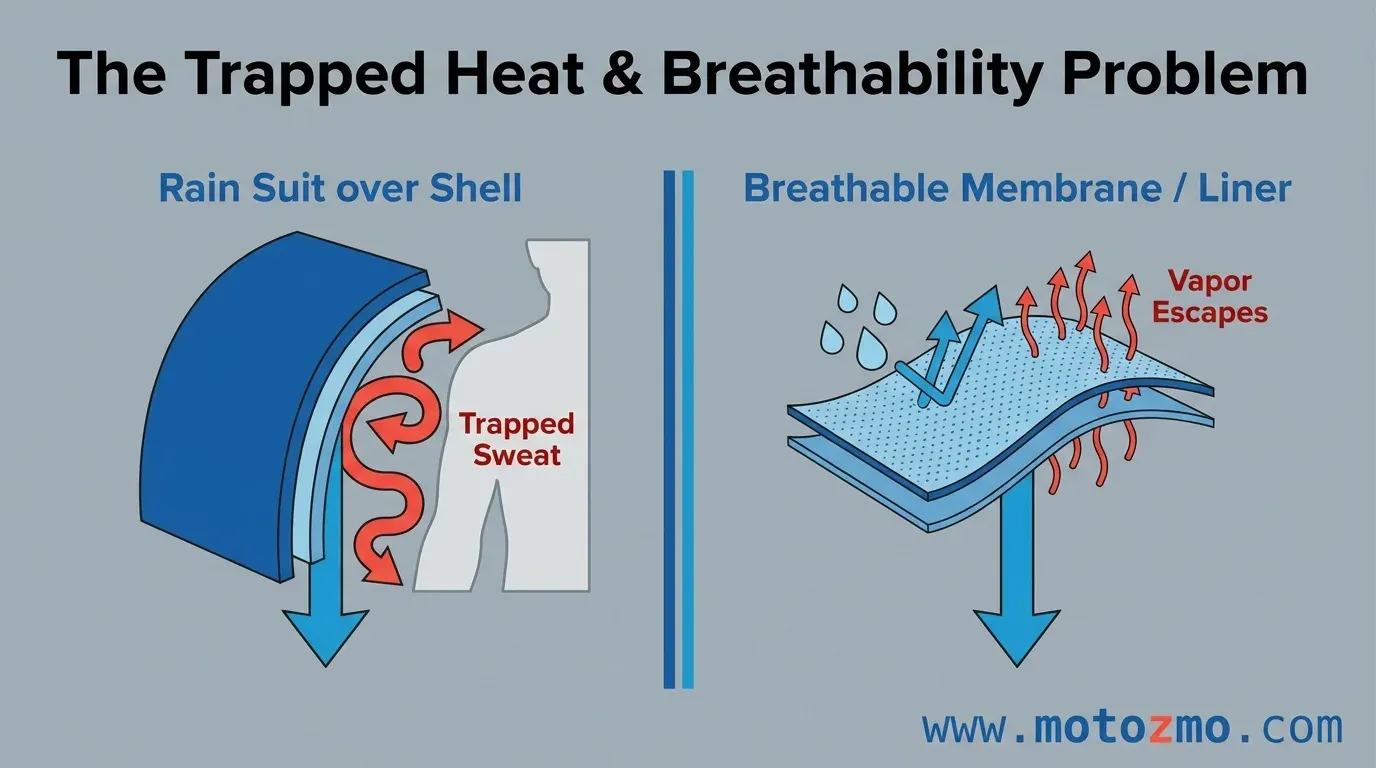
Waterproof-breathable membranes rely on a durable water repellent coating on the outer fabric to keep working, and that coating wears off with sweat, dirt, and washing, whether it’s on a liner jacket or full waterproof gear.
REI’s washing guide covers how to test for this and when to reapply it. A rain suit that spends most of the year packed away skips this problem entirely, since it’s not exposed to the wear that breaks a coating down.
Which One Fits How You Ride
| You are | Get this |
|---|---|
| A commuter who rides under 30 minutes and checks the forecast first | Rain suit, cheap and rarely needed |
| A daily rider who can’t always plan around the weather | Liner jacket, so you’re never caught without it |
| A tourer crossing climates in one day, or riding through sustained highway rain | Rain suit, dedicated gear holds up longest once rain turns heavy |
| Someone who already owns a jacket they love and don’t want to replace | Rain suit, it works with what you have |
Fitting It Over What You Already Wear
A rain suit has to fit over your jacket, not just over you, and that trips up more riders than the waterproofing itself does. Buy a rain suit one size larger than your riding jacket, not your normal clothing size.
Two collars stacked on top of each other, your jacket’s and the rain suit’s, rarely seal as well as either one alone, so expect some water at the neck in sustained rain no matter which suit you buy.
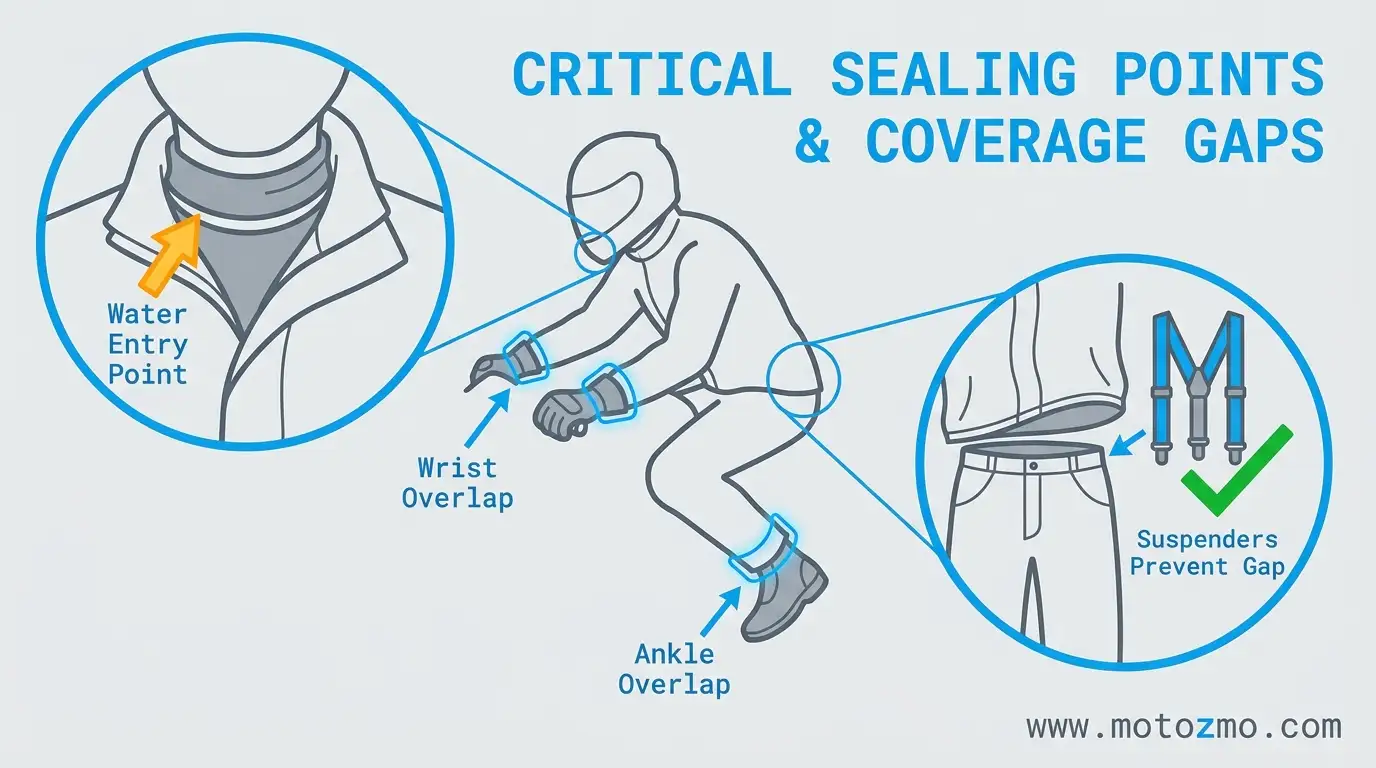
Suspenders on rain pants solve a related problem: without them, the waistband can slide below your jacket’s hem, and water runs straight down your back through the gap.
How Long Each One Lasts
A rain suit’s weak points show up at the seams that flex the most, the crotch and the ankle zippers, and owners report those spots wearing thin or snagging after a few seasons of regular use.
Waterproof riding gear and liner jackets wear differently: the waterproof membrane itself tends to outlast the coating on top of it. Gore-Tex’s own care guide explains why: the membrane stops water from getting through, but the outer coating is what keeps the fabric from soaking up water and going heavy in the first place, and that coating is what wears down first.
The fix is reproofing the fabric, not replacing the jacket, and that’s a job you can do at home every year or two.
What None of These Three Cover
A jacket, liner, or rain suit stops at your wrists and ankles. Pair whichever setup you pick with a real pair of waterproof gloves, since wet hands lose their feel for the levers faster than anything else gets wet.
For your feet, rain covers for your boots close the gap a jacket and pants leave open at the ankle. If you land on the rain suit side of this choice, our best motorcycle rain suit roundup picks three that hold up under real use, and if integrated waterproof gear fits your riding better, waterproof riding jeans are a lower-commitment way to start with your legs before replacing your jacket too.