
Affiliate disclosure: This post may contain affiliate links. If you buy through a link on this page, MOTOZMO may earn a small commission at no extra cost to you. It helps keep our guides free. How we test and choose products.
Hitting the redline occasionally on a warmed-up motorcycle won’t damage your engine. Modern rev limiters protect against over-revving.
Engineers set the redline roughly 1,000 RPM below actual failure points. However, repeatedly bouncing off the limiter, revving while cold, or accidentally downshifting at high RPM can cause valve float, bearing damage, and accelerated wear on pistons and connecting rods.
The real damage happens in two scenarios: mechanical over-revving (forcing the engine past redline through the transmission) and sustained high-RPM abuse.
Let’s break down exactly when redlining crosses from acceptable to destructive.
What Happens When You Hit the Redline
The redline marks the maximum safe engine speed manufacturers recommend. That red zone on your tachometer typically appears between 8,000-16,000 RPM depending on your motorcycle’s engine displacement (CC) and design.
Modern motorcycles have electronic rev limiters that cut fuel or spark when you reach redline. The limiter kicks in by:
- Cutting spark to specific cylinders
- Reducing fuel delivery
- Retarding ignition timing
You’ll feel the engine stutter or “bounce” as power cuts momentarily. This prevents the engine from spinning into the danger zone where valves can’t close fast enough and pistons slam into them.
The Engineering Safety Margin
Engineers test engines to destruction during development. They identify the RPM where components fail, usually 10-15% above the redline. This safety cushion protects your engine during brief redline hits.
A CBR600RR with a 16,000 RPM redline likely won’t suffer mechanical failure until 17,500+ RPM. But that margin disappears if you force the engine there through motorcycle problems like missed shifts.

When Redlining Won’t Damage Your Engine
Quick Acceleration Runs
Winding out second gear on an on-ramp for 2-3 seconds? Your engine handles this easily. Modern motorcycle engine types are engineered for occasional full-throttle acceleration.
Sportbikes especially thrive in the upper RPM range. A Yamaha R6 makes peak power at 13,500 RPM, which is 500 RPM below its 14,000 redline. You’d shortchange performance by shifting too early.
Track Day Riding
Circuit riding demands maximum engine output. Riders frequently touch redline before upshifting. This remains acceptable because:
- Engine reaches full operating temperature
- You’re in appropriate gears with smooth shifts
- Rev limiters prevent true over-revving
- Track maintenance schedules compensate for increased wear
One track day equals roughly 500-800 miles of street wear due to sustained high RPM operation.
Downshifting with Rev-Matching
Proper rev-matching during downshifts momentarily raises RPM but doesn’t harm the engine. The difference? You’re controlling the RPM rise through throttle blips rather than forcing it through the transmission.
When Redlining Destroys Your Engine
Mechanical Over-Revving
Rev limiters can’t protect against mechanical over-revving. This happens when the rear wheel forces the engine to spin faster than the limiter allows.

Example scenario: You’re at 13,000 RPM in third gear. You accidentally grab first instead of fourth. The transmission violently spins the crankshaft to 20,000+ RPM before you realize the mistake.
The result:
| Component | Damage Type |
|---|---|
| Valves | Bent or shattered from piston contact |
| Valve springs | Compressed beyond elastic limit (valve float) |
| Connecting rods | Bent or fractured from extreme G-forces |
| Piston rings | Cracked or broken from rapid deceleration |
| Bearings | Spun or damaged from oil film breakdown |
At redline, a four-ounce piston experiences 1,700 G-forces, equivalent to 450 pounds of load. Push past redline and those forces multiply exponentially.
Cold Engine Redlining
Redlining before your engine reaches operating temperature accelerates wear dramatically. Cold engine oil flows like honey — thick and slow. Without proper lubrication:
- Piston rings scrape cylinder walls
- Bearings run metal-on-metal
- Cam lobes wear faster
- Carbon deposits form on valves
Wait 5-10 minutes after starting before aggressive riding. Your temperature gauge reaching normal doesn’t mean oil temperature has caught up.
Sustained Redline Operation
Bouncing off the limiter for minutes creates cumulative damage. Even with proper cooling, components degrade from:
Heat buildup: Sustained high RPM generates excessive engine heat that breaks down oil viscosity faster. Oil that normally lasts 5,000 miles might need changing at 3,000 miles with frequent redline use.
Vibration stress: Higher frequency vibrations at redline loosen fasteners and fatigue metal. Exhaust studs, valve cover bolts, and sprocket nuts can work loose.
Oil shear: High-RPM operation shears oil molecules, reducing lubrication effectiveness. This compounds heat damage to bearings and cam surfaces.
Neutral Redlining
Revving in neutral poses unique risks. Without transmission load governing speed, the engine can spin beyond design limits. The clutch and transmission normally absorb energy and limit RPM spikes, and neutral removes this safety buffer.
How Engine Type Affects Redline Safety

High-Revving Sportbikes
Inline-four sportbikes (CBR, GSX-R, R6) have:
- Oversquare engine design (bore larger than stroke)
- Lightweight pistons with short travel distance
- Strong valve springs resisting float
- Redlines of 14,000-16,000 RPM
These engines tolerate brief redline hits better than other designs. Peak power arrives near redline, making full-RPM use necessary for performance.
V-Twin Cruisers
Harley-Davidson and Indian motorcycles feature:
- Undersquare design (stroke longer than bore)
- Heavy pistons with longer travel
- Low compression optimized for torque
- Redlines of 5,000-6,500 RPM
Redlining a cruiser accomplishes nothing. Peak torque arrives at 3,000-4,000 RPM. Above 5,500 RPM, you’re just creating noise and vibration without additional power.
Single-Cylinder Thumpers
KTM and Honda single-cylinder bikes have:
- Significant reciprocating mass
- High vibration at all RPM
- Moderate redlines of 9,000-11,000 RPM
Singles tolerate occasional redline use but suffer more from sustained high-RPM riding. The heavier piston and connecting rod create greater inertial forces than multi-cylinder designs.
Rev-Matching Prevents Accidental Over-Revving
Rev-matching synchronizes engine speed to transmission speed during downshifts. Done correctly, it prevents the engine braking at high RPM shock that damages transmissions.
The Three-Step Rev-Match
- Pull clutch while closing throttle
- Downshift while simultaneously blipping throttle
- Release clutch as RPM matches target speed
Master this technique and you’ll rarely accidentally over-rev. The blip raises RPM to where it should be in the lower gear, preventing the transmission from forcing the engine there violently.
Poor rev-matching symptoms include:
- Rear wheel hopping or chattering
- Unusual engine noises under acceleration
- Transmission clunk
- RPM surging past redline
Oil Change Intervals for High-RPM Riding
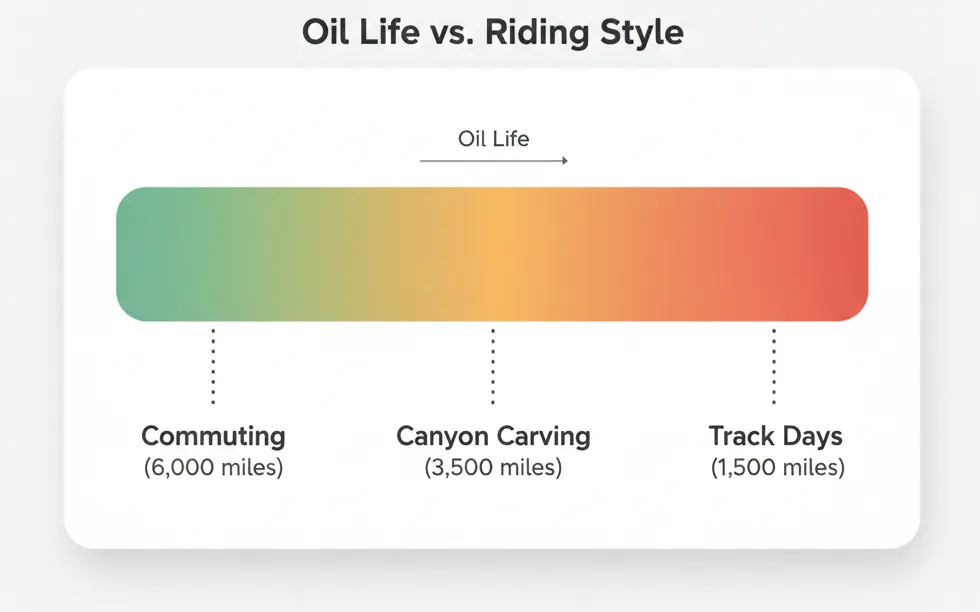
Standard maintenance schedules assume moderate riding. Frequent redline use demands adjusted service intervals.
Recommended Changes
| Riding Style | Oil Change Interval |
|---|---|
| Standard street riding | Every 5,000-6,000 miles |
| Spirited backroad riding | Every 3,500-4,000 miles |
| Track day / racing | Every 1,500-2,000 miles or 20 hours |
High-quality synthetic oil handles heat better than conventional oil. But even synthetics degrade faster under sustained high RPM stress.
Check oil color and consistency frequently. If oil turns black quickly or feels thin, reduce change intervals further.
Recognizing Redline Damage Warning Signs
Catch engine damage early and you might avoid catastrophic failure. Watch for:
Metallic ticking: Often indicates worn valve train components or low oil pressure at high RPM.
Loss of power: Compression loss from worn piston rings or bent valves reduces top-end pull.
Excessive oil consumption: Worn rings allow oil into combustion chambers. Blue smoke from exhaust confirms this.
Metal particles in oil: Drain oil into a clean container. Glittery flakes signal bearing or cam wear.
These symptoms after sustained redline use suggest accelerated wear requiring immediate inspection.
The Truth About “Italian Tune-Ups”
Some riders claim occasional redline runs clean carbon deposits. This contains partial truth.
High-RPM combustion burns carbon from valves and piston crowns. But modern fuel injection systems already prevent significant carbon buildup. The practice offers minimal benefit on bikes manufactured after 2010.
Older carbureted motorcycles might benefit from occasional wide-open throttle runs. But this doesn’t require hitting redline, 75-80% of maximum RPM accomplishes the same carbon cleaning.
Smart Redline Practices
Follow these guidelines to use your engine’s full rev range without causing damage:
Always warm up first. Five minutes of gentle riding brings oil to operating temperature.
Use proper shifting technique. Rev-match downshifts and shift smoothly to prevent RPM spikes.
Monitor long periods at high RPM. Highway cruising at 75-80% of redline is acceptable. Sustained 90%+ operation accelerates wear.
Check maintenance frequently. Aggressive riding demands more frequent oil changes and valve adjustments.
Respect your engine type. Sportbikes tolerate redline use better than cruisers or singles.
Never redline in neutral. Without transmission load, uncontrolled RPM spikes can occur.
Breaking In New Engines
Manufacturers recommend restricted RPM during the break-in period (first 500-1,000 miles). This seats piston rings properly and allows bearing surfaces to mate.
Typical break-in guidelines:
- First 200 miles: Stay below 50% of redline
- 200-500 miles: Vary RPM, avoid sustained high speeds
- 500-1,000 miles: Gradually use more RPM range
- After 1,000 miles: Full rev range acceptable
Breaking these guidelines won’t immediately destroy a modern engine. But proper break-in extends engine life by properly seating wear surfaces.
FAQs: Is It Bad to Redline a Motorcycle?
Does hitting the rev limiter damage my motorcycle?
Brief contact with the rev limiter causes no damage. The limiter exists specifically to prevent over-revving. However, bouncing off the limiter repeatedly or holding throttle against it stresses components unnecessarily.
Can I redline my motorcycle every day?
Daily brief redline hits during acceleration won’t harm a properly maintained engine. Avoid prolonged redline operation and always ensure the engine reaches operating temperature first before aggressive riding.
What causes valve float at high RPM?
Valve springs can’t close valves fast enough when RPM exceeds design limits. The valve “floats” open, causing compression loss and potential piston contact. Rev limiters prevent this on properly functioning motorcycles.
Is redlining worse for older motorcycles?
Yes. Worn components have less tolerance for stress. Piston rings with 30,000 miles show more wear than new rings. Occasional spirited riding remains fine, but sustained redline operation risks failure sooner.
How can I tell if I’ve over-revved my engine?
Sudden power loss, metallic noises, rough idle, or smoke from the exhaust indicate possible over-rev damage. Metal particles in oil confirm internal component wear. Compression testing reveals bent valves or ring damage.
Does engine braking cause high RPM damage?
Proper engine braking stays within normal RPM ranges and causes no harm. Damage occurs when downshifting forces RPM beyond redline. This is mechanical over-revving, which rev limiters cannot prevent.
Is it bad to redline a brand-new motorcycle?
Yes. During the “break-in period” (usually the first 600 miles), piston rings need to seat against the cylinder walls. High RPMs can glaze the cylinder, leading to oil consumption later.
Can I redline in Neutral to show off?
Avoid it. “Free-revving” creates rapid acceleration spikes on internal parts without the dampening effect of the transmission load. It is much harder on the engine than redlining while riding.
Why does my bike lose power at the redline?
Most engines stop making peak power before the redline. The “power curve” drops off because the engine can’t breathe air in fast enough. You should usually shift just before the redline for maximum acceleration.
Does redlining consume more oil?
Yes. High RPM increases internal pressure and heat. This causes oil to vaporize (blow-by) past the piston rings and into the combustion chamber, where it burns off.