
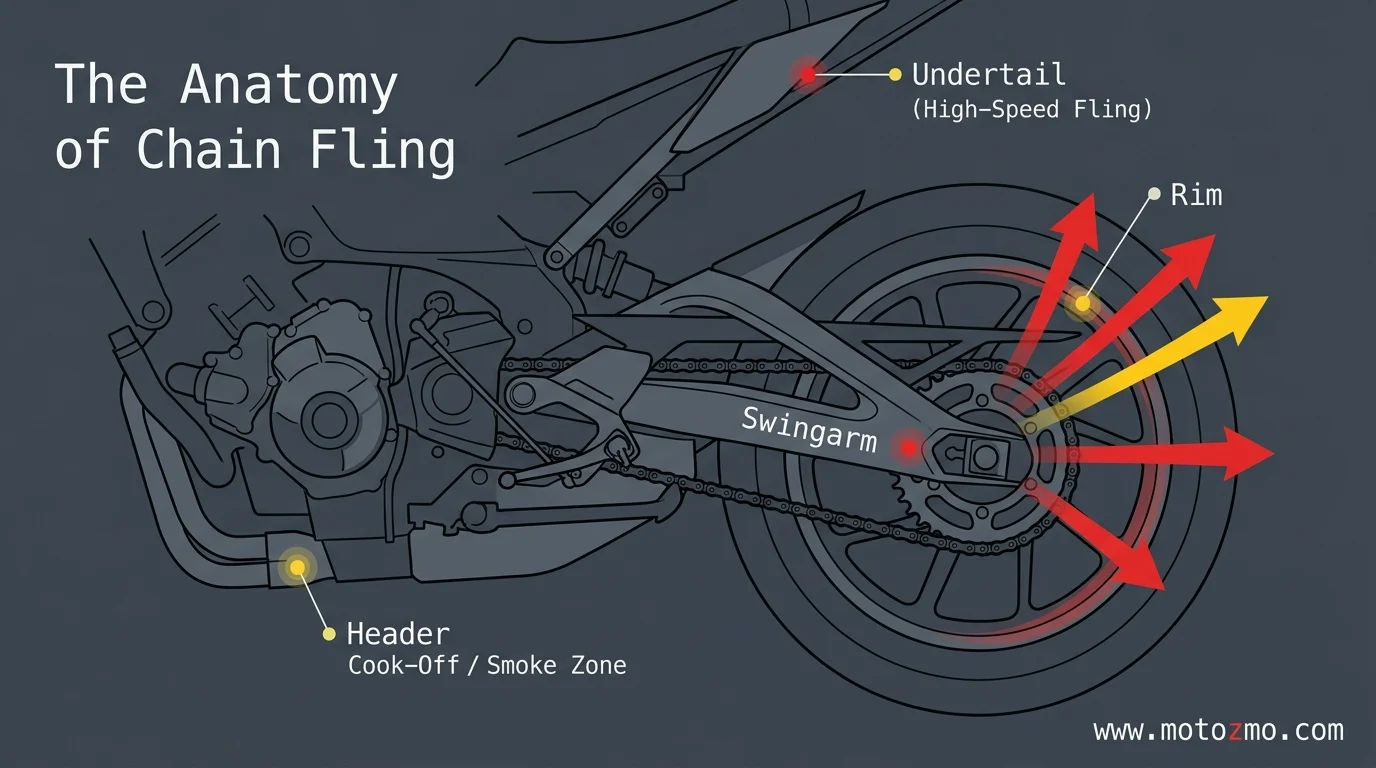
The first time I noticed it, I’d just gotten back from a two-hour ride and there were pale specks all over my rear rim. I wiped them off, figured it was road grime, and forgot about it. The second time, it wasn’t specks. It was streaks, all down the swingarm, up onto the underside of the tail section, and a thin film baked onto one of the exhaust headers that gave off a faint burning smell for the next ten minutes of riding. That’s when I stopped ignoring it.
If you’ve lubed a chain and then spent the next ride watching (or smelling) that lube end up everywhere except the chain, you already know how this goes. It’s one of the most common complaints on every motorcycle forum that has a maintenance section, and almost everyone who’s dealt with it tried a few things that didn’t work before landing on the thing that did.
What Was Happening Every Time I Rode
I was doing the basics right, or so I thought. Clean the chain, spray it down with a can of lube from the auto parts store, wipe off the obvious excess, ride.
But within twenty minutes of getting on the highway, the fling would start. Small droplets at first, thrown off the rear sprocket and rim by centrifugal force, then a light dusting on anything within a few inches of the chain line. On a longer ride, some of it reached the exhaust and cooked off, which is where the smell came from.
None of this hurt the bike. It’s ugly, it’s a pain to clean, and if lube keeps landing on a hot header, that’s worth paying attention to rather than shrugging off. But it kept happening ride after ride, which meant I was doing something wrong, not just unlucky.
Why Chain Lube Flings off In the First Place
A motorcycle chain running at highway speed is spinning several hundred times a minute. Any lubricant sitting on the outside of that chain that hasn’t fully set gets thrown off the same way water flies off a spinning bike tire. That’s centrifugal force doing exactly what it does.
The question isn’t really “why does it fling off,” because some amount of fling is normal and even expected. The real question is why so much of it was landing on my rim and exhaust instead of staying on the chain where it belonged.
Three things were working against me, and I didn’t know it at the time.
- I was applying too much. More lube doesn’t mean more protection, it just means more excess with nowhere to go once the chain starts spinning.
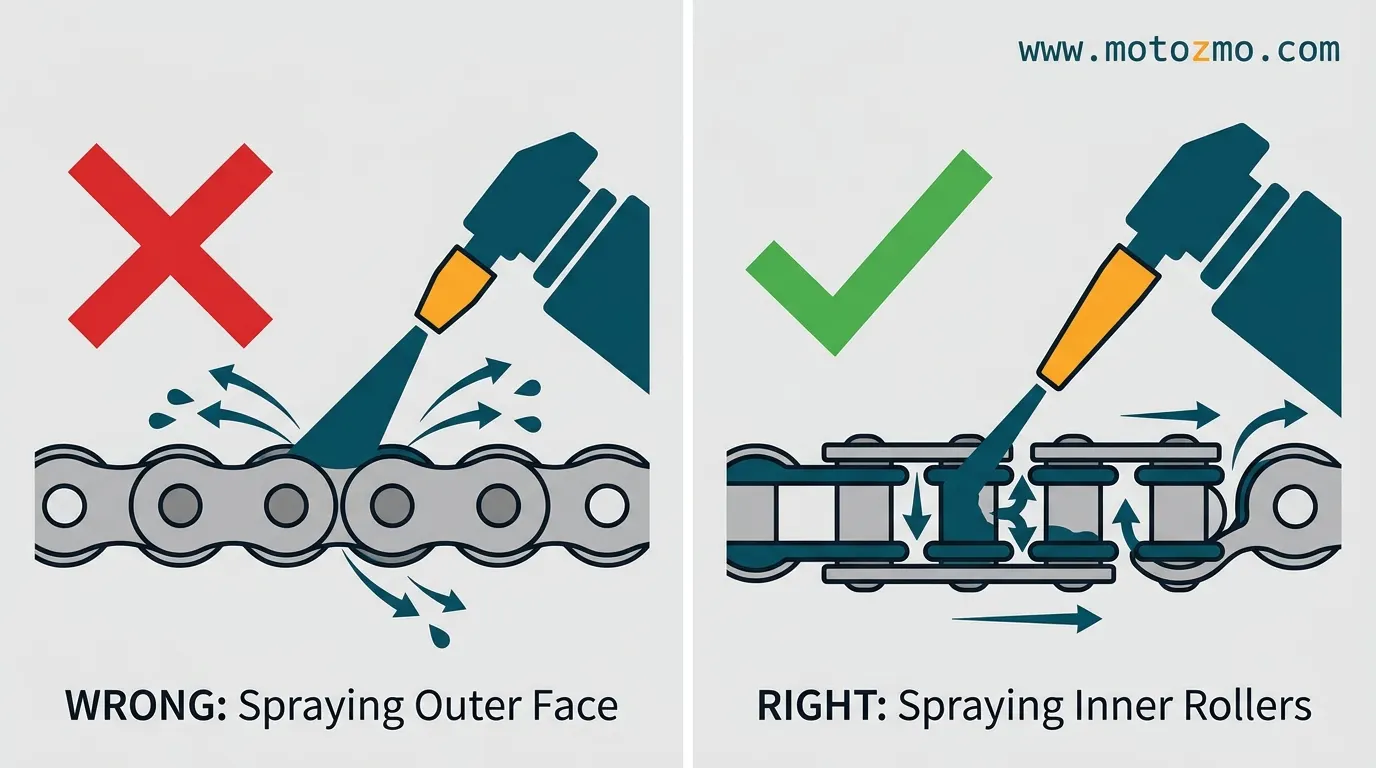
- I was spraying the outside face of the chain, the flat side you can see when the bike’s on the side stand, instead of aiming into the rollers and O-rings where the chain actually needs lubrication. Most O-ring and X-ring chains keep their internal lubricant sealed in from the factory. What you’re maintaining externally is really a thin protective film against rust and drying out, and that film doesn’t need much to do its job. D.I.D., one of the largest chain manufacturers, explains this seal design and it’s worth understanding before you assume more lube equals more protection.
- And I was riding almost immediately after spraying. That was the big one.
The Fixes I Tried That Didn’t Work, or Only Half Worked
I switched brands first, on the theory that my lube was just bad. It wasn’t. Different can, same problem, because the technique underneath it hadn’t changed.
Then I tried using noticeably less lube. That helped a little. Less excess meant less mess, but I was still getting fling on longer rides, just a lighter version of the same thing.
I also tried wiping the chain down more aggressively right after spraying, thinking I was removing the excess before it could fling. This one backfired a bit, because wiping too soon pulls off lube that hasn’t had a chance to bond to the chain at all, so I was just removing product I’d need again in fifty miles.
None of these were wrong exactly. They were all treating a symptom of the actual problem, which was timing.
What Stopped It
The fix that worked was almost entirely about when I lubed the chain, not what I sprayed on it.
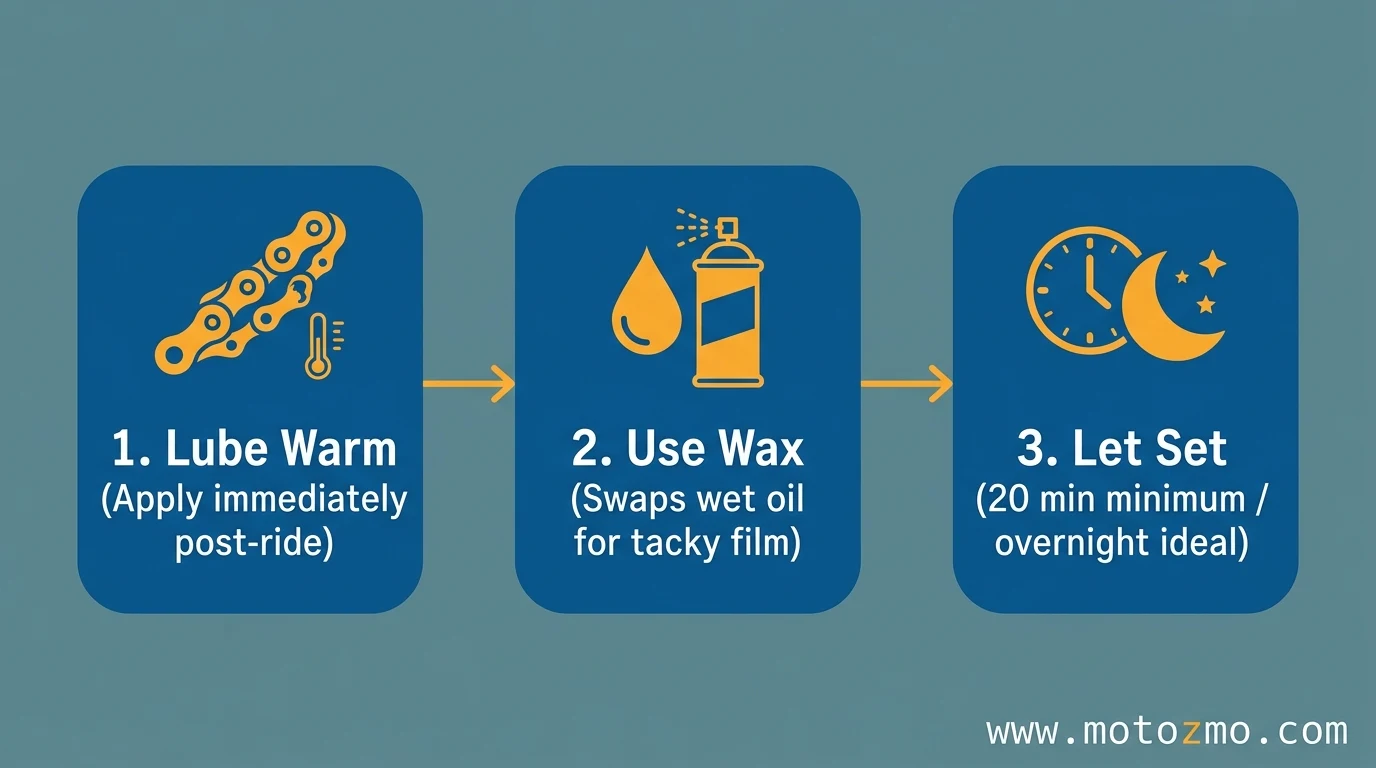
Chain lube needs time to set before the chain starts moving fast enough to fling anything off. Most cans say something like fifteen to twenty minutes on the label, and that number is closer to a minimum than a suggestion. Dirt Bike Magazine’s chain maintenance guide makes the same point: skip proper setup time and the lube is far more likely to fling straight back off the first time you ride.
Here’s what I changed, in order of how much it mattered:
I started lubing the chain right after a ride, while it’s still warm, instead of before one. A warm chain lets the lubricant penetrate the rollers instead of sitting on top of a cold, contracted chain.
I let it sit overnight whenever I could. If I couldn’t wait that long, twenty minutes became a hard floor, not a rough guess.
I aimed the nozzle at the inner rollers and let the lube wrap around as I turned the wheel by hand, rather than spraying the flat outer plates where it just sits on the surface.
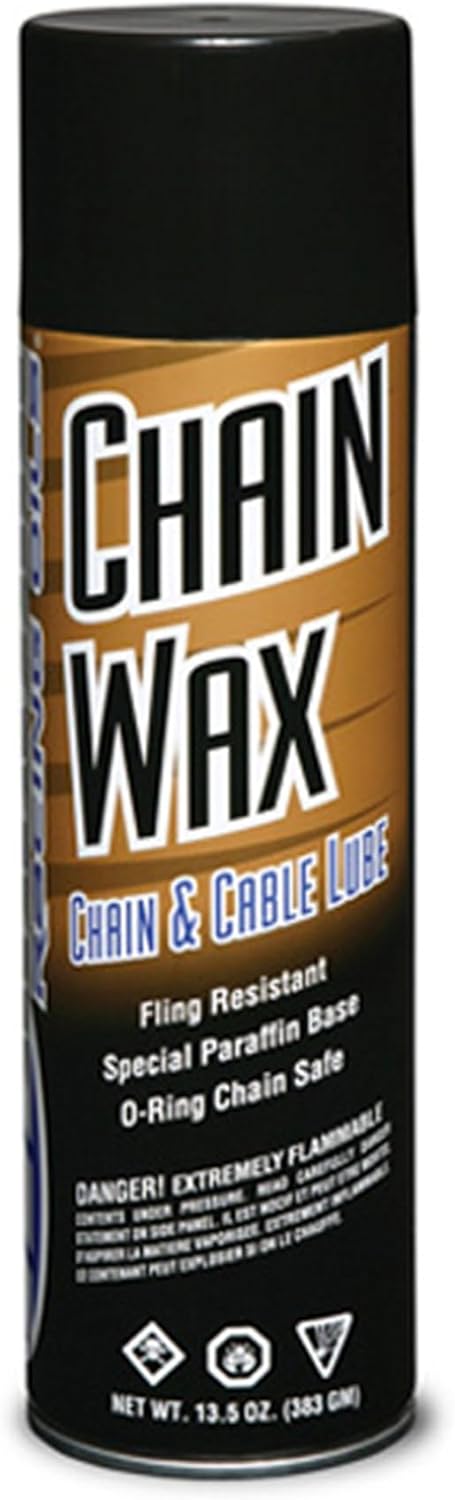
I switched to a wax-based lube instead of a thin oil-based one for street riding, and landed on Maxima Chain Wax after a couple of others didn’t quite do it. Wax-based formulas set up tacky rather than staying wet, and that tackiness is what keeps it on the chain once you’re doing 70 on the highway.
Key Features
- ParaFilm™ anti-fling formula eliminates splatter on your rear rim, swingarm, and exhaust even at high highway speeds
- Engineered with special additives that protects critical internal seals against wear, rust, and water washout
- The dry wax coating sheds dirt and dust to extend chain and sprocket lifespan
Maxima actually lists fling resistance as a named feature on the can rather than burying it in marketing copy, which tells you it’s a known enough problem that manufacturers build products specifically to solve it. It’s a small change, but between the wax formula and the actual set time, the fling problem dropped by more than the sum of either fix alone.
If you want to compare the full field of fling-resistant options rather than just the one that worked for me, our best motorcycle chain lube that won’t fling roundup covers it. And if you’re riding through real winter or monsoon stretches rather than the occasional wet commute, our best all-weather motorcycle chain lube guide is built around that instead.
The Exhaust Part Specifically
The rim splatter was annoying. Lube landing on a hot exhaust header was the part that actually made me fix this properly instead of just living with it. When lube hasn’t set and gets flung onto a header that’s running at a few hundred degrees, it cooks off and smokes a little, which is where that burning smell comes from.
It’s not dangerous in the amounts you’re likely to see from a normal lube job, but it’s also not something you want to make a habit of, and it’s a pretty clear sign that lube is going somewhere it shouldn’t.
Once I fixed the timing and switched to a wax-based lube, the smell stopped showing up entirely. That was actually the clearest signal that the underlying fix had worked, more than the rim staying clean.
Cleaning up What’s Already There
If you’re dealing with lube already baked onto your rim or splattered across the swingarm, don’t reach for whatever solvent is closest. Some of what shows up in forum threads on this, brake cleaner, kerosene, diesel, will cut through the lube fast, but they can also strip paint, dull plastics, or eat into finishes you don’t want to test that on. Warm soapy water and a bit of patience handles most of it.
For the stubborn, baked-on spots, a dedicated chain and degreaser product made for motorcycles is the safer call, and our roundup of the best chain cleaners for motorcycles covers which ones actually cut through this without touching your paint.
Quick Reference If You’re Troubleshooting This Right Now
| What you’re seeing | Likely cause | What to check first |
|---|---|---|
| Light dusting on the rim after every ride | Over-application | Use less lube, wipe excess after it sets, not before |
| Streaks on the swingarm and tail section | Not enough set time | Lube right after a ride, wait at least 20 minutes before riding again |
| Burning smell after a longer ride | Lube reaching a hot exhaust header | Same fix as above, plus check your lube isn’t overspraying past the chain line |
| Mess persists even after waiting | Lube type isn’t holding | Try a wax-based, tacky formula instead of a thin oil-based one |
None of this required a different bike, a different chain, or some product nobody’s heard of. It required doing the same job at a different point in the ride and giving it time to do what it’s supposed to before asking the chain to spin at highway speed.