
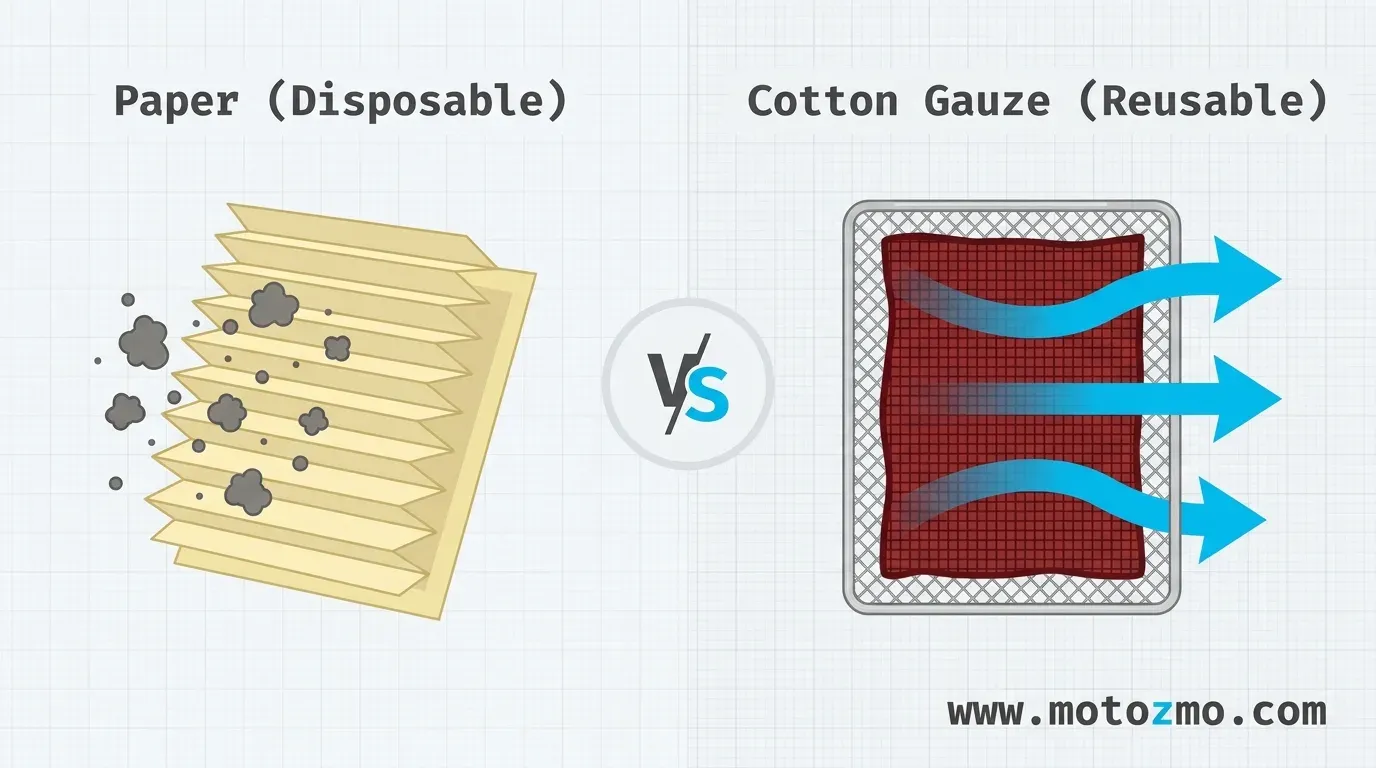
A paper filter is the safer, cheaper default for most street riders, and a reusable filter only earns back its higher price if you clean it on schedule. I’ve run both on different bikes, and neither one wins in every situation. A paper element does one job and does it well: it catches dirt, then you throw it away. A reusable filter trades a small amount of filtration for more airflow and a lower cost over time, but only if you stay on top of the cleaning.
Riding conditions change that math too. A commuter riding clean city streets gets less value from a reusable filter than someone who rides gravel every weekend.
Here’s how the two types stack up, where the “reusable filters let more dirt in” claim comes from, and which one fits your bike.
Paper vs Reusable Air Filters at a Glance
| Factor | Paper filter | Reusable filter (cotton or foam) |
|---|---|---|
| Upfront cost | Low | Higher |
| Cost over 5 years | Adds up with each replacement | Often lower once you own it |
| Airflow | Good, but drops as it loads with dirt | Stays strong longer |
| Filtration on a clean street bike | Very good | Good, if cleaned and oiled right |
| Maintenance work | None. Toss it and fit a new one | Wash, dry, and re-oil on a schedule |
| Best fit | Commuters, low-mileage riders, anyone who wants zero upkeep | Riders who put on miles, ride dirt or dust, or keep a bike for years |
Neither column wins outright. Pick based on how you ride, not which one sounds more advanced.
How a Paper Motorcycle Air Filter Works
Most street bikes leave the factory with a pleated paper element, folded into layers to pack more surface area into a small box. Air passes through the paper, dirt and dust get trapped in the fibers, and clean air moves on to your engine. It’s the standard setup because it’s cheap to build, simple to fit, and does a solid filtration job right out of the box.
The catch: paper is a one-way street. Once it’s dirty, you replace it. Washing a paper filter tears the fibers and opens gaps for dirt to slip through, so skip that. Your owner’s manual will also tell you not to blow it out with compressed air, for the same reason. When the manual says replace, replace.
How a Reusable Motorcycle Air Filter Works
Reusable filters come in two common types, and most articles lump them together. They’re not the same product.
Cotton gauze filters, the kind K&N and BMC build, use layers of oiled cotton between wire mesh. The oil traps dust on the fibers instead of packing it into pores the way paper does. These are the go-to upgrade for street and adventure bikes because they hold up well and don’t need constant attention. We’ve covered one of the most common versions in our K&N motorcycle air filter review, if you want a closer look at fitting and running one.
Foam filters use an oiled foam element instead of cotton. Dirt bikes and older motorcycles run these most, since foam handles thick dust and mud better than cotton gauze and takes seconds to pull, rinse, and re-oil trailside. If you ride off-road, foam is the stronger reusable choice, not cotton gauze.
Both types get washed with a filter-specific cleaner, dried, and coated with the right oil before they go back in. Skip a step, and the filter won’t perform the way it’s built to.
What It Costs Over Time
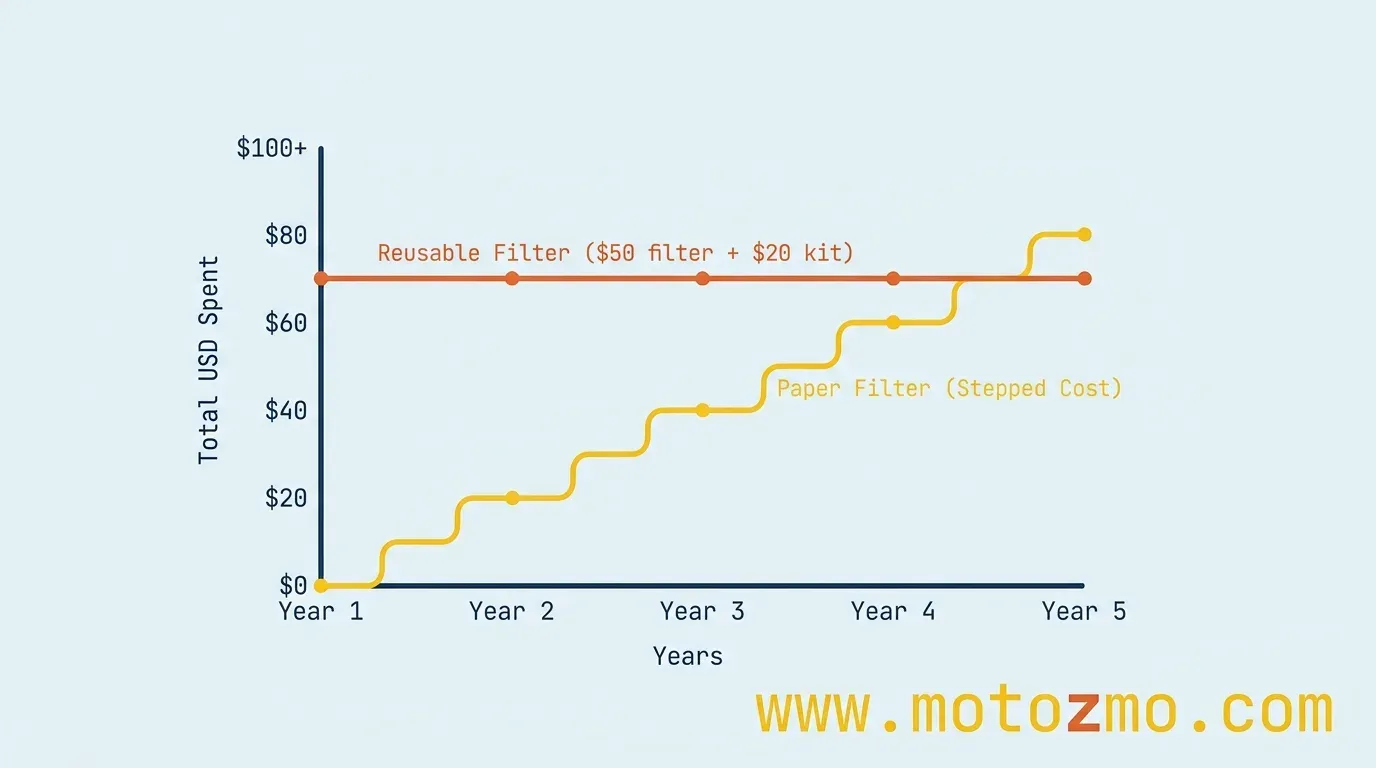
Numbers make this easier to picture. A paper filter for a typical street bike runs $15 to $35, and most owner’s manuals call for a new one every 10,000 to 20,000 miles depending on your model. Over five years of average street riding, that’s two or three filters, plus the ten minutes it takes to swap each one.
A cotton gauze filter costs $40 to $70 to start, but you’re not buying a new one every few years. BMC recommends washing and re-oiling its filters every 20,000 to 25,000 km, or about 12,000 to 15,000 miles, and a cleaning kit that services the filter many times over costs about $20. Run the same math over five years, and a reusable filter can land close to what you’d spend on paper, or less, once you factor in that a well-maintained cotton filter can outlast the bike it’s on.
The trade isn’t free, though. You’re swapping a few minutes of work every year or two for a cleaning session that takes longer and needs the right supplies on hand.
Does a Reusable Filter Let More Dirt Through?
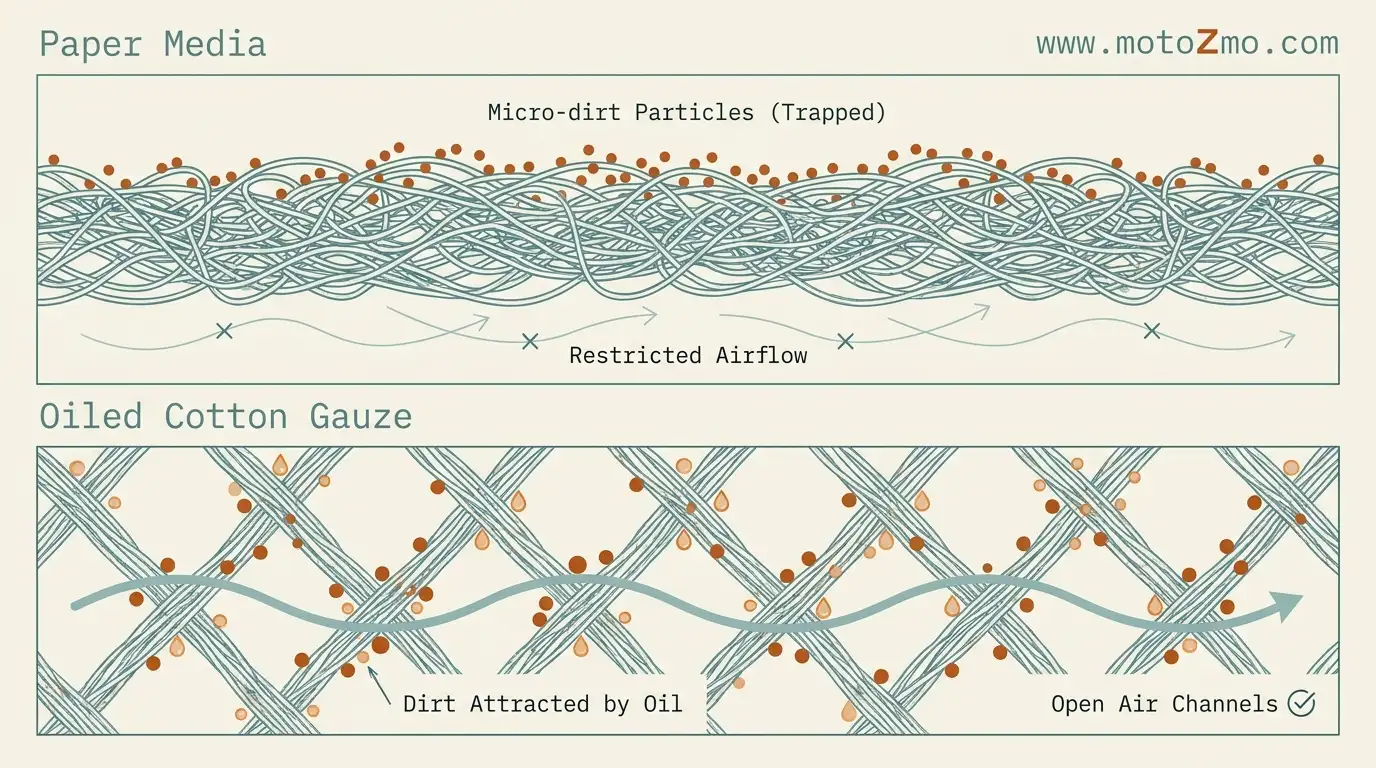
This one comes up in every forum thread about switching filters, and it deserves a straight answer instead of a dodge. Cotton gauze does have a coarser weave than paper, and a dry or just-washed filter without enough oil on it can let more coarse dust pass through than a paper element would. That part is true.
What gets left out of the argument is that oil, not the cotton itself, does most of the filtering work. A well-oiled filter traps dirt on the surface and keeps performing close to spec. K&N backs its cotton filters with a lifetime limited warranty, which tells you the company expects the media to hold up under normal use when a rider cleans and oils it the way the kit says.
There’s no independent, motorcycle-specific lab test that settles this argument once and for all, and most of what gets cited online is old, brand-funded, or run on car engines instead of bikes.
What matters for your engine is simpler: clean and oil the filter the way the kit instructions say, on the schedule the maker recommends. Skip it, and you lose the airflow gain and add real risk of dirt getting past a dry, under-oiled filter. The filter material matters less than how you treat it.
Which Rider Fits Which Filter
| Rider type | Better fit | Why |
|---|---|---|
| Daily commuter on paved roads | Paper | Low mileage in clean air doesn’t justify a cleaning kit |
| Weekend sport or canyon rider | Cotton gauze | Airflow gain is worth it, and you’ll keep the bike long enough to see the savings |
| Adventure or dual-sport rider on gravel and dirt | Foam | Handles heavy dust, and you can clean it trailside in minutes |
| Track day rider | Cotton gauze | You’re already inspecting the bike between sessions, so cleaning fits your routine |
| Long-term owner or high-mileage tourer | Cotton gauze | One filter can outlast several paper replacements over the years you own the bike |
Whichever type you land on, add a filter check to your spring maintenance checklist so it doesn’t slip past you for a full season.
Who Should Stick with Paper
If you don’t want another maintenance task on your list, plan to sell the bike within a year or two, or spend most of your riding time on clean pavement, paper is the right call, not a compromise. It’s still what a lot of manufacturers fit on brand-new bikes, for a reason.
A reusable filter only pays off when you put in the work, and if that work isn’t going to happen, a $20 paper filter beats a $60 reusable one that never gets cleaned.
How Often to Check Your Filter
Pull the filter and look at it when you change your oil, since you’re already in the airbox area for other checks. Dark, caked-on debris means it’s time to act: replace a paper filter outright, or wash and re-oil a reusable one, following the kit instructions to the letter.
Riding dusty roads or off-road trails? Check sooner. A filter doing its job gets dirty fast in those conditions, and that’s a good sign, not a bad one.
FAQs
Will switching to a reusable air filter void my motorcycle’s warranty?
No, not on its own. Federal law (the Magnuson-Moss Warranty Act) blocks manufacturers from denying a warranty claim just because you fitted a non-OEM part, unless they can show that part caused the failure. Keep your receipts in case a dealer pushes back.
Do I need to re-tune my bike after switching to a reusable filter?
Not for a simple drop-in swap into the stock airbox. That’s not a big enough airflow change to need rejetting or a new fuel map. Adding a full open-element or velocity-stack intake kit instead of a drop-in filter is a different job, and that one does call for a retune.