Affiliate disclosure: This post may contain affiliate links. If you buy through a link on this page, MOTOZMO may earn a small commission at no extra cost to you. It helps keep our guides free. How we test and choose products.
A heated glove battery lasts about half as long on a real winter ride as the box claims.
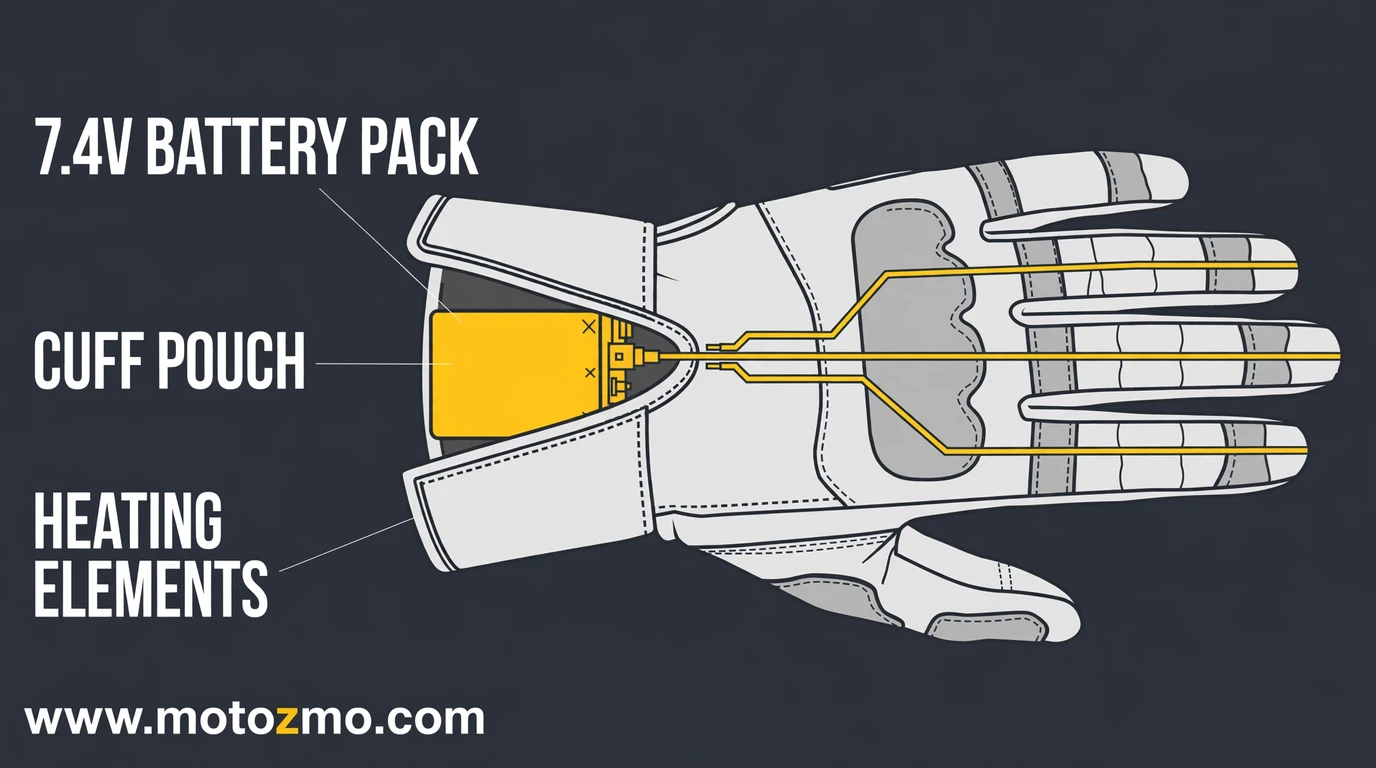
I plan on 2 to 3 hours on high, 4 to 5 on medium, and 6 to 8 on low from a standard 7.4V pack, and less when it is truly cold. Once I stopped trusting the brochure and started treating each pack like fuel with a plan, I stopped getting caught with dead hands by noon.
If you are shopping for gloves first, my roundup of the best heated gloves for motorcycle riders favors models with replaceable packs.
Here is what each setting really gives you, how to tell a dead pack from a cold one, the swap math for a full riding day, and how to store the packs so they last years.
How long does a heated glove battery really last?
Start with the honest numbers. Most battery heated gloves run on a 7.4V lithium pack in the 2,200 to 3,000mAh range, and the industry-typical runtimes look like this:
| Heat setting | Advertised runtime | What I plan for below freezing |
|---|---|---|
| High | 2-3 hours | 1.5-2 hours |
| Medium | 4-5 hours | 3-3.5 hours |
| Low | 6-8 hours | 4-5 hours |
Two things worth knowing about those numbers. First, manufacturers usually quote the best-case setting. If you run high all day, cut the advertised figure in half. Second, real riders see noticeably less in deep cold.
One tested review found about 30 percent less runtime below 20 degrees than the brochure promised, with 5.5 hours on low and under 2 hours on high. Plan your day around the reduced number, not the box.
Why Does Cold Hit the Runtime So Hard?
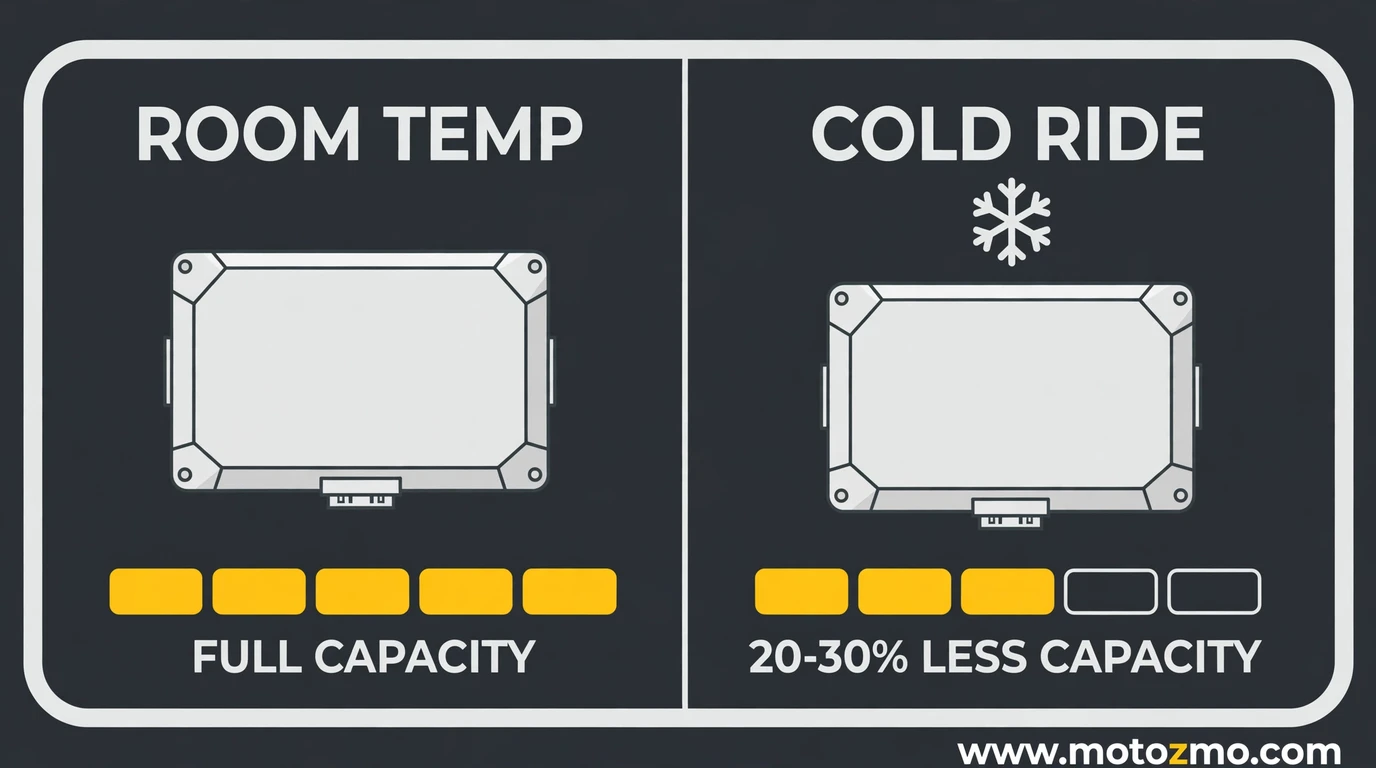
A lithium battery is a chemical reaction in a pouch, and cold slows that reaction. Around 14 degrees, you can lose 20 to 30 percent of the pack’s usable capacity before the glove even asks it for heat. On a bike it gets worse: the battery rides in a cuff pouch at 65 mph, so the pack itself is cold while it is working.
Meanwhile the glove keeps calling for heat to fight the wind, so the heater draws harder than it would in a lab test. Cold on both ends of the system, less time on the clock.
I break down which gloves hold up best in this kind of weather in are heated gloves any good for winter riding, including real battery hours from testing.
Dead or Just Cold?
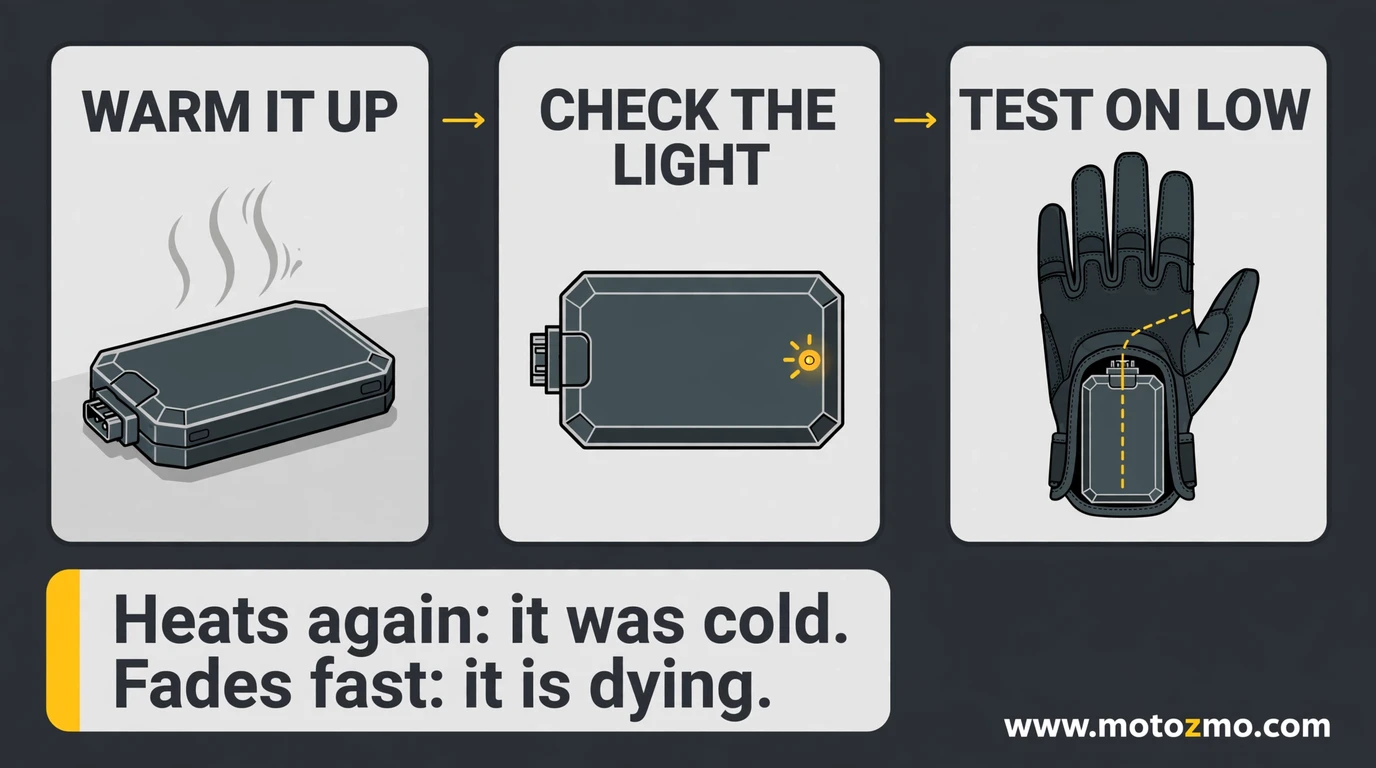
This is the question that saves riders money, because a pack that quit at 25 degrees is often not dead at all. Run this test before you buy a replacement:
- Bring the pack inside and let it warm to room temperature for 30 to 60 minutes.
- Check the charge indicator, then pop it back in the glove and run it on low.
- If it heats up fine, it was cold, not dead. Cold saps output; warmth restores it.
- If it shows full charge but fades in 20 minutes on low, the pack is dying. That is capacity loss, and no amount of warming fixes it.
Your bike battery suffers the same cold problem, by the way. If you want to understand why, my cold-weather motorcycle battery guide explains how freezing temperatures cut cranking power and what to do about it.
How Do I Stretch the Batteries across a Full Riding Day?
One pack will not cover an all-day winter ride. Two packs will, if you run a plan instead of leaving the gloves on high from the driveway:
- Preheat the gloves indoors for 5 to 10 minutes before you roll out. Warm hands from the start means the gloves work less.
- Start on high for the first 10 to 15 minutes only, then drop to medium or low. Most gloves auto-step down from high after about 10 minutes anyway.
- Kill the heat at every stop. Gas station, lunch, coffee. Those minutes add up.
- Carry one spare pack per glove. Swap at lunch and you have a full second tank of heat.
The math for an 8-hour ride: two packs per glove, high only for warm-up, medium or low the rest of the way, heat off at stops. That is the setup that actually works. A single pack with no discipline dies by noon and ruins the afternoon.
How Do I Charge and Store the Packs So They Last Years?
Most glove batteries last 300 to 500 charge cycles, which is several winters for a regular rider, but only if you treat them right.
Charge the packs at room temperature, never straight off a freezing garage shelf, and unplug them when full. The gloves have overcharge protection, but sitting at 100 percent in a warm room still ages the cells.
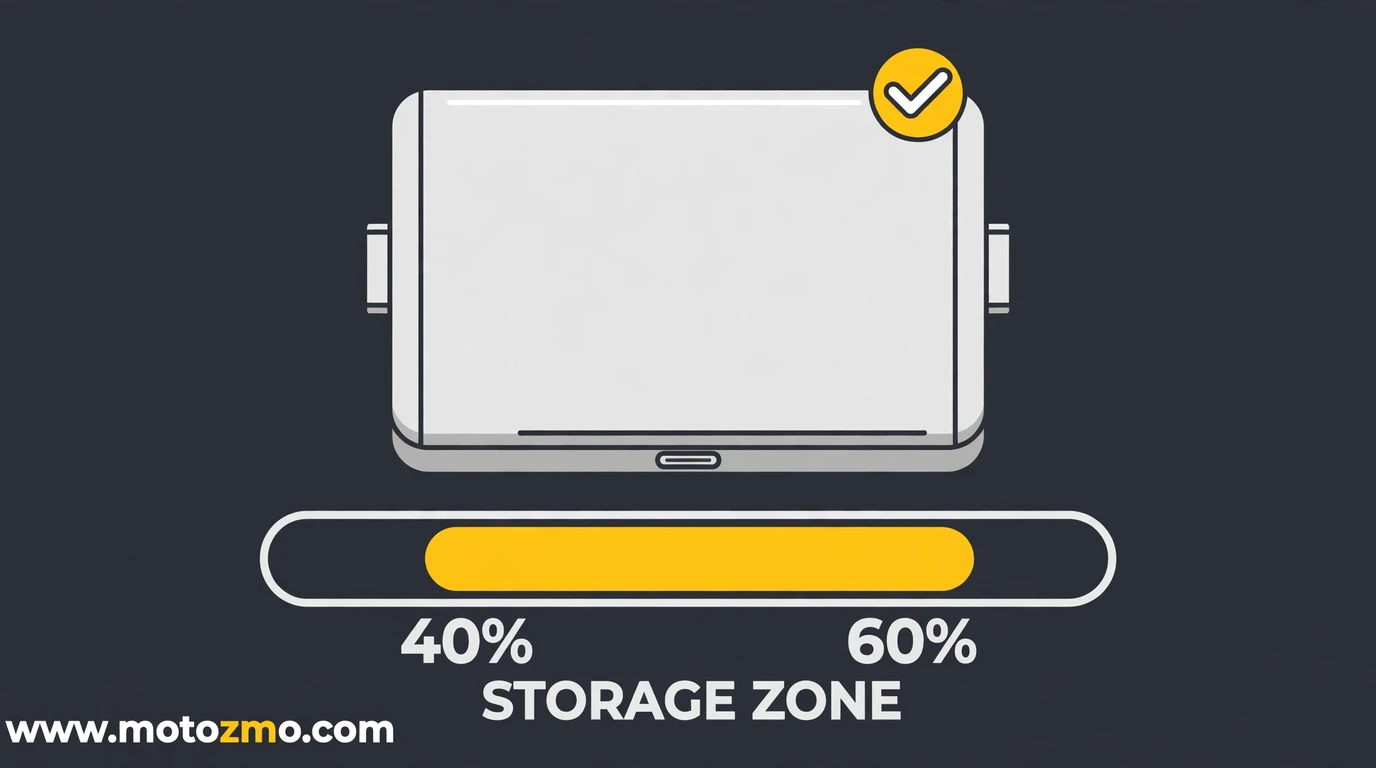
For summer storage, leave the packs at about 40 to 60 percent charge in a cool, dry spot, and top them up every two or three months. A pack left fully charged or fully dead in a hot attic all summer comes back weaker in fall.
Storage guidance for lithium cells backs this up: partial charge and moderate temperature are what keep capacity from fading (poweringautos.com).
And never leave the packs in the bike’s saddlebags through winter. For the full winter-gear picture, see my heated motorcycle gear guide.
When Is a Battery Done for Good?
Replace the pack when you see these signs:
- Runtime drops to half of what it used to be on the same setting.
- The pack swells or the pouch no longer sits flat. Stop using it immediately.
- It gets hot while charging instead of warm.
- It shows full, then dies in minutes.
Here is the money question: new pack or new gloves? If the gloves still heat evenly and the shell is intact, buy the pack.
Replacement packs cost a fraction of a new pair, and the heating elements usually outlast the batteries. Buy a new pair only when the heat itself is patchy, the wiring is frayed, or the gloves no longer fit right.
Manufacturers like Gerbing sell replacement 7.4V packs and publish real runtime figures by setting, so check your glove maker’s specs before you assume the worst.
Heated Glove Battery Questions
Can I charge the batteries from the bike while I ride?
Some gloves support USB charging, but heating draws more than a port gives, so you still lose charge while riding. I top up at stops instead and swap in a spare pack.
Can I buy a bigger aftermarket pack for longer runtime?
Only buy packs from the glove maker. The connector, voltage, and controller are matched; a mismatched pack can damage the heating circuit or the battery itself.