
Top Picks For You
ILM Motorcycle Balaclava
An affordable, lightweight entry-level mask designed to block wind on short rides without creating uncomfortable bulk under tight-fitting full-face helmets.
Check Price
Tough Headwear Fleece Balaclava
A heavy-duty option built for sub-freezing rides, utilizing thick fleece and an extra-long neck to trap vital body heat inside your jacket.
Check Price
Schampa Warmskin Skull Gaiter
A versatile modular headpiece offering multiple wearing styles, ideal for riders who alternate between half-helmets, full-face protection, and riding glasses.
Check Price
The ILM Motorcycle Balaclava is the best all-around pick for most riders, but the right one depends on how cold and how fast you ride.
A ski mask keeps you warm standing at a chairlift. On a bike doing 50 mph, wind strips heat off your face faster than the thermometer suggests, and a mask that fogs your visor or leaves a gap at your collar defeats the point of wearing one. Fabric weight, where the breathing panel sits, and how the thing fits under a helmet matter more here than in any general ski mask review.
I dug through the spec sheets and owner reviews for the motorcycle balaclavas riders actually rely on and matched four of them to the riding situations where each one earns its price. You’ll also find how to stay warm riding a motorcycle in the winter useful if a balaclava is just one piece of your cold-weather setup.
Why Cold Hits Harder on a Bike
Standing still in 40°F air is uncomfortable. Riding through 40°F air at 50 mph is a different problem, because wind pulls heat off exposed skin far faster than still air does.
That’s the whole idea behind wind chill: the National Weather Service’s wind chill chart shows that a 40°F day with a 30 mph wind already feels close to freezing on exposed skin, and motorcycle riders hit those wind speeds on almost any road above a school zone. Your jacket handles your torso. Your gloves handle your hands. Your face and neck, unless you cover them, sit right in that wind the entire ride.
That’s also why deciding whether to ride a motorcycle in the winter at all comes down to more than the air temperature on your phone. A balaclava is cheap insurance against the part of your body a helmet doesn’t fully seal off.
Three Things That Matter More Than the Price Tag
- Where the breathing panel sits: a solid fleece panel over your nose and mouth traps warm, wet breath against a cold visor, while a mesh or knit panel lets it vent instead.
- Fabric weight: thin masks fit under a snug helmet without bulk but won’t hold up below freezing, and heavier fleece blocks more cold but can feel tight under a full-face helmet a size down.
- One-size-fits-most versus a real fit: cheaper masks stretch to fit most heads, which works fine for casual riding, but a daily rider wants a snug, purpose-built fit that stays put over hours in the saddle.
The Three Best Motorcycle Balaclavas Compared
| Balaclava | Warmth | Wind block | Fog risk | Best for |
|---|---|---|---|---|
| ILM Motorcycle Balaclava | Light to medium | Good | Low | Riding to work in 30–45°F mornings and want something cheap that works |
| Tough Headwear Fleece Balaclava | High | Good | Medium | Out for hours in real winter cold, 20s°F and colder |
| Schampa Warmskin Skull Gaiter | Medium | Good | Low | Switching between a half helmet, glasses, and a full-face on different days |
ILM Motorcycle Balaclava: Best for Daily Commuting
Key Features
- Thin, wind-blocking flocked lining
- Open ear channel for Bluetooth integration
- Low-profile, non-bulky under-helmet fit
- Available in standard and thick fabric options
This one shows up on almost every “best powersports balaclava” list on Amazon for a reason: it’s cheap, it works, and thousands of riders have already put it through a winter.
The thin flocked lining cuts wind without adding bulk under a helmet, and the open channel around the ears means you can run earbuds or a Bluetooth headset without pulling the whole mask off. It also comes in a thicker version if the standard one isn’t warm enough for your climate.
The tradeoff is right there in the fabric. This is a wind barrier for a 20-minute commute in the 30s and 40s, not a piece built for hours in brutal cold. Riders doing long touring days in freezing temperatures want something heavier.
Buy it if your rides are short and your winters are mild to moderate. Skip it if you’re planning all-day rides below freezing.
Tough Headwear Fleece Balaclava: Best for Long Rides in Deep Cold
Key Features
- Heavyweight Furnace Fleece material
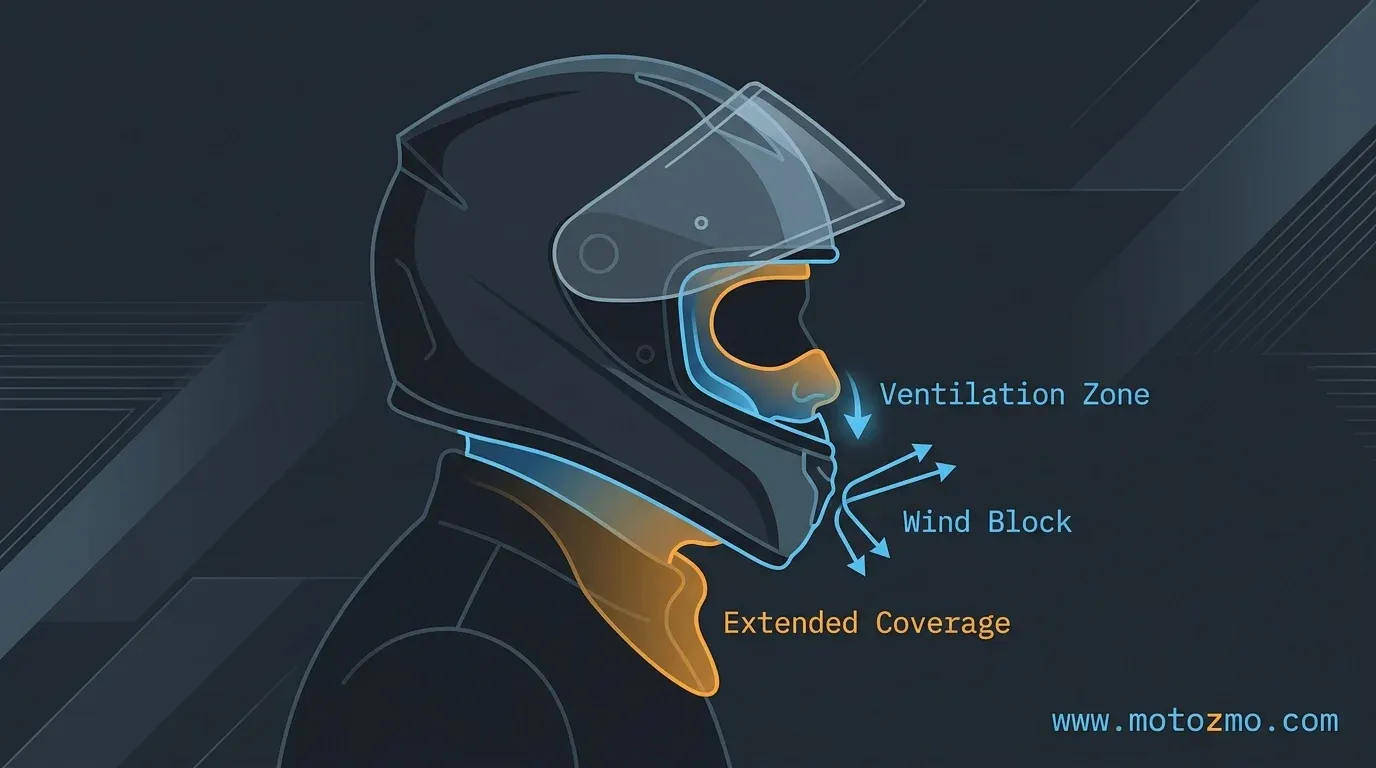
- Extended neck tail prevents collar gaps
- Repositionable front panel prevents visor fogging
- Maximum thermal protection for deep freezing weather
Tough Headwear built its reputation on the thin, breathable version of this mask, but the heavyweight fleece model is the one that matters for real winter riding.
The brand calls the fabric Furnace Fleece, and it’s thicker than the standard version, with an extended neck section that tucks into a jacket collar instead of leaving a gap.
Here’s the tradeoff, straight from owner reviews: pull the front panel up over your nose inside a full-face helmet, and your visor fogs in seconds, even with anti-fog treatment on the shield.
The fix riders have landed on is simple: wear the mask a little lower, so the panel sits just below your lip instead of over your nose. You lose a small strip of face coverage, but your visor stays clear.
If this mask still isn’t warm enough for where you ride, look at our heated motorcycle gear guide instead of stacking on more fleece.
Schampa Warmskin Skull Gaiter: Best for Switching Helmet Styles
Key Features
- Convertible two-piece skullcap and gaiter design
- WarmSkin fabric paired with double-layer fleece
- Multi-helmet setup adaptability
Schampa has made this style of gear for close to two decades, and it’s built for riders, not repurposed from a ski shop rack. The two-piece design, a thin WarmSkin skullcap attached to a double-layer fleece neck gaiter, means you can wear the whole thing as a full balaclava, pull the skullcap off and wear just the gaiter around your neck, or run the skullcap alone under a half helmet.
The mesh breather panel at the mouth also cuts down on fogging for riders who wear glasses instead of contacts under their visor, which most balaclavas on this list don’t address at all.
Owners of this style of Schampa gaiter mention the elastic loosens up after a season or two of regular wear, so expect the fit to relax over time rather than stay showroom-tight forever.
It also runs snug for larger heads, since it’s built as one size fits most. This one earns its keep if you swap between a half helmet and a full-face through the week.
How to Stop Your Visor from Fogging with a Balaclava on
Fogging is the most common complaint about motorcycle balaclavas, and it usually comes down to where your breath goes, not how cold it is outside.
- Check where the panel sits. If the fabric covers your nose, warm breath vents straight into the visor. Drop the mask below your lower lip and let your breath escape downward instead.
- Look for mesh at the mouth, not solid fleece. A ventilated panel lets breath escape through the fabric instead of pooling behind your visor.
- Treat the visor, not just the mask. An anti-fog insert or spray handles the other half of the problem, since even a well-placed balaclava won’t fix a visor with no ventilation of its own.
- Crack the visor at a stop. A finger’s width of airflow clears fog fast and costs nothing once you’re moving again.
What to Pair with Your Balaclava
A balaclava covers your face and neck, but cold gets in everywhere your gear doesn’t seal.
A motorcycle winter base layer under your jacket closes the gap at your torso, and a solid pair of winter motorcycle gloves keeps your hands from going numb before your face ever gets cold. Get those three pieces right and a lot of what makes winter riding miserable disappears.
None of these four masks will make a bad winter jacket warm or turn a freezing commute into a summer ride. What they will do is stop the one part of your body a helmet can’t fully cover from being the reason you turn back early.