
Top Picks For You
Glidecoat Motorcycle Ceramic Coating
A specialized formula tailored specifically for bikes, giving high-heat exposure zones long-lasting shield capabilities so your ride stays vibrant without premature wear.
Check Price
Glidecoat ALPHA Graphene Ceramic Coating
A premium, multi-vehicle graphene option engineered to deliver maximum longevity and extreme resilience for owners seeking extended multi-year protection.
Check Price
Adam’s Polishes Advanced Graphene Ceramic Spray Coating
A high-yield spray blend perfect for detailers prioritizing visible precision, extreme gloss, and forgiving application across multiple vehicles.
Check Price
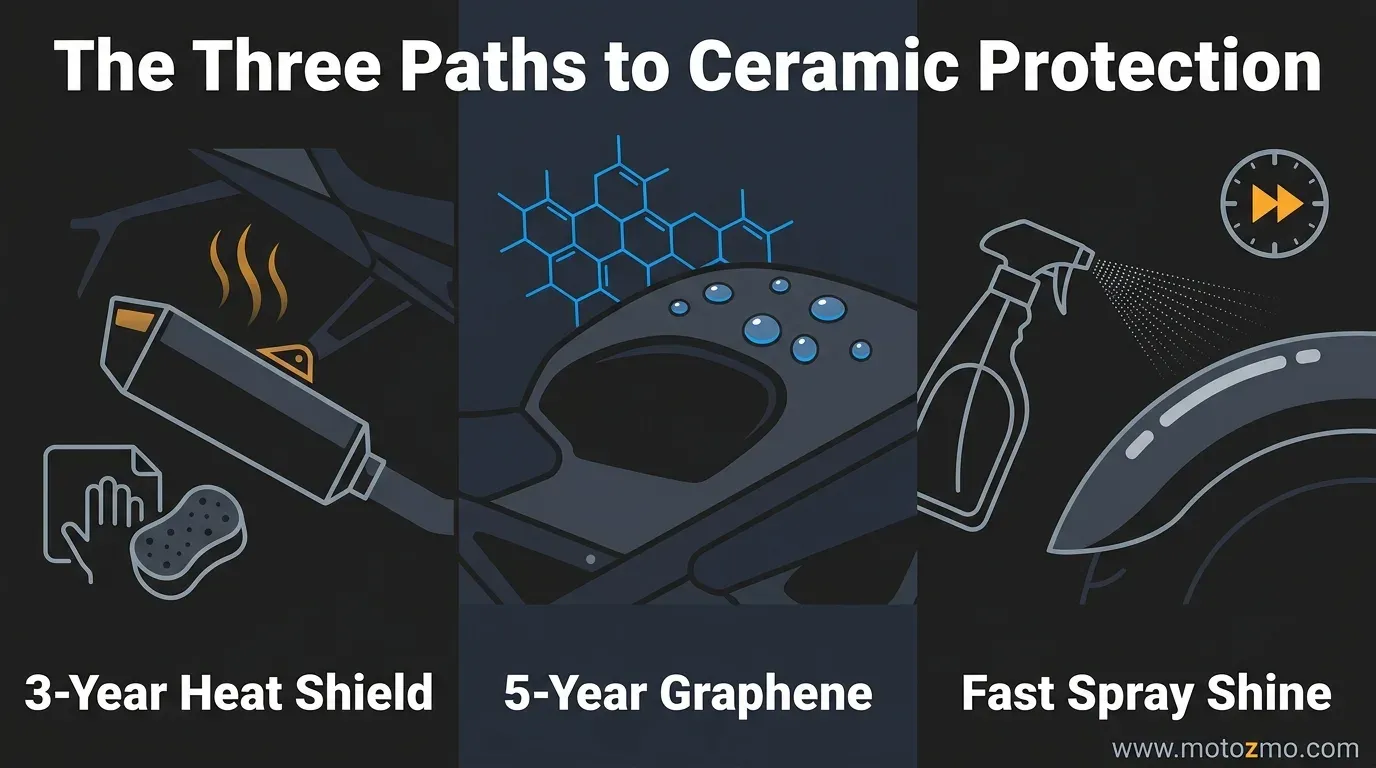
The best motorcycle ceramic coating overall is the Glidecoat Motorcycle Ceramic Coating, since it handles the heat near a bike’s exhaust and engine and protects paint, chrome, plastic, and metal for up to 3 years.
Step up to Glidecoat’s ALPHA Graphene Ceramic Coating if you want that protection window to stretch to 5 years and don’t mind the extra cost. And if gloss and a show-quality finish top your list, Adam’s Polishes Advanced Graphene Ceramic Spray Coating pushes past 18 months of protection and adds a UV tracer that lights up every spot you’ve covered, so you never miss a panel.
Wash the bike first using our motorcycle wash guide or a proper wash and detailing kit; every coating on this list bonds to a clean surface, not a dirty one.
Which Rider Are You?
| If you’re this rider… | Best pick |
|---|---|
| You want solid, multi-year protection built for a motorcycle from the start | Glidecoat Motorcycle Ceramic Coating |
| You want the longest protection window and don’t mind the extra cost | Glidecoat ALPHA Graphene Ceramic Coating |
| You want the highest gloss and hydrophobic finish, and own more than one vehicle to spread the bottle across | Adam’s Polishes Advanced Graphene Ceramic Spray Coating |
Glidecoat Motorcycle Ceramic Coating
Key Features
- Handles up to 1100°F temperatures
- 3-year protection window
- Broad multi-surface application
- Accessible wipe-on application method
Glidecoat built this coating for motorcycles rather than adapting a car formula. The 30ml kit handles surfaces up to 1100°F, a spec that matters on a bike in a way it never does on a car, since your exhaust pipe and engine cases sit right next to painted tank panels and fairings. It covers paint, plastic, chrome, metal, and glass, and protects for up to 3 years. Full details, including the application steps, sit on Glidecoat’s product page.
What riders like:
- No sprayer, machine applicator, or UV lamp required. You wipe it on with the included sponge and buff it off with a microfiber cloth, which keeps it accessible for a home garage setup.
- Reviewers calling it easy to use and effective across multiple surfaces, including motorcycles, cars, and more.
What to watch for:
- Glidecoat’s instructions call for full paint prep before you start: polishing, compounding, and removing any oxidation. Skip that step and the coating locks in whatever imperfections sat there before. This isn’t a spray-and-wipe job.
- Technique matters more than you’d expect. Glidecoat’s application guide warns that a section left unbuffed for too long turns hard to work with and starts to streak, and a damp microfiber cloth needs an immediate swap for a clean one.
- Glidecoat sells a separate product to remove black streaking and exhaust soot buildup from their coated surfaces, which tells you this is a known issue riders run into on exhaust-adjacent panels, not a rare complaint.
Glidecoat ALPHA Graphene Ceramic Coating
Key Features
- 5-year coverage duration
- Graphene-infused formula
- Enhanced hydrophobic capability
Unlike the standard kit above, ALPHA covers automotive, marine, RV, and motorcycle surfaces under one label rather than shipping as a dedicated motorcycle SKU. It’s the same manufacturer behind the motorcycle-specific coating above, using the identical wipe-on, buff-off application, with a graphene formula that pushes protection out to 5 years instead of 3 and adds real gains in durability, hydrophobic performance, and gloss according to Glidecoat.
What riders like:
- Applies the same way as the standard kit, so no new technique stands between you and the longer protection window.
- Covers paint, chrome, and bare metal, the same surface types a motorcycle has, even though the bottle isn’t labeled motorcycle-only.
- Makes sense for a show bike, a garage queen, or anyone who wants to skip reapplying for the better part of a decade.
What to watch for:
- Because it ships as a multi-surface product rather than a motorcycle-specific one, the bottle and listing skip motorcycle-specific application notes, so lean on Glidecoat’s motorcycle instructions for prep and technique instead.
- It costs more than the standard kit for a protection window most casual riders don’t need. A rider who reapplies a fresh coat every couple of years doesn’t gain much from the extra years.
- The prep-and-technique requirements from the standard Glidecoat kit carry over here too. Going graphene doesn’t make the application any more forgiving.
Adam’s Polishes Advanced Graphene Ceramic Spray Coating
Key Features
- Built-in UV tracer technology
- Generous 12 oz capacity
- SiO₂ and graphene oxide base
- 18+ months durability
Adam’s Advanced Graphene Ceramic Spray Coating combines an SiO₂ ceramic base with graphene oxide in a spray format, rated for 18-plus months of protection and covering paint, glass, plastic trim, and wheels. Adam’s markets it for cars, boats, RVs, and motorcycles.
An independent long-term test from Reflections Detailing put the product through six months of daily outdoor exposure and confirmed the gloss, water beading, and durability claims held up under real conditions, though that test ran on a car rather than a bike.
What riders like:
- A built-in UV tracer glows under Adam’s UV flashlight (sold separately), so you can see every spot the coating covers and catch missed areas before they harden into a patchy finish, a real fix for the most common DIY ceramic mistake.
- The reviewer’s 12 oz bottle covered a full mid-size car on 3 to 4 ounces of product, leaving plenty for a motorcycle or a second vehicle from the same bottle.
- Buffing off proved forgiving compared to a traditional liquid ceramic. The reviewer reported no high spots or streaks even where the wipe-off timing wasn’t perfect.
What to watch for:
- This coating still demands real surface prep: a wash, a clay bar pass to pull embedded contaminants, and an isopropyl alcohol wipe to strip any residue. Skip that prep and the coating won’t bond or last as advertised.
- Between prep, application, and a 12-hour cure window before the first rain or wash, the whole job eats an afternoon at minimum, not a quick garage session.
- The spray nozzle drew a specific complaint in testing for the occasional clog or sputter. Spraying onto the applicator pad instead of the panel sidesteps the issue and happens to be the recommended method anyway.
What Matters When You Choose a Motorcycle Ceramic Coating
None of these three skip surface prep. Glidecoat asks for a full polish and compound pass, and Adam’s asks for a wash, clay bar, and panel wipe. Budget a real block of time, not a rushed hour before a ride, for any of them.
Does high-heat resistance matter for your bike? A motorcycle puts painted surfaces closer to an exhaust and hot engine cases than a car ever does. If your tank or fairings sit near heat sources, a coating rated for high temperatures, like Glidecoat’s, deserves extra weight in your decision.
How long do you want the protection to last? Adam’s sits around 18 months, the standard Glidecoat kit reaches 3 years, and ALPHA stretches to 5. Match this number to your real reapplication schedule, not to whichever figure sounds most impressive on the label.
Work small and buff fast. Every set of instructions here says the same thing: coat a small section, buff it off the moment it flashes or streaks, and swap to a clean microfiber the instant one gets damp. An independent look at DIY versus professional ceramic coatings explains why: DIY formulas self-level and buy you more working time so a rushed buff doesn’t leave permanent streaking, a tradeoff for the slower cure. Rushing this step remains the single most common way a DIY ceramic coating goes wrong.
Keep it off leather. A ceramic coating targets hard surfaces: paint, chrome, glass, and plastic. If your seat is leather, route around it. Our guide to restoring a leather motorcycle seat covers the right products for that surface instead.
Remember what a coating doesn’t do. It protects the visible painted and chrome surfaces you can see, not the bolts, fasteners, or frame components tucked underneath. Riders parked somewhere wet or salted should pair whichever coating they pick with a proper anti-corrosion spray on those hidden metal parts.
The Bottom Line
Pick the standard Glidecoat Motorcycle Ceramic Coating for the most dependable single choice: real multi-year protection, genuine high-heat resistance, and a track record to back it up. Step up to ALPHA when 5 years of protection is worth the extra cost and you’re comfortable using Glidecoat’s motorcycle instructions with a bottle that isn’t labeled motorcycle-only. Reach for Adam’s Advanced Graphene Spray Coating when gloss and hydrophobic performance top your priority list and you’re willing to give the job a full afternoon plus an overnight cure.
Once applied, an outdoor motorcycle cover keeps road grime and UV exposure from working against whichever coating you pick between rides.