Affiliate disclosure: This post may contain affiliate links. If you buy through a link on this page, MOTOZMO may earn a small commission at no extra cost to you. It helps keep our guides free. How we test and choose products.
Top Picks For You
ACF-50 Anti-Corrosion Lubricant
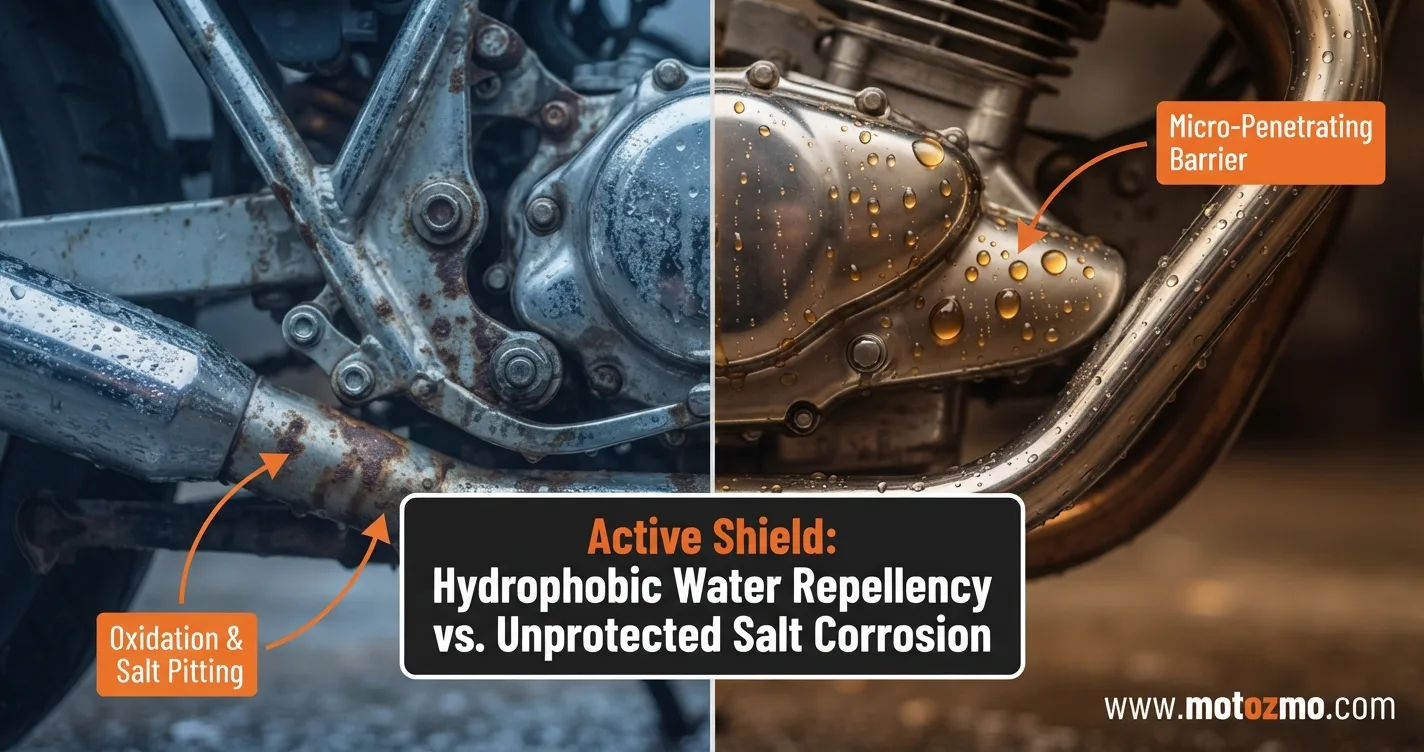
ACF-50 penetrates micro-cracks and electrical components, actively halting rust beneath the surface. It is the ultimate invisible layer for riders who prioritize deep protection over cosmetic dry films.
Check Price
CRC 06026 Heavy Duty Corrosion Inhibitor
CRC leaves a thick, hard-curing shell designed for severe environments. It is ideal for winter commuters and coastal riders needing heavy-duty protection against harsh road salts and road debris.
Check Price
Boeshield T-9
Developed by Boeing, T-9 combines wax lubrication with metal sealing. It is a dual-action choice for riders who want clean protection on chains, cables, and unpainted aluminum.
Check Price
Muc Off Motorcycle Protectant
A detailer-grade finishing spray that repels standing water and restores showroom shine. Perfect for fair-weather riders who want fast application and a clean aesthetic after every wash.
Check Price
WD-40 Specialist Corrosion Inhibitor
A cost-effective, high-performance spray for garage storage and exposed frames. Ideal for budget-conscious riders seeking industrial-grade rust prevention without a premium price tag.
Check Price
ACF-50 is the best anti-corrosion spray for most motorcycle riders. Its thin fluid creeps into seams and electrical connectors, stops corrosion that already started, and keeps working for up to 24 months per the manufacturer.
I learned this after one winter of salted roads ate the fasteners on my old commuter. But the best overall pick is not the best pick for every rider. A bike that sleeps outside needs a hard shell. Cables and chains want a wax that also lubricates. A show bike wants a spray that dries clean.
I checked what the manufacturers claim, tossed the numbers the buying guides keep repeating wrong, and matched five sprays to real riding situations. If winter storage is on your mind, read this alongside our fuel stabilizer picks.
Which Spray Matches Your Riding?
Every spray on this list stops rust. They differ in what they leave behind: a creeping fluid, a hard shell, a wax film, or a cosmetic coating. Match the finish to where your bike lives and how you ride.
| If you… | Grab | Why it fits |
|---|---|---|
| Ride through winter on salted roads | CRC 06026 | Hard film seals salt spray out |
| Store the bike for months at a time | ACF-50 | Creeps into hidden spots, works up to 24 months |
| Want cables, chains, and levers covered too | Boeshield T-9 | Wax lubricates while it protects |
| Just washed the bike and want shine | Muc-Off Protectant | Dries clean, beads water, looks great |
| Watch every dollar | WD-40 Specialist | Vapor inhibitors at a budget price |
Best for Long-Term Protection: ACF-50 Anti-Corrosion Lubricant
- Penetrates existing corrosion · Safe on electrics, paint, and rubber · Up to 24 months active
Key Features
- Active capillary action creeps into unseen electrical connectors and tight multi-metal joints
- Thermal stability up to 300°F keeps it active on air-cooled engines and headers
- Requires no clean-up wiping; cures naturally into an invisible, non-hardening protective film
ACF-50 started in aviation, not in bike garages, and it shows. The fluid is thin enough to wick into seams, under fasteners, and inside electrical connectors where rust starts long before you can see it. The trait that keeps it on top of every rider poll: it kills corrosion cells instead of covering them up.
The manufacturer rates it for up to 24 months of active protection, not the 12 months most buying guides repeat. That changes the math when you compare cost per year against the rest of this list. It is also one of the few sprays you can hit battery terminals and wiring with and not worry.
Two honest knocks. It goes on as a thin, slightly messy fluid, not a clean dry film, so a show bike will look oily for a while. And it costs more per can than everything else here.
For a winter-stored bike, pair it with our full winter storage routine and you cover the whole off-season in one afternoon.
Best for a Hard Protective Shell: CRC 06026 Heavy Duty Corrosion Inhibitor
- Dries to a sealed film · Shrugs off road salt · Self-healing if scratched
Key Features
- Self-healing resin structure flows back together if scratched by gravel or road debris
- High-viscosity formula clings firmly to vertical surfaces and low-hanging undercarriage parts without dripping
- Creates an impermeable physical barrier against direct salt-spray and liquid chemical de-icers
Where ACF-50 stays a fluid, CRC cures into a varnish-like shell that locks moisture out. If your bike sees salted roads all winter, that difference matters: a film you can see is a film you know is still there. The formula carries molybdenum disulfide, which reinforces the layer on bare metal.
The tradeoffs are real. Some buyers report leaky nozzles, so test-spray away from the bike first. And the cured film can turn brittle near hot spots like engine covers, which means those areas want a fresh coat more often than the rest of the bike.
One more thing: this spray protects clean metal. It does not fix rust that already took hold. If you spot orange bubbling under the paint, treat the rust first, then seal the area with CRC.
Best Wax-Based All-Rounder: Boeshield T-9
- Wax film lubricates moving parts · Dries non-tacky · Safe on paint and plastic
Key Features
- Formulated with paraffin wax that lubricates moving parts like cables and levers while protecting
- Waterproof barrier won’t wash off during unexpected downpours or high-pressure sprayings
- Dries to a smooth, non-tacky finish that resists dust, sand, and road grit build-up
Boeing developed T-9, and the paraffin wax base gives it a trick the others lack: it protects and lubricates in one pass. Cables, levers, and pivot points get rust protection plus smoother action. It dries to a thin, non-tacky film that does not grab dust the way oily sprays do.
The wax cuts both ways. The nozzle can clog between uses; a quick rinse under hot water clears it. And for pure long-term rust blocking, it asks for reapplication more often than ACF-50.
I reach for T-9 on the parts that move and ACF-50 on the parts that sit. Our chain cleaning and lubing guide covers the rest of that maintenance loop.
Best after a Wash: Muc-Off Motorcycle Protectant
- Spray-and-wipe application · Non-sticky finish · Made for post-wash use
Key Features
- High percentage of active organic UV inhibitors prevents sun fading on anodized finishes
- Hydrophobic polymers force water to bead and roll off immediately upon contact
- Leaves a high-gloss finish on painted tanks and carbon fiber elements
- Smells pleasant and emits low VOCs, making indoors or small garage application comfortable
Muc-Off built this for a single moment: right after you wash the bike. Spray it on, wipe it off, and the water still hiding in crevices gets displaced while the paint picks up a glossy, water-beading layer. Almost nothing else in this category dries truly non-sticky, and that alone makes it worth keeping on the shelf.
Be honest about what it is not: a months-long shield. Think of it as the finishing step of a wash, not a replacement for ACF-50 or CRC on the parts that take the worst abuse. Used that way, after every wash, it keeps the bike looking sharp between deep treatments.
Best Budget Pick: WD-40 Specialist Corrosion Inhibitor
- 1 year outdoors, 2 years indoors · Vapor inhibitors reach hidden spots · Not the classic blue can
Key Features
- Includes a dual-action Smart Straw for switching between precision pin-pointing and wide spraying
- Vapor Phase Corrosion Inhibitors (VCI) protect non-sprayed internal air pockets nearby
- Resistant to extreme heat and harsh cold without cracking, peeling, or degrading
- High surface tension ensures it won’t bleed onto brake rotors or tire treads
Grab the wrong can and you get a water displacer that quits in weeks. Grab this one and you get a purpose-built inhibitor rated for a year outdoors and two years indoors, with vapor-phase inhibitors that keep guarding nearby bare spots even where the spray did not land.
The Smart Straw flips between a pin-point stream and a wide fan, which makes frame tubes far less annoying to coat.
It will not outlast CRC’s cured shell in a salt-blast winter, but for a garage-kept bike it delivers serious protection per dollar. If you are still on the fence about whether your bike even needs winterizing, this is the low-cost way to cover the corrosion half of the job.
Spots You Should Never Spray
A car hides its metal under a hood. A bike wears it outside, which is why corrosion hits motorcycles harder and why the spray can feels like the answer to everything. It is not.
Keep these spots clean: brake rotors and pads, where any film kills stopping power; tires, where overspray turns to ice under lean; and a hot exhaust, which most of these sprays are not rated for.
Let the pipes cool first. SlashGear’s rundown of motorcycle rust prevention makes the same point about exposed metal needing a different maintenance mindset than a car.
How to Apply It So It Works
- Wash the bike first. Spraying over grime seals dirt under the film instead of locking moisture out. Our engine cleaning walkthrough covers the fiddly bits.
- Dry every surface fully. Trapped water under a cured coating does the exact job you bought the spray to prevent.
- Knock down existing rust before you seal. A corrosion inhibitor guards clean metal; it does not reverse deep rust. For light surface rust, this rust remover showdown shows what actually works.
- Lay down an even coat and let it cure. Most sprays feel dry in 15 to 30 minutes but need a few hours to set fully before you ride.
- Re-treat on schedule. Sheltered spots hold a coat for a season or more; exposed fasteners and lower frame tubes want a fresh pass a few times a year.
Bottom Line
ACF-50 stays my top pick because it does the thing the others cannot: it hunts down corrosion in places you cannot see and keeps working for up to two years. But the honest answer is that your riding decides. Salted winter roads want CRC’s hard shell. Moving parts want T-9’s wax. A fresh wash wants Muc-Off. A tight budget wants the WD-40 Specialist can, not the classic one. Pick the finish that matches your bike’s life and you will stop fighting rust every spring. When you roll the bike out of storage, give the tires a hard look too with our tire replacement guide, then run through the post-winter maintenance checklist before the first real ride.