Affiliate disclosure: This post may contain affiliate links. If you buy through a link on this page, MOTOZMO may earn a small commission at no extra cost to you. It helps keep our guides free. How we test and choose products.
Get heated gloves if you ride in real cold; get heated grips if you want warmth on demand with no charging or wiring to manage.
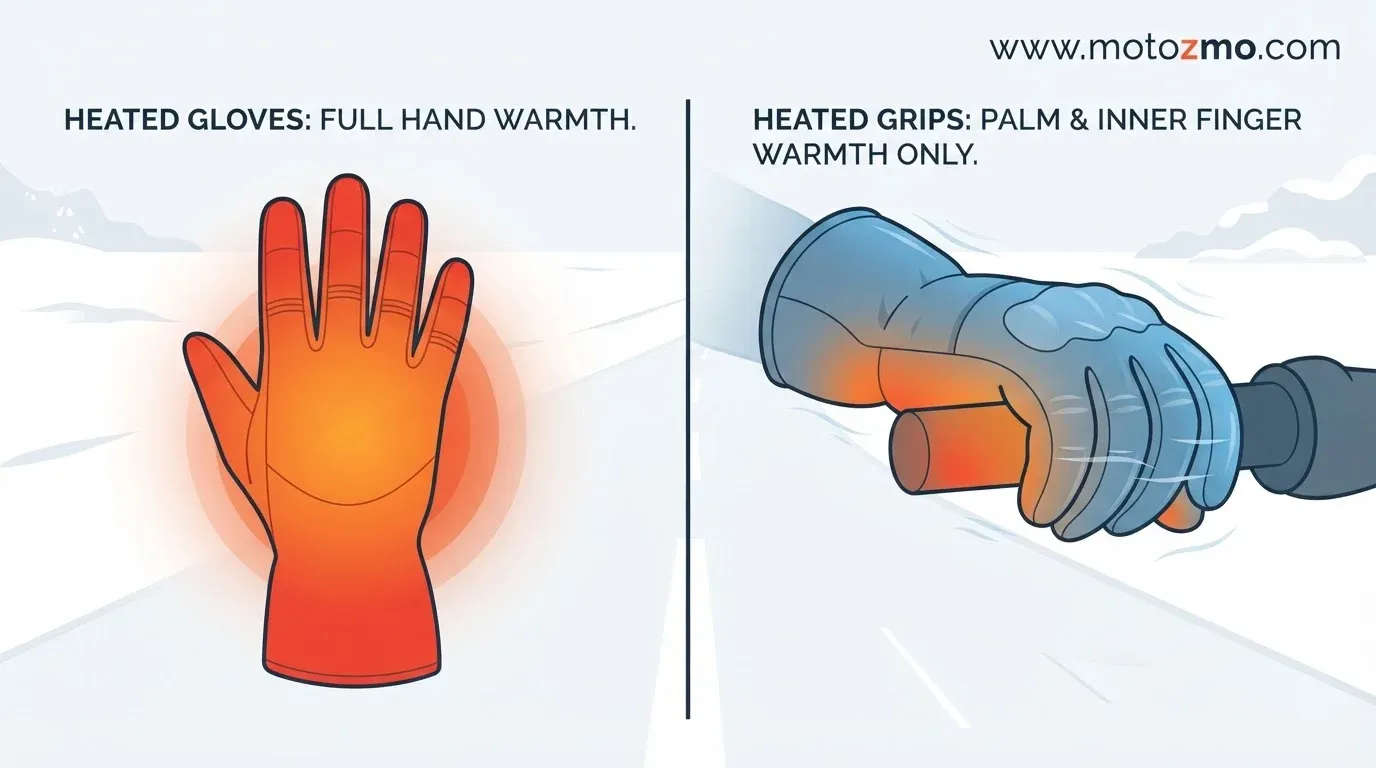
I have used both over several winters, and that is the honest split. Gloves heat your whole hand, fingers and knuckles included. Grips heat your palms and leave the backs of your hands to the wind.
If you face freezing mornings on a regular basis, gloves solve the actual problem. Grips win on convenience: they live on the bike, they turn on with a switch, and they cost less.
Below is the decision framework I wish someone had handed me before I spent money twice, plus the combination that beats both options alone.
This comparison sits inside the bigger picture of heated motorcycle gear, and if you have not bought heated gear before, start with whether heated gloves are worth it for winter riding before you commit to either.
Which Rider Are You? Answer that First
The gloves-vs-grips debate has no single winner. The right answer follows your riding life.
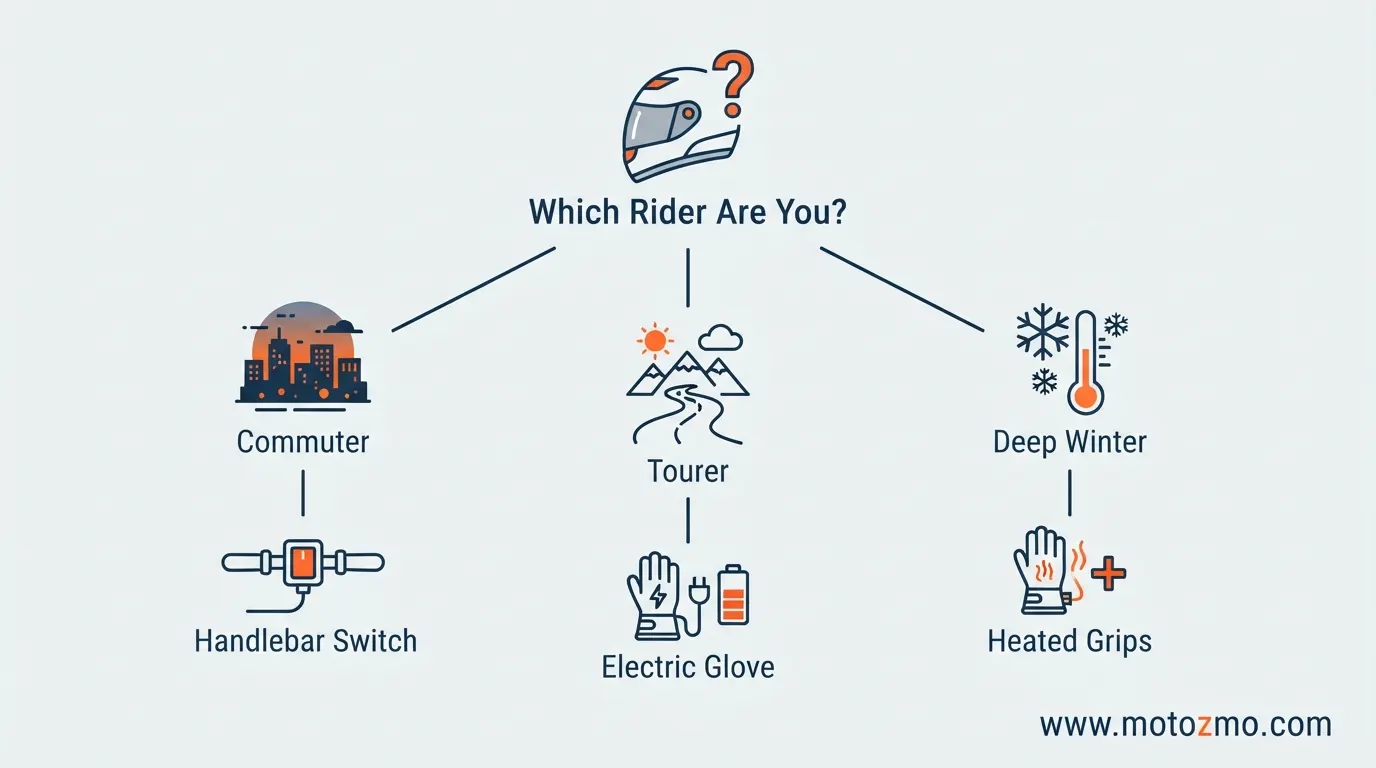
- The daily commuter. You ride the same bike, same route, often in the dark and the cold. You want heat at the press of a button with no ritual. Grips suit you.
- The tourer. Long hours at highway speed, where wind chill does the damage. Your fingertips go numb first. Gloves suit you.
- The deep-winter rider. You ride below freezing on purpose. One heat source is not enough. You need the combination, and I will get to that.
- The multi-bike owner. Your heat should move with you. Gloves ride in your jacket, not on one set of handlebars.
- The reluctant winter rider. You only brave the cold a few weekends a year. Spend the smaller amount. Grips, or even plain winter gloves, will do.
The Side-by-Side Comparison
| What matters | Heated gloves | Heated grips |
|---|---|---|
| What gets warm | Whole hand: fingers, knuckles, back of hand | Palms and inner fingers; backs of hands get little |
| Typical cost | About $150 to $500 for a quality pair | About $45 to $280 for quality sets |
| Install | None. Charge the batteries or plug into the bike | 1 to 3 hours of wiring into the bike’s electrical system |
| Power source | Batteries (3 to 8 hours per charge) or the bike battery via a harness | The bike battery, always on demand |
| Use off the bike | Yes, walking around, working outside | No |
| Moves between bikes | Yes | No |
| Coldest useful range | Below freezing, with good insulation | Down to about 40 to 45 F on their own |
| Effect on the bike | Almost none; battery gloves draw nothing from the bike | Draws 3 to 4 amps; old bikes with weak charging systems can struggle |
| Crash protection | Real riding gloves: armor, palm sliders, abrasion layers | You still wear whatever gloves you own |
Who Should Not Buy Each One
This is the part most comparisons skip, and it saves people money.
- Do not buy heated gloves if you ride one bike, ride mostly in cool (not cold) weather, and hate charging gear. The batteries add a chore, and the payoff is small above about 45 F.
- Do not buy heated grips if your bike has a weak charging system (many older bikes and small-displacement machines do), if you own more than one bike, or if your winter riding goes below freezing. Below freezing, warm palms and frozen fingers is a miserable combination I have lived through.
How Heated Gloves Work
A heated glove is a real riding glove with thin heating wires sewn through the fingers and back of the hand, powered by either small batteries in the cuffs or a 12V harness wired to your bike.
Most have three heat settings: low, medium, high. The battery kind runs three to eight hours depending on the setting; on high in real cold, plan for the short end of that range.
The 12V wired kind draws constant power from the bike while the engine runs, so the heat never fades on a long highway stretch. That matters because wind chill at speed is what kills hands, and battery gloves fade right when you need them most.
Gerbing’s 12V system is a good example of how this works: the gloves connect into the same harness as a heated jacket liner, with their own heat zone, so you can run hands hotter than your torso (Gerbing’s 12V glove line shows the setup). If you ride through real winters, this is the version I lean toward.
Two catches. First, quality heated gloves cost more than most riders expect: a good pair lands between $150 and $300, and the premium ones climb past $400. Second, battery gloves add a charging ritual and the bulk of the batteries. If you want the full run of heated glove picks, my heated glove roundup breaks them down by rider.
How Heated Grips Work
A heated grip is a replacement handlebar grip with a heating element built in. It wires into your bike’s battery, usually through a fused harness, and you control the heat with a switch or a dial on the bar.
Turn them on and the palms of your hands warm up in a minute or two. Good sets, like the Oxford HotGrips Pro, hold a chosen temperature automatically and shut themselves off if you forget, so they do not drain the battery overnight.
The appeal is real: they are always there, they cost less than gloves, and installation is a one-time job of one to three hours. Luimoto’s guide to adding heated grips covers what the install involves.
But understand the limits. Grips only warm what touches them: your palms and the inner side of your fingers. The backs of your hands and your fingertips sit in the wind the whole ride.
Riders on forums say the same thing again and again: around 45 F and below, their palms cook while their knuckles go numb. That is not a brand problem. It is a physics problem.
Two more catches. The install means wiring into your bike, which is a real job on some machines and not for every owner. And a pair of grips pulls 3 to 4 amps; on a modern bike with a healthy charging system that is nothing, but on an older bike or a small single, that draw can matter. If you want the full run of grip picks, my heated grip roundup covers them.
The Combination that Beats Both Alone
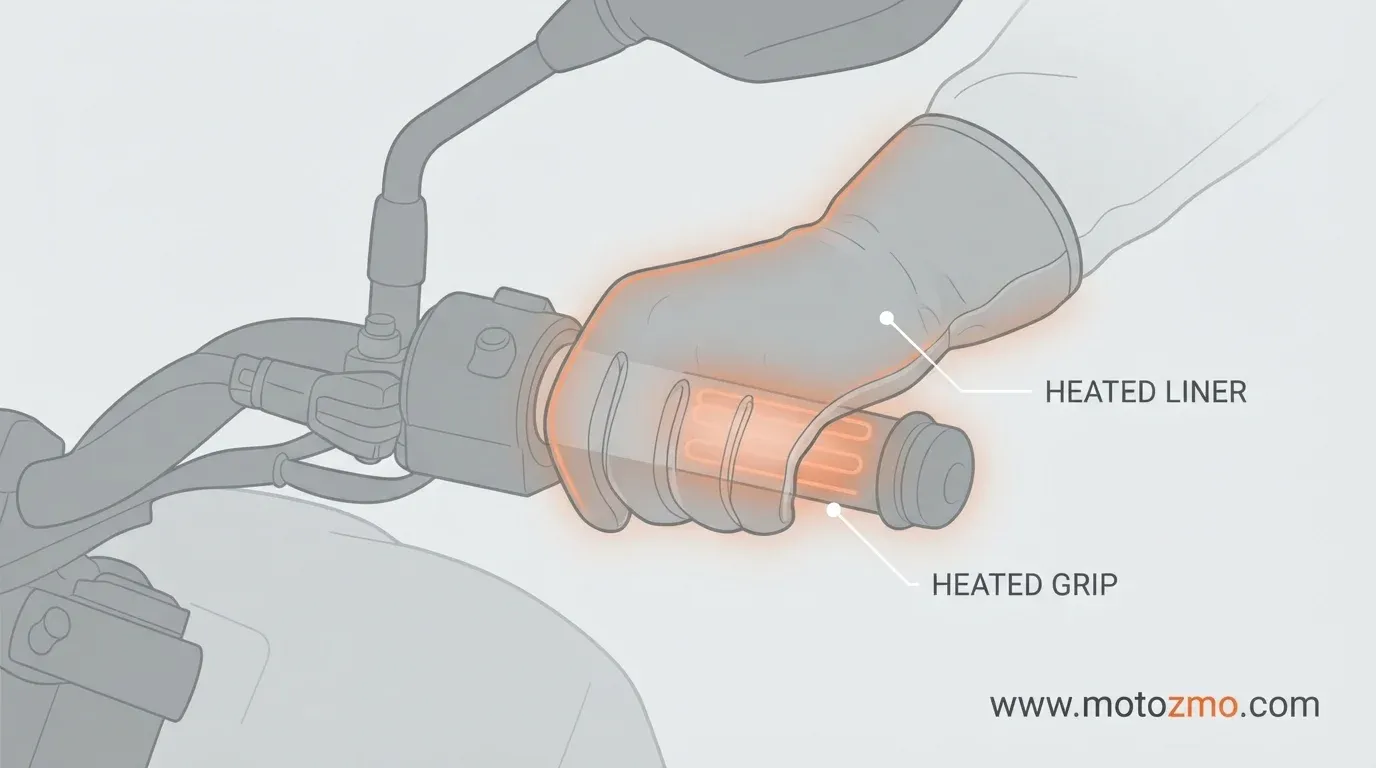
Here is what experienced cold-weather riders end up with: heated grips plus heated glove liners, or heated grips plus handlebar mitts.
The grips warm your palms, the liners warm your fingers and the backs of your hands, and the heat does not depend on two separate battery charges if the liners run on 12V. This is the setup riders on long-distance forums keep returning to after trying each one alone.
There is also a cheaper multiplier most people ignore: handlebar mitts. A set of handlebar mitts blocks the wind that is stealing all your heat.
Pair mitts with grips and you can wear thinner gloves, keep your feel of the controls, and ride in temperatures that used to force you inside. Blocking the wind does more work than adding heat.
Cost of Ownership, Honestly Stated
Grips look cheaper and usually are: a quality set runs $45 to $280, plus your time or a shop’s hour for the install. After that, they cost nothing to run and last years. Gloves cost $150 to $500 up front.
Battery gloves add replacement batteries every few seasons and a charging habit. 12V wired gloves need the harness and a controller, which pushes the total higher.
Over five winters of regular use, the difference shrinks but grips still come out ahead on cost. Gloves come out ahead on warmth. Decide which currency you are spending: money or comfort.
The Verdict
If I had to recommend one to a rider facing a real winter, I would pick heated gloves, and only just. The reason is simple: gloves heat the part of your hand the wind hits hardest.
Fingers and knuckles go numb first on a cold ride, and grips never reach them. Gloves also move between bikes, work off the bike, and ask nothing of your bike’s electrical system. For the job this comparison is about, keeping hands warm through winter riding, gloves are the better single buy.
But grips earn their popularity. If you commute on one bike, ride in cool rather than freezing weather, and want heat with zero rituals, grips are the right call. And if you ride below freezing, stop choosing: grips plus heated liners or mitts is the setup that works.
For the rest of your winter kit, my full guide to staying warm on a winter ride ties it together, and if you would rather skip electricity entirely, the best non-heated winter gloves still get the job done down to about freezing.