
Top Picks For You
NOCO Boost Plus GB40
The sweet spot for most riders. It’s enough power for any motorcycle battery, compact enough for a saddlebag, and foolproof safety tech for beginners.
Check Price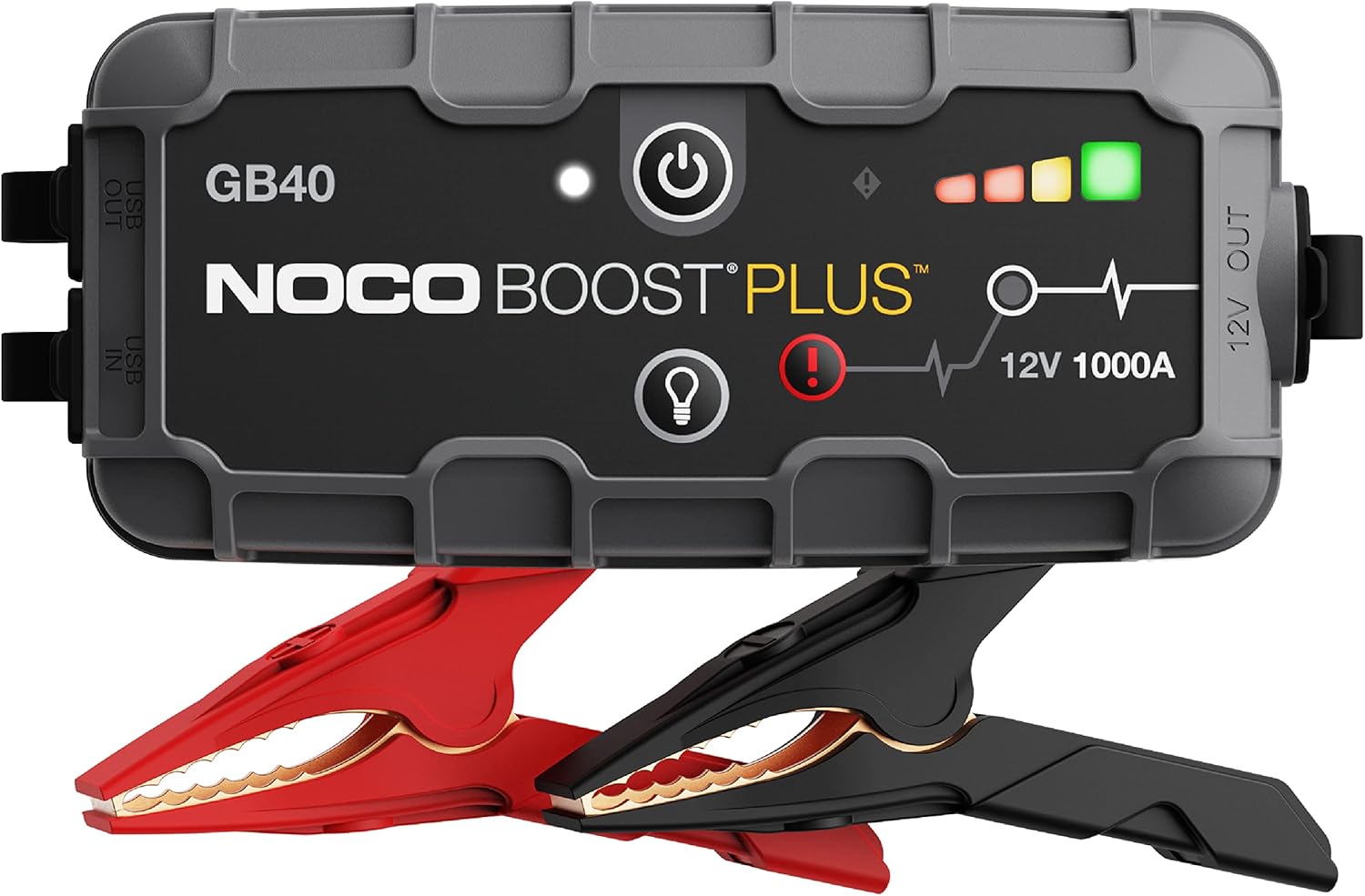
ANCEL BS200 Super Starter
A permanently mounted, no-fuss solution with zero internal battery risk. It’s ideal for riders who want always-on starting assist without managing a separate device.
Check Price
HULKMAN Alpha85S
The only pick here that genuinely solves cold-weather lithium failure. This jump starter is worth the extra weight and cost if freezing starts are a real, recurring problem.
Check Price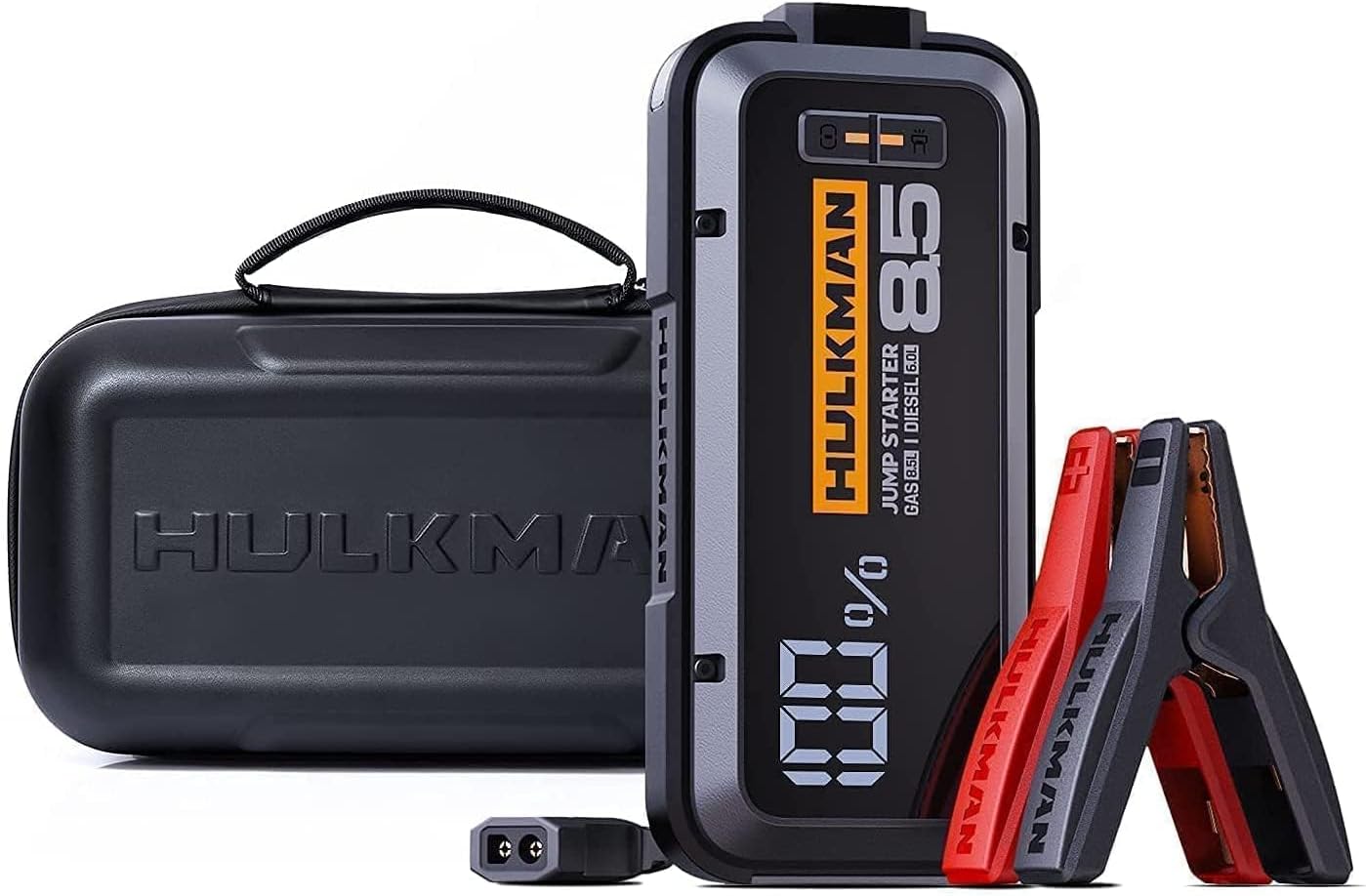
WOLFBOX 3000A Jump Starter
One device for jump-starting and multi-day trip charging. This is best for riders who want versatility, with the understanding that power shared is power spent.
Check Price
The NOCO Boost Plus GB40 is the best overall portable jump starter for motorcycles: 1,000 peak amps, 2.4 pounds, and small enough to actually live in a saddlebag.
That’s the right pick for most riders. But the best choice depends on what you need most: the smallest possible unit that disappears into a glovebox, real cold-weather performance if you ride through actual winters, or a hybrid device that also charges your phone on a multi-day trip. Below is how they compare, and which one fits your riding.
Already have one and just need the steps? See how to use one safely.
What Actually Matters for a Motorcycle (Not a Truck)
Most “best jump starter” lists are written for car and truck owners, and that’s the wrong comparison set if you ride. Here is what decides a good pick for two wheels.
Peak Amps: Why 500 to 1,000A Covers Virtually Every Motorcycle
Motorcycle batteries are small, typically 10 to 20Ah, nothing close to what a V8 truck battery demands. Most motorcycles start reliably with 500 to 1,000 peak amps.
Anything beyond that isn’t extra reliability, it’s extra weight and bulk you’re carrying for a job that’s already handled. Don’t chase the highest peak-amp number on the shelf. It’s solving a truck problem, not a motorcycle one.
Size and Weight: The Real Difference for Bike Use
On a truck, a jump starter lives in the trunk and its size barely registers. On a motorcycle, it has to fit in a saddlebag, tail bag, or under-seat storage alongside everything else you’re already carrying.
This is the axis most motorcycle-specific roundups should be sorting by, and most general “best overall” lists don’t account for it at all.
Cold-Weather Performance
Lithium cells lose usable current below roughly 14°F, which matters if you’re trying to jump-start a bike on a genuinely cold morning.
A handful of newer units solve this with a built-in pre-heat function that warms the cells before delivering current. It’s worth paying for if you ride through real winters, and unnecessary if you don’t.
Best Overall for Motorcycles: NOCO Boost Plus GB40
Key Features
- Peak Amps: 1,000A
- Safety Tech: UltraSafe spark-proof, reverse-polarity protection
- USB Charging: USB-A power bank output
1,000 peak amps · UltraSafe spark-proof tech
The GB40 hits the sweet spot for most riders: enough peak amps to handle any motorcycle battery with margin to spare, small and light enough to actually carry, and NOCO’s UltraSafe technology (spark-proof clamps, reverse-polarity protection) that removes most of the risk of a beginner mistake. It’s also the most-reviewed compact jump starter built specifically for the motorcycle weight class, which means a long track record rather than a first-year product.
The honest limitation: it charges phones over USB-A only, and its internal battery capacity is modest as a phone power bank. It’s fine for a single emergency top-off, but not something you’d rely on for a full day of GPS use. If that matters to you, see the hybrid pick below.
Read our full NOCO Boost Plus GB40 review for the complete breakdown, including real-world testing against motorcycle-sized batteries specifically.
Smallest / Most Portable: ANCEL BS200 Super Starter
Key Features
- Peak Amps: 700A
- Design: Permanently connected supercapacitor unit
- Temperature Range: -40°F to 176°F
- Smart Monitoring: App-based real-time battery health tracking
If saddlebag space is your main constraint, the ANCEL BS200 takes a different approach than a traditional portable jump starter. It connects permanently to your motorcycle’s battery, so there’s nothing to dig out of a tank bag or remember to charge. At 700A peak current and built to operate from -40°F to 176°F, it’s well-suited to the temperature swings riders actually encounter across seasons.
The tradeoff is real: this is a set-it-and-forget-it supercapacitor unit, not a grab-and-go pack. It carries no internal battery, which means zero risk of chemical reactions or swelling in a hot saddlebag, but it also means it works by drawing from and assisting your existing battery rather than replacing its function entirely.
For a healthy or moderately weak motorcycle battery, that’s still plenty of starting assist. As a bonus, its smart app lets you monitor battery voltage, temperature, and jump-start history in real time, which adds genuine peace of mind on longer trips.
Best for Cold-Climate Riders: HULKMAN Alpha85S
Key Features
- Peak Amps: 2,000A
- Cold Weather: Pre-Heat technology rated to -40°F
- Best For: Winter and cold-climate riders
- Tradeoff: Heavier and pricier than compact alternatives
2,000 peak amps · Pre-Heat technology rated to -40°F
If you ride through actual winters, this pick solves a problem the others don’t: standard lithium jump starters lose current in real cold, right when you’re most likely to need one. The Alpha85S’s pre-heat function warms its cells before delivering a jump, which is the difference between a jump starter that works in your driveway in July and one that works on a genuinely cold morning in January.
It’s heavier and pricier than the GB40, and that tradeoff only makes sense if cold starts are a recurring problem for you. If they are, it’s also worth reading up on which replacement batteries hold up best in cold weather. The jump starter and the battery itself are two halves of the same seasonal problem.
Best Hybrid (Jump Starter + Trip Power Bank): WOLFBOX 3000A Jump Starter
Key Features
- Peak Amps: 3,000A
- Fast Charging: 65W USB-C in/out
- Emergency Features: LED flashlight with SOS and strobe modes
3,000 peak amps · 65W USB-C Fast Charging · 59.2Wh capacity
For riders who want one device that covers both a dead battery on a random Tuesday and charging a phone or GPS unit across a multi-day trip, the WOLFBOX 3000A earns its extra size and weight by doing double duty.
The 65W USB-C port charges phones and laptops quickly, the built-in LED flashlight with SOS and strobe modes adds genuine emergency utility, and the automatic boost mode removes the guesswork when battery voltage drops below 9V. Just connect it and turn the key.
However, remember that every watt-hour spent charging your phone or GPS is a watt-hour not available for the actual jump-start if you need one on the same trip. The 59.2Wh capacity is generous for a portable unit, but it’s still a finite pool.
If you’d rather not think about managing that balance, a dedicated jump starter plus a separate small power bank is often the more reliable setup than one device trying to do both jobs well.
The Bottom Line
Motorcycle jump starters live and die by size and weight, not raw peak amps. Once you clear roughly 500A, more amperage just means more bulk in your saddlebag for no real benefit. The NOCO Boost Plus GB40 is the best overall balance of power, size, and safety tech for most riders.
FAQs
Do portable jump starters work in cold weather?
Most standard lithium jump starters lose usable current below about 14°F. A few models with built-in pre-heat technology are rated for much colder starts if that’s a regular issue for you.
Can a jump starter damage my motorcycle’s electronics?
It can, if you connect the clamps in the wrong order or reverse polarity. Units with built-in reverse-polarity protection and spark-proof clamps significantly reduce that risk.
How often should I recharge a jump starter I don’t use often?
Most manufacturers recommend a top-off charge every 3 to 6 months, since lithium cells slowly self-discharge even in storage. Check the specific unit’s manual, since some have longer shelf lives than others.