
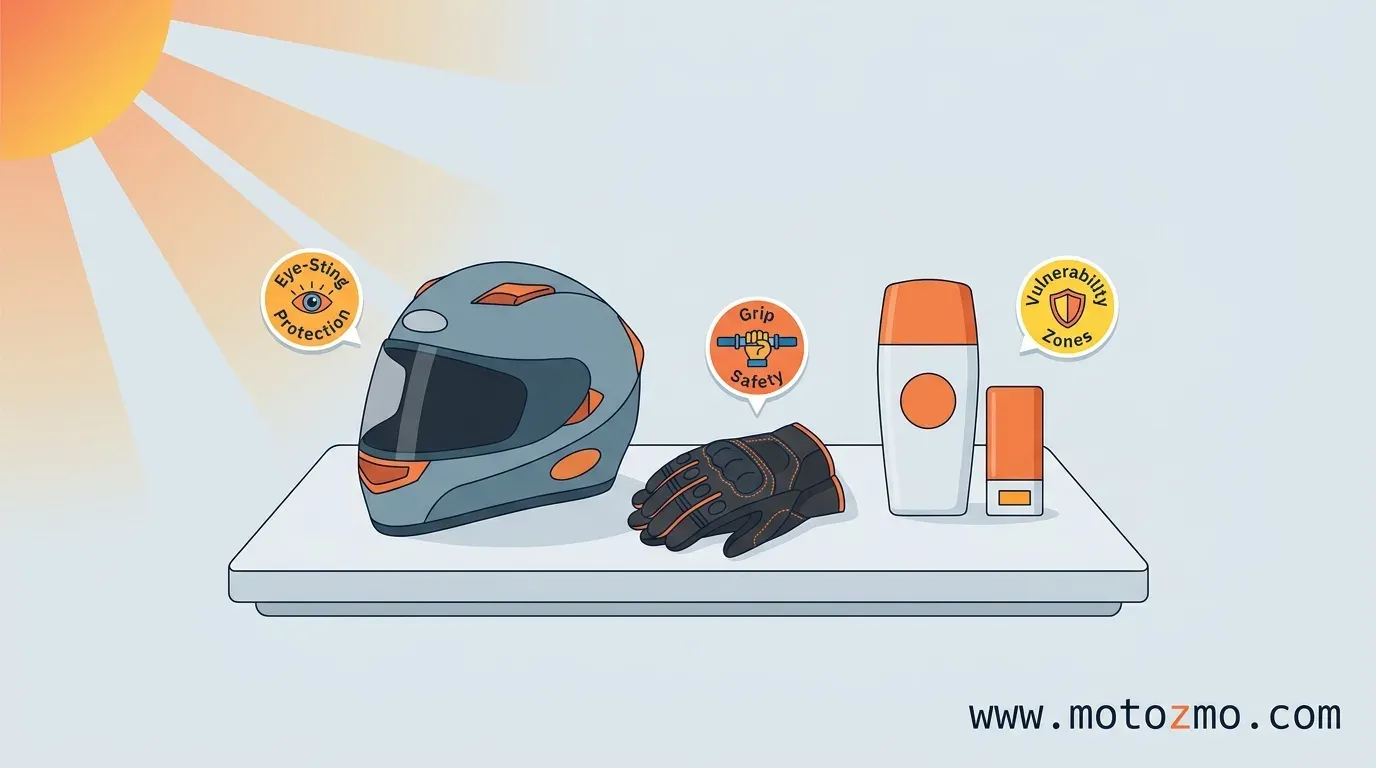
Top Picks For You
Sun Bum Original SPF 50 Sunscreen Lotion
Fast-absorbing chemical sunscreen delivering reliable high-SPF protection with a lightweight, non-greasy finish. Ideal for daily commuters wanting effortless wear beneath gear without clogged pores or skin breakouts.
Check Price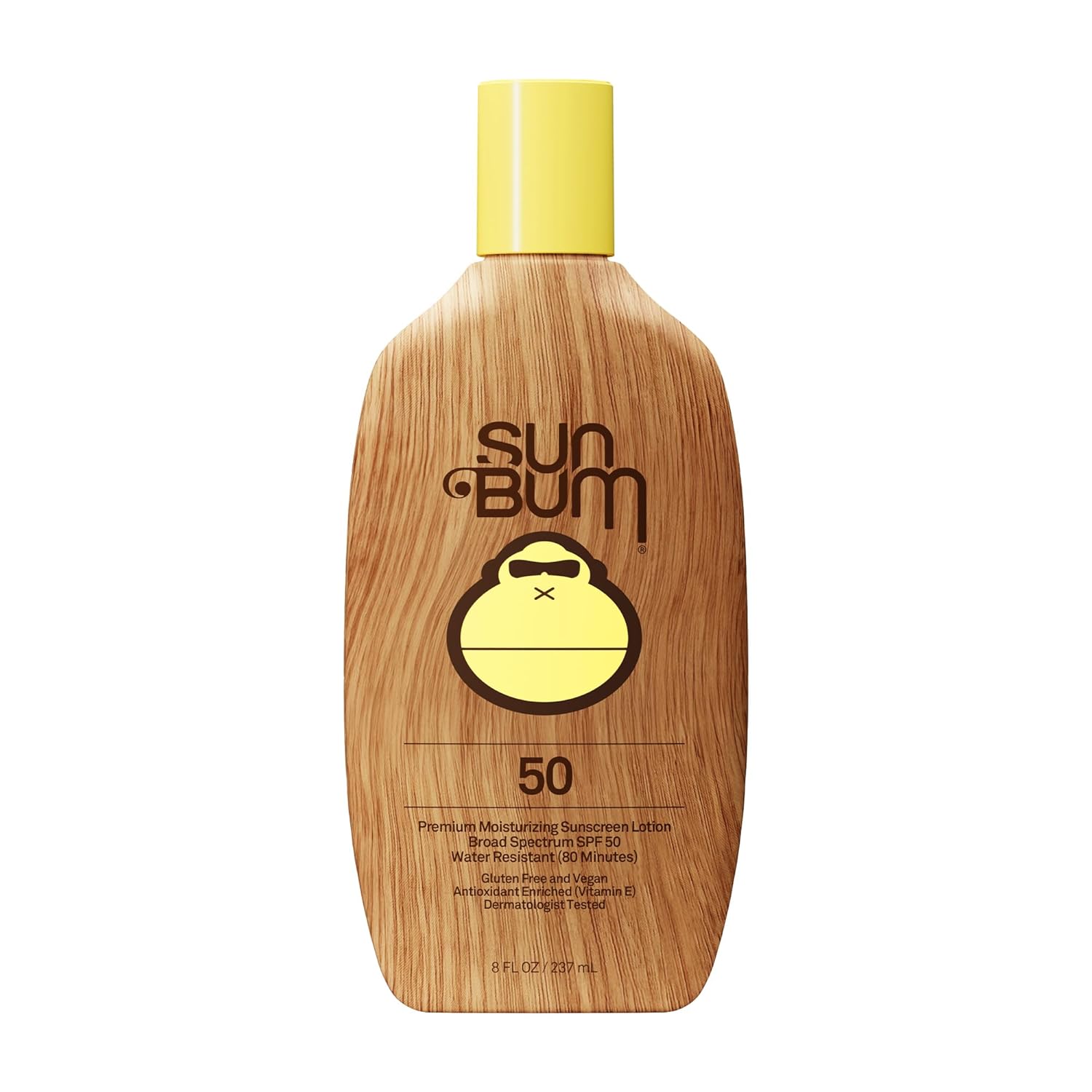
La Roche-Posay Anthelios Melt-In Milk SPF 60
Premium endurance-grade sunscreen engineered for intense heat and continuous sweating. Perfectly suited for long-haul highway riders needing maximum allowable water resistance that won’t compromise handlebar grip.
Check Price
Neutrogena Ultra Sheer Dry-Touch SPF 55
Ultra-accessible, budget-friendly sunscreen featuring a matte finish. Excellent roadside emergency purchase for short commutes when you forget your primary bottle at home.
Check Price
Coppertone Sport Mineral SPF 50
Heavy-duty zinc-based barrier built specifically to eliminate eye sting. Best choice for heavy-sweating riders who prioritize zero eye irritation over quick application time.
Check Price
Blue Lizard Sensitive Mineral Sunscreen Stick SPF 50+
Compact, glove-friendly mineral stick designed for instant fuel-stop touch-ups. Ideal for mess-free reapplication across vulnerable high-exposure zones like the nose, ears, and neck.
Check Price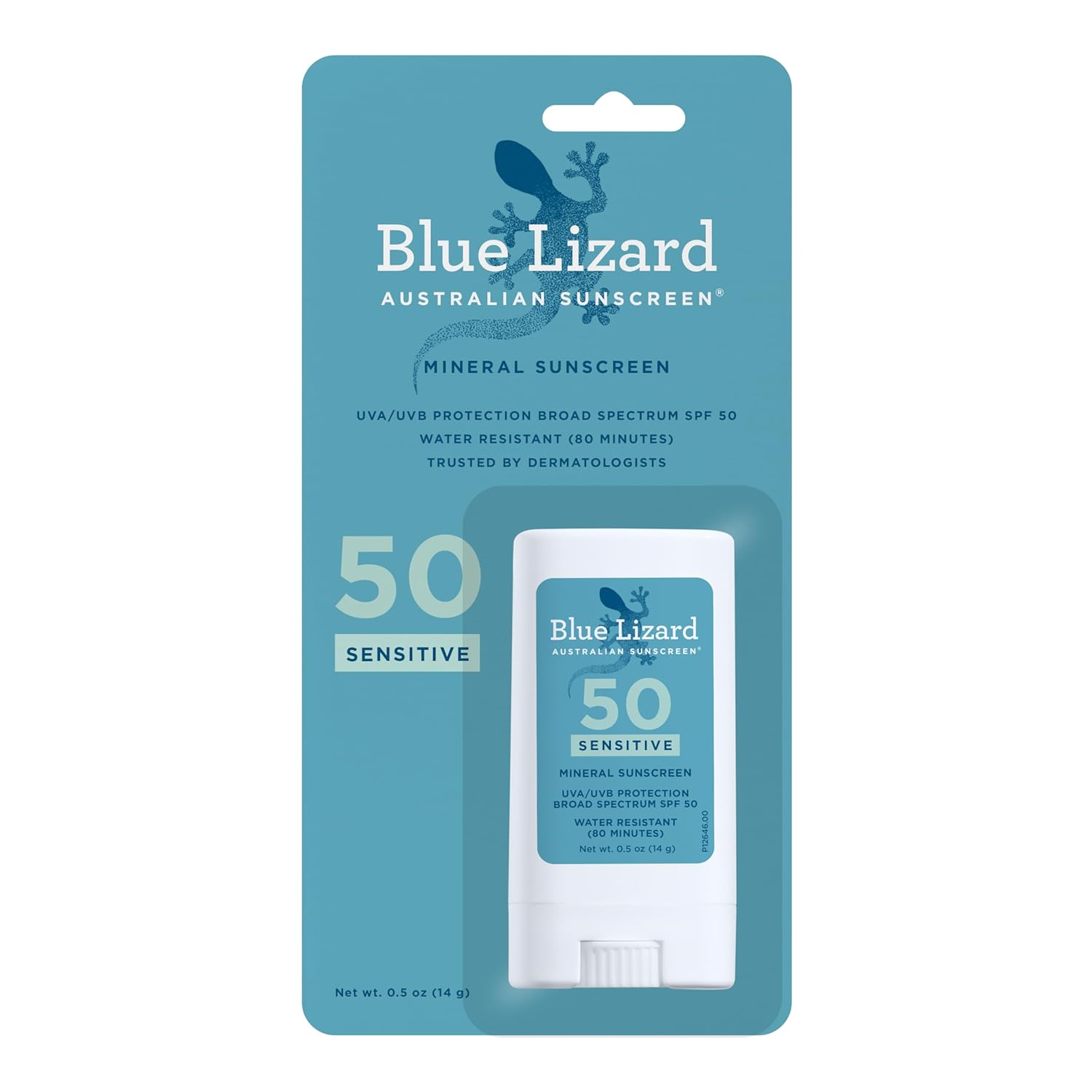
Yes, motorcycle riders genuinely need to think about sunscreen differently than someone heading to the beach. Wind hides how much you’re sweating until you flip your visor up at a gas station and feel it running straight into your eyes, and plenty of sunscreens marketed for “sport” are built around swimming laps, not five hours under a helmet with your gloves on.
The short version: a mineral pick if eye-sting is your dealbreaker, a high-protection lotion if you sweat hard on long highway stretches, and a stick if you just want a five-second swipe at every fuel stop.
Below are five sunscreens riders keep buying again, what real reviewers actually complain about with each one, and whether your bathroom-cabinet sunscreen is even the right tool for a long ride.
Do Motorcycle Riders Need a Different Sunscreen?
In a few specific ways, yes.
Wind is the reason riders get burned without feeling it happen. Moving air keeps your skin feeling cool while the UV keeps working underneath, so a ride that never felt hot can still leave you sunburned by the time you park. That’s a real difference from a beach day, where the heat itself is what tells you you’ve had enough sun. It’s the same reason sunscreen belongs on the same short list as water and breaks when you’re staying healthy on a hot ride: you won’t feel either problem coming until it’s already happened.
Spray sunscreen is also a worse idea on a bike than it looks on the shelf. It’s hard to apply evenly through a half-raised visor or over a glove, and it’s tough to aim once you’re already dressed. The Environmental Working Group specifically warns against sprays for exactly this reason: incomplete coverage and the risk of inhaling it, which is the last thing you want right before pulling onto the highway.
Then there’s eye-sting, which hits riders harder than almost anyone else who wears sunscreen. Sweat has nowhere to go under a full-face helmet. It pools on your forehead, and the moment you crack the visor at a light or a fuel stop, it runs straight into your eyes and carries whatever sunscreen is up there with it. Chemical filters sting far worse than mineral ones (zinc oxide or titanium dioxide) when this happens, which is part of why a couple of the picks below lean mineral even though chemical formulas usually rub in cleaner.
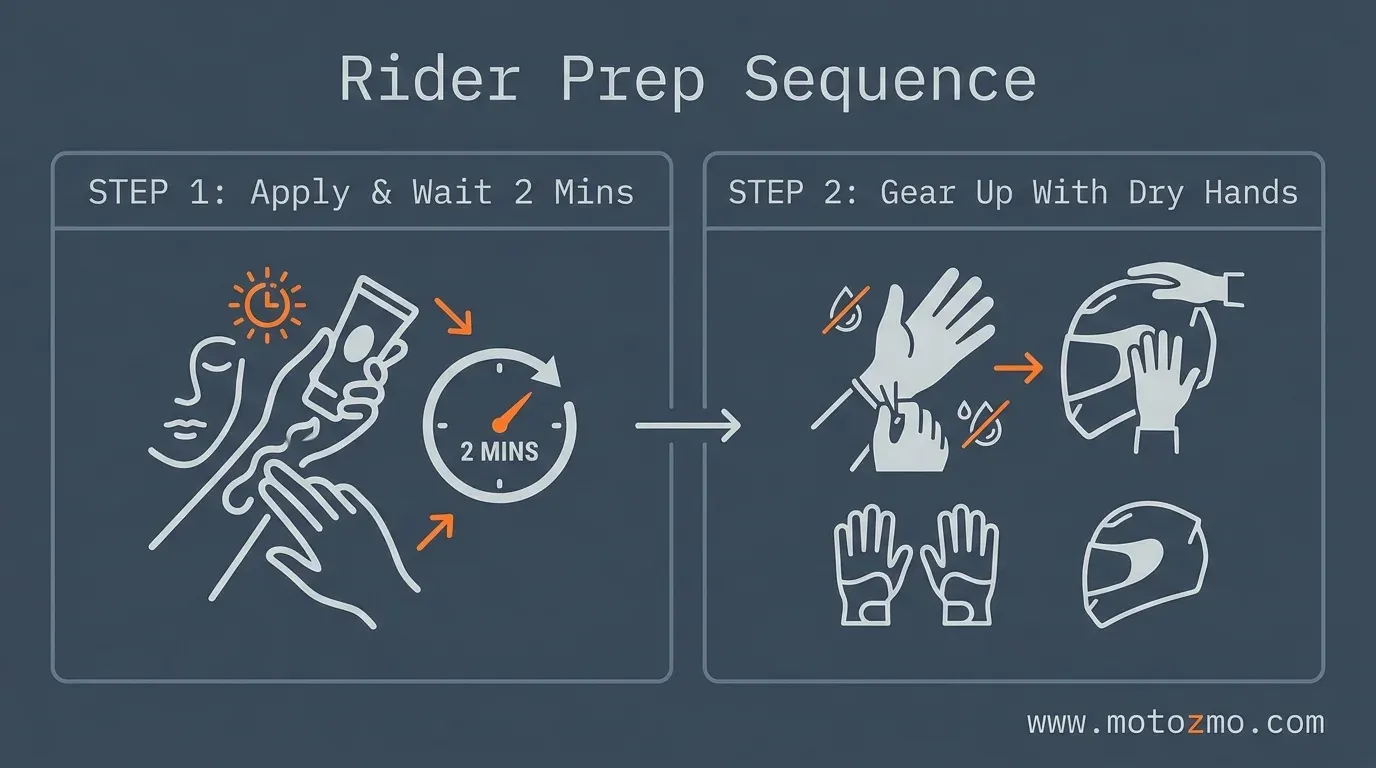
Sequencing matters too, and it’s something most sunscreen guides never mention because it’s specific to riding. Sunscreen needs a few minutes to fully absorb before you pull gloves on, or you’re gripping the throttle and the bars with a slick palm. That’s a real grip concern on a bike, not just an annoyance the way it might be holding a steering wheel. Apply it first, wait a minute, then gear up.
The FDA won’t let any brand call a sunscreen “waterproof” or “sweatproof” for exactly this reason: it always wears off eventually, riding or not. The most a label can legally claim is water resistance for a set window, either 40 or 80 minutes, based on standardized lab testing, and the brand has to say which one applies. On a four-hour highway stretch, that math means you’re reapplying at least once, and ideally every time you stop for gas.
How These Were Picked
I didn’t rank these by SPF number, because past a point that number stops meaning much (more on that below). Instead I went through hundreds of real buyer reviews across retailers for each product, looking specifically for the complaints that matter on a bike: does it sting when sweat hits your eyes, does it survive hours of wind and heat, does it leave your hands greasy right before you need to grip something.
Every pick below has at least one real trade-off, because no sunscreen is the right answer for every rider.
The 5 Best Sunscreens for Motorcycle Riding
1. Sun Bum Original SPF 50 Sunscreen Lotion — Best Overall
- SPF: 50
- Format: Lotion
- Mineral or chemical: Chemical (oxybenzone/octinoxate-free)
- Water resistance: 80 minutes
Key Features
- Fast-absorbing chemical formula
- Oxybenzone and octinoxate-free
- 80-minute water/sweat resistance
- Non-comedogenic daily texture
You’ll love the sunscreen for its light, non-greasy feel, and it doesn’t leave you breaking out, which matters if you’re applying it daily all summer. It’s a chemical-filter formula (Sun Bum markets it as oxybenzone- and octinoxate-free, though it still relies on other UV filters), and it absorbs fast enough to gear up without waiting around.
The catch is the same one that shows up across nearly every chemical sunscreen: stinging badly when sweat carries it into eyes, occasionally could be bad enough to make you switch products mid-trip. If you’re a heavy sweater or you ride with your visor cracked in traffic, that’s worth knowing before a six-hour day.
Skip this one if eye irritation has burned you before with other lotions, and go mineral instead (picks 4 and 5 below).
2. La Roche-Posay Anthelios Melt-In Milk SPF 60 — Best for Long, Sweaty Highway Days
- SPF: 60
- Format: Lotion
- Mineral or chemical: Chemical
- Water resistance: 80 minutes
Key Features
- Broad-spectrum SPF 60 rating
- Max-level 80-minute water resistance
- Zero white-residue finish
- Quick-dry texture tested by athletes
This is the pick for riders doing long mileage in hot weather. It carries the maximum water-resistance rating the FDA allows (80 minutes), it rubs in fast without leaving a white residue. The sunscreen’s lightweight texture melts in fast enough that it doesn’t interfere with grip, which is great for riders spending hours sweating outdoors.
The trade-off is the same eye-sting risk as any chemical formula. It can migrate into the eyes during heavy sweating, which is a real discomfort, and it can transfer onto light-colored gear if you dress before it’s fully dry. Give it the full few minutes to set before you put your jacket on.
Skip this one if you specifically want a mineral-only formula, or if you tend to sweat enough that eye migration is a dealbreaker no matter the brand.
3. Neutrogena Ultra Sheer Dry-Touch SPF 55 — Best Budget Pick You Can Find Anywhere
- SPF: 55
- Format: Lotion
- Mineral or chemical: Chemical
- Water resistance: Not sport-rated
Key Features
- Matte dry-touch finish
- Ultra-lightweight skin feel
- High SPF at a lower cost
The advantage here isn’t performance, it’s availability and price. This is the sunscreen you can grab at literally any gas station or drugstore along your route if you forgot to pack one. You’ll like it for how lightweight and non-greasy the dry-touch finish feels for daily wear.
The downside: it’s not especially sweat-resistant compared to sunscreens built for sport, and it may run and sting the eyes once real sweat starts. Also, it can leave a white cast on darker skin tones. Treat it as a solid backup or a short-ride option rather than your go-to for an all-day summer tour.
Skip this one for long, hot rides where you know you’ll be sweating heavily for hours; save it for shorter commutes or as an emergency backup.
4. Coppertone Sport Mineral SPF 50 — Best If Eye-Sting Is Your Dealbreaker
- SPF: 50
- Format: Lotion
- Mineral or chemical: Mineral (zinc oxide)
- Water resistance: 80 minutes
Key Features
- 100% zinc oxide active base
- Zero-eye-sting mineral formula and 80-minute sweat/water durability
- Maximum physical UV reflection
This is the zinc-oxide-heavy mineral version of Coppertone’s sport line, and it doesn’t irritate eyes during heavy sweating the way chemical sunscreens do. That’s a solution to the exact problem riders run into most. Also, it doesn’t sting, even during workouts that produce heavy sweat.
The cost is application. The formula runs thick and waxy, so it’s a real chore to rub in evenly, and it leaves a more noticeable white cast than the lotion picks above. It’s also worth noting Coppertone Sport comes in a separate chemical-lotion version that applies more easily but doesn’t have the same eye-comfort advantage. If a bottle doesn’t specify “mineral” on the label, check before you buy expecting this exact experience.
Skip this one if fast, even application at a gas station matters more to you than eye comfort; the stick below solves that specific problem.
5. Blue Lizard Sensitive Mineral Sunscreen Stick SPF 50+ — Best for Fast Reapplication at Fuel Stops
- SPF: 50+
- Format: Stick
- Mineral or chemical: Mineral (zinc oxide)
- Water resistance: 80 minutes
Key Features
- Mess-free solid stick format
- Sensitive-skin mineral base
- Target-zone precise application and 80-minute water-resistant barrier
A stick is the most glove-friendly format there is. No lotion on your hands, no bottle to dig out of a tank bag, just a few swipes across your nose, ears, and the back of your neck while you’re standing at the pump. It’s a mineral formula, so it shares the same no-eye-sting advantage as pick 4. Use it if you have sensitive skin because it’s one of the few products that doesn’t irritate eyes or skin at all.
The downside is the same one that follows mineral sticks generally: a visible white or chalky cast, especially if you don’t take the extra few seconds to rub it in fully, and it’s pricier per ounce than a bottle of lotion. For a five-second touch-up at a fuel stop rather than full-body coverage, that trade-off is easy to live with.
Skip this one if you need to cover large areas of exposed skin quickly (arms, back) rather than just touch-up zones; a lotion will get you there faster.
Which Rider Are You?
| If you’re this rider… | …reach for this |
|---|---|
| Daily commuter, shorter rides, wants something pleasant to use every day | Sun Bum Original SPF 50 |
| All-day tourer covering serious highway miles in real heat | La Roche-Posay Anthelios Melt-In Milk SPF 60 |
| Forgot to pack sunscreen and need something from any gas station | Neutrogena Ultra Sheer Dry-Touch SPF 55 |
| Gets stinging eyes from sunscreen no matter the brand | Coppertone Sport Mineral SPF 50 |
| Wants a zero-mess, glove-friendly touch-up at every fuel stop | Blue Lizard Sensitive Mineral Stick |
Where Your Gear Leaves You Exposed
Full gear covers most of your skin, which is exactly why riders underestimate how much sun they’re still getting. The problem spots are predictable, and they’re the same ones dermatologists and long-distance riders both point to:
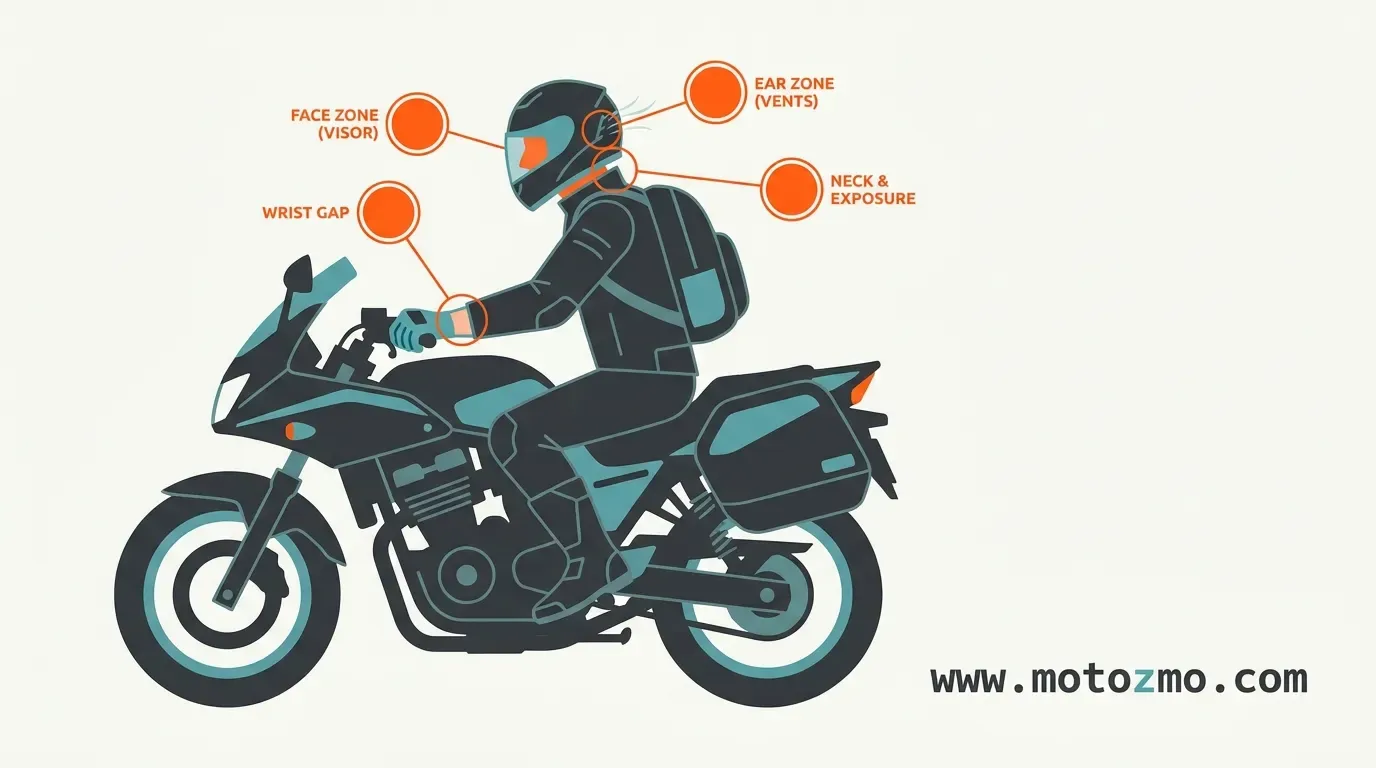
- Nose, cheeks, and lips. Even a full-face helmet doesn’t fully shade these, and lips need their own SPF lip balm since regular sunscreen doesn’t hold up well there.
- The wrist gap. If your sleeve doesn’t fully meet your glove when your arm is stretched out to the bars, that strip of skin gets direct sun for the whole ride. A pair of proper summer gloves with a longer cuff closes most of that gap on its own.
- The back of the neck, especially if you ride hunched forward on a sport bike. A cooling neck gaiter doubles as sun coverage here and beats remembering to reapply sunscreen on a spot you can’t see.
- Ears. Helmet vents don’t shade them, and they’re one of the most commonly missed spots according to dermatologists.
A properly ventilated summer jacket covers your arms and torso either way, so sunscreen’s real job is the strips of skin your gear can’t reach. The Skin Cancer Foundation makes this same point directly to motorcyclists: pair your leather jacket with a full-face helmet, ideally one with a built-in sun shield, rather than counting on sunscreen to do all the work.
One more thing worth folding into your routine: heat and sun exposure drain you faster than you’d think on a bike, so pair sunscreen with real hydration. A hydration pack that lets you sip without stopping does more for a long summer ride than any single sunscreen choice.
Is SPF above 50 actually worth paying for? Not by much. Regulators haven’t found solid evidence that going past roughly SPF 50–60 buys you meaningfully more protection, which is part of why the products above cluster in that range rather than chasing SPF 100 for its own sake. Reapplication schedule matters more than the number on the bottle.