
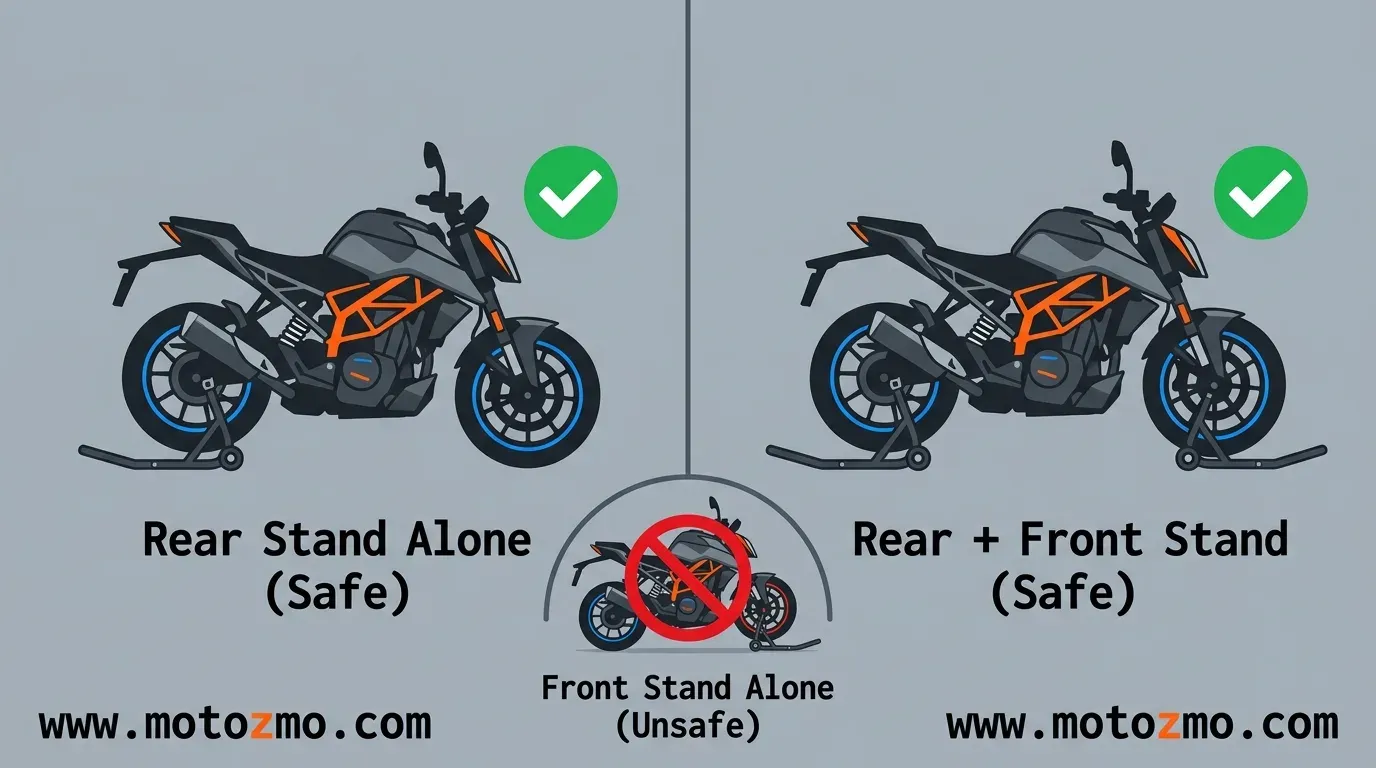
Almost every rider needs a rear stand. Only some riders also need a front stand, and you can never use a front stand safely without a rear stand already in place. That last part is the piece most comparisons skip. This isn’t an either-or choice. It’s closer to: buy a rear stand first, always, then decide later whether your own maintenance habits justify adding a front one.
What Does Each Stand Lift?
A rear stand lifts the back of the bike by the swingarm, either with rubberized tabs that grip the swingarm directly or with hooks that catch a pair of spools threaded into the swingarm. Once it’s up, the rear wheel spins freely.
A front stand lifts the front of the bike, and it does it one of two ways. A fork stand cradles the bottom of each fork tube with rubber pads and lifts from there.
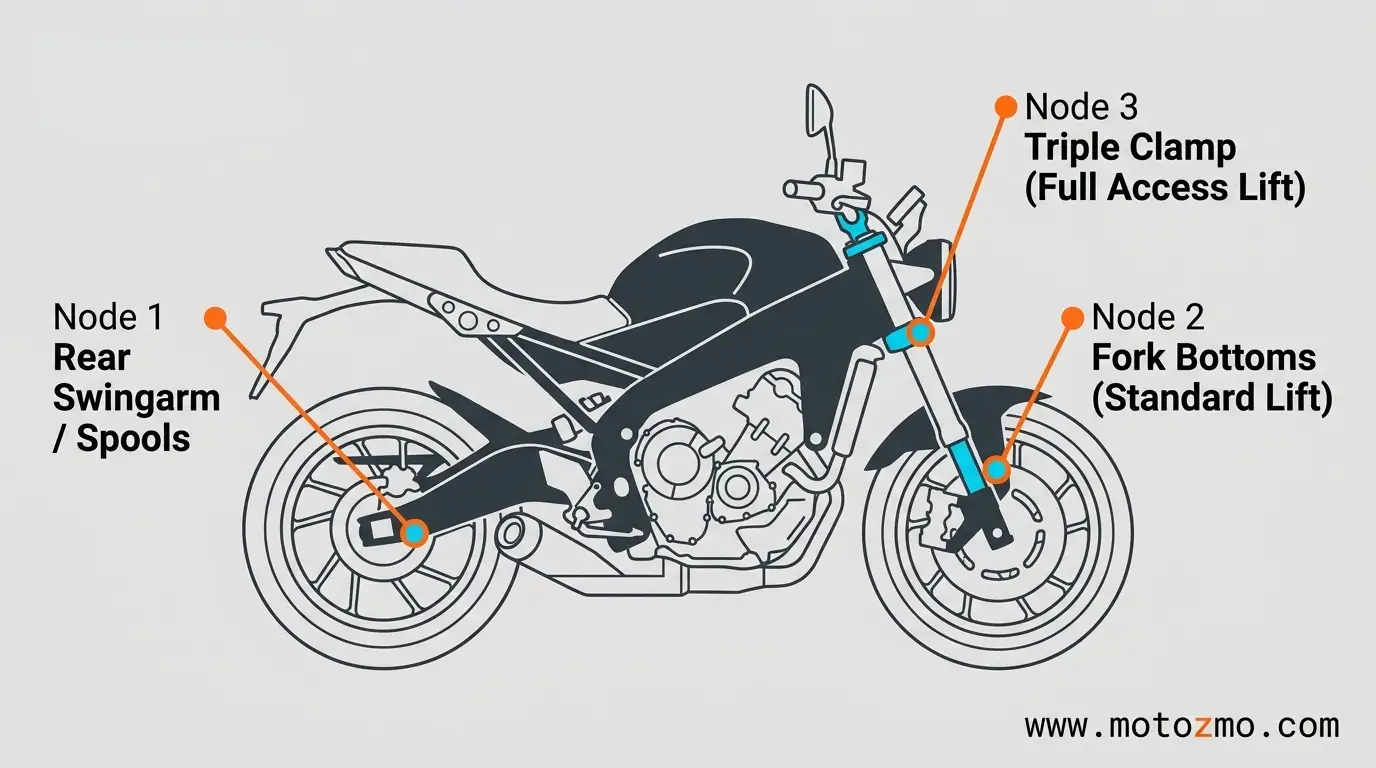
A triple-tree stand, sometimes called a steering-head stand, uses a pin that slots into the bottom triple clamp and lifts from the steering head instead. The fork style is simpler and lighter, but you can’t turn the handlebars or pull the forks while the bike sits on it. The triple-tree style costs more and takes a bit more skill to use, but it frees up the forks completely, so you can remove them for service if you need to.
Why Can’t You Use a Front Stand by Itself?
A front stand only contacts the bike at one point, near the steering head or the forks, with nothing holding the rear of the bike in place. Lift the front alone and there’s nothing stopping the bike from rolling backward off the stand.
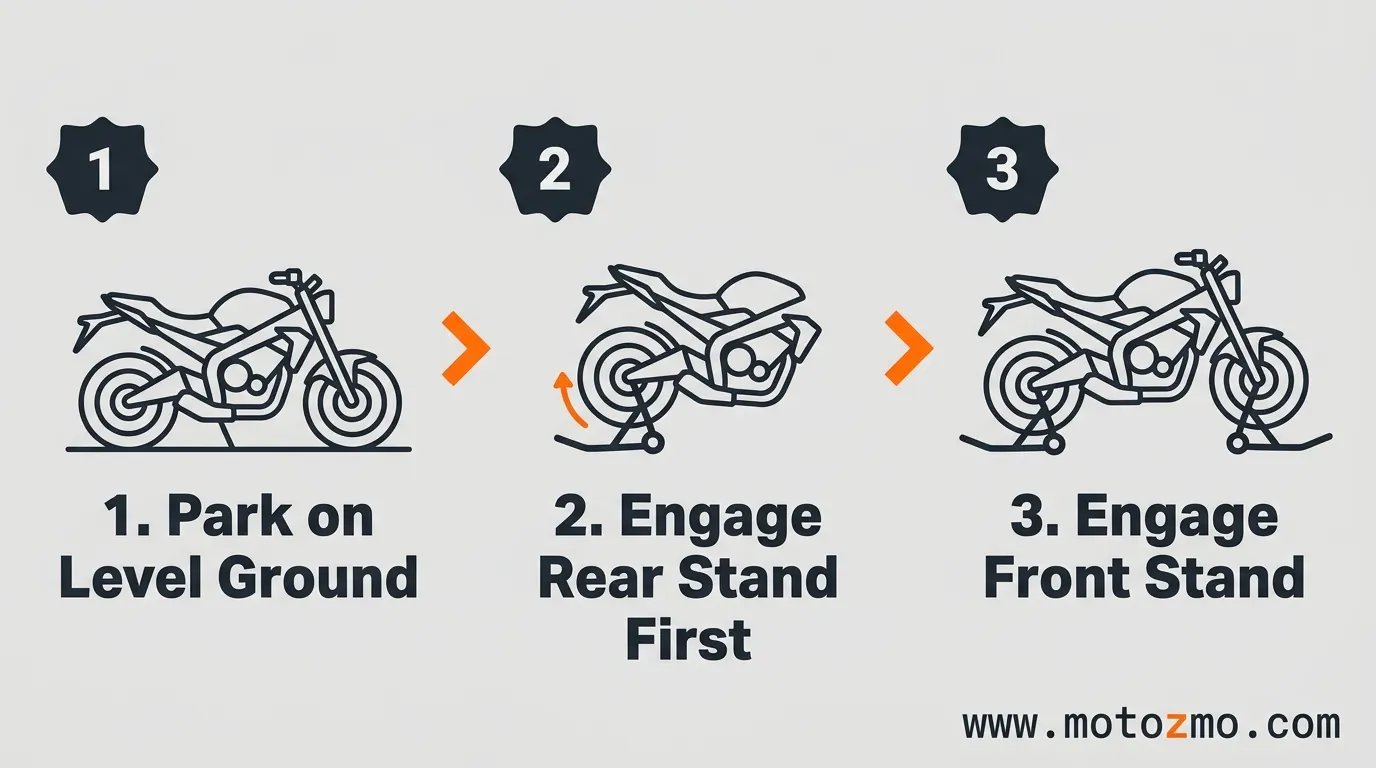
The correct order is always rear first: get the rear stand under the bike and locked in, and only then add the front stand for extra reach. If you ever see a front stand advertised as a standalone product, that’s a red flag, not a feature.
Which Jobs Need Which Stand?
| Job | Stand needed |
|---|---|
| Chain cleaning and lubing | Rear stand only |
| Rear tire change | Rear stand only |
| Rear brake pad or fluid work | Rear stand only |
| Oil change | Rear stand only (just needs the bike level) |
| Front tire change | Rear stand, then front stand |
| Front brake work | Rear stand, then front stand |
| Fork oil or seal service | Rear stand, then a triple-tree front stand |
| Full wash or detail | Rear stand, then front stand |
| Long-term or winter storage | Rear stand, then front stand, to keep both tires off the ground |
If most of your list sits in the left column, you don’t need a front stand yet. If you’re doing your own front-end work or storing the bike for months at a time, it earns its place.
Who Should Skip the Front Stand Entirely?
If you don’t service your own forks, don’t swap your own front tire, and don’t store the bike long enough to worry about flat spots, a front stand mostly sits in the corner of the garage.
Plenty of riders manage without one. On rider forums, it’s common to see people with just a rear stand improvise for the rare front-end job instead, propping the front with a jack and a block of wood under the frame rather than owning a dedicated stand they’d use twice a year. It works, but it’s worth knowing that’s the trade-off you’re making by skipping the purchase.
A rear stand doesn’t have that same opt-out. Chain maintenance alone, something almost every rider does themselves, makes it close to mandatory.
What If Your Bike Doesn’t Fit a Standard Stand?
Bikes with a single-sided swingarm, common on Ducati, Triumph, and BMW models, need a rear stand built for that swingarm style rather than a standard two-sided one. And once a bike gets heavy, a paddock stand of either kind starts to struggle. Most rear stands are built for sportbikes and nakeds under about 500 to 600 lbs; a full-size cruiser or touring bike needs a hydraulic lift jack instead.
We cover stands and lifts for both situations, along with real owner feedback on specific models, in our roundup of motorcycle lifts and paddock stands.
Putting It to Use
Once the bike is up, the actual work is usually chain maintenance, a tire change, or brake service, and most of that work involves torquing something back down correctly, which is what a torque wrench is for. If you’re setting the bike up for the season rather than a repair, see our guide to motorcycle winter storage for what else belongs on the checklist.
And if a stand is the only garage tool you’re missing, our breakdown of tools worth carrying and our roadside tool kit picks cover the rest of what a home mechanic actually needs.