
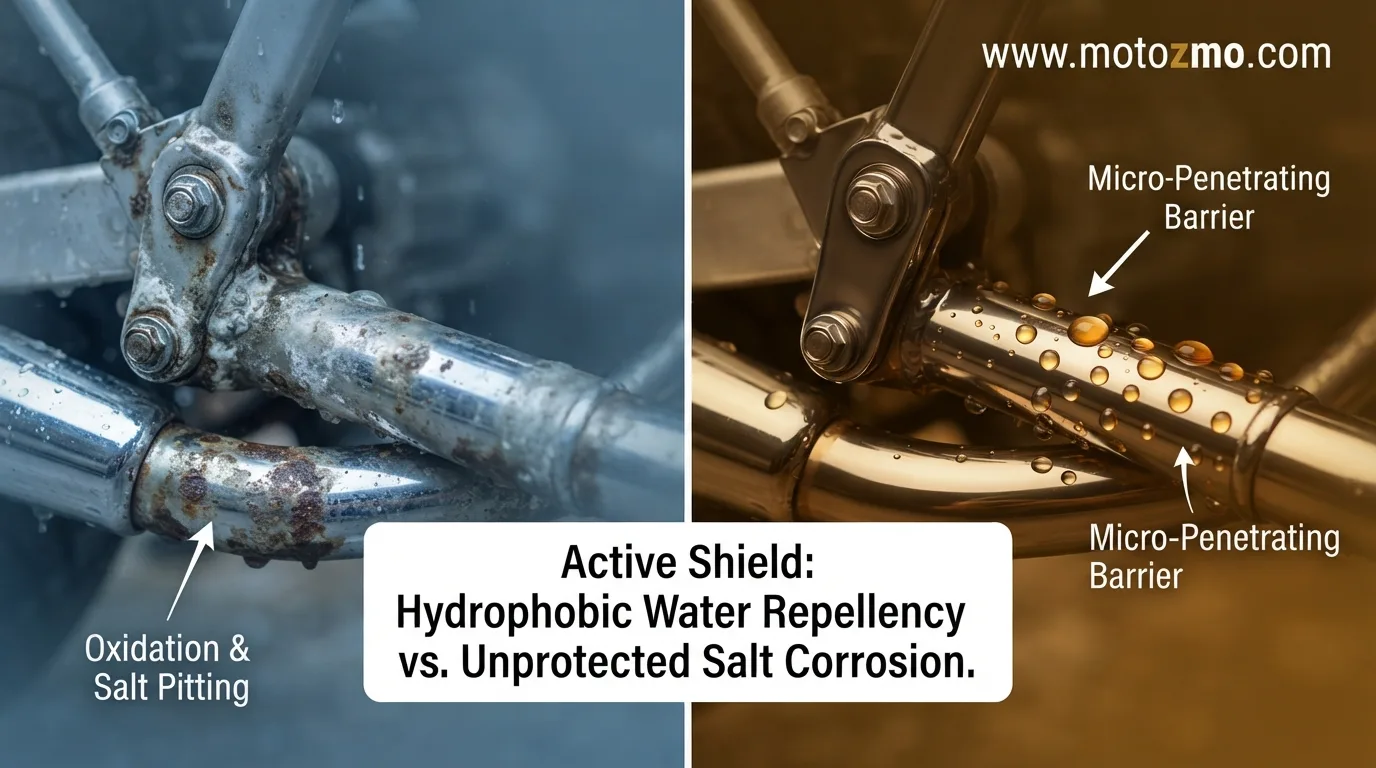
Your motorcycle’s brakes depend on two completely different clocks: your pads wear out with use and need a physical check, not a mileage guess, while your fluid degrades with time and moisture no matter how much you’ve actually ridden.
Skip either check and you’re gambling with the one system on your bike where “probably fine” isn’t good enough.
Below, you’ll learn exactly how to tell when your pads are genuinely worn, why your fluid needs changing on a schedule even if it looks fine, and what bleeding really does to tie the two together, so you’re never guessing on something this important.
Key Takeaways
- Two Maintenance Clocks: Pads wear out from physical use (inspect manually); fluid degrades with time and moisture (replace every 1–2 years).
- Inspect Pads Visually: Ignore mileage charts. Replace pads when the wear groove disappears (under 2mm of material) or if you hear squealing.
- Fluid Fails from Moisture: Glycol fluid absorbs water over time, lowering its boiling point and risking costly $1,000+ ABS repairs.
- Bleed to Purge Air: A spongy lever means trapped air or bad fluid; ABS-equipped bikes may need a scan tool to bleed the internal modulator completely.
Brake Maintenance at a Glance
| Watch For | When to Act | |
|---|---|---|
| Brake Pads | Squeal, vibration in the lever, longer stopping distance, a worn or vanished wear groove | By physical inspection; mileage alone isn’t reliable |
| Brake Fluid | A spongy or softer lever, fluid darkening toward the color of weak tea | Every 1–2 years, regardless of mileage |
Why Mileage Alone Won’t Tell You When Your Pads Need Replacing
Your riding style changes everything. Lean on your front brake hard through traffic and twisty roads, and your pads wear faster than a rider who mostly cruises the highway.
Your dominant brake matters too. Most riders rely more on the front, so front pads typically wear out well before the rears do. Two identical bikes can have completely different wear timelines depending on how they’re actually ridden.
That’s exactly why a mileage number on a maintenance chart is a rough starting point at best, never a substitute for actually looking at your pads. It’s the same reason checking your tires on a real schedule matters more than trusting a mileage interval alone. Wear that depends on how you ride, not just how far, always needs an eyes-on check.
The Real Signs Your Brake Pads Need Replacing
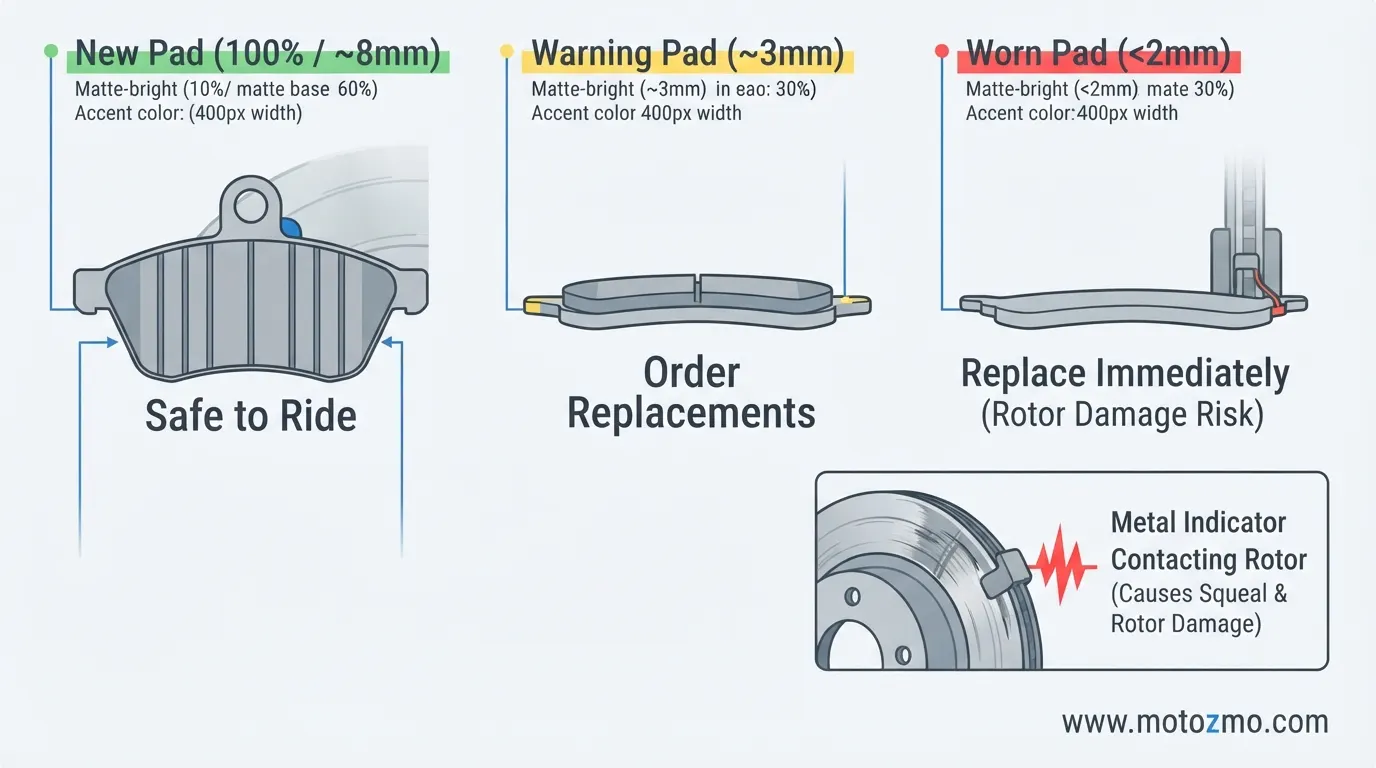
Watch for these five signs, and don’t wait for all of them to show up before you act:
- The wear groove is gone. Most pads have a molded groove cut into the friction material. Once it disappears, roughly 2mm of material or less remaining, replace them.
- A high-pitched squeal. That’s not your imagination. Many pads have a built-in metal wear tab designed to make exactly that noise once the friction material is nearly used up.
- Longer stopping distances. If your bike needs noticeably more room to stop, or your lever needs more pressure than it used to, your pads have lost bite.
- Vibration in the lever. Often it’s just uneven pad wear, but it can also point to a warped rotor; worth checking both at once.
- Visible glazing, cracking, or a dashboard warning light on bikes equipped with one.
RevZilla’s own mechanics walk through this exact check in their brake-pad guide, and they land on the same conclusion you’ll find here: a real inspection beats any mileage chart, every time.
Choosing a Replacement Pad
Once you know you need new pads, the material you pick matters almost as much as the timing.
Sintered, ceramic, and organic pads each behave differently under braking, so see which pad material actually fits your riding before you buy. Once you’ve settled on a material, the brake pads we’d trust narrows that down to specific picks.
Why Your Brake Fluid Needs Changing Even If It “Looks Fine”
Your brake fluid doesn’t fail because of mileage. It fails because of time. Most brake fluid — DOT 3, DOT 4, and DOT 5.1 — is glycol-based, and glycol is hygroscopic: it actively pulls moisture out of the air every single day your bike sits, ridden or not.
That moisture doesn’t just sit there quietly. It lowers your fluid’s boiling point and slowly corrodes the metal parts it touches from the inside.
This is exactly the kind of easy-to-forget, calendar-driven task worth folding into your regular maintenance routine rather than something you only think about once a problem shows up.
How Often to Actually Change Motorcycle Brake Fluid
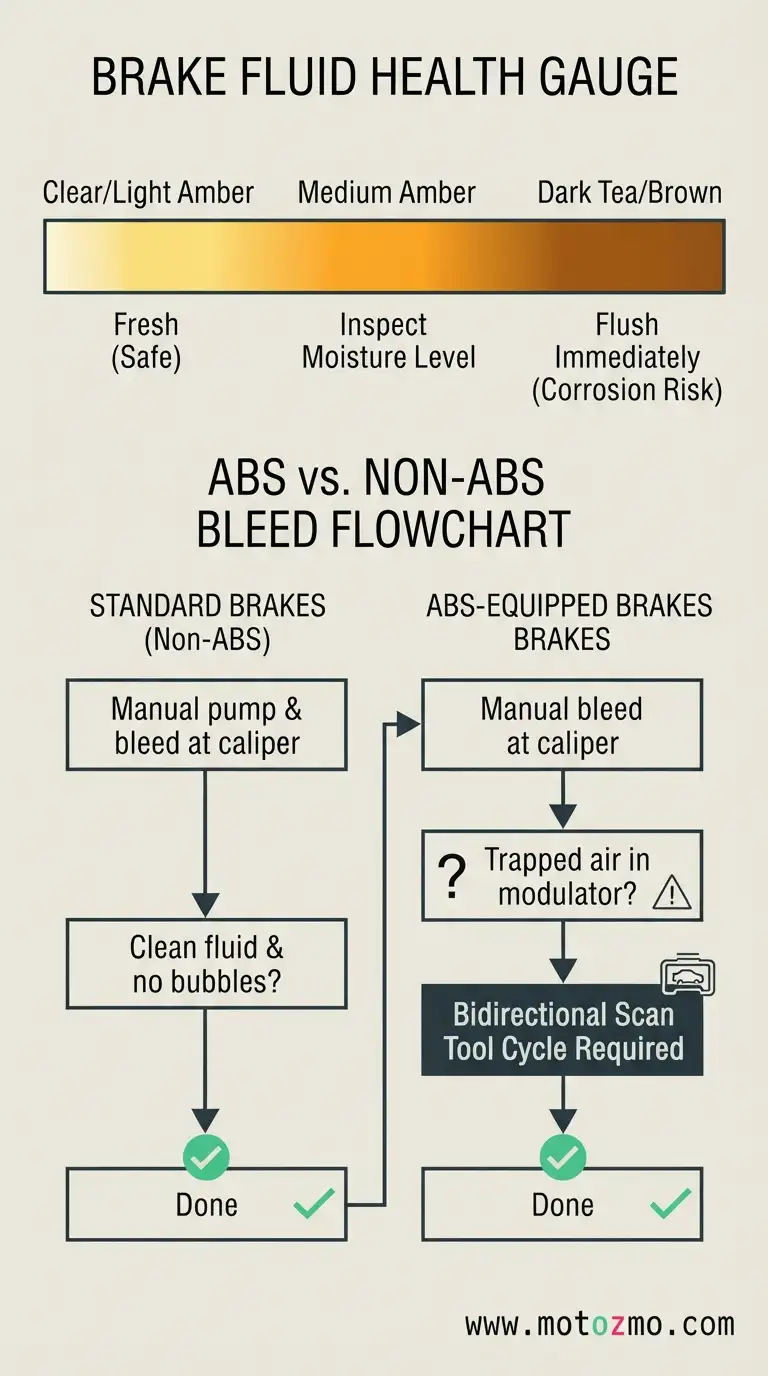
The industry-standard interval is every one to two years, regardless of mileage. A bike with 3,000 miles that’s spent 18 months sitting in a humid garage needs this just as much as one that’s been ridden hard for 15,000. Time and moisture are doing the damage here, not your odometer.
A couple of signs it’s overdue even within that window: your lever feels slightly spongy or less firm than it used to, or the fluid itself has darkened toward the color of weak tea when you check it through the reservoir window.
On ABS-equipped bikes specifically, the stakes go up. According to motogearspro’s mechanic’s breakdown of brake fluid intervals, fluid that’s gone too long between changes can get thick and contaminated enough to damage the ABS module’s small internal jets; they bluntly call it a “$1,000-plus mistake.” That’s not a scare tactic. It’s a genuinely different repair bill than a routine fluid change.
Choosing the Right Fluid
Not every DOT-rated fluid is interchangeable, and mixing the wrong type isn’t a minor mistake. Some fluid chemistries genuinely don’t mix safely.
Don’t guess here: see the fluid type that’s right for your bike before you pick one up.
What Bleeding Does (and When You Need It)
Bleeding pushes fresh fluid through your brake system while purging trapped air and the old, moisture-heavy fluid sitting in the lines. You’ll need it any time you flush fluid on schedule, and any time you’ve opened a line to replace pads or another component.
The basic idea: fresh fluid gets pushed in from the master cylinder while old fluid and air escape through the caliper’s bleed valve. You repeat that until only clean fluid, with no air bubbles, comes through. A spongy lever that isn’t explained by old fluid alone is very often trapped air: same root cause, same fix.
Here’s the part most basic bleeding guides skip entirely: if your bike has ABS, a simple caliper bleed doesn’t always reach all the air.
Modern ABS systems route fluid through an internal modulator, a block of tiny solenoid valves and a pump that stay sealed shut during normal riding. If air gets trapped inside that modulator (which can happen if the reservoir ran dry, or after certain component replacements), a standard two-person caliper bleed simply can’t reach it, because those internal passages aren’t open during a manual bleed.
Your lever can still feel spongy afterward even though you did everything right at the caliper. In that specific case, the actual fix is a bidirectional scan tool that can electronically cycle the ABS pump and valves through a proper bleed sequence, or a shop visit. Repeating the same manual bleed hoping it works differently the next time won’t fix it.
For a straightforward, non-ABS bleed, the bleeder kits that make this a one-person job are worth having in your garage.
Bottom Line
Your brakes really do run on two separate clocks, pads by inspection, fluid by calendar, and neither one cares what your odometer says. Check your pads physically instead of guessing by mileage, change your fluid every one to two years no matter how little you’ve ridden, and treat a spongy lever as a signal worth investigating, not ignoring. Get those two habits right, and bleeding your brakes becomes routine maintenance instead of a mystery.
FAQs
How do I know if my motorcycle’s brake pads need replacing without taking the wheel off?
Listen and feel first: a high-pitched squeal or a lever needing more pressure than usual are both reliable warning signs you can catch without removing anything.
Is it dangerous to keep riding on worn brake pads?
Yes. Worn pads mean longer stopping distances and, eventually, metal-on-metal contact with your rotor — a real safety risk and a far more expensive repair than a timely pad swap.
How often should motorcycle brake fluid actually be changed?
Every one to two years, regardless of mileage. Fluid degrades from moisture absorption over time, not from how far you’ve ridden.
Can I bleed my own motorcycle brakes at home?
For a standard, non-ABS system, yes — a basic bleeder kit and some patience will do it. ABS-equipped bikes sometimes need a scan tool or a shop visit instead.
What happens if I don’t change my brake fluid on schedule?
Moisture-contaminated fluid lowers your brakes’ boiling point and corrodes internal components — on ABS bikes specifically, it risks a genuinely expensive failure inside the module.