
Affiliate disclosure: This post may contain affiliate links. If you buy through a link on this page, MOTOZMO may earn a small commission at no extra cost to you. It helps keep our guides free. How we test and choose products.
Test your gas before you dump it. Most “old” gas in a bike tank is still usable, and the stuff that is not has one legal way out: a household hazardous waste drop-off.
I learned this the spring I skipped stabilizer and found four gallons of suspect fuel sitting in my tank. Every guide online says the same thing, take it to hazardous waste, but none tell you how to tell if it is actually bad, how to get it out of a motorcycle tank, or what to do when the nearest drop-off is an hour away.
This guide covers all three. If you want to skip this job entirely next year, read my notes on STA-BIL shelf life first. The bottle matters as much as the fuel.
Is Your Gas Actually Bad?
Gasoline does not flip from good to bad overnight. It fades. The light ends evaporate first, then oxidation turns what is left into gum and varnish.
Ethanol blends go first, because the alcohol pulls moisture out of the air and can separate into layers.
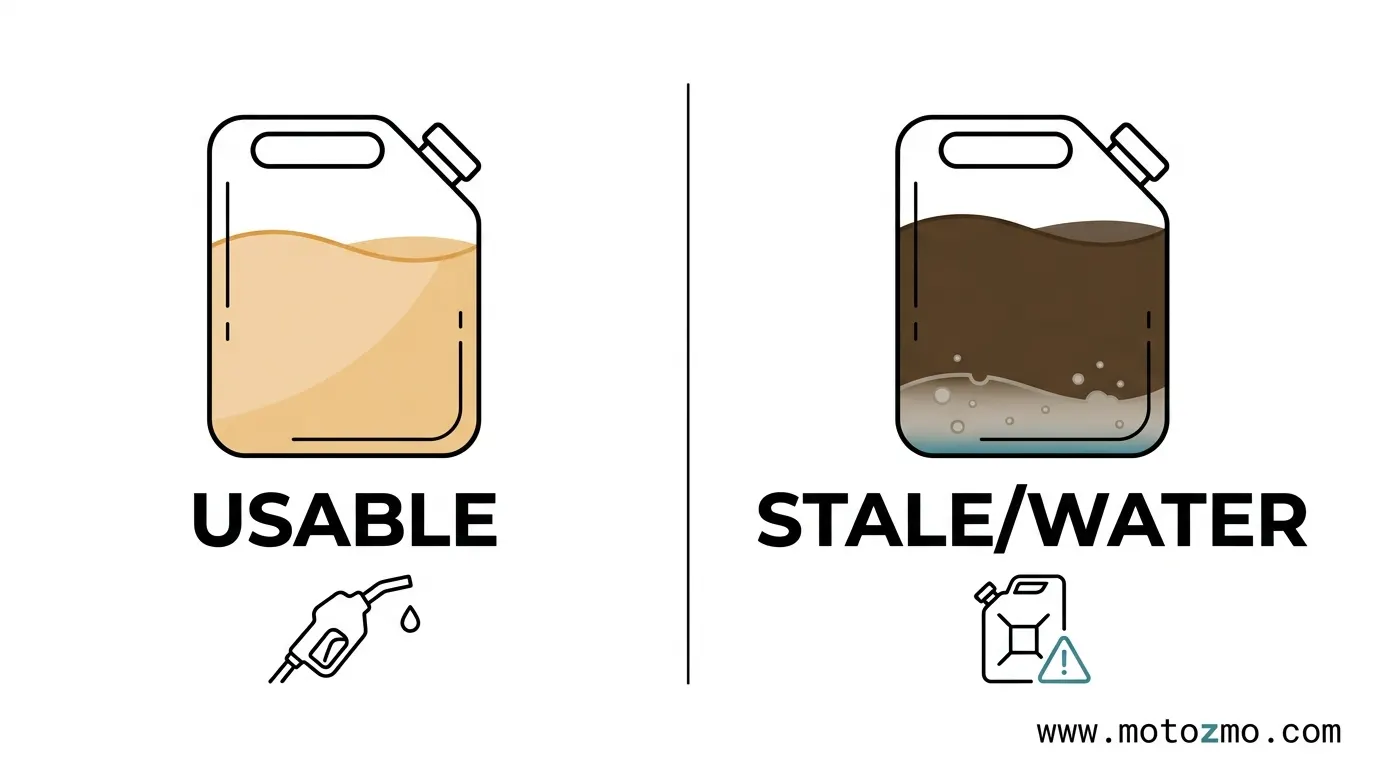
Before you drain anything, run this test. It takes two minutes and saves a lot of hauling.
| Check | Good sign | Bad sign |
|---|---|---|
| Age | Under 3 months, or treated with stabilizer | Over 6 months untreated, over a year even treated |
| Smell | Sharp chemical smell like the pump | Sour, stale, or varnish-like |
| Color | Clear to light amber | Dark amber, brown, or murky |
| Layers | One even liquid | Two layers or beads of water at the bottom |
One bad sign means caution. Two or more means the fuel is done for your bike. Sour smell plus dark color is the classic pair. Visible layers mean water got in, and no additive fixes that.
When in doubt, treat it as bad. A tank of questionable fuel is not worth a gummed-up fuel system.
Get It out of the Tank Safely
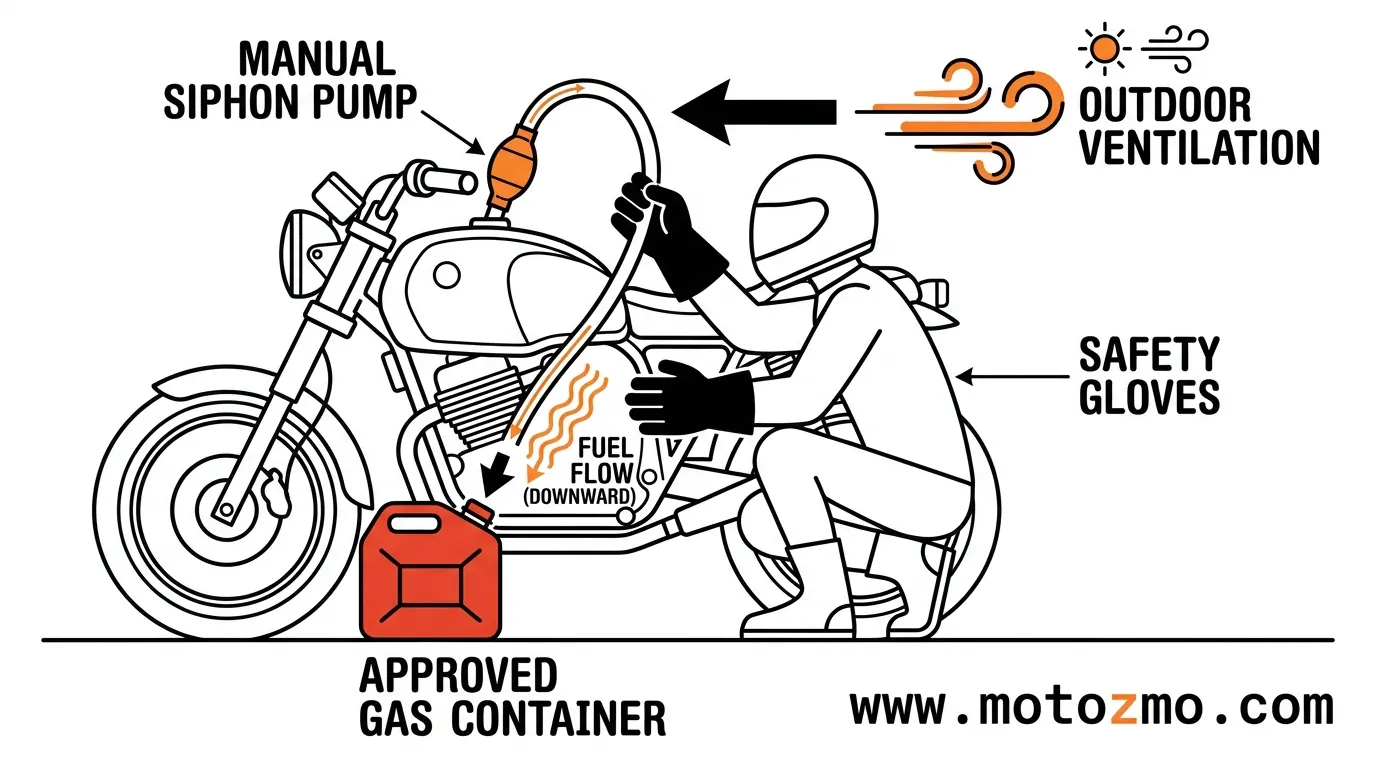
Work outside, away from anything that sparks. No garage with a water heater running, no smoking, no power tools nearby. Put on nitrile gloves and eye protection. Gasoline on skin is unpleasant; in eyes it is a real problem.
The easiest method is a manual siphon pump, the kind with a squeeze bulb, sold at any auto parts store for a few dollars. Feed the hose to the deepest part of the tank.
On most bikes that is the outer edge, and leaning the bike on its kickstand pools the fuel on one side so the hose reaches more of it. Pump into an approved gas can, never a milk jug or soda bottle, which can soften and leak.
If your bike has a petcock with a drain position, that works too. Pull the fuel line at the carburetor end, point it into the can, and open the petcock.
On fuel-injected bikes you can sometimes power the in-tank pump with a jumper to push fuel out through the disconnected line, but check your manual first.
Whatever method you use, do not forget the carburetor bowls. Each bowl holds a few ounces of the same old fuel, and the drain screw on the bottom of each bowl lets it out through the overflow tube.
If your carbs are already gummed, my carburetor maintenance guide walks through the cleanup.
One quirk riders hit: the reserve. A siphon hose often cannot reach the last half-gallon sloshing below the petcock pickup. The fix is to ride that remainder out on fresh fuel once the tank is refilled, or pull the tank and pour the last of it out. Do not stress about a few ounces. Diluted into a full tank of fresh gas, it burns fine.
Use It, Dilute It, or Dump It
Not all old gas needs a hazardous waste trip. Here is the decision I use, and it matches what county programs and mechanics actually say.
| Condition | Verdict |
|---|---|
| Passes the test above, under 6 months old | Use it. Top the tank with fresh fuel and ride. |
| Slightly off smell, still clear, no water | Dilute it. Up to 1 part old to 4 parts fresh, in a lawnmower or an old car, not your bike. |
| Sour or varnish smell, dark color, over a year old | Dispose of it. Household hazardous waste drop-off. |
| Water layers, sediment, or rust in the fuel | Dispose of it. Nothing saves this batch. |
You will see advice both ways on diluting. One camp says a 4-to-1 mix in a lawnmower is fine; the other says mixing just contaminates good fuel, like topping off spoiled milk. Both have a point.
My line: dilute only fuel that is mildly stale, only in simple low-compression engines, and never in the bike. Anything worse goes to hazardous waste.
The EPA is blunt about this class of waste: do not pour it down the drain, on the ground, or into storm sewers, and check your local solid waste office for collection options.
Where to Take Bad Gas
Your county household hazardous waste program is the main answer. Most run a permanent drop-off site, a seasonal collection event, or both. Search your county waste management site for “household hazardous waste” or punch your ZIP into Earth911, which lists nearby drop-offs.
Some auto repair shops and fire stations take small amounts too, but call first. Policies and volume limits vary, and a wasted trip with a can of gas in the trunk is nobody’s idea of fun.
Transport it right. Use a sealed, approved gas can, filled no more than 95 percent, labeled “old gasoline.” Strap it upright in the trunk or truck bed, never in the passenger compartment, and drive straight there.
As one auto writer put it, put it in the back of the pickup, never inside a car, unless you enjoy breathing vapors.
What Never to Do with Old Gas
- Pour it on the ground. One gallon can contaminate a huge volume of soil and groundwater, and many states fine you for it.
- Pour it down a drain, toilet, or storm sewer. It creates a fire risk in the pipes and poisons water treatment systems.
- Put it in the trash, even in a sealed jug. Trash trucks compact. Compacted gas cans leak, and the results are obvious.
- Burn it in a pile or fire pit. Gasoline vapors flash. People get hurt this way every year.
- Mix it with used motor oil to make one trip. Oil recyclers reject contaminated oil, so you ruin both disposals at once.
- Let small amounts “evaporate” in a pan. Some corners of the internet suggest this. The vapors are the hazard, and most local rules forbid it.
Stop This Happening Next Winter
Old gas is a storage failure, not bad luck. A dose of fuel stabilizer before layup keeps fuel fresh for a year or more, and a proper winter storage routine covers the tank, battery, and tires in one afternoon.
The full winter riding and storage guide ties it all together if you ride through the cold months too.
Bottom Line
Test it first. Siphon it out safely. Burn the mild stuff diluted in a mower, haul the bad stuff to hazardous waste, and never pour it anywhere. One afternoon of stabilizer next fall beats this whole job.
FAQs about Old Gasoline Disposal
My county only runs hazardous waste events twice a year. How do I store old gas until then?
Keep it in a sealed, approved gas can in a cool, ventilated spot away from the house, like a detached shed. Label it clearly and keep it out of reach of kids. Never store it in the living space or near a water heater or furnace.
Can I mix old gasoline with used motor oil and recycle them together?
No. Oil recyclers test for contamination and will reject the whole batch, so you lose both disposals. Keep gas and oil in separate labeled containers and take each to its own drop-off.