Affiliate disclosure: This post may contain affiliate links. If you buy through a link on this page, MOTOZMO may earn a small commission at no extra cost to you. It helps keep our guides free. How we test and choose products.
An opened bottle of STA-BIL lasts two years. An unopened bottle lasts up to five.
I found this out the hard way. I poured a three-year-old opened bottle into my tank one fall, and the carbs were gummed up by spring anyway. The stabilizer was dead and I never checked the bottle.
Most guides quote the two-year number and stop. That skips the questions that matter: how old is the bottle in your garage right now, how can you tell it went bad, and what size bottle should you buy when a bike sips stabilizer by the ounce? I answer all three below.
If you are new to stabilizer, read my fuel stabilizer picks for winter and the full winter storage routine first.
How Long Does STA-BIL Last Once Opened?
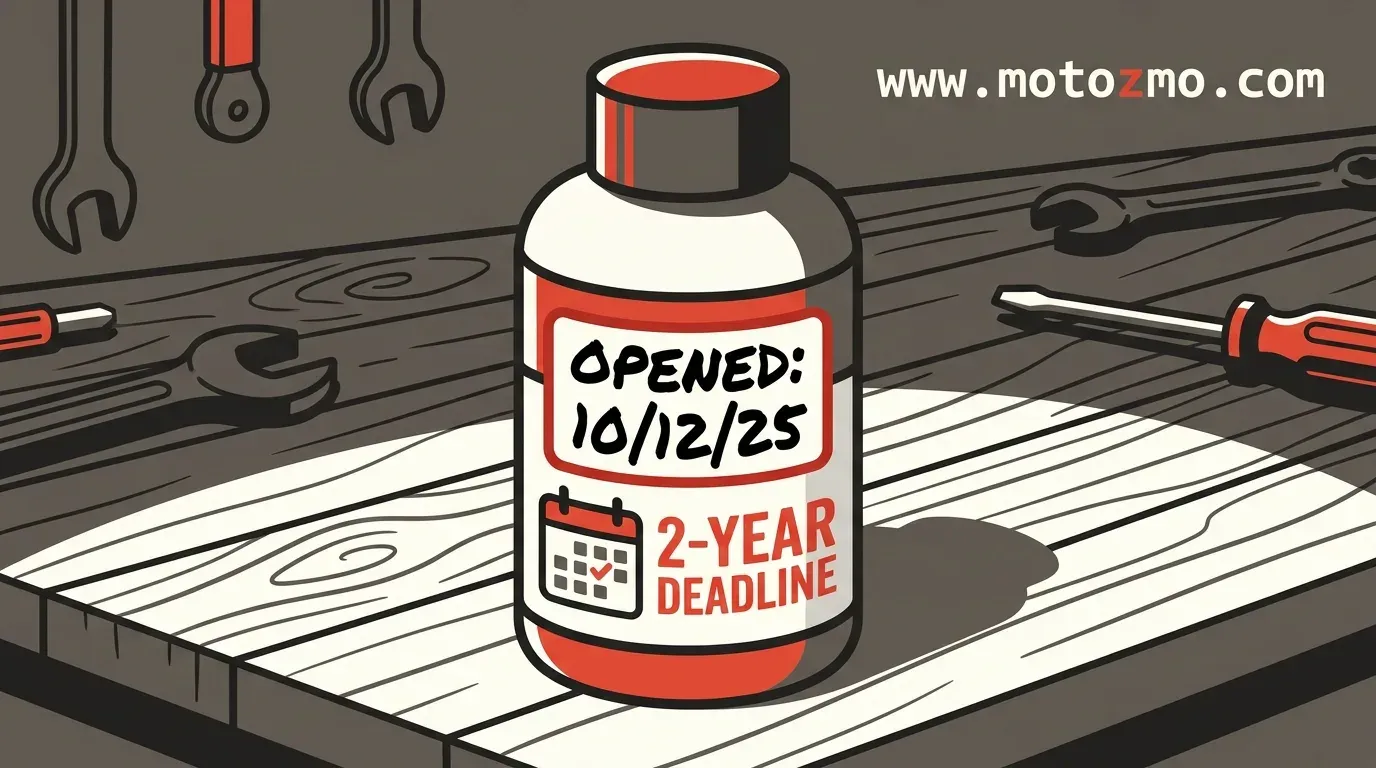
An opened bottle stays good for two years from the day you break the seal, as long as you cap it tight and keep it somewhere cool and dry. That number comes straight from Gold Eagle, the company that makes STA-BIL.
Heat and air wear the active ingredients down, so a bottle left half-open in a hot garage dies faster than two years.
An unopened bottle lasts up to five years from the day it was made. Same rule: cool, dry shelf, out of the sun.
| Bottle state | How long it lasts |
|---|---|
| Unopened | Up to 5 years from manufacture |
| Opened | 2 years from the day you open it |
Gold Eagle spells this out on their shelf life page, including one detail most riders miss: an old bottle will not harm anything. It just stops working as well.
How to Read the Date Code on the Bottle
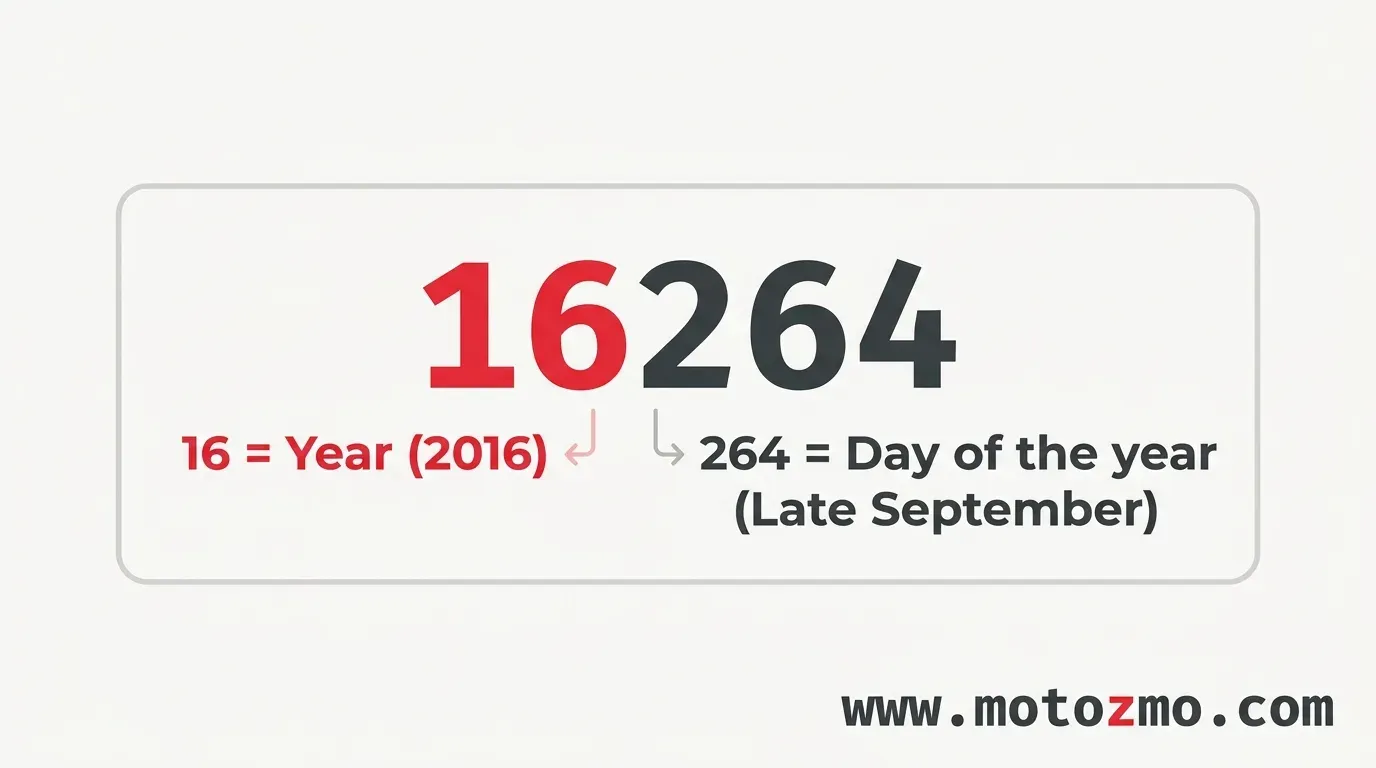
Every STA-BIL bottle carries a stamped code that tells you the exact day it was filled. It looks like this: 16264-87649-2233.
Read the first five digits. The first two are the year. The last three are the day of that year on the Julian calendar, where January 1 is day 001. So 16264 means the 264th day of 2016, which lands in late September.
Do one more thing the day you open a bottle: grab a marker and write the date on the back. The company tells riders to do this because nobody remembers when they cracked the seal two winters ago. That written date plus two years is your deadline.
Three Signs Your Bottle Is Dead
You do not need a lab to test a bottle. Three checks take ten seconds.
- Color. Fresh STA-BIL is a clear red. When it turns very dark red or brown, the active ingredients are gone. NAPA says the same in their fuel stabilizer guide: dark color means replace it.
- Flakes. The red dye breaks down into crystals as the liquid ages. If you see flakes or sediment floating in the bottle, it will not protect stored fuel anymore.
- Separation. If the liquid looks split into layers instead of one smooth fluid, do not trust it in the tank.
Which Bottle Size Should a Rider Buy?
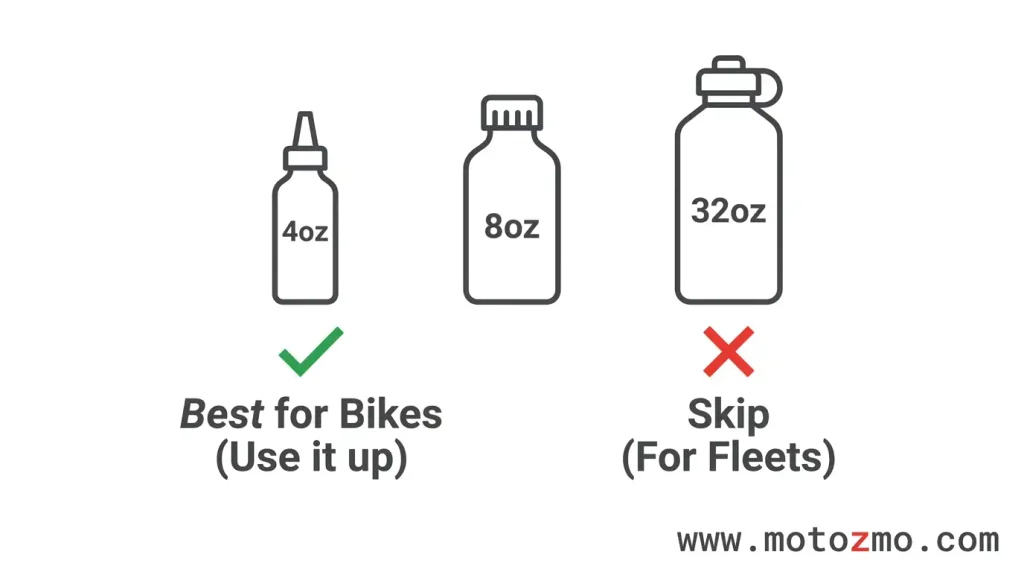
This is where most riders waste money. The dose for STA-BIL Storage is one ounce per 2.5 gallons of gas. A typical motorcycle tank holds 3 to 5 gallons, so one winter layup needs about 1 to 2 ounces.
An 8-ounce bottle treats 20 gallons. At 2 ounces per winter, that bottle covers ten winters on paper. But an opened bottle dies after two years. You will throw most of it away.
| Your winter dose | Bottle | What really happens |
|---|---|---|
| About 2 oz per winter | 4 oz | You finish it inside its 2-year opened life |
| About 2 oz per winter | 8 oz | It dies at year 2 with half the bottle left |
| About 2 oz per winter | 32 oz | Skip it. That jug is for a fleet, not one bike |
Buy the 4-ounce bottle. It costs a few dollars and you will use it up before it goes bad.
The big jugs make sense for mowers, boats, and generators, not one motorcycle. Pair it with the rest of your winter layup routine and the stabilizer stops being the weak link.
What to Do with an Old Bottle
An old bottle is not dangerous. Gold Eagle says it will not harm anything, it just loses strength. So you have two honest options.
First, use it as a fuel system cleaner. If the liquid is clear with no flakes or sediment, pour it into fresh gas and run it through the bike.
It still cleans a little even after it stops preserving fuel. That makes it a fine pre-season flush before your spring maintenance, and it beats paying for a carburetor cleaning later.
Second, dispose of it. STA-BIL is a petroleum distillate, so never pour it down a drain or toss it in the trash. Take it to a local hazardous waste collection point. Most towns and counties run them, often free of charge.
Bottom Line
Read the date code. Write the opened date on the bottle. Buy the small bottle. Toss it when it turns dark or grows flakes. Two minutes of bottle care beats a carb rebuild every time.
FAQs about STA-BIL Shelf Life
Will old STA-BIL damage my engine?
No. Gold Eagle says an old bottle will not harm anything; it just loses strength. Do not count on it to protect stored fuel, but it will not hurt the motor.
Can I still use STA-BIL after the two years?
Yes, as a fuel system cleaner, if the liquid is clear with no flakes or sediment. After two years opened it no longer preserves fuel for storage, so buy a fresh bottle for winter layup.