
Affiliate disclosure: This post may contain affiliate links. If you buy through a link on this page, MOTOZMO may earn a small commission at no extra cost to you. It helps keep our guides free. How we test and choose products.
Top Picks For You
STA-BIL Storage
The default red bottle on every auto parts shelf. Cheap, simple, and plenty for a normal winter in a dry garage. Just don’t expect it to clean anything.
Check Price
STA-BIL 360 Marine
The heavy-duty pick for damp climates and long storage. Stronger ethanol treatment plus detergents that clean injectors while the bike sits.
Check Price
Sea Foam Motor Treatment
Cleans as well as preserves: dissolves existing gum and varnish while it stabilizes. It’s my pick if the bike ran rough before you parked it.
Check Price
Star Tron Stabilizer
Concentrated enzyme formula built for ethanol defense. One small bottle treats a whole fleet, which makes it the practical pick for multi-bike garages.
Check Price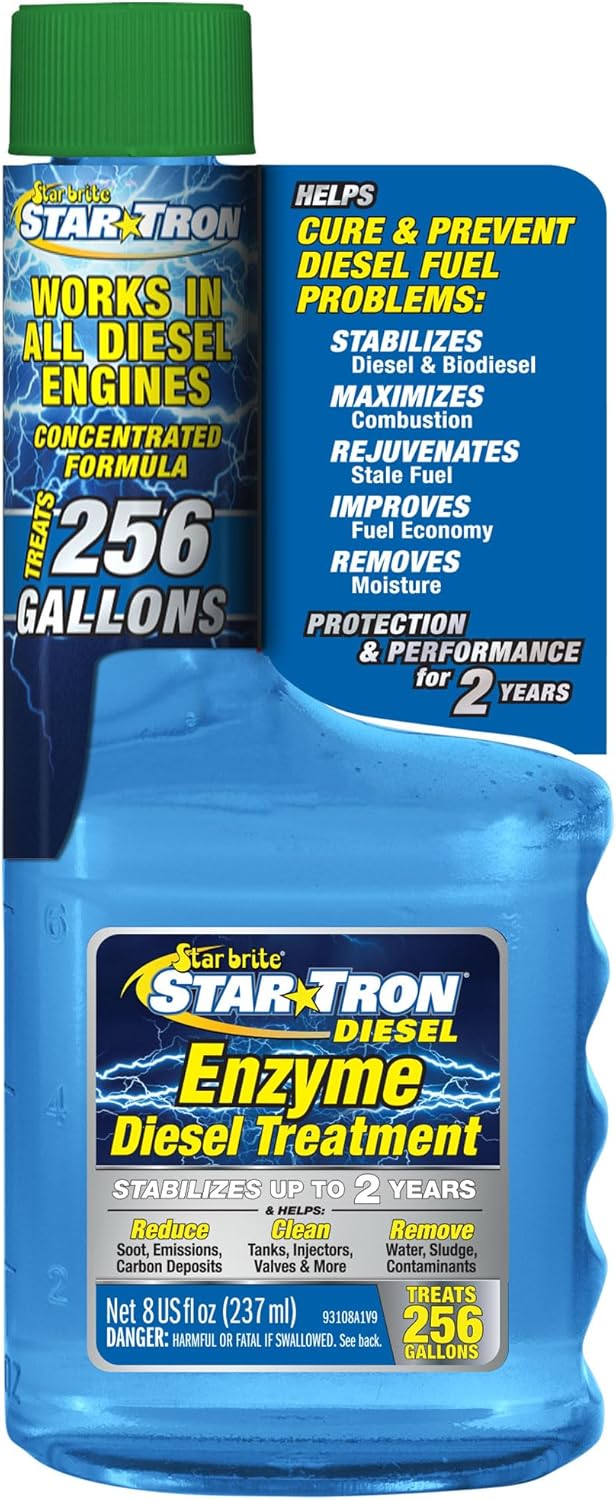
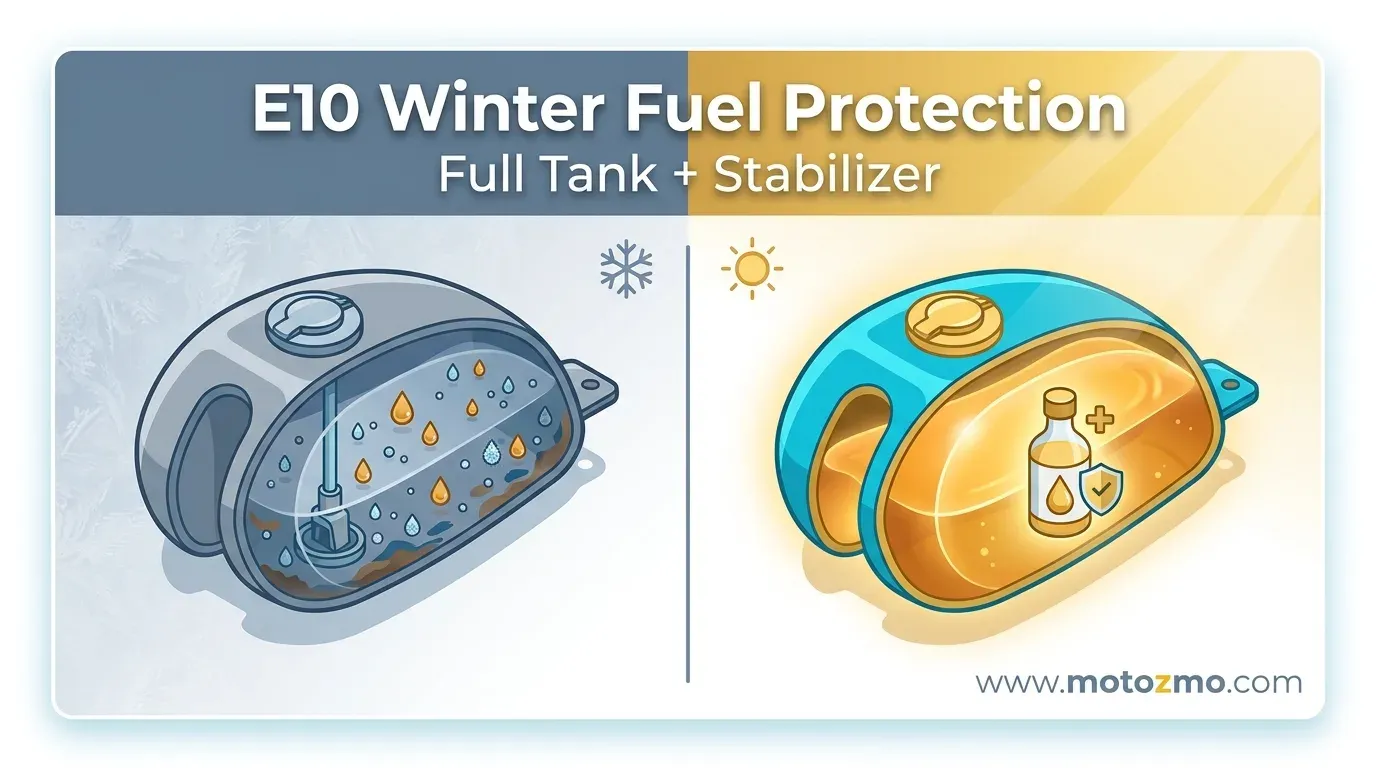
Yes, if your bike sits for more than a month, pour fuel stabilizer into a full tank and run the engine long enough to push it through the whole fuel system.
I skipped this once with a carbureted bike: parked it in October with half a tank of pump gas and no treatment. By March the pilot jets were gummed shut, and the shop charged me $180 to clean the carbs.
Most U.S. pump gas is E10, and ethanol pulls moisture from the air from day one. After about 30 days of sitting, moisture separates out and leftover fuel turns to varnish.
A stabilizer slows the chemistry down, and a full tank leaves less air space for condensation. Ten minutes of work in the fall beats a carb rebuild in the spring. Fuel is one part of winter prep. Our winter motorcycle storage guide covers battery, tires, and everything else.
Do You Need Stabilizer, or Is a Full Tank Enough?
A full tank helps because less air above the fuel means less moisture gets in. But it does not stop ethanol from doing what ethanol does. E10 starts losing its lightest, most flammable compounds within weeks, and once water separates out of the blend, no additive reverses it. That is the part riders miss: stabilizer prevents the damage; it cannot fix fuel that already turned.
The other myth is the monthly start-up. Some riders fire the bike up every few weeks all winter “just to be safe.”
A short idle never gets the engine hot enough to burn off the moisture it creates in the crankcase and exhaust, so the bike can end the winter with more internal corrosion than if you had left it alone. Unless the bike is going out for a real ride, leave it parked and treat the fuel instead.
Which Stabilizer Fits Your Storage Situation?
There is no single best bottle; there is a best bottle for your garage. Match the product to the situation:
| Your situation | What to look for |
|---|---|
| One bike, standard 3-6 month winter, dry garage | Any name-brand stabilizer at the standard dose works fine |
| Humid or coastal climate, or storage past 6 months | A stronger ethanol and corrosion formula, since your fuel fights more moisture |
| Bike already ran rough or sat too long before you treated it | A stabilizer that cleans as well as prevents |
| Multiple bikes, or other small engines like a mower or generator | A concentrated formula so one bottle stretches further |
| You want the simplest option every parts store carries | The category default — cheap, proven, no measuring headaches |
One thing stabilizer cannot do: protect the outside of the bike. Damp garage air and road salt attack chrome, fasteners, and bare metal all winter while the tank sits safe inside. That job belongs to an anti-corrosion spray. Think of the two as inside and outside protection for the same storage season.
The 4 Best Fuel Stabilizers for Winter Motorcycle Storage
STA-BIL Storage
- Ratio: 1 oz per 2.5 gal
- Keeps fuel fresh up to 24 months
- Best for: a standard 3–6 month winter in a dry garage
Key Features
- Economical base price point
- Protects fuel systems up to 2 full years
- Gentle standard dose ratio for routine care
This is the red bottle on every auto parts shelf in America, and for a normal winter it is all you need. It keeps treated fuel fresh up to two years and fights corrosion for a few dollars.
What it does not do is clean. If your bike already has gum in the jets, this will not dissolve it. That is fine, because prevention is the whole job here. Dose it right (about an ounce and a half for a typical 4-gallon tank) and it is the cheapest insurance in motorcycling.
STA-BIL 360 Marine
- Ratio: 1 oz per 10 gal
- Stabilizes up to 12 months
- Best for: humid or coastal climates, or storage past 6 months
Key Features
- Enhanced PEA active detergent blend
- Vapor-phase corrosion inhibitors
- Specialized high-humidity protection
The marine version adds vapor-phase corrosion inhibitors: protection for the metal above the fuel line, not just below it, plus stronger detergents that clean injectors while the bike sits. It costs more per ounce, but the dose is smaller: one ounce treats ten gallons for storage, so the bottle lasts.
If your garage stays damp all winter or the bike sleeps longer than six months, this is the upgrade that earns its price. For a heated garage and a normal winter, save your money and buy the red bottle.
Sea Foam Motor Treatment
- Ratio: 1 oz per gal
- Stabilizes up to 2 years
- Best for: bikes that ran rough before you parked them
Key Features
- Multi-purpose 3-in-1 formula
- Integrated upper-cylinder lubrication
- Active carbon/gum dissolution
Sea Foam is the only pick here that cleans as well as preserves. If your bike sat too long last fall or idled rough on the last ride of the season, this dissolves existing gum and varnish while it stabilizes, plus it lubricates upper cylinders during the long sleep.
The trade-off is the dose: one ounce per gallon means a 4-gallon tank wants four full ounces, roughly triple the STA-BIL dose, so the bottle goes faster.
Sea Foam’s winter-storage guidance confirms the 1-ounce-per-gallon storage dose and notes you cannot really overdo it short of absurd ratios. It is not ethanol-specific the way STA-BIL 360 or Star Tron are, so pair it with ethanol-free fuel if a station near you sells it.
Star Tron Stabilizer
- Ratio: 1 oz per 5 gal (storage formula; 16 oz treats 80 gal)
- Keeps fuel fresh up to 2 years
- Best for: multi-bike garages and maximum ethanol defense per ounce
Key Features
- Enzyme-based phase-separation prevention
- Motorcycle-specific formula engineering
- Coastal climate specialization
Star Tron’s enzyme formula breaks water into sub-micron droplets that burn off harmlessly instead of separating out. That is the phase-separation defense, and it is why coastal riders swear by it. A 16-ounce bottle treats 80 gallons, so one bottle covers a whole fleet of bikes plus the mower and generator.
The catch: Star Tron sells several formulas with different ratios, and the storage-line bottle doses differently from the everyday treatment. Read the label. Grabbing the wrong bottle and underdosing is the most common way this product “fails.”
You do not need a giant bottle unless you are treating several machines. Small bottles sized for one or two tanks cost a few dollars and skip the question of whether an opened bottle is still good next winter.
How Much Stabilizer Does a Motorcycle Tank Need?
Most dosing advice assumes a 15-gallon car tank. Your bike holds three to five. That mismatch is where riders go wrong: eyeballing a glug from the bottle into a small tank.
Do the actual math. STA-BIL Storage doses 1 ounce per 2.5 gallons, so a 4-gallon tank needs about 1.6 ounces. Sea Foam wants 1 ounce per gallon: four full ounces for that same tank.
Star Tron’s storage formula needs less than an ounce for most bikes. Measure with the bottle’s built-in neck. Most stabilizer bottles have measurement marks for exactly this reason.
Two rules from the manufacturers themselves: pour the stabilizer in before the fuel so it mixes, and treat only fresh fuel. Gold Eagle’s usage directions also confirm what forum debates argue about endlessly: going a bit over the dose is harmless (up to four times the label rate), but underdosing leaves fuel unprotected. When in doubt, round up, not down.
One more thing: an opened bottle does not last forever. Most formulas stay good about two years after opening, and liquid that has turned dark has lost strength. Here is how to tell if your STA-BIL is still good before you pour.
How Do You Get Stabilizer Through the Whole Fuel System?
Stabilizer in the tank protects the tank. The carburetor bowls, fuel rail, and injector tips need it too, and they only get it if you run the engine. Sequence matters:
- Run the tank down to a quarter or less before you start. This gives fresh fuel and stabilizer more room to mix.
- Check your tank capacity in the owner’s manual and measure stabilizer for that volume, not a guess.
- Pour stabilizer into the tank first, before adding fuel. Stabilizer poured onto a full tank sits on top and never mixes well; fuel pumps draw from the bottom, so untreated fuel would reach the engine first.
- Fill to about 95% capacity with fresh fuel from a station with decent turnover. Ethanol-free fuel, where you can find it, stores noticeably better than E10 even though it costs a dollar or two more per gallon.
- Run the engine at least 5–10 minutes, or ride a couple of miles. Idling alone often does not move enough fuel through the system; the stabilizer needs to reach the carburetor bowls or the fuel rail and injectors. It does no good sitting in the tank.
Full Tank or Drained Float Bowls?
Carbureted bikes add one more decision: leave the float bowls full of treated fuel, or drain them dry.
| Storage length | Recommendation |
|---|---|
| Under 6 months | Leave bowls full of treated fuel — simpler, and it keeps carburetor gaskets from drying out |
| 6+ months, or a second winter in a row | Drain the float bowls. Turn the petcock off, run the engine until it dies, then open the drain screws into a container |
| Fuel-injected bikes | No bowls to worry about — the tank-and-run-it-through method above covers the whole system |
Mistakes That Waste the Whole Effort
| Mistake | Why it backfires |
|---|---|
| Adding stabilizer after filling the tank | It never mixes in well, and untreated fuel reaches the engine first |
| Skipping the run-the-engine step | Stabilizer sitting in the tank never reaches the carburetor or injectors |
| Storing with a half-empty tank | More air space means more room for condensation during temperature swings |
| Starting the bike briefly every week or two “just to be safe” | A short cold start never gets hot enough to burn off the moisture it makes, so the engine and exhaust can end the winter wetter than if you had left the bike alone |
| Using stabilizer that has been open for years | Most formulas stay good about 2 years after opening; liquid that has turned dark red or brown has lost strength |
That fourth one surprises a lot of riders, since starting it up once in a while used to be standard advice. If you want the battery maintained over winter, a tender handles that without the engine ever turning over.
See why motorcycle batteries die over winter for that side of storage.
How Long Does Stabilized Fuel Last?
Manufacturer claims cluster around 12–24 months, but storage conditions matter more than the label. A full, sealed tank held at a steady 40–60°F can genuinely make it 12–18 months.
A garage that swings from 20°F winter nights to 90°F summer afternoons pushes that closer to 8–12 months, since each cycle pulls in a little more condensation.
Past a year of storage, it is simpler to drain and refill with fresh treated fuel in spring than to trust an 18-month-old tank, no matter what the bottle promises.
Waking the Bike up in Spring
| Storage length | What to do |
|---|---|
| Under 4 months | Start it and ride normally. Treated fuel is still good; watch for hesitation or rough idle as your only warning sign |
| 4–6 months | Start it, ride 5–10 minutes to confirm it runs clean, then drain and refuel with fresh gas |
| Over 6 months | Drain the tank before starting. On carbureted bikes, open the float bowl drains too, then run a full tank of fresh fuel with a system cleaner before your first real ride |
Before that first ride, check whether your tires are still roadworthy. Tires lose air and can flat-spot over a long sit. Our spring maintenance checklist covers the rest of the wake-up routine beyond fuel.
Signs the Stabilizer Didn’t Do Its Job
Spring arrives and something feels off. Here is what points back to the fuel system specifically:
- Won’t start, or cranks a long time first. Varnish is partly blocking fuel delivery
- Starts, then dies within seconds. The float bowl fuel burned off, but the lines or jets downstream are still clogged
- Rough idle or hesitation off idle. Jets are partly, not fully, blocked
- Sour smell or visibly separated fuel. The stabilizer could not keep up, usually from an underdosed tank or a garage with big temperature swings
Do not pour more stabilizer into fuel that already went bad. It prevents breakdown but does not reverse it. Drain the tank, refuel fresh, and if the idle circuit still sticks after that, our carburetor maintenance guide walks through cleaning from there.
Fuel is one winter job. How to store a motorcycle for winter walks through the full checklist: battery, tires, cover, and everything in between.