Affiliate disclosure: This post may contain affiliate links. If you buy through a link on this page, MOTOZMO may earn a small commission at no extra cost to you. It helps keep our guides free. How we test and choose products.
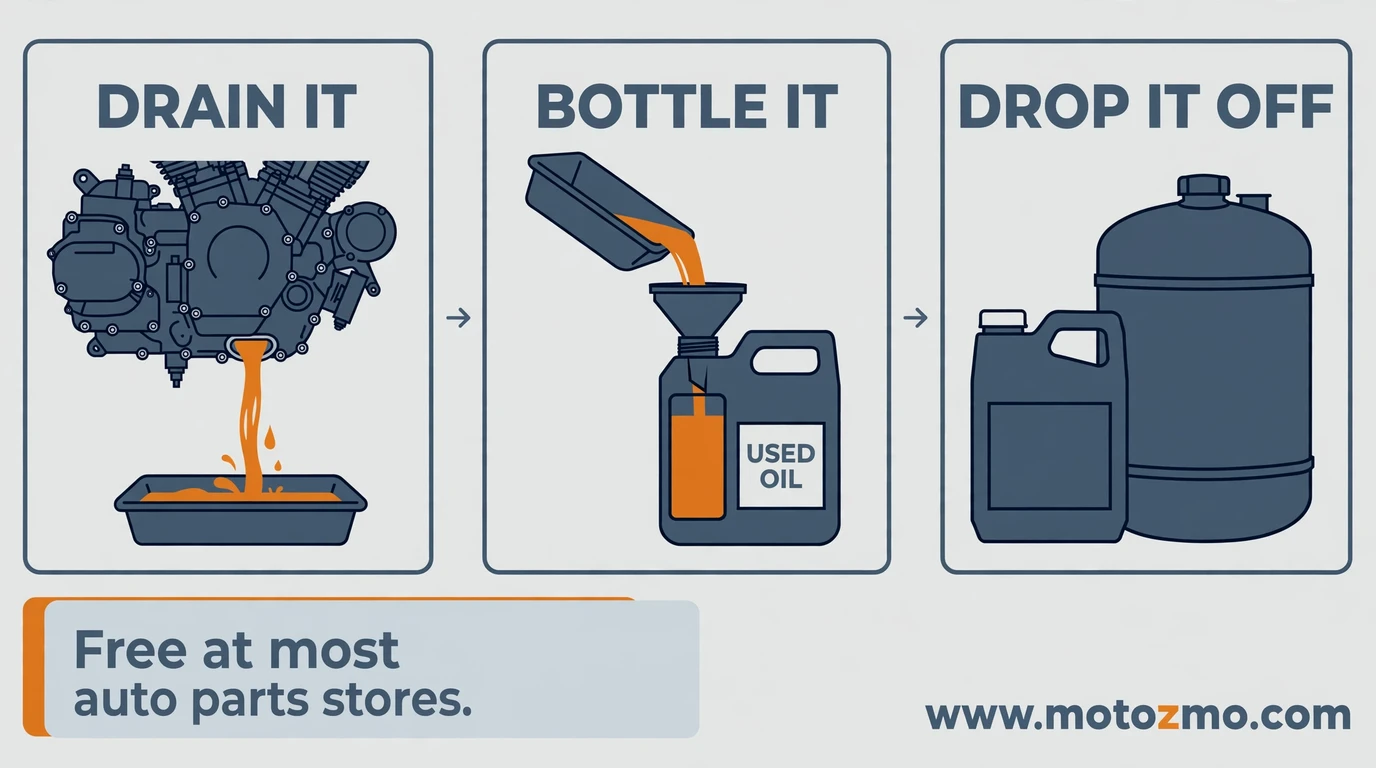
Put it in a sealed jug and take it to an auto parts store. It is free. That is the whole job once you finish your DIY oil change. A bike change leaves you with three or four quarts of dirty oil and a dripping filter.
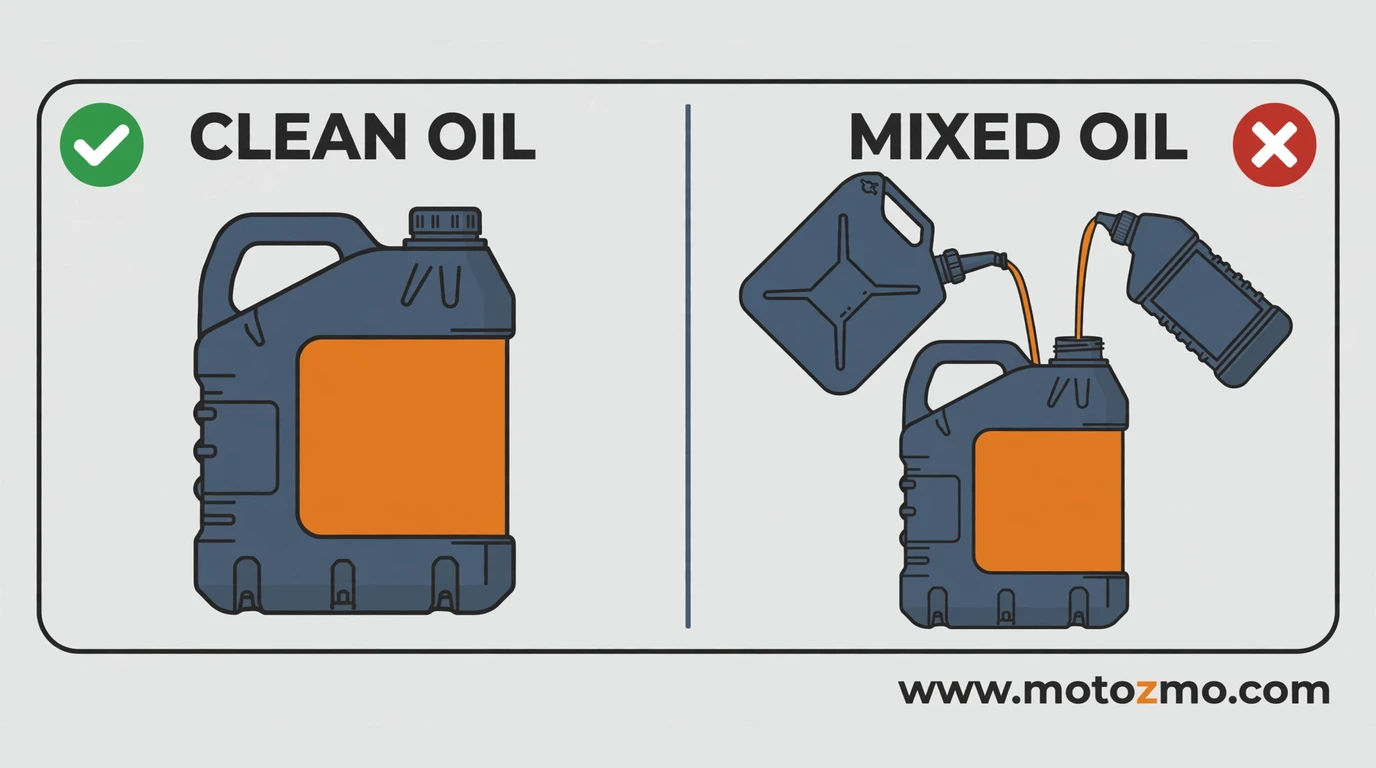
Used motor oil is one of the most recyclable waste streams you will ever produce, and one gallon of it can contaminate a million gallons of fresh water. The catch: it has to stay clean oil. Mix it with gasoline, coolant, or solvent and no collection center can take it.
This guide walks the rider workflow, drain it, bottle it, bag the filter, find a free drop-off, and what never to do with the stuff.
What counts as used oil, and what ruins it
Motor oil does not wear out, it just gets dirty. That is the EPA’s way of putting it, and it is why used oil is worth recycling instead of dumping. The EPA’s list of what counts as used oil covers engine oil from motorcycles, cars, trucks, boats, and farm equipment, plus transmission fluid and hydraulic oil.
One rule decides whether a collection center will accept your jug: nothing mixed in. Gasoline, antifreeze, solvents, brake cleaner, and even water make used oil unrecyclable, and most centers test for contamination before they take it.
A jug with mixed fluids becomes hazardous waste, which costs money to get rid of instead of nothing. If you also drained old fuel from your tank, it needs its disposal route, never the same container as your oil.
Get It from the Drain Pan into a Sealed Jug
Drain the oil into a pan, then pour it straight into a clean jug with a tight cap. The best jugs are the empty bottles from the fresh oil you just poured in, they already have screw caps and a shape made for pouring.
Any clean plastic container with a lid that screws shut works. Wipe the outside of the jug so it is not dripping, and label it “Used Oil” with a marker. If you change your oil on schedule, this becomes a twice-a-year errand, not a garage chore.
Never use a jug that held antifreeze, cleaner, or any other chemical. Residue in the container contaminates the oil the same way pouring coolant straight in would, and the collection center cannot use it. When in doubt about a container’s history, do not use it.
Drain the Filter and Bag It
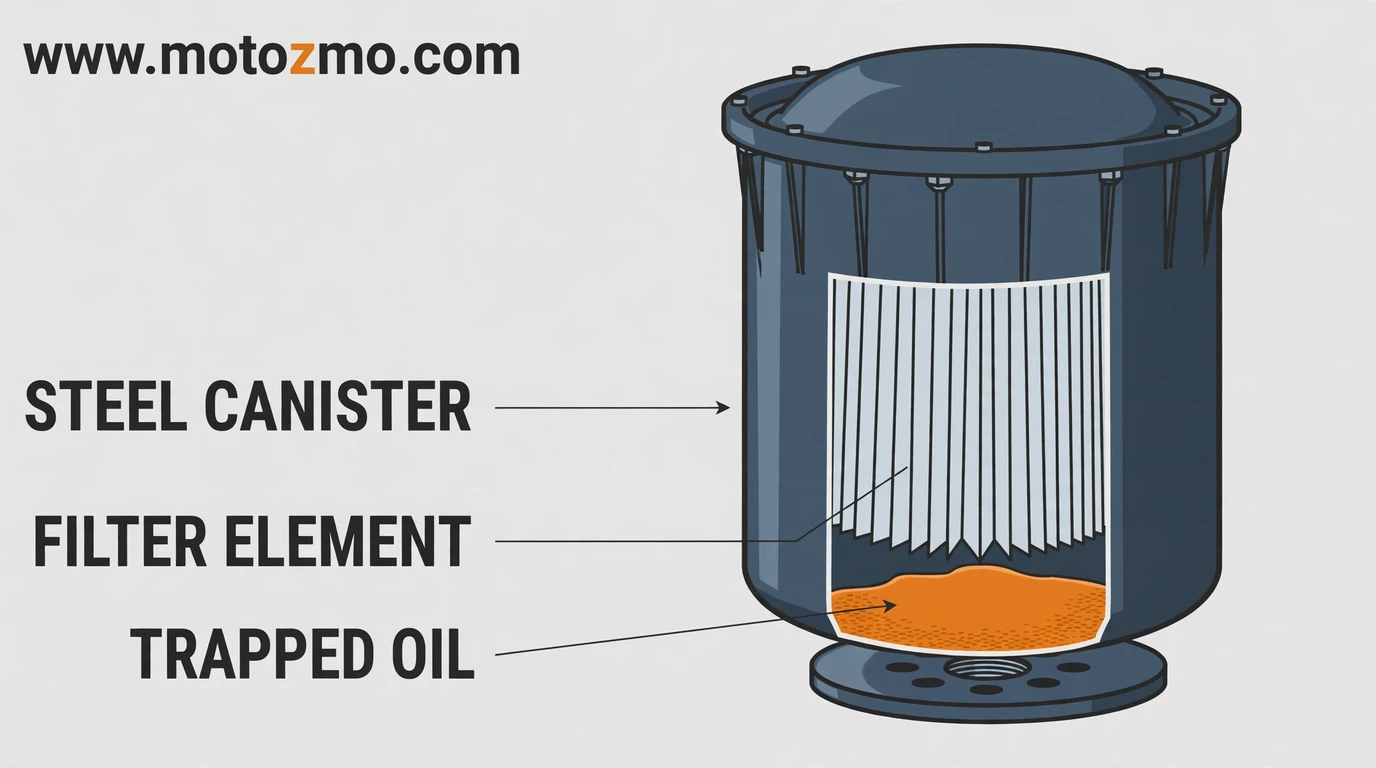
The filter is not trash. A used oil filter still holds several ounces of oil, and the steel in the canister is recyclable. Punch a hole in the dome end, turn the filter upside down over your drain pan, and let it drain for a few hours or overnight. Then seal it in a zip-style bag so it does not leak in your trunk.
Most collection centers that take used oil also take drained filters, so this rides along on the same trip. Many states and counties ban oil filters from landfills outright, because the oil left inside them seeps into the ground. Bag it, bring it, done.
Where to Take It
Riders have four easy options. Pick whichever one fits your situation.
| Drop-off option | Cost | Limits | Takes filters? |
|---|---|---|---|
| Auto parts store (AutoZone, Advance Auto Parts, O’Reilly) | Free | Often around 5 gallons per visit, call ahead | Most do, call ahead |
| Municipal hazardous waste site | Free | Varies, some ask for ID or proof of residence | Usually |
| Quick-lube or repair shop | Free or a small fee | Ask ahead, not all accept walk-ins | Sometimes |
| Community collection event | Free | Seasonal, check your city waste calendar | Often |
For most riders, the auto parts store is the move. Chains like AutoZone, Advance Auto Parts, and O’Reilly take used oil free at most locations, and Advance’s oil recycling page spells out what they need from you: collect it clean, bring it in a proper container.
Call your local store first to confirm the daily limit and whether they take filters. If you are not near a store, type your ZIP into Earth911 to find the closest certified collection center or hazardous waste event.
What Never to Do with Used Oil
- Never pour it on the ground, in a ditch, or down a storm drain. It is illegal, and a single gallon can contaminate a million gallons of fresh water.
- Never put it in the household trash or a dumpster. The jug will split and the oil will leak out in the truck or the landfill.
- Never mix it with gasoline, coolant, or solvents. Mixed oil cannot be recycled, and you turn a free drop-off into a hazardous-waste problem.
- Never store it in an open or cracked container. Oil creeps out of bad seals, stains everything it touches, and is a pain to clean up.
- Never burn it in a barrel or a fire pit. Burning oil throws toxic smoke and leaves heavy metals in the ash.
What Happens after You Drop It off
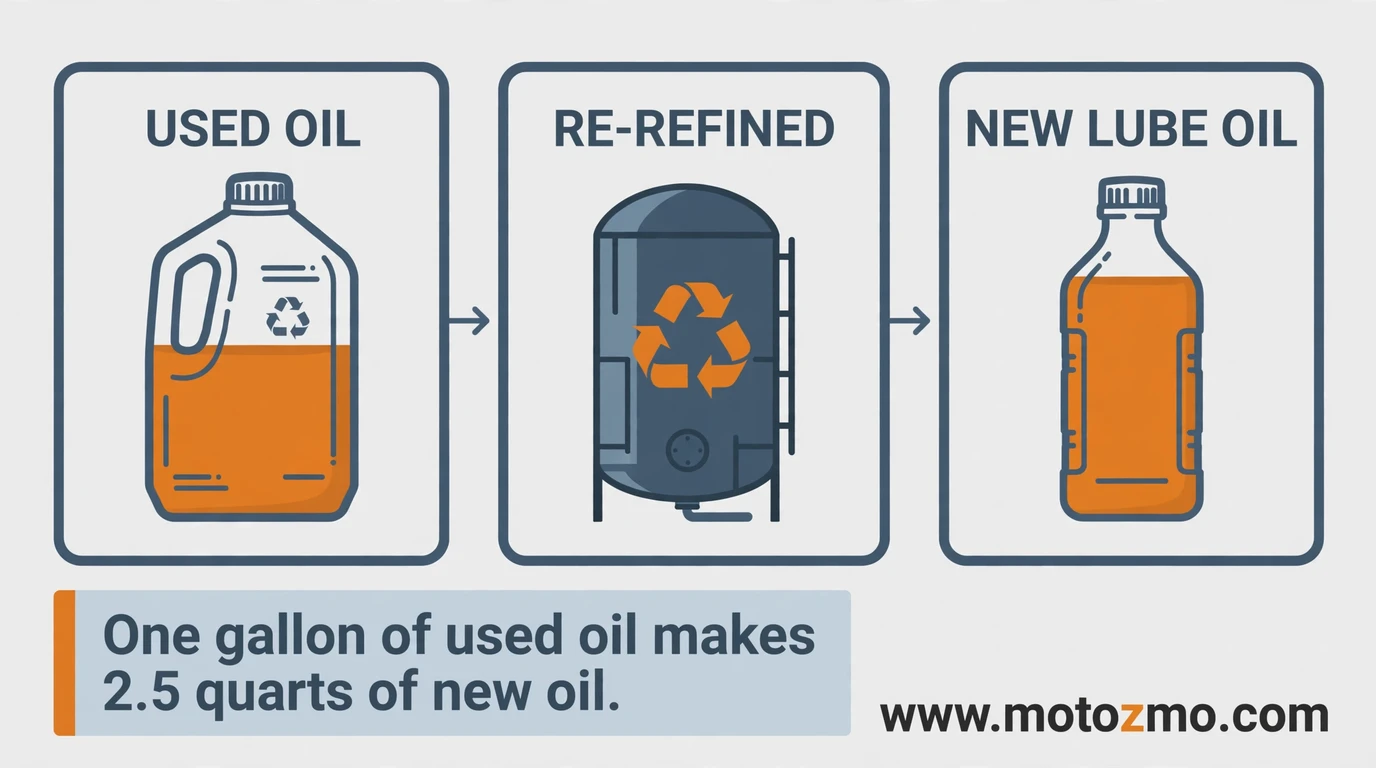
Your oil gets a second life. Most of it goes to re-refiners, who clean it back into usable lubricating oil.
One gallon of used oil produces about 2.5 quarts of re-refined lube oil, the same yield as 42 gallons of crude oil, and it takes far less energy to make. The rest becomes fuel for industrial burners or feedstock for the petroleum industry.
The steel from your filter gets melted down into construction materials, car parts, and appliances. That is the payoff for a ten-minute drop-off: nothing wasted, nothing in the water.
Frequently Asked Questions
How long can I store used oil before dropping it off?
There is no legal clock on it in most places. Keep it sealed, labeled, and out of the sun, and drop it off within a few months. The longer it sits, the more likely the jug gets knocked over or contaminated, so do not treat it as long-term storage.
Can I mix used motorcycle oil with used car oil?
Yes. Engine oils from bikes, cars, and trucks all go into the same recycling stream. Just keep gasoline, coolant, and solvents out of the jug.