
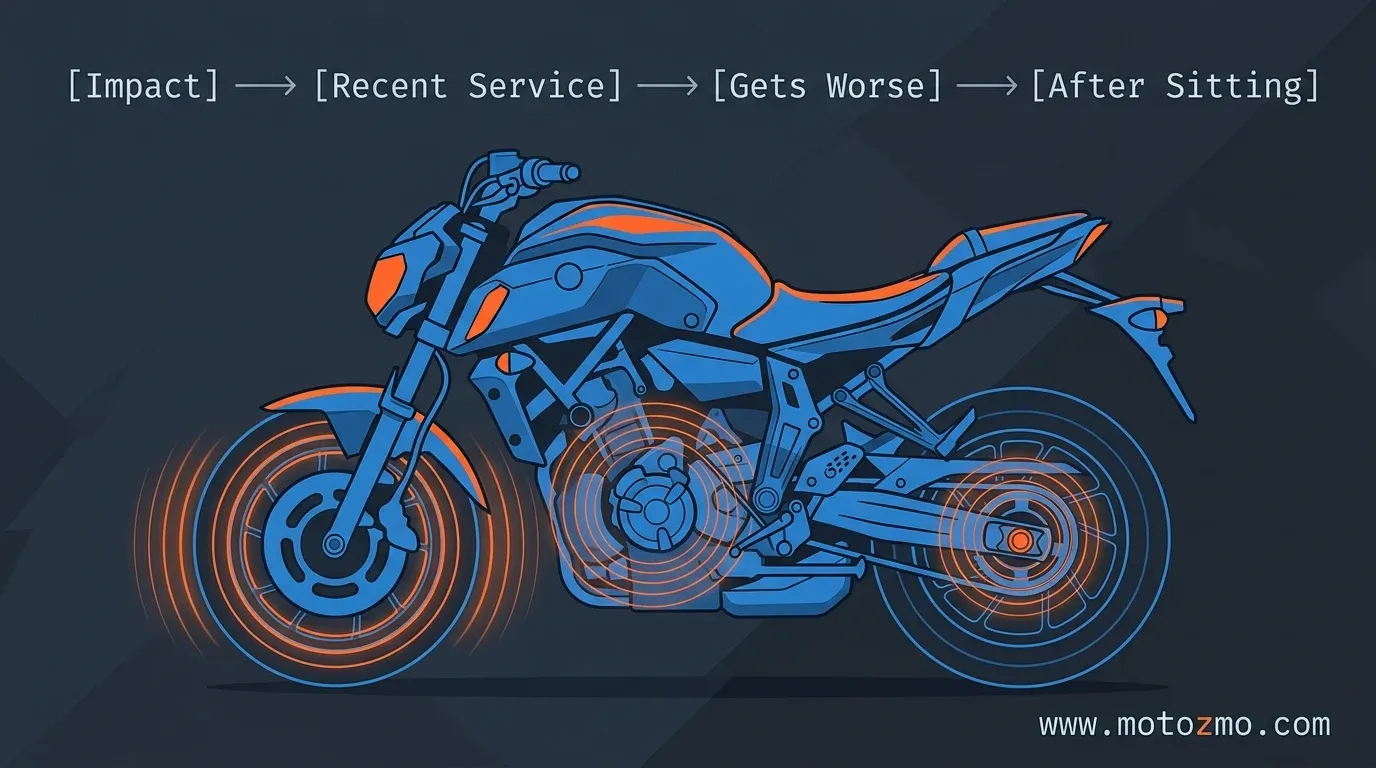
Vibration that shows up out of nowhere almost always traces back to one specific moment, not gradual wear. That’s the main difference from a vibration that’s crept in slowly over months. Something changed on a specific ride, and the fastest way to find out what is to think back to what you were doing right when it started. Did you hit something? Did a shop just work on your wheels? Did it start partway through the ride and keep getting worse? Or is this the first ride after the bike sat for a while?
Each of those points to a different cause, and below is how to tell them apart. For the broader picture on vibration that builds up gradually instead, our general vibration troubleshooting guide covers that side of things.
What Were You Doing Right When It Started?
This one question narrows things down faster than anything else.
| What happened right before | Most likely cause |
|---|---|
| You hit a pothole, curb, or a rough pavement seam | A bent rim, a damaged tire, or a wheel bearing knocked out of true by the impact |
| You just had tires, wheels, or bearings serviced | A missing balance weight, a bearing that got seated crooked, or an axle nut that wasn’t torqued back down fully |
| No impact, no recent service, but it’s getting worse the longer you ride | A tire losing air, or a wheel bearing failing in real time |
| The bike sat parked for a few weeks and this is your first ride since | A flat-spotted tire from sitting in one spot |
Read on for the section that matches your situation.
You Hit Something
A hard hit on a pothole, curb, or a broken stretch of pavement can bend a rim, damage a tire’s sidewall, or knock a wheel bearing just far enough out of place to cause play. The vibration shows up right away, or within the first mile or two.
Pull over somewhere safe and take a look. Spin each wheel and watch it from the side. A rim that’s out of true will show a visible wobble as it spins, not just a wiggle in the tire. Run a hand around the tire’s sidewall, especially near where you think you hit the pothole, and feel for a bulge or a soft spot. A bulge means the internal cords are damaged, and that tire needs to come off before you ride on it again. Our guides on checking your tires and knowing when a tire needs replacing go into more detail on what to look for.
If you ride a bike with spoked wheels, a hard impact can also loosen or break a spoke, which throws the wheel out of true the same way a bent rim would. Our guide to spoked wheel safety covers how to check for that.
If everything looks fine visually but the vibration is still there, don’t rule out a wheel bearing. A hard enough impact can crack a bearing race or knock it just slightly out of position, and that kind of damage doesn’t always show up to the eye.
You Just Had Tires, Wheels, or Bearings Worked on
This one catches a lot of riders off guard, since it feels like something must have broken rather than something being installed wrong. New vibration right after a tire change, a wheel balance, or a bearing replacement comes down to the install, not a new problem with the bike.
A few common culprits: a balance weight that wasn’t seated properly and fell off during the ride home, a wheel bearing that got pressed in slightly crooked, or an axle nut that got torqued to the wrong spec, leaving just enough play in the wheel to cause a shake.
If a shop did the work, it’s worth going back to them before you assume you need new parts. If you did it yourself, double-check the axle nut torque and take another look at how the bearing seated.
It’s Getting Worse the Longer You Ride
This is the pattern to treat as urgent. If the vibration wasn’t there at the start of the ride but keeps building the further you go, something is actively failing rather than sitting at a fixed level of wear.
Two things cause this.
- The first is a tire slowly losing air, maybe from a slow puncture you haven’t noticed yet, which changes the tire’s shape more and more as pressure drops. Our guide on handling a flat tire on the road covers what to do if you suspect this while you’re still riding.
- The second is a wheel bearing that’s failing in real time rather than one that’s simply worn. A bearing on its way out often starts with a mild vibration and a faint noise, then gets louder and rougher the longer it spins and heats up. Our signs of a bad wheel bearing guide walks through how to check for this once you’re stopped.
Either way, a vibration that’s getting worse in real time isn’t one to ride out. Find somewhere safe to stop and check it rather than pushing on to see if it settles down, because this pattern doesn’t settle down on its own.
First Ride After the Bike Sat for a While
This is the one case here that’s nothing to worry about. Tires develop what’s called a flat spot when a bike sits in one place for weeks, since the same small patch of rubber is under the bike’s weight the whole time. According to tire manufacturer Michelin, this kind of flat-spotting works itself out after a few miles of riding, once the tire warms up and the rubber relaxes back into its normal round shape.
If that’s your situation, the vibration should fade noticeably within the first ten or fifteen minutes of riding. If it’s still there after that, or if you can see a hard, flattened patch on the tire that doesn’t round out, treat it as a tire problem worth a proper look rather than a simple flat spot.
When It’s Not Safe to Keep Riding
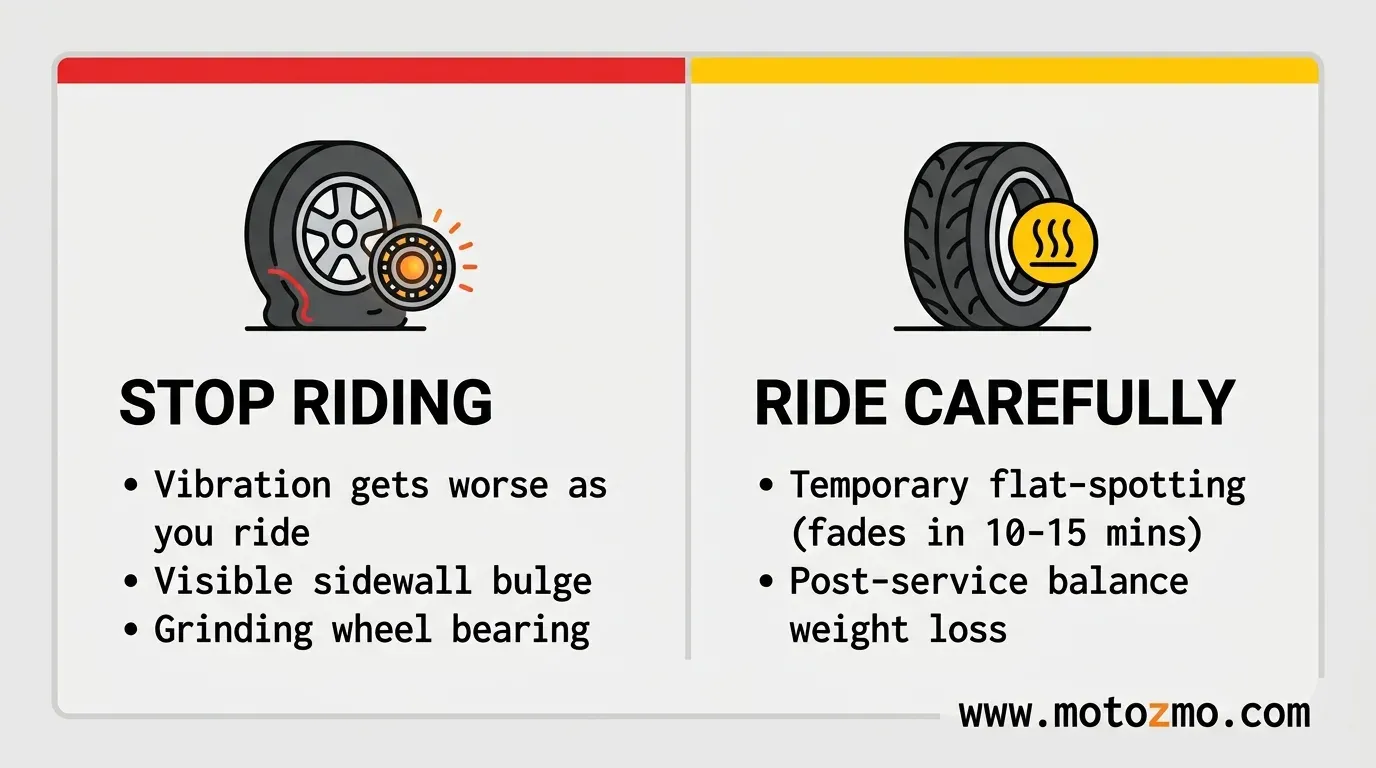
A couple of these situations are worth pulling over for immediately rather than finishing the ride. A tire that lost air suddenly after an impact is one of them. The National Highway Traffic Safety Administration notes that a tire can lose pressure suddenly after striking a pothole or curb, even without an obvious puncture, so a vibration that comes with a soft or squirmy feel in the tire is worth checking before you go any further. A bearing that’s grinding, getting hot, or letting the wheel move when you rock it is the other one. Neither of these gets better if you keep riding on it, and both can get considerably worse, fast.
If you’re not sure which case you’re in, a basic tool kit and ten minutes with the bike on a stand is enough to tell the difference between something you can ride home carefully and something you shouldn’t ride at all. And if this turns out to be a bearing that’s already failing, it’s worth checking how often wheel bearings need replacing so you know whether this one was simply overdue.