
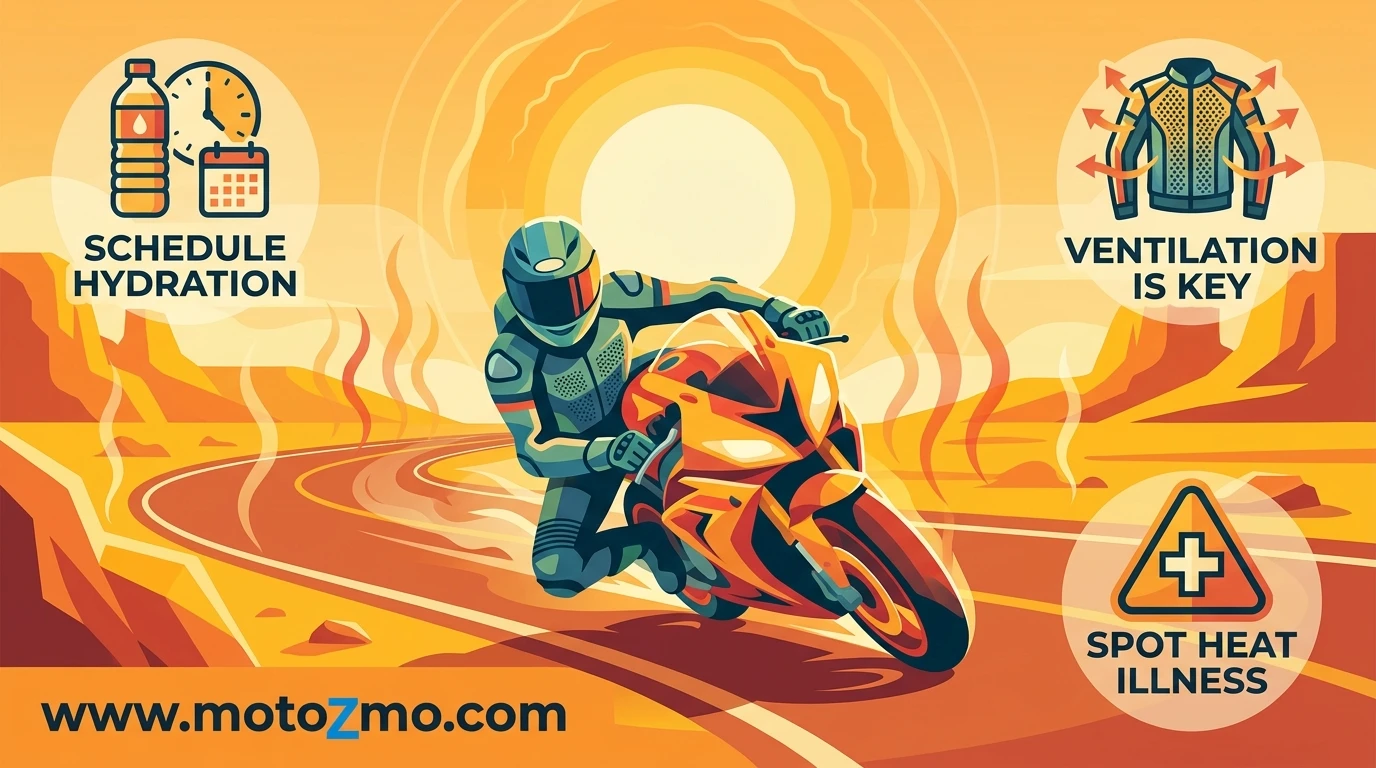
You can ride safely in real heat, including well above 100°F, but it takes more than “drink some water and wear light colors.”
The riders who handle extreme heat well treat hydration as a schedule rather than a reaction to thirst, know the difference between heat cramps, heat exhaustion, and heat stroke because the right response to each one is different, and time their riding around the hottest hours rather than just gutting it out.
Here’s what actually matters, including a couple of common pieces of advice worth correcting.
Hydrate on a Schedule, and Know When Water Alone Isn’t Enough
Waiting until you’re thirsty means you’re already behind. OSHA’s heat safety guidance for anyone working or exerting themselves in heat recommends roughly 24 to 32 ounces of water per hour, closer to a full bottle every hour than the sip-here-and-there approach most riders default to. Drink before a long ride starts, not just during it.
Past about an hour of heat exposure, plain water stops being enough on its own. You’re losing sodium and other electrolytes through sweat, and replacing volume without replacing salt can actually make things worse, drinking large amounts of plain water without electrolytes over a long, hot ride can dilute your blood sodium level, a real condition called hyponatremia that produces symptoms unsettlingly similar to dehydration itself: nausea, confusion, and headache. For anything beyond an hour in serious heat, an electrolyte drink alongside water, not instead of it, is the safer approach.
Electrolyte Drinks vs Plain Water: What to Look for
Skip caffeine and alcohol before and during a hot ride; both work against hydration rather than for it.
When you do reach for an electrolyte product, sodium is the mineral that matters most, since it’s what you lose the most of through sweat, and most standard sports drinks are actually fairly light on it, often only 100 to 200mg per serving. For genuine heat exertion over an extended ride, look for something closer to 300 to 700mg of sodium per serving alongside a smaller amount of potassium, roughly in that range rather than an exact number, since sweat rate and sweat salt concentration both vary a lot between individual riders.
A product with meaningful sodium and little to no potassium isn’t wrong, sodium is doing most of the real work, but a well-formulated one includes both.
A Sample Hydration Schedule for a 4-Hour Ride in Serious Heat
For a planned ride in the 95 to 105°F range, start hydrated rather than starting the clock at the first mile: drink 16 to 20 ounces in the hour or two before you leave, not right as you’re pulling on your helmet.
Once riding, aim for that 24 to 32 ounce hourly target at each stop rather than one big gulp at the end of the ride, and add an electrolyte serving at your first stop and roughly every hour after that once you’re past the one-hour mark where plain water alone stops being sufficient.
Plan a real stop, not just a red light, every 60 to 90 minutes in that kind of heat, shade if you can find it, water, and a couple of minutes off the bike. A four-hour ride in triple-digit heat is a legitimately different undertaking than the same ride at 75°F, and treating it with a real plan rather than winging it is most of what separates riders who handle it well from riders who end up pulled over on the shoulder feeling terrible.
Know the Difference: Heat Cramps, Heat Exhaustion, and Heat Stroke
These aren’t three names for the same thing, they’re an escalating sequence, and the right response changes at each stage.
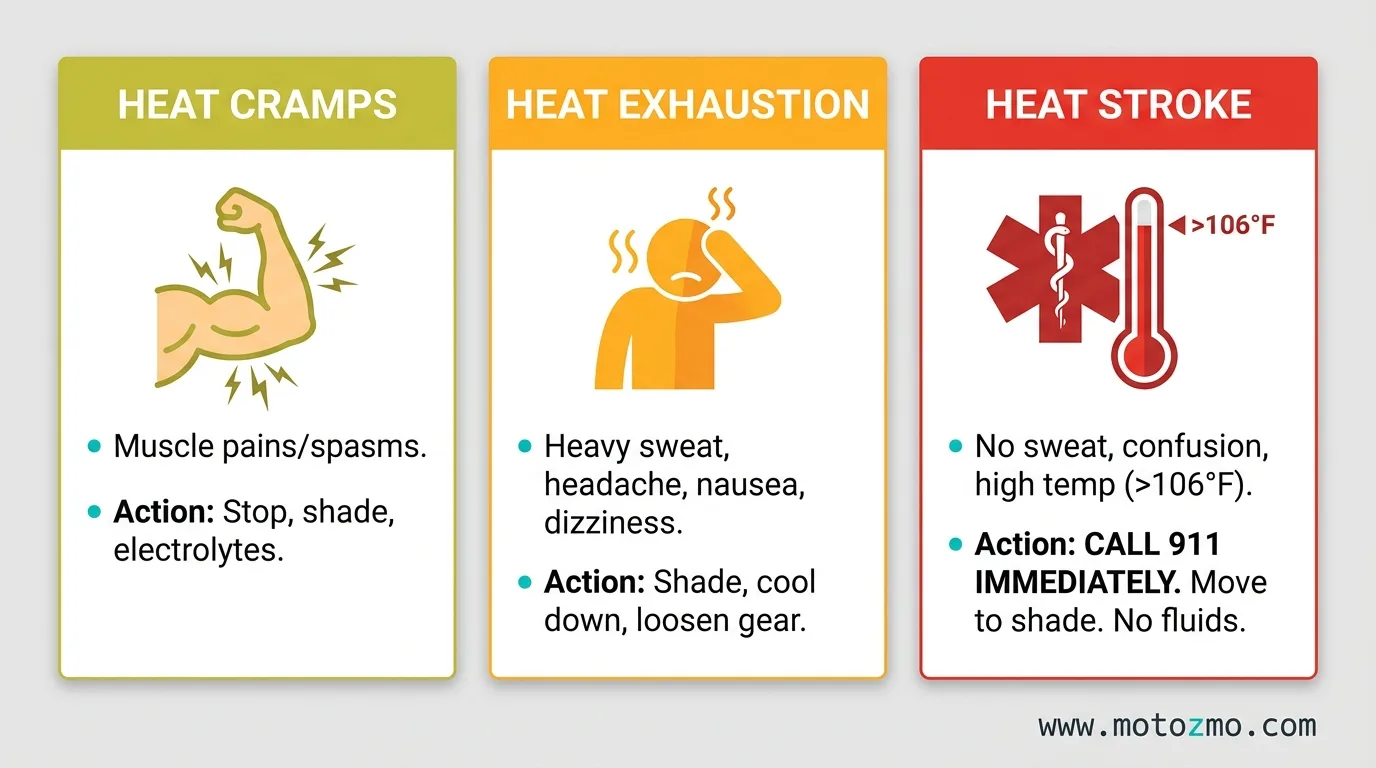
Heat cramps come from salt and fluid loss during heavy sweating: painful muscle cramps, usually in the legs or abdomen. Stop, rest in shade, and rehydrate with something that includes electrolytes, not just water.
Heat exhaustion is your body’s broader response to fluid and salt loss: headache, nausea, dizziness, weakness, irritability, and heavy sweating. Get out of the sun, loosen or open your gear, sip water, and cool down with a wet cloth on your neck or wrists. If symptoms don’t improve within an hour, or you’re vomiting, that’s a signal to get medical help rather than push through it.
Heat stroke is a medical emergency, not a worse version of feeling tired. The body’s temperature regulation fails entirely, sweating can stop, and internal temperature can climb past 106°F within 10 to 15 minutes. Confusion, slurred speech, seizures, or loss of consciousness are the signs. Call 911 immediately, move the person to shade, and cool them with wet cloths, but don’t give them anything to drink, someone in this state can’t safely swallow, and the treatment priority is cooling the body, not rehydrating it.
If you’re riding solo, know these signs well enough to catch them in yourself before they progress. If you’re riding with others, check on each other at stops; heat exhaustion can affect judgment before it feels serious.
Dress for Airflow: What Ventilates, and Does a Cooling Scarf Help
The instinct to strip down to a t-shirt in extreme heat works against you twice: it removes crash protection and it doesn’t actually cool you down as well as proper mesh gear does, since sun exposure on bare skin adds heat you’d otherwise be shielded from.
What ventilates well comes down to how directly air can reach your skin: true mesh fabric, open weave panels rather than a few small vents, moves the most air and dries fastest if it gets wet from sweat or rain.
Perforated leather is a step down from that, real airflow through the punched holes, but the leather itself still holds more heat than open mesh. Solid textile with vent zippers ventilates the least of the three, since airflow only reaches the specific panels that open. Our guide to dressing for hot weather and our roundups of summer riding pants and hot-weather jackets cover specific gear if you’re shopping.
A soaked bandana or cooling towel around the neck is worth doing, and it’s not just a folk remedy: your neck sits close to the carotid arteries, major blood vessels running close to the skin surface, so evaporative cooling there has a more noticeable effect on how hot you feel than cooling the same size patch of skin somewhere else on your body. It’s not going to dramatically drop your core temperature on its own, but as a cheap, easy addition alongside real hydration, it genuinely helps, and it’s worth re-soaking at every stop rather than expecting one dunk to last the whole ride.
Light colors do reflect more heat than dark ones too, worth factoring in if you’re choosing between otherwise similar gear, though it matters less than ventilation itself.
Grip Matters: Gloves That Hold up When Your Hands Sweat
Sweaty hands lose grip, and on a motorcycle that’s not a minor discomfort, it’s your connection to the clutch, brake lever, and throttle.
Look for gloves with mesh or perforated panels across the palm specifically, not just the back of the hand, since that’s the contact surface that matters for grip. A moisture-wicking liner helps more than people expect, pulling sweat away from your skin rather than letting it pool against the leather or textile. Some gloves add a textured or silicone-gripped palm section specifically to hold up when wet, worth checking for if you ride hard in serious heat regularly.
It’s also worth wiping your palms at a stop before a stretch of aggressive braking or technical riding if you notice your grip feels less secure than usual. This is one place where “just tough it out” is a genuinely worse idea on two wheels than it would be in a car.
Time Your Ride, and Plan Your Stops, Around the Heat
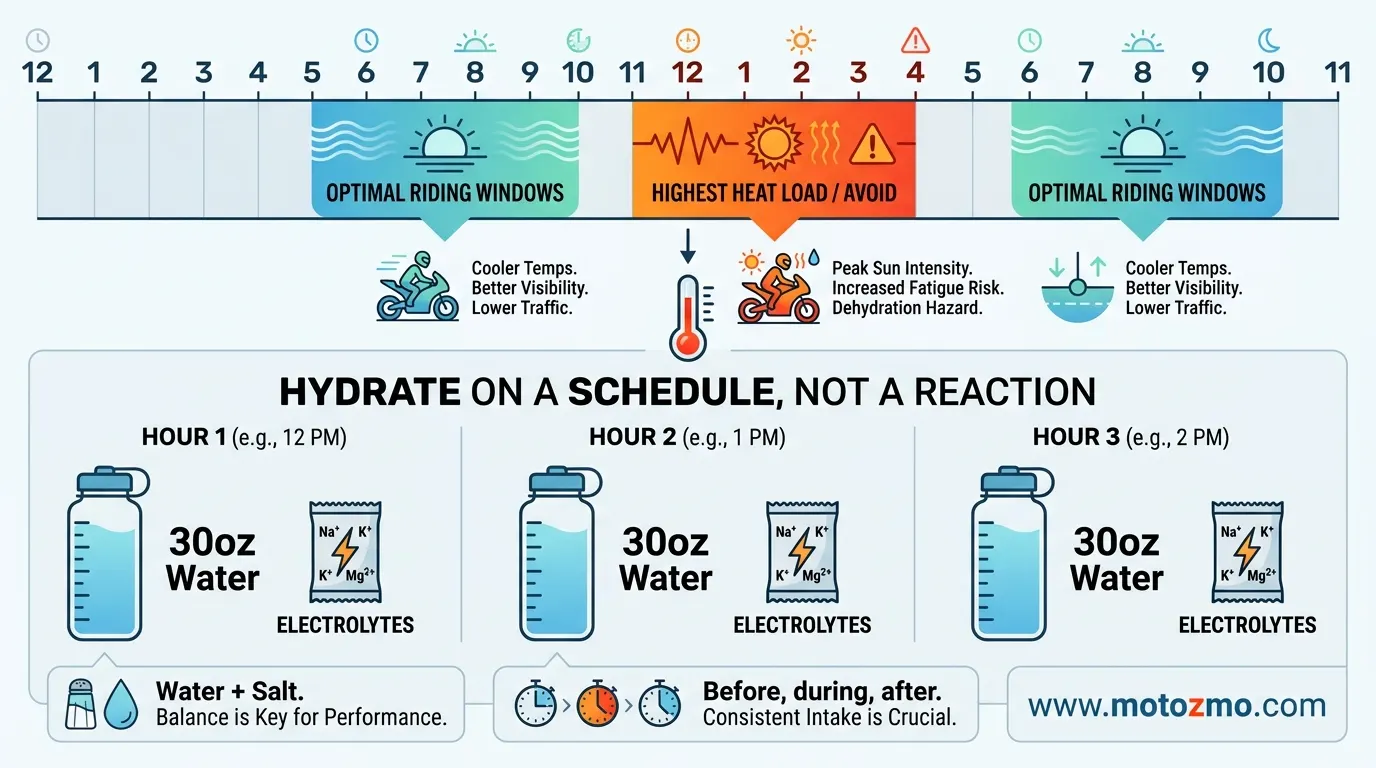
The sun and the pavement are both hottest between roughly noon and 4 p.m.; riding early morning or evening instead meaningfully lowers the load on you, even with identical gear.
Route planning matters as much as timing: before a long, hot ride, actually map out where shade and water are available along the way rather than committing to a straight run through open highway and hoping something turns up. Gas stations, rest areas, and anywhere with an awning or trees all count, the goal is knowing your stops before you’re already overheated and searching for one.
Extreme heat, and heat combined with high humidity specifically, is genuinely one of the most dangerous weather conditions in the US, it kills more people most years than hurricanes, tornadoes, or flooding combined, so treating serious heat with real caution isn’t overreacting.
That said, “don’t ride at all above 100°F” isn’t realistic advice for riders in genuinely hot climates, and it’s not what the guidance above is actually built around. Riders who live somewhere that regularly hits triple digits build tolerance over time, ride with real hydration discipline, and adjust pace and break frequency to the conditions, rather than avoiding summer riding altogether. Know your own limits and pay attention to how you’re actually feeling, not a specific number on a thermometer.
If you ride through genuinely cold conditions too, our guide to staying warm in winter covers the opposite end of the same problem: managing your own body temperature safely while riding.