
Top Picks For You
VHT 550° Engine Enamel
Perfect zero-guesswork option for general DIYers. It combines bulletproof thermal headroom with effortless aerosol application, giving your engine cases a durable, high-heat factory finish on a budget.
Check Price
PJ1 Fast Black Engine and Case Paint
The top choice for riders who demand dedicated motorcycle chemistry over general automotive paint. It offers incredible chemical resistance against oil and fuel spills on raw engine cases.
Check Price
Rust-Oleum Automotive Engine Enamel
The ultimate low-cost, high-reward solution for quick garage refreshes. It offers maximum thermal protection for under ten bucks, making it the smartest choice for casual, hassle-free updates.
Check Price
Dupli-Color Ceramic Engine Enamel
An absolute must-buy if you need to match specific factory bike shades. Its fast-drying ceramic formula delivers crisp, precise color matching without extending your downtime.
Check Price
KBS Motor Coater
The definitive pick for serious restorers wanting a show-quality, rock-hard finish. Its self-leveling formula completely eliminates brush marks, outlasting standard rattle cans when paired with proper prep.
Check Price
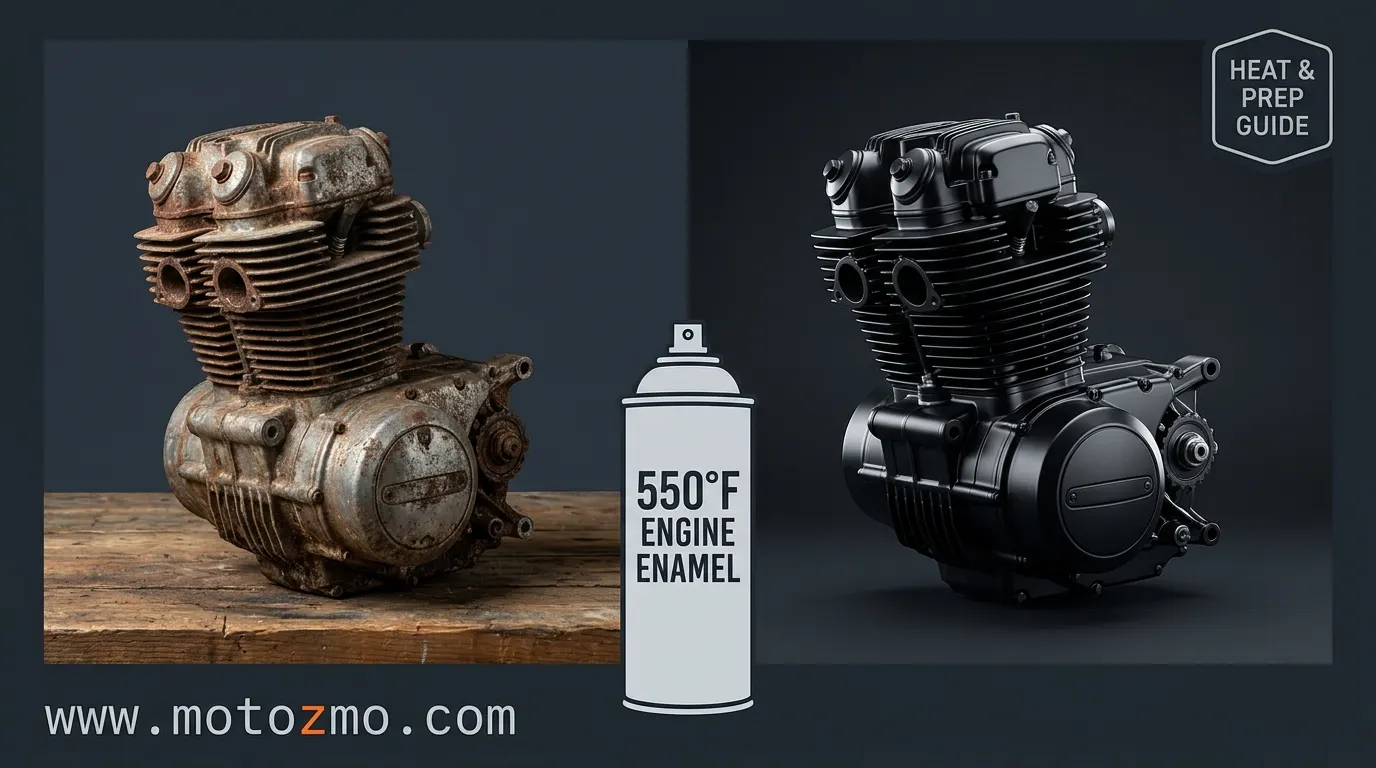
The best all-around motorcycle engine paint is VHT’s 550° Engine Enamel. It handles more heat than a painted cover will ever actually see, comes in nearly every OEM color a home builder could want, and costs about what you’d spend on a case of beer.
It’s not the only right answer, though. A restorer chasing a show-quality finish is better off with a heavier brush-or-spray system like KBS Motor Coater, and if you’d rather use something built for a bike instead of a repurposed car paint, PJ1 makes the only product on this list formulated specifically for motorcycle cases.
What actually separates a paint job that lasts five years from one that flakes off by next season usually isn’t the paint at all. It’s whether the can you grabbed is rated for what your engine is made of and how hot it really runs. Here’s what to buy for each situation, and what to skip.
Which Rider Are You?
| Your situation | Best pick |
|---|---|
| Weekend refresh on a bike you still ride | Rust-Oleum Automotive Engine Enamel |
| You want a paint actually built for motorcycles | PJ1 Fast Black Engine and Case Paint |
| Matching a specific factory color exactly | Dupli-Color Ceramic Engine Enamel |
| Full restoration or a show bike | KBS Motor Coater |
| Not sure, want the safest all-around choice | VHT 550° Engine Enamel |
Engine Paint vs Header Paint: Don’t Grab the Wrong Can
One mix-up shows up constantly in the paint aisle: a can rated to 2000°F looks like the safest bet, but that rating belongs to header and exhaust coatings, not the enamel meant for cases, cylinders, and covers. Header paint is usually a flat ceramic formula built to survive direct exhaust gas, and it behaves differently than a glossy case enamel once it’s on.
A painted engine cover rarely sees more than 300 to 400°F even on an air-cooled bike, so engine surface temperatures leave plenty of headroom under a 500 to 550°F engine enamel. If you’re painting a header or full exhaust, that’s a separate product and a separate prep process, not a swap-in for anything on this list.
The 5 Best Motorcycle Engine Paints
VHT 550° Engine Enamel — Best All-Around Pick
Key Features
- Advanced urethane-ceramic hybrid formula
- Aerosol spray format
- Covers standard bike cases in one can
VHT’s engine enamel line blends urethane and ceramic resins and holds up to 550°F intermittent heat, which is more headroom than any painted cover or cylinder on a street bike will need.
It comes in around 20 OEM-matched colors, from Chevy orange to plain gloss black, and one 11 oz can typically covers a full set of covers.
Skip it if you want a brush-on option for a fully torn-down rebuild, VHT’s line here is aerosol-only, and KBS below handles that job better.
PJ1 Fast Black Engine and Case Paint — Best Motorcycle-Specific Pick
Key Features
- Formulated exclusively for motorcycle metal
- Powersports retailer favorite
- Available in gloss or satin finishes
Every other paint on this list started life as an automotive product repurposed for bikes. PJ1 didn’t. It’s formulated specifically for two-stroke and four-stroke motorcycle cases, cylinders, and heads, and it’s what you’ll find at RevZilla or your local powersports parts counter rather than an auto parts store. It’s rated to 500°F, sold in gloss or satin black.
The tradeoff is color: black is genuinely the only option, so if your factory covers were silver or gold, this isn’t your paint.
Rust-Oleum Automotive Engine Enamel — Best Budget Pick
Key Features
- High-heat version hits 600°F threshold
- Ubiquitous hardware store availability
- Ideal for simple black/silver touch-ups
This is the paint most home garages already have half a can of, and it’s a genuine best-seller for a reason. The standard formula is rated to 500°F, with a newer high-heat version rated to 600°F, and it’s sold at basically every hardware store and auto parts chain in the country.
There’s no motorcycle-specific color line, just a generic automotive palette, which is a non-issue if you’re going with plain black or silver but worth knowing if you’re chasing an exact factory shade.
Dupli-Color Ceramic Engine Enamel — Best for Matching Factory Color
Key Features
- Enormous 30+ OEM color catalog
- Fast touch-dry time (30 mins)
- Fully handleable within 60 minutes
Dupli-Color’s ceramic-resin formula is rated to 500°F and comes in more than 30 factory-matched colors, more than anything else on this list, which matters if you’re chasing a specific manufacturer’s shade instead of just picking black. It dries to the touch in about 30 minutes and is handleable within an hour.
At $9 to $11 a can it’s priced right next to Rust-Oleum, so the real deciding factor between the two is the color chart, not the price tag.
KBS Motor Coater — Best for a Full Restoration
Key Features
- Brush-on pint or aerosol format
- Self-leveling ultra-hard coating
- Part of a complete prep-to-topcoat system
- 40+ shades including natural aluminum
Motor Coater is less a paint than a small system. KBS sells a matching degreaser and rust treatment alongside it, and the enamel itself self-levels to a noticeably harder, glossier finish than anything sprayed straight from a rattle can, which is why it comes up repeatedly as the preferred pick in restoration forums.
It’s rated to 500°F, sold as either a 12 oz aerosol or a brush-on pint, and comes in more than 40 OEM colors, including a genuine aluminum-tone finish.
The tradeoff is effort: getting the self-leveling result the brand is known for means following their full prep sequence, not just a quick degrease and spray. If you want a weekend job with minimal fuss, pick one of the four above instead.
Quick Comparison
| Paint | Heat rating | Price | Format | Best for |
|---|---|---|---|---|
| VHT 550° Engine Enamel | 550°F | $10–$12 | Aerosol | Best all-around |
| PJ1 Fast Black Engine and Case Paint | 500°F | $13–$15 | Aerosol | Built for bikes |
| Rust-Oleum Automotive Engine Enamel | 500–600°F | $7–$9 | Aerosol | Lowest cost |
| Dupli-Color Ceramic Engine Enamel | 500°F | $9–$11 | Aerosol | Widest color match |
| KBS Motor Coater | 500°F | $16–$28+ | Aerosol or brush | Toughest finish |
The Paint Rarely Fails on Its Own
Almost every “this paint peeled after a month” story in owner forums traces back to prep, not the product. Motorcycle cases are usually cast aluminum rather than the cast iron most automotive paint instructions assume, and bare aluminum needs a self-etching primer underneath or the topcoat never really bites.
Skipping a proper degrease and clean beforehand causes the same problem in a different way, since grease trapped in the metal’s surface keeps paint from bonding no matter how good the can is.
We walk through the full process, including which primer to use on aluminum and how long to actually let the paint cure before you start the engine, in our how-to guide on painting a motorcycle engine. None of the five paints above are magic. Put any of them over bad prep and they’ll all fail the same way.
If what you actually want is rust prevention on bare or lightly corroded metal rather than a full color change, an anti-corrosion spray does that job without the masking and multi-coat process a full repaint requires.