You must winterize your motorcycle before storing it for winter. Skipping this process invites battery failure, fuel system gunk, tire flat spots, and rust. These are problems that can cost $200 to $1,500+ to fix come spring. The good news: proper winterization takes about 2-3 hours and requires no special tools.
The core steps include changing the oil, adding fuel stabilizer to a full tank, connecting a battery tender, lifting tires off the ground, and using a breathable cover. Each step targets a specific failure point that cold weather and extended sitting create.
Whether you store indoors or outside, this guide walks through every winterization task in order. For a broader look at cold-weather options, including winter motorcycle storage and riding strategies, that resource covers the full picture.
Let’s break down exactly what happens to an idle motorcycle in winter and how to prevent each problem.
🎯 Key Takeaways
- Full Tank + Stabilizer: Fill the gas tank completely and add fuel stabilizer. Empty tanks rust from inside; untreated fuel gums up injectors within 30-60 days.
- Battery Tender is Non-Negotiable: Batteries lose 35% capacity at 32°F and self-discharge within 60 days. Connect a smart tender or remove and store indoors.
- Lift Those Tires: Tires develop permanent flat spots under load. Use paddock stands, a center stand, or rotate the bike every 2-3 weeks.
- Never Start Without Riding: A 5-minute idle creates moisture in the crankcase and exhaust. Either ride for 20+ minutes to reach full operating temperature, or don’t start until spring.
- Clean Before Covering: Road salt trapped under a cover corrodes metal for months. Wash, dry, and wax all surfaces before storage.
- Change Oil Before Storage: Used oil contains acids and moisture that attack bearings and cylinder walls. Fresh oil protects internal components during the idle period.
- Block Entry Points: Stuff steel wool in exhaust pipes and cover air intakes. Rodents build nests in these spaces and destroy wiring, filters, and seats.
- Total Time Investment: 2-3 hours of winterization prevents $200-$1,500 in spring repair costs.
Why Winter Storage Damages Motorcycles
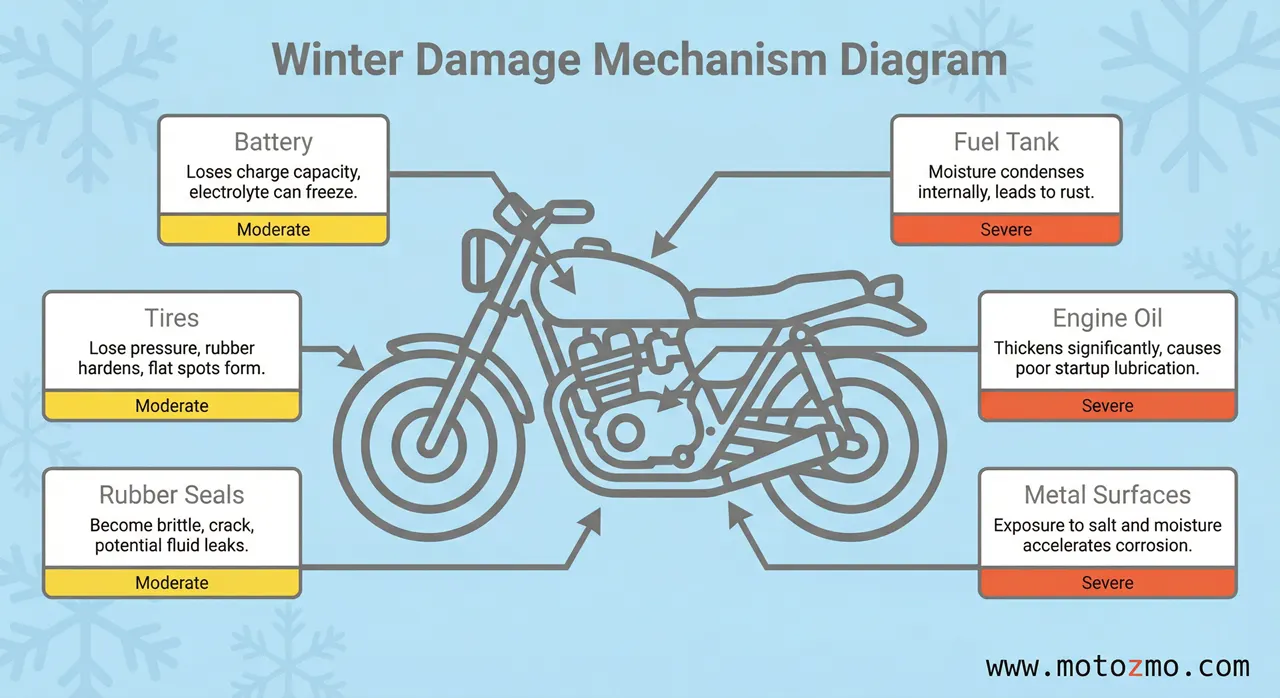
An idle motorcycle deteriorates faster than one ridden regularly. Cold temperatures accelerate chemical breakdown, and sitting still creates mechanical problems that riding would prevent.
What Happens During Extended Storage
| Component | Winter Damage Mechanism | Consequence |
|---|---|---|
| Fuel | Gasoline oxidizes; ethanol absorbs moisture | Clogged injectors/carb jets, varnish deposits |
| Battery | Self-discharge accelerates; loses 35% capacity at 32°F | Dead cells, sulfation, won’t hold charge |
| Tires | Weight compresses one contact patch | Permanent flat spots, vibration at speed |
| Engine Oil | Moisture condenses; acids form from combustion byproducts | Internal corrosion on bearings, cylinder walls |
| Rubber Seals | Dry out without lubrication circulation | Cracked gaskets, oil leaks |
| Metal Surfaces | Moisture + salt residue accelerates oxidation | Rust on exhaust, frame, brake rotors |
According to Battery University, lead-acid batteries lose significant cranking power in cold temperatures. At 32°F, your battery delivers only 65% of its rated capacity. At 0°F, that drops to 40%.
Fuel degradation starts within 30 days of sitting. Modern ethanol-blended gasoline (E10) absorbs atmospheric moisture through a process called phase separation. This water sinks to the bottom of your tank and corrodes metal components from the inside.
The 8-Step Winterization Checklist
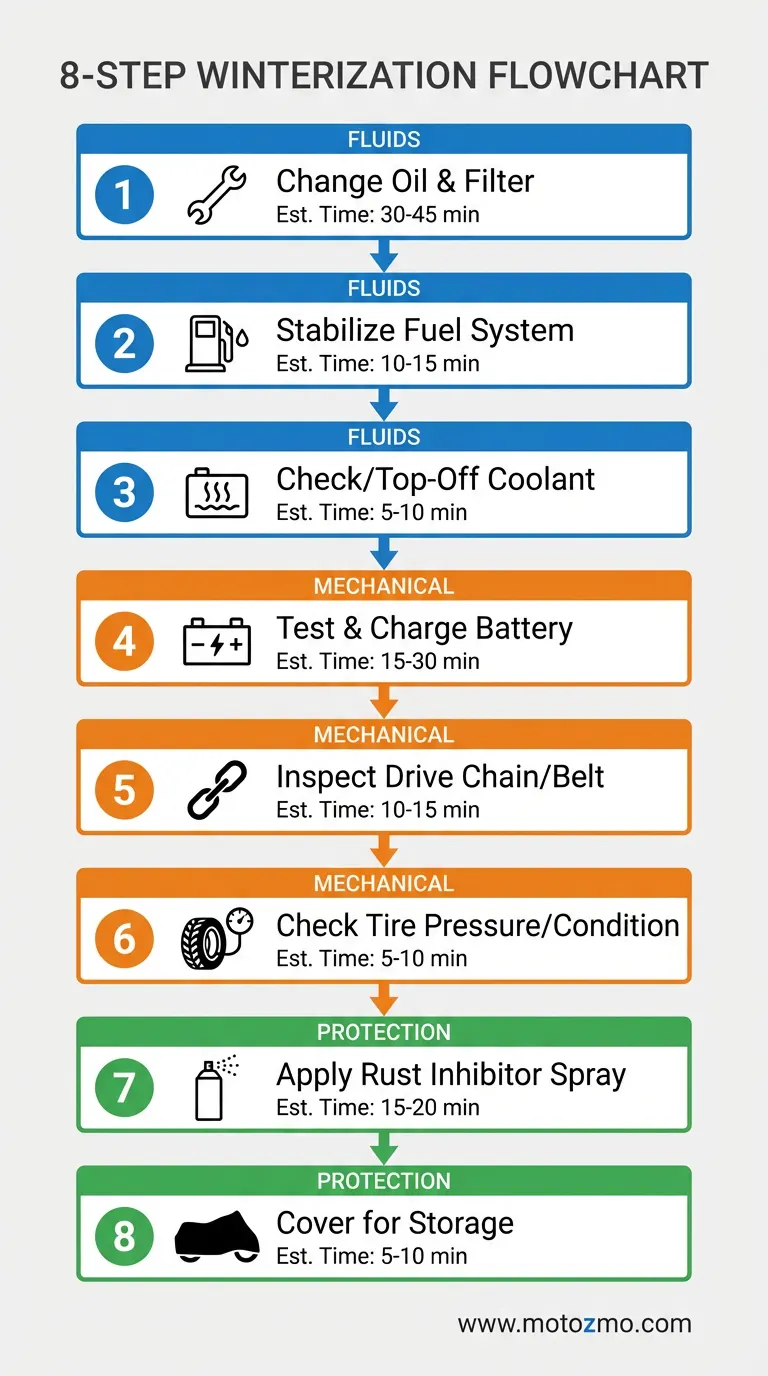
Complete these steps in order before parking your motorcycle for extended storage. Each builds on the previous one.
Quick Reference Table
| Step | Task | Time Required | Tools Needed |
|---|---|---|---|
| 1 | Wash and dry thoroughly | 30-45 min | Soap, microfiber cloths, compressed air |
| 2 | Change engine oil and filter | 20-30 min | Drain pan, filter wrench, fresh oil |
| 3 | Fill tank + add fuel stabilizer | 10 min | Fuel stabilizer |
| 4 | Lubricate chain and moving parts | 15 min | Chain lube, cable lube |
| 5 | Connect battery tender or remove battery | 10 min | Smart charger/tender |
| 6 | Inflate tires and elevate if possible | 10 min | Tire pump, stands |
| 7 | Block exhaust and air intake | 5 min | Steel wool, muffler plugs |
| 8 | Apply cover | 5 min | Breathable motorcycle cover |
Step 1: Wash Your Motorcycle Completely
Road grime, salt, and brake dust trap moisture against metal surfaces. This accelerates rust formation during storage.
How to do it right:
- Use a motorcycle-specific cleaner or pH-neutral car wash soap
- Spray wheel wells, underbody, and suspension components where salt accumulates
- Blast water out of crevices with compressed air or a leaf blower
- Dry every surface with microfiber towels
- Apply a thin coat of wax to painted surfaces
Never store a dirty motorcycle. The salt and grime sitting under a cover will pit chrome and corrode aluminum over three to four months.
Step 2: Change the Engine Oil
Used oil contains combustion acids, moisture, and metal particles. Leaving contaminated oil in the crankcase allows these byproducts to attack internal surfaces while the bike sits.
What fresh oil does:
- Creates a protective film on cylinder walls and bearings
- Removes acidic contaminants that cause corrosion
- Ensures proper lubrication on first spring startup
Change both the oil and filter. Run the engine for 3-5 minutes after the change to circulate fresh oil throughout the system.
For storage exceeding four months, some riders fog the cylinders. Remove spark plugs, spray fogging oil into each cylinder, and turn the engine over a few times to coat the walls.
Step 3: Fill the Tank and Add Fuel Stabilizer
An empty tank invites rust. Moisture in the air condenses on bare metal walls and creates corrosion from the inside out.
The correct approach:
- Fill the tank completely—no air space
- Add fuel stabilizer according to the product ratio
- Run the engine for 5-10 minutes to circulate treated fuel through lines, injectors, or carburetors
Stabilizer prevents gasoline oxidation and phase separation for up to 12 months. Without it, fuel degrades within 30-60 days and leaves varnish deposits that clog fuel system components.
For carbureted motorcycles, either run stabilized fuel through the system OR drain the float bowls after filling with stabilized fuel. Pick one approach. Don’t leave un-stabilized fuel sitting in carburetor passages.
Step 4: Lubricate Chain and Moving Parts
Lubrication prevents rust on exposed metal and keeps seals from drying out.
Focus on these areas:
- Drive chain: Clean with degreaser, then apply fresh chain lube
- Cables: Use cable lubricant on throttle, clutch, and brake cables
- Pivot points: Grease kickstand pivot, brake and clutch lever pivots
- Fork stanchions: Wipe with a light oil coating to protect the chrome
Slide the bike forward or backward after lubricating the chain to distribute lube along the entire length.
Step 5: Manage the Battery
Batteries self-discharge during storage. Cold temperatures accelerate this drain and reduce capacity. Left unattended, a battery can die within 30-60 days and may not recover.
There are two options:
Option A: Remove the battery
- Disconnect negative terminal first, then positive
- Store indoors at room temperature on a wooden shelf or battery mat (not concrete)
- Connect to a smart charger or tender
Option B: Leave installed with a tender
- Connect a smart battery tender directly to the battery terminals
- Ensure the tender is “smart,” it monitors voltage and only charges when needed
A dead motorcycle battery after winter storage often results from sulfation, which is crystal buildup on the lead plates that permanently reduces capacity. A float charger prevents this by maintaining optimal charge levels.
Clean terminals with a wire brush and apply dielectric grease before storage.
Step 6: Protect the Tires
Tires develop flat spots when left in one position under load. The rubber compresses and may not fully recover, causing vibration at highway speeds.
Prevention methods:
- Best: Use a rear paddock stand and front stand to lift both wheels completely off the ground
- Good: Use the center stand if your motorcycle has one (lifts rear tire only)
- Acceptable: Overinflate tires by 5-10 PSI above spec and rotate the bike every 2-3 weeks to shift the contact patch
Place a piece of plywood or carpet under tires if storing on concrete. Cold concrete draws moisture and accelerates rubber degradation.
Step 7: Block Exhaust and Air Intake
Rodents seek warm, enclosed spaces during winter. Your exhaust pipes and airbox look like perfect real estate.
Seal these openings:
- Stuff steel wool or muffler plugs into exhaust outlets
- Cover air intake openings with plastic bags secured by rubber bands
- Place dryer sheets inside the airbox, under the seat, and in saddlebags (mice hate the smell)
Remove all blockages before starting the engine in spring. Forgetting steel wool in the exhaust guarantees a rough first ride.
Step 8: Cover Your Motorcycle
A quality cover protects against dust, UV exposure, and moisture. Even indoor storage benefits from a cover.
Cover requirements:
- Waterproof (for outdoor storage)
- Breathable (allows condensation to escape)
- UV-resistant (prevents paint fading and plastic degradation)
- Secure fit with tie-down grommets or elastic hem
Avoid cheap tarps. They trap moisture, abrade paint in the wind, and shred in storms. Invest in a purpose-built motorcycle cover rated for your climate.
Indoor vs. Outdoor Storage: Which Works Best?

Indoor storage wins every comparison. But outdoor storage works if you take extra precautions.
Storage Comparison Table
| Factor | Indoor (Garage/Shed) | Climate-Controlled Unit | Outdoor with Cover |
|---|---|---|---|
| Rust Risk | Low | Very Low | High |
| Temperature Stability | Moderate | Excellent | Poor |
| Moisture Control | Good | Excellent | Challenging |
| Security | Moderate | High | Low |
| Cost | Free (if you have space) | $50-100/month | Free |
| Rodent Risk | Low | Very Low | High |
| Recommended For | Most riders | High-value bikes, no garage | Last resort only |
Indoor Storage Tips
A heated garage between 50-60°F provides ideal conditions. Avoid damp basements where humidity accelerates corrosion.
Ensure adequate ventilation. Stagnant air holds moisture that settles on metal surfaces.
Outdoor Storage Requirements
If outside storage is your only option:
- Find a covered area (carport, overhang, or DIY shelter) to block direct rain and snow
- Waterproof all electrical connections with dielectric grease
- Use a heavy-duty cover rated for harsh weather with sealed seams
- Elevate the bike on plywood to prevent ground moisture wicking up
- Check weekly for cover damage, water pooling, or signs of intrusion
If you’re deciding between winter riding or storing your bike, that choice affects which preparation strategy you’ll follow.
5 Winter Storage Mistakes That Cause Damage
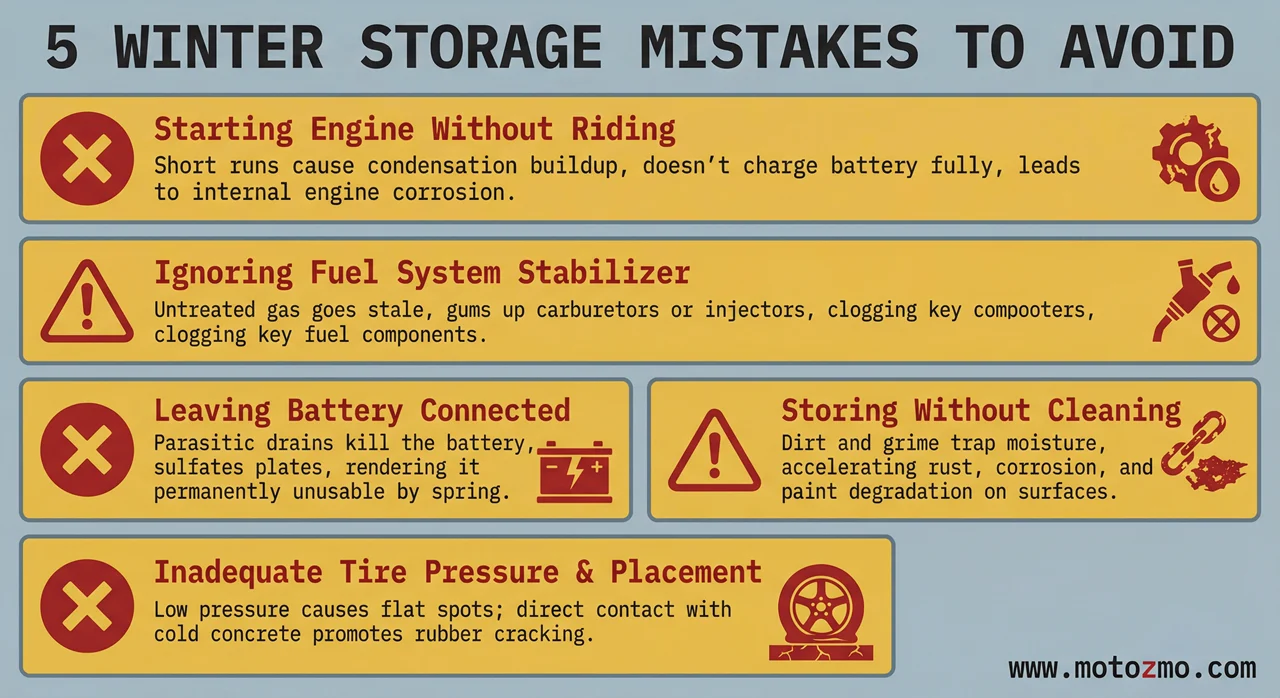
These errors undo your winterization efforts. Avoid all five.
Mistake 1: Starting the Engine Periodically Without Riding
Many riders start their bike every few weeks “to keep things lubricated.” This backfires.
Why it causes damage:
- The engine never reaches operating temperature
- Moisture from combustion condenses inside the crankcase, exhaust, and cylinder walls
- This water mixes with oil and accelerates internal corrosion
Either ride for 20+ minutes to fully warm the engine and evaporate moisture, or don’t start it at all until spring. A 5-minute idle causes more harm than three months of proper storage.
Mistake 2: Draining the Fuel Tank
Old advice suggested emptying the tank. Modern guidance says the opposite.
Why this fails:
- Empty tanks allow moisture to condense on bare metal walls
- Interior tank rust requires expensive cleaning or replacement
- Carbureted bikes still have fuel in float bowls that will gum up
Keep the tank full with stabilized fuel. The fuel itself protects tank walls from air and moisture.
Mistake 3: Using Cheap Covers or Tarps
Plastic tarps trap moisture against the bike. They also abrade paint when wind moves them.
What happens:
- Condensation collects underneath with no way to escape
- Surface rust forms on chrome and bare metal
- Tarps shred in wind storms, leaving your bike exposed
Use a breathable, purpose-made motorcycle cover. The $40-80 investment protects thousands in potential damage.
Mistake 4: Forgetting the Battery
A dead battery ranks as the most common springtime surprise. Batteries drain even when disconnected.
Consequences of neglect:
- Complete discharge within 30-60 days
- Sulfation damages lead plates permanently
- Replacement cost: $80-200 for most motorcycle batteries
Connect a tender or remove and store the battery indoors with a smart charger.
Mistake 5: Storing a Dirty Bike
Dirt, salt, and grime don’t become inert under a cover. They continue attacking metal and paint.
Winter damage from stored grime:
- Road salt creates aggressive pitting on aluminum and steel
- Bug residue etches clear coat if left for months
- Chain gunk hardens and accelerates sprocket wear
Wash, dry, and protect all surfaces before covering. This 30-minute task prevents expensive bodywork repairs.
Spring Preparation Before First Ride
After winter storage, complete these maintenance steps after winter storage before hitting the road.
Pre-Ride Checklist
Battery:
- Reinstall if removed; fully charge before installation
- Check voltage with multimeter (should read 12.6V or higher)
- Clean terminals and inspect cable condition
Fuel System:
- Remove fuel line and drain any water that settled at the bottom
- For carbureted bikes, verify smooth throttle response
- Check for fuel leaks at connections
Tires:
- Inflate to manufacturer specification
- Inspect for flat spots, cracks, or weather checking
- Check tread depth
Fluids:
- Verify oil level on dipstick or sight glass
- Check coolant level and condition
- Confirm brake and clutch fluid levels
Controls:
- Test front and rear brakes (may feel soft initially)
- Check clutch engagement point
- Verify all lights and signals function
Remove All Blockages:
- Pull steel wool from exhaust
- Remove plastic from air intake
- Clear any rodent deterrents
Start the engine and let it reach full operating temperature. Listen for unusual noises. Test brakes in your driveway before leaving. Rotors may have light surface rust that clears after a few stops.
Take a short, low-speed test ride in a safe area before returning to regular riding.
FAQs About How to Store Motorcycle for Winter
How long can a motorcycle sit without starting?
A properly winterized motorcycle can sit 4-6 months without issues. With a battery tender and fuel stabilizer, storage up to 12 months is possible. Beyond that, seals may dry and fluids degrade.
Should I drain gasoline for winter storage?
No. Fill the tank completely and add fuel stabilizer. Empty tanks rust from inside due to condensation. Stabilized fuel protects tank walls and remains usable for up to 12 months.
Can I store my motorcycle outside in winter?
Yes, if properly protected. Use a waterproof breathable cover, elevate tires off ground, remove the battery for indoor storage, and apply corrosion inhibitor to exposed metal. Check weekly for cover damage.
How often should I check my stored motorcycle?
Inspect monthly for indoor storage. Check weekly for outdoor storage. Look for fluid leaks, rodent activity, cover damage, and tire pressure loss.
Do I need to change oil before AND after winter storage?
Change oil before storage to remove contaminants. If storage exceeds 6 months, change again in spring. For 3-4 month storage with pre-winter oil change, spring replacement is optional.
What temperature damages a stored motorcycle?
Freezing damages batteries and can crack coolant lines if antifreeze is weak. Temperature fluctuations cause more harm than steady cold, as they create condensation cycles that accelerate corrosion.
Should I use a fuel stabilizer even for short storage?
Yes. Fuel degradation begins within 30 days. Any storage over 2-3 weeks benefits from stabilizer to prevent varnish formation in injectors or carburetor passages.
How do I prevent mice from nesting in my motorcycle?
Block exhaust with steel wool or muffler plugs. Cover air intake openings. Place dryer sheets inside the airbox, under the seat, and in storage compartments. Mothballs work but leave lasting odor.