
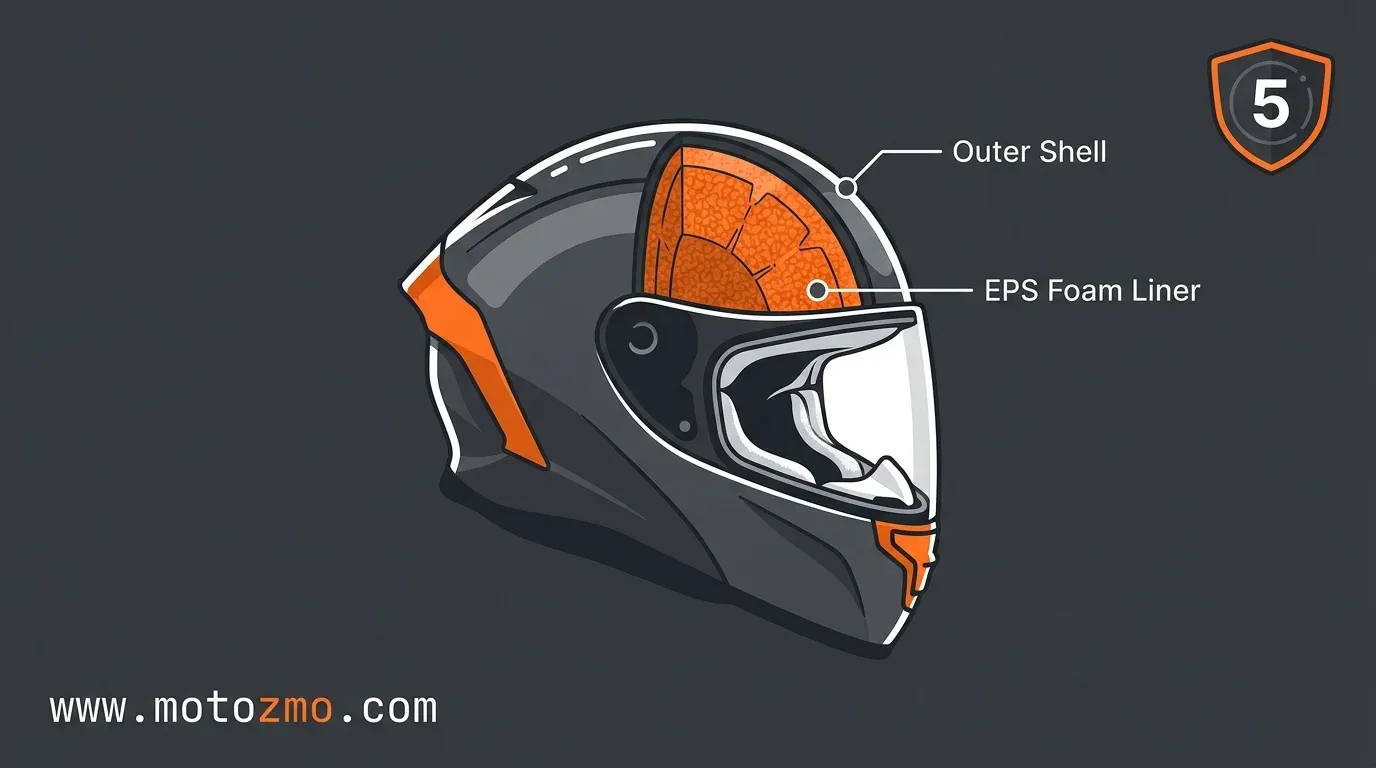
Replace your motorcycle helmet every five years from first use, or right after any crash, whichever comes first. The foam inside only works once.
I treat helmets like tires now: the outside can look perfect while the inside is finished. A helmet saves you by crushing its EPS liner on impact, and crushed foam never springs back. So a crashed helmet is done even with a flawless shell. A helmet that never crashes still ages out. Sweat, UV, and heat break down the liner, the glue, and the straps year by year.
Below is how I decide: a drop-severity check that tells you whether that knock counted, a five-minute inspection that finds a dead liner hiding behind a good shell, and the date-stamp habit I borrowed from checking tire age. If you want a lid that gets you seen too, here is my guide to the best helmets for visibility.
Did That Drop Actually Ruin Your Helmet?
Probably not, if your head was not in it. The Snell Memorial Foundation answers the dropped-helmet question in its own FAQ this way: helmets are single-use devices, but they take real damage when they hit something with a head inside. That is the physics. EPS crushes when the weight of your head drives into it at speed.
An empty helmet tipping off your seat meets the ground with far less force behind it, and you can read Snell’s full reasoning on the Snell Foundation FAQ page.
| What happened | Verdict | Why |
|---|---|---|
| Crash or fall while wearing it | Replace now | EPS crushes once, and the damage is often invisible |
| Fell from waist height onto concrete | Replace | Hard surface plus height can compress the foam |
| Knocked off the bike seat onto pavement | Inspect hard, replace if unsure | Medium energy; check the shell, liner, and fit after |
| Tipped over onto carpet, grass, or a mat | Keep riding | Too little energy to crush EPS |
The wince test works as a gut check. If the sound of the drop made you flinch, treat it as the middle row, not the bottom one.
And if you ride with a Shoei, the company runs an impact inspection service through its US distributor for genuinely borderline cases, which is worth knowing before you bin a maybe-good helmet.
Why Five Years Is the Rule, and When It Is Sooner
Snell, the independent standards body, calls the five-year replacement a judgment call rooted in a prudent safety philosophy. Its reasoning: glues and resins in the helmet can affect the liner over time, hair oils, sweat, and cosmetics break materials down, and petroleum products in cleaners and fuels can degrade them further.
Shoei’s official care page lists five years after first retail purchase even if nothing else is wrong, and you can see the full checklist on Shoei’s helmet maintenance page. Arai says five years of use or seven from manufacture, whichever lands first. Bell is the strictest, printing three years on its website.
None of them mean the helmet dies on its fifth birthday. The rule is a line in the sand for invisible aging. For daily commuters in hot sun, three to four years is the honest number. UV and sweat do the most damage, and a helmet that lives on a mirror in a parking lot ages faster than one kept in a cool closet.
Find your helmet’s birthday. The manufacture date sits on a tag under the comfort liner or on the chin strap. Read it the way you read a tire DOT code.
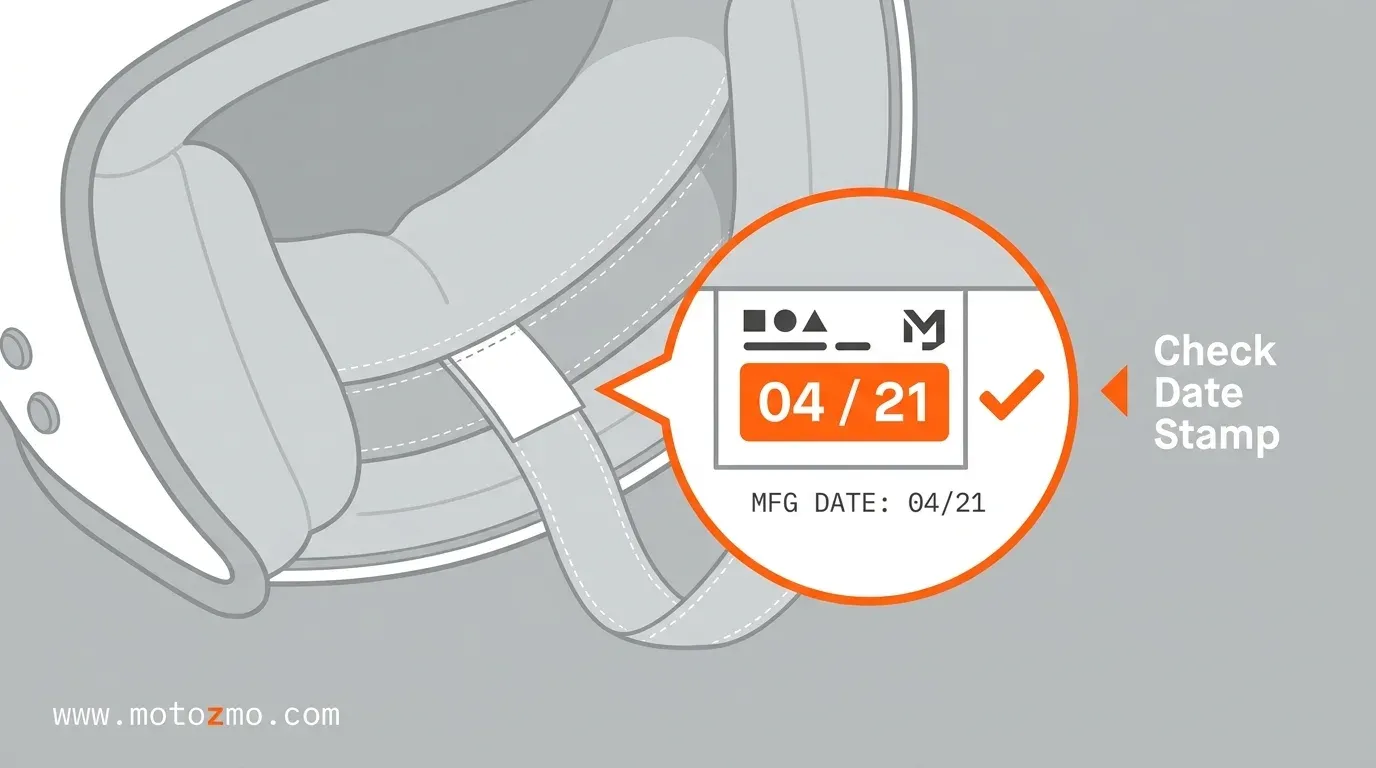
If you already check tire age before you buy rubber, run the same habit on helmets. A “new” helmet that sat in a warehouse for three years has burned through most of its safe life before you ever wear it.
How to Tell the Liner Is Dead When the Shell Looks Fine
The shell is the billboard. The EPS liner is the actual safety device. Shoei publishes a replacement checklist that beats every generic “look for cracks” list, and it turns into a five-minute inspection you can do at home.
- The shake test. Fasten the chin strap, then try to turn the helmet side to side by shaking your head gently. If the helmet rotates while your head stays put, the comfort padding has packed out and the fit is gone. A loose helmet can shift or come off in a crash, and fit is a big part of how helmets prevent head injuries.
- EPS separation. Pull the comfort liner back and look at the foam underneath. If it has pulled away from the shell anywhere, the energy path is broken. Replace the helmet.
- EPS wear. Dents, crumbling edges, or a melted look from heat or solvents mean the foam can no longer crush the way it was designed to. Replace the helmet.
- Strap and buckle. Frayed webbing, a stretched strap, or a buckle that slips under a hard tug. The retention system keeps the helmet on your head. A helmet that comes off helps no one.
- Visor and vents. A visor that will not stay shut or vent sliders that flop around signal a helmet that has lived hard. Not a fail on its own, but stack it with any check above and the decision makes itself.
One myth to drop: a smelly helmet is not a dead helmet. Sweat stink means the comfort liner needs washing, not that the EPS is done.
Wash removable liners with mild soap, air-dry them all the way, and keep solvents and harsh chemicals away from the shell and liner. Petroleum products can attack the very materials you are counting on.
What Ages a Helmet Fastest
Sweat leads the list. Hair oils, body fluids, and cosmetics soak into the liner every ride, and Snell names them outright as degradation drivers. Washable liners and regular cleaning slow this down a lot.
Heat and UV come next. A helmet baking on a mirror or in a car trunk cooks the EPS and fades polycarbonate shells. Store it in a cool, dry place, in a bag, out of direct sun.
Riding habits matter too. A well-vented helmet runs cooler and drier inside, which is kinder to the liner over five summers, so a ventilated helmet earns its keep beyond comfort. And never store your gloves inside the helmet. Glove leather picks up fuel traces, and fuel attacks the liner.
What to Do with a Retired Helmet
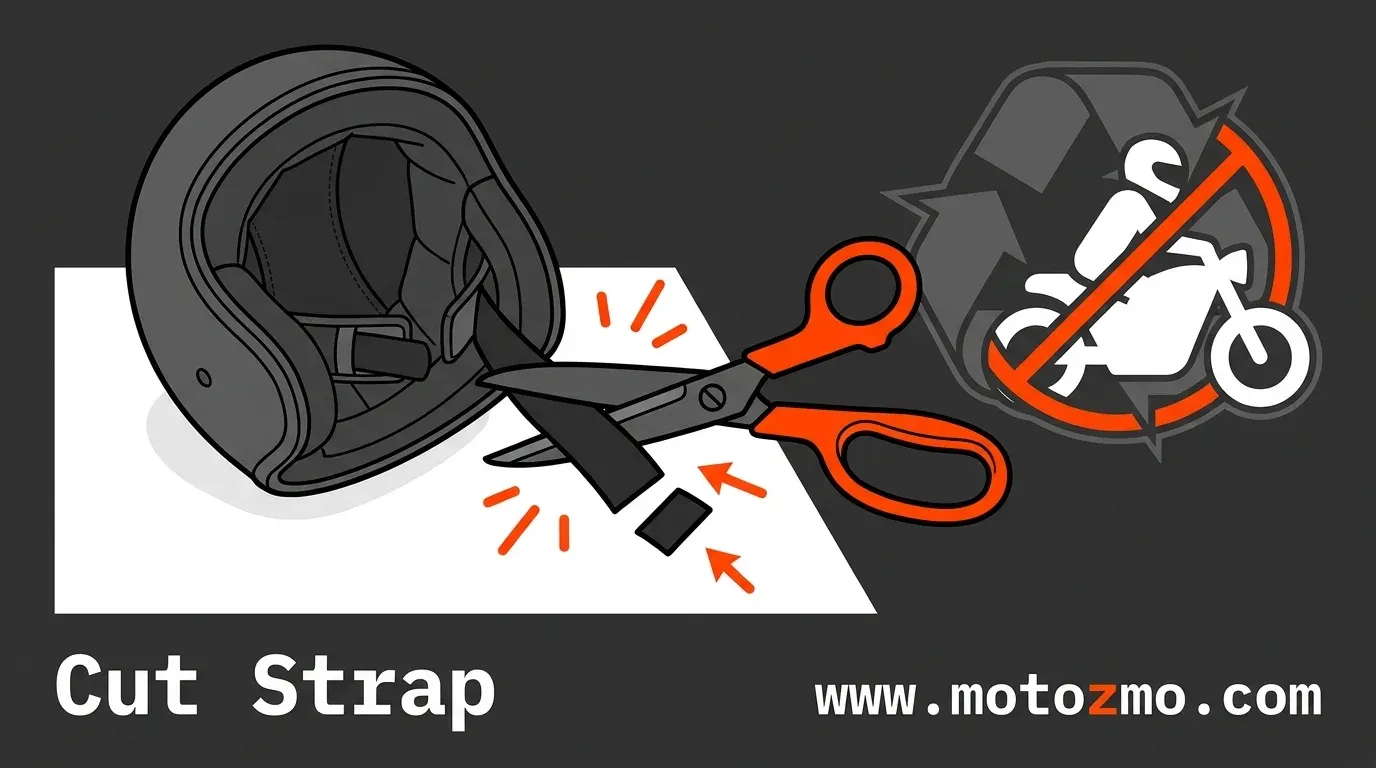
Do not donate or sell a retired helmet for riding. The next rider cannot see crushed foam or aged glue, and a helmet that looks fine can protect badly.
Cut the chin strap so it can never go back on the road, then recycle the parts where your town takes them. Shell plastic, metal hardware, and EPS pull apart without much fight.
Then shop the replacement with a clean slate. Helmet tech moves every five years, so the new lid is usually safer than the old one was on day one. If you like classic looks, retro-styled helmets prove you can keep the vintage vibe on a fresh, safe shell.
Bottom Line
Five years, one crash, or a failed inspection, whichever comes first. Check the date stamp like a tire DOT code, run the shake test every season, and retire a helmet the moment the fit goes loose. Your head only gets one liner.
FAQs about Replacing Your Motorcycle Helmet
Can I just replace the liner instead of the whole helmet?
A fresh comfort liner restores feel, not safety. The EPS impact liner is glued in and not replaceable, and a new comfort pad does not reset the five-year clock or fix crushed foam. If the EPS is the problem, the helmet is done.
Does a helmet expire sitting new in the box?
Use ages a helmet fastest, but the clock does not fully stop on the shelf. Buy the freshest manufacture date you can. A new helmet made three years ago gives you about two good years, not five. Check the date tag before you pay.